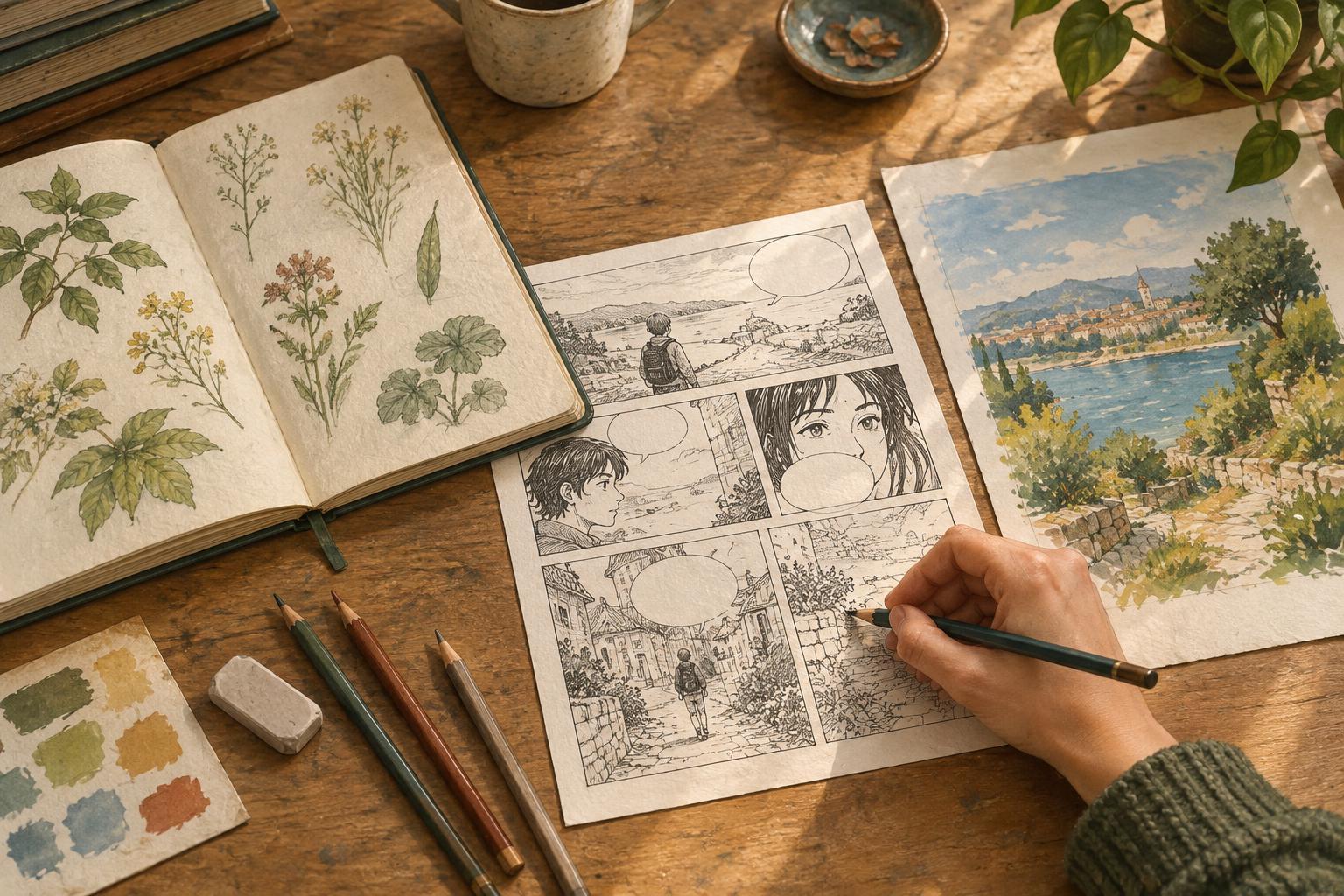
Give each kind of work a different job
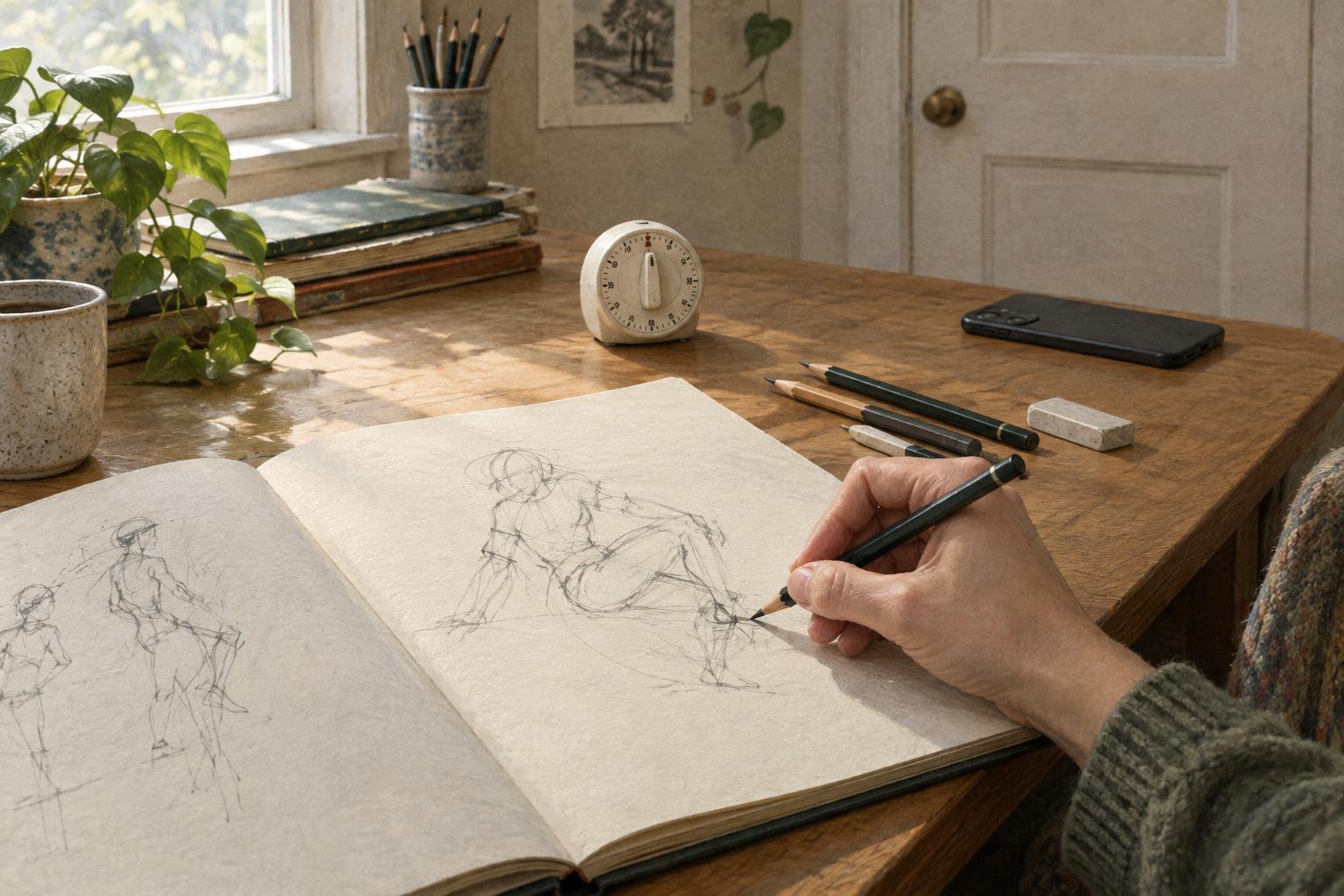
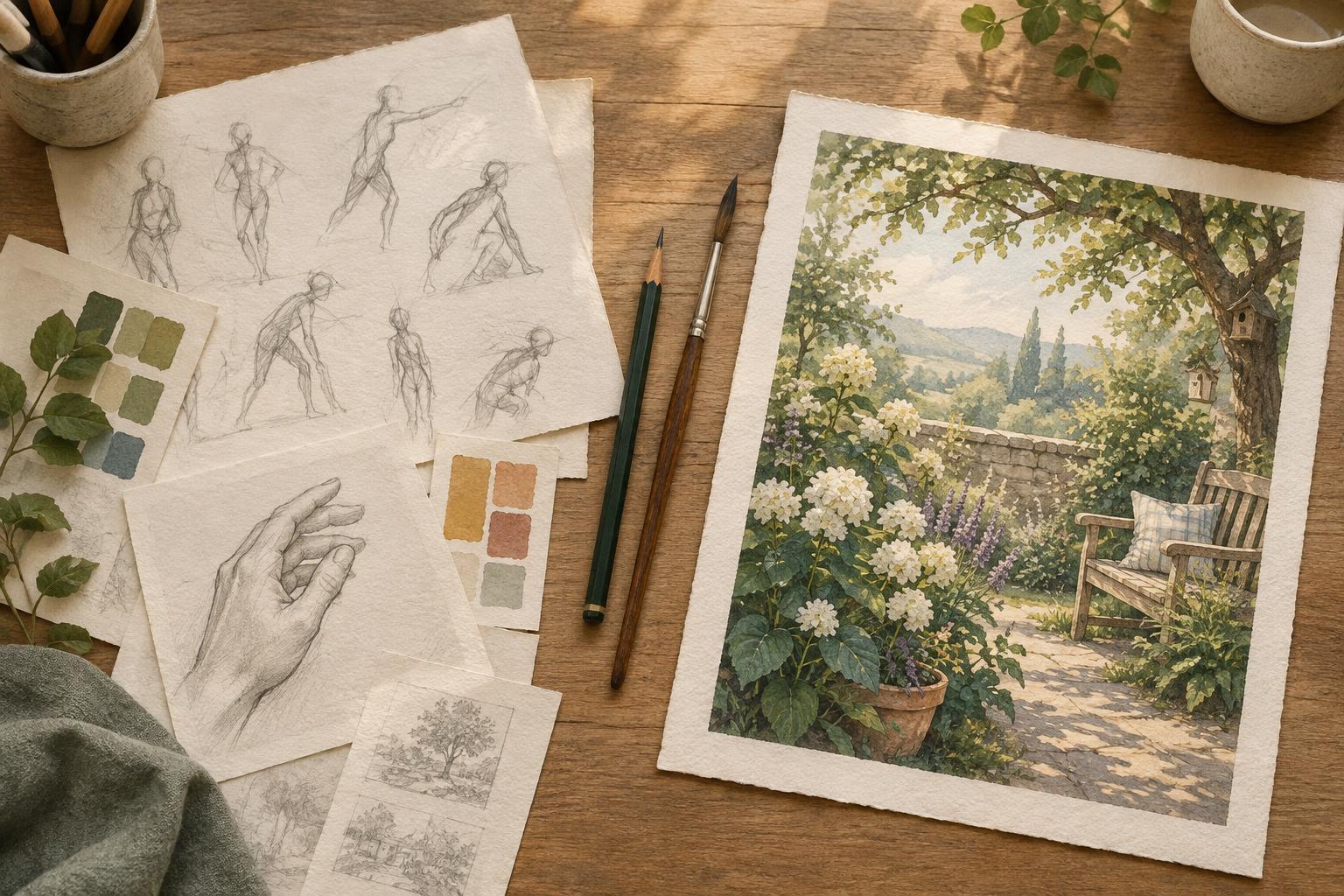
A skill study is a place to investigate one question. You might draw the same hand at several angles, compare ways to group values, or sketch a room from different eye levels. The result does not need to be attractive or complete. Its purpose is to make a specific problem easier to see and work through.
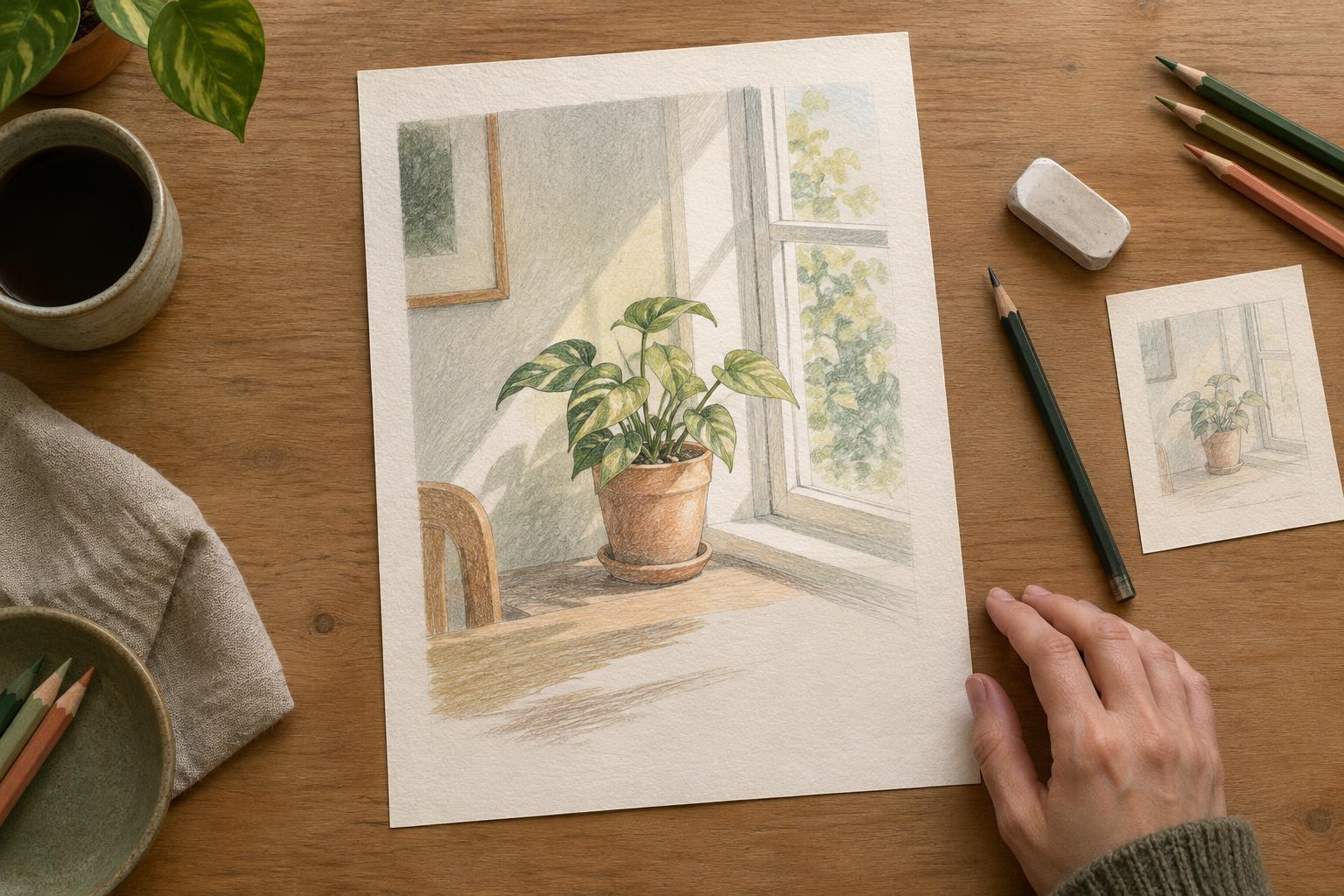
A finished illustration asks a broader question: how do the image’s choices work together? Composition, expression, color, setting and detail all compete for attention. Finishing a piece means deciding which choices serve the idea, even when some parts could be improved. Studies build options; finished work teaches you to select among them. Neither can fully replace the other.
Let projects choose the studies
It is easy to collect exercises without knowing where they lead. A more useful starting point is a small illustration you want to make, such as a character waiting at a bus stop or a quiet scene inside a kitchen. Sketch the idea roughly, then notice where you hesitate. If the pose feels stiff, study weight and gesture. If the setting feels flat, try a few quick perspective sketches before returning to the image.
Keep the study narrow enough to finish in one sitting. Instead of trying to “get better at backgrounds,” draw three simple rooms with a clear foreground, middle ground and background. Instead of studying color in general, test two palettes for the scene you are making. The exercise gives you something you can apply immediately, while the project gives the exercise a reason to exist.
Protect time for completion
Studies can feel safer than finished illustrations because you can always do another one. To avoid an endless preparation loop, decide what “finished” means before you begin a piece. It might mean one readable illustration at a chosen size, with resolved values and enough detail to support its focal point. It does not have to mean that every line is polished or every weakness has disappeared.
You can also set a stopping point for studies. After a few attempts, choose one lesson to carry into the illustration and continue. If the result reveals a new problem, make a note for a later session rather than rebuilding the entire piece around it. Finishing under reasonable limits develops judgment: which flaws distract from the story, and which can remain while the image still communicates?
Use a simple working rhythm
A flexible rhythm can keep both modes active. Begin with a rough concept sketch. Make one or two targeted studies based on what that sketch needs. Complete a small illustration, then look back at the first sketch and the final image. Write down one choice that improved the work and one question worth exploring next time. This cycle can take a few sessions or much longer, depending on the piece.
The balance does not need to be equal every week. A deadline may call for more finished work; an unfamiliar subject may call for more exploration. If time is limited, reduce the scale rather than dropping one mode entirely. A ten-minute study followed by a compact, finished spot illustration still gives you a chance to investigate and apply what you found.
Review progress without judging every page
A single drawing is a poor measure of growth. Keep studies and completed pieces together so you can compare them over time. Look for practical patterns: Are characters clearer at a glance? Are backgrounds helping to establish a place? Do you spend less time avoiding a particular problem? These observations are more useful than labeling a whole image a success or failure.
When reviewing a finished illustration, ask what it taught you to study next. When reviewing a study, ask whether you used its lesson in an image. That two-way connection keeps practice from becoming a stack of disconnected exercises and keeps projects from relying on the same familiar solutions. The goal is not to earn the right to make finished work. Making finished work is part of how you learn.