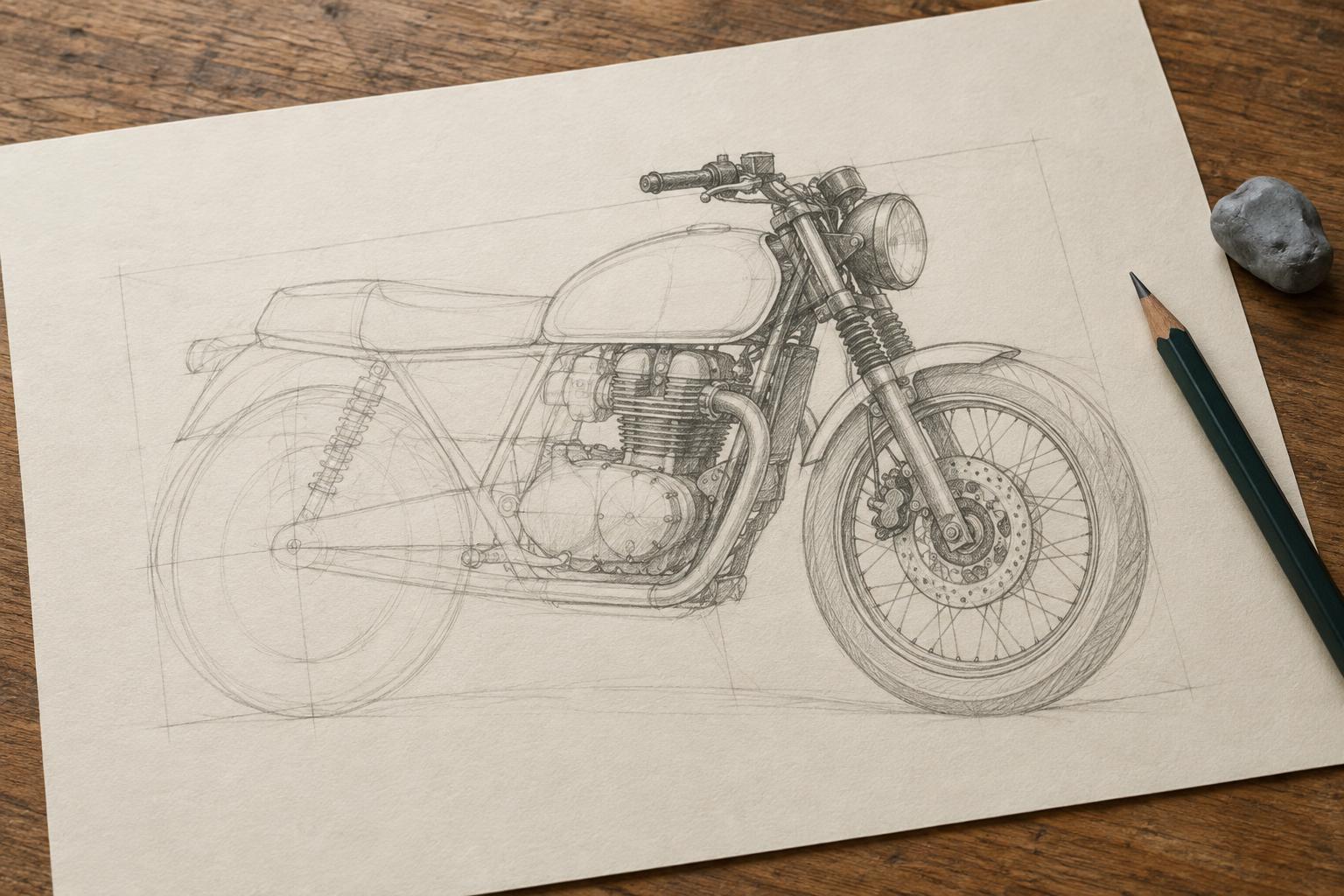
Drawing FoundationsA motorcycle can look complicated when every cable, spoke and panel competes for attention. This drawing exercise breaks the subject into a bounding box, two wheels, a main body and a few clear connections so you can build an accurate, readable sketch before adding detail.
Read article · 4 min↗
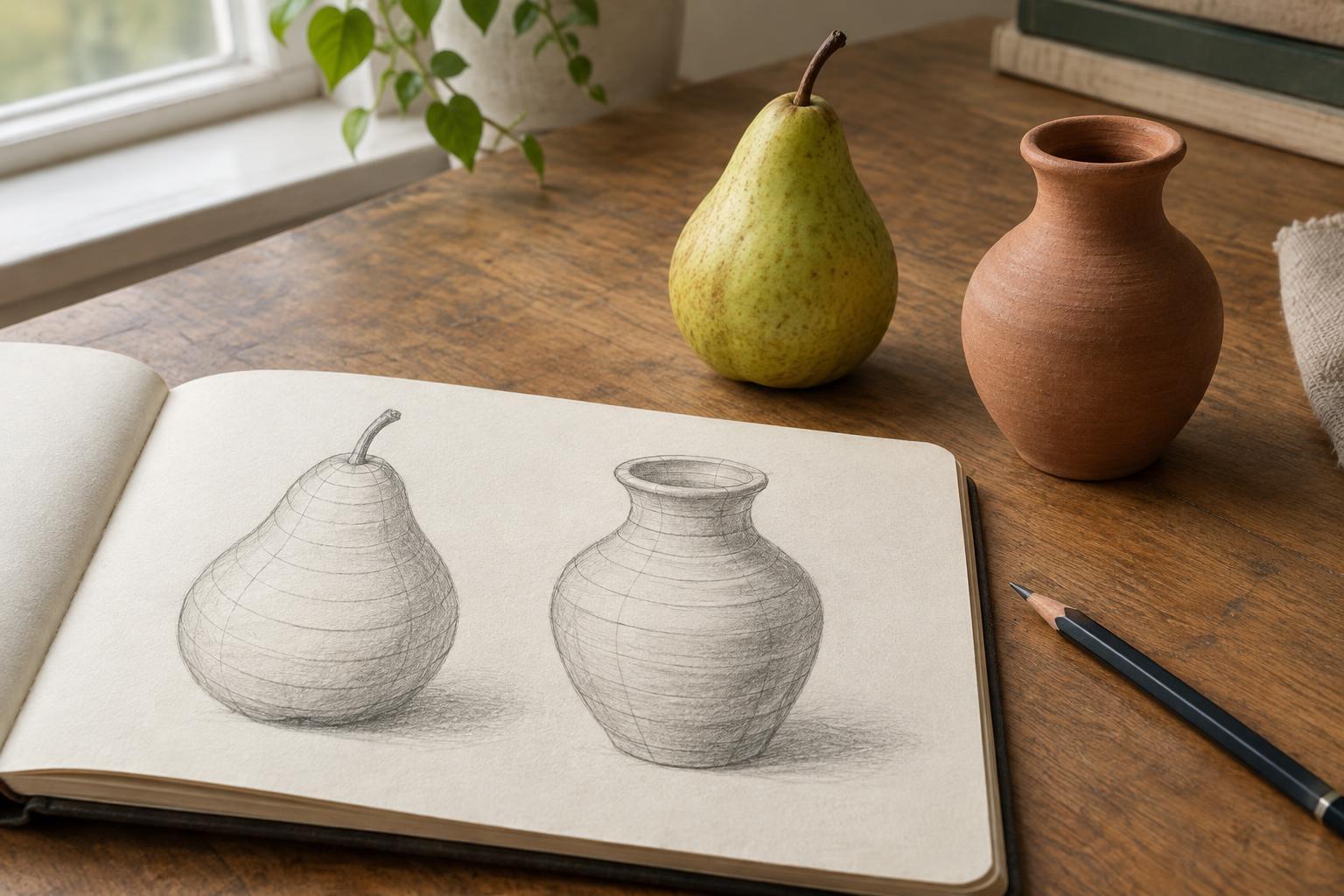
Drawing FoundationsCross-contour lines travel across a drawn object rather than around its edge. Learn how to use them to study volume, check the direction of a form, and make observational drawings easier to understand.
Read article · 4 min↗
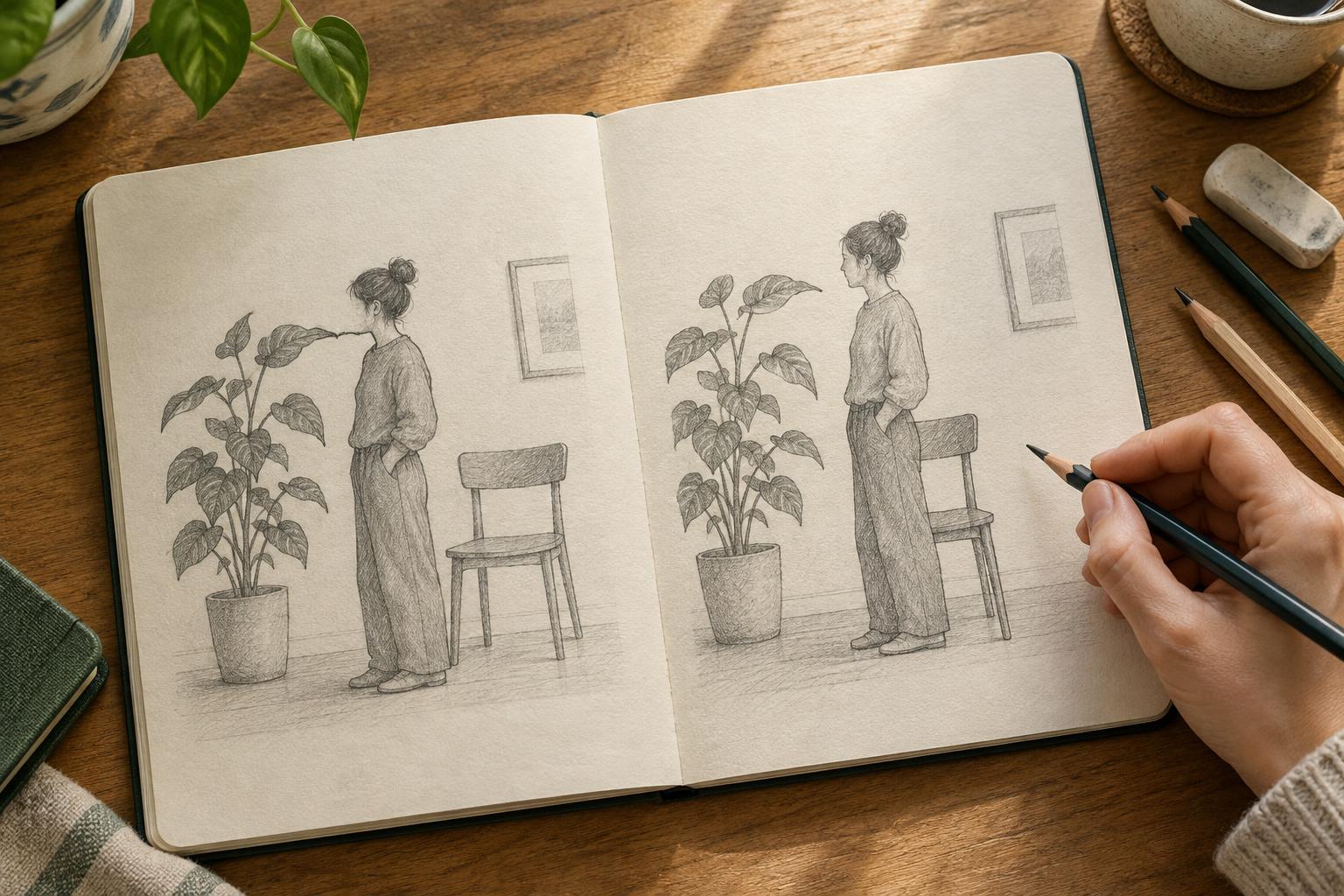
Drawing FoundationsWhen two shapes barely touch, a drawing can become harder to read. Learn how to find accidental tangencies, decide whether they matter, and fix them with small, purposeful changes.
Read article · 4 min↗
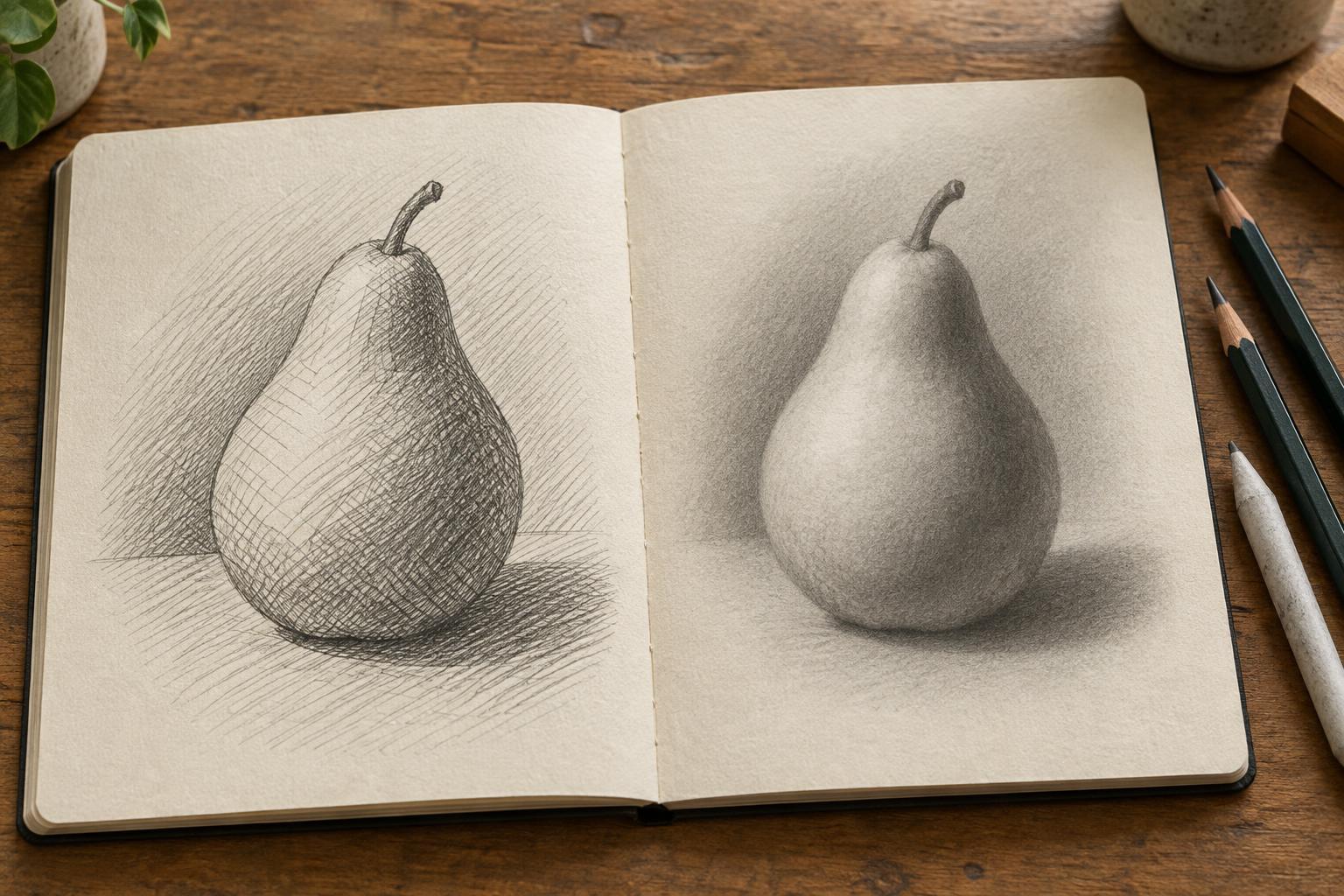
Drawing FoundationsHatching builds tone with visible lines; blending softens pencil marks into smoother transitions. Learn what each approach makes easier to see, where each can cause trouble, and how to compare them in a simple pencil study.
Read article · 4 min↗

Drawing FoundationsA useful still life does not need unusual objects. Learn how to choose a few familiar forms, arrange them with a clear focal point, and check the composition before you begin drawing.
Read article · 4 min↗
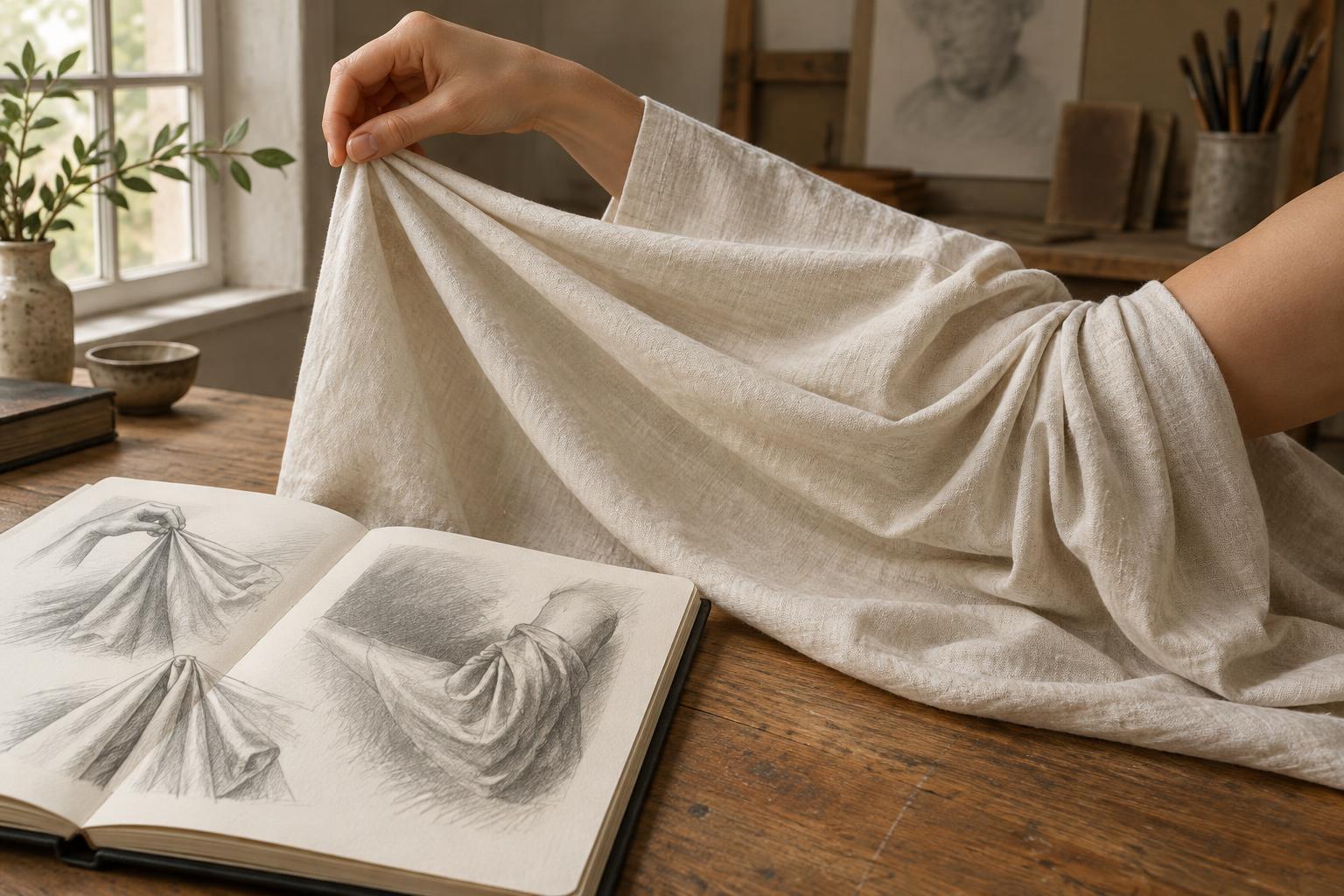
Drawing FoundationsFabric folds become easier to draw when you begin with what holds or presses the cloth. Learn to find tension points, map the direction of each fold, and use simple value shapes to make fabric feel connected to the body beneath it.
Read article · 4 min↗
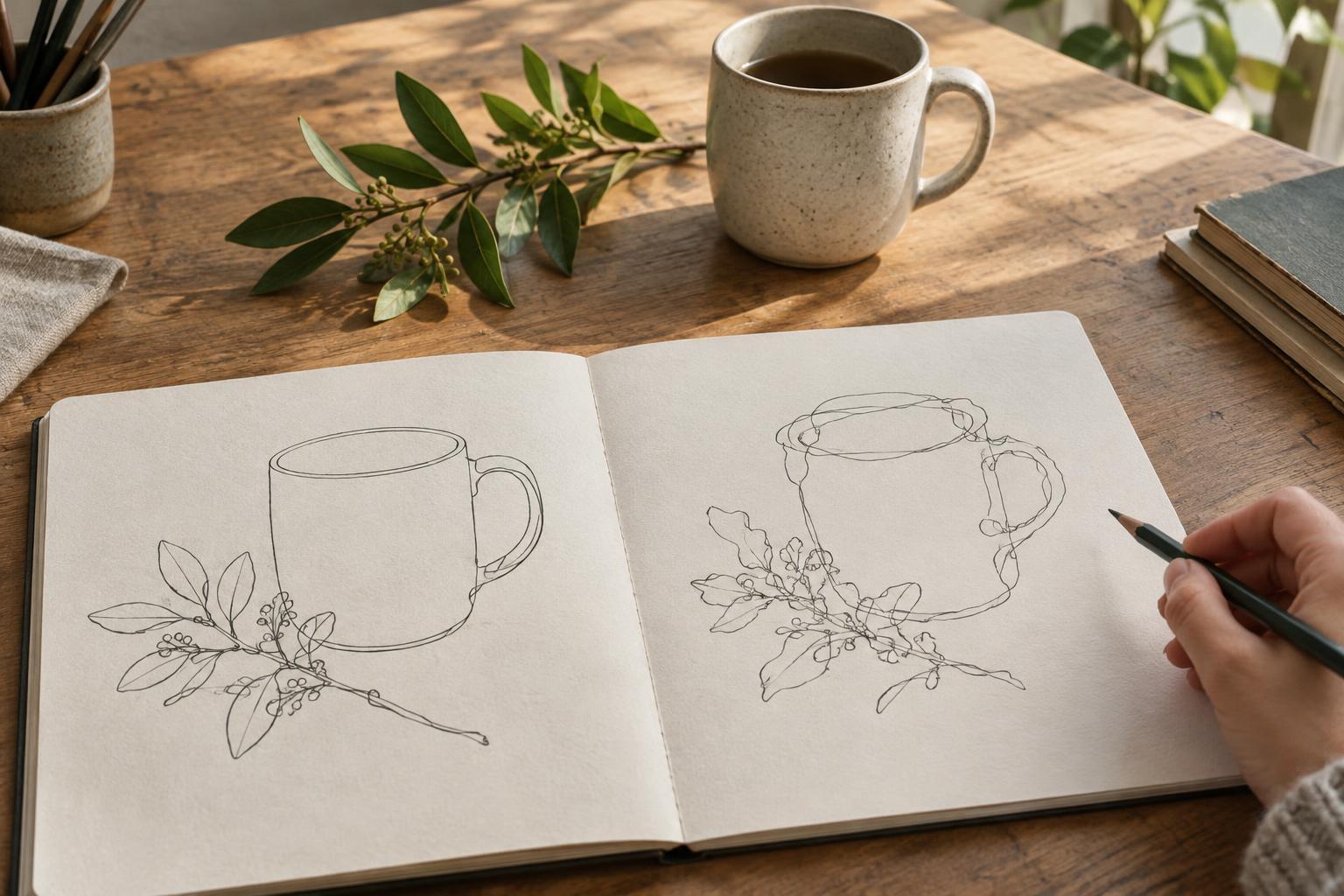
Drawing FoundationsContour drawing and blind contour drawing both ask you to follow what you see, but they train different habits. Learn when to look at the page, when to keep your eyes on the subject, and how to use both exercises in a short practice session.
Read article · 4 min↗
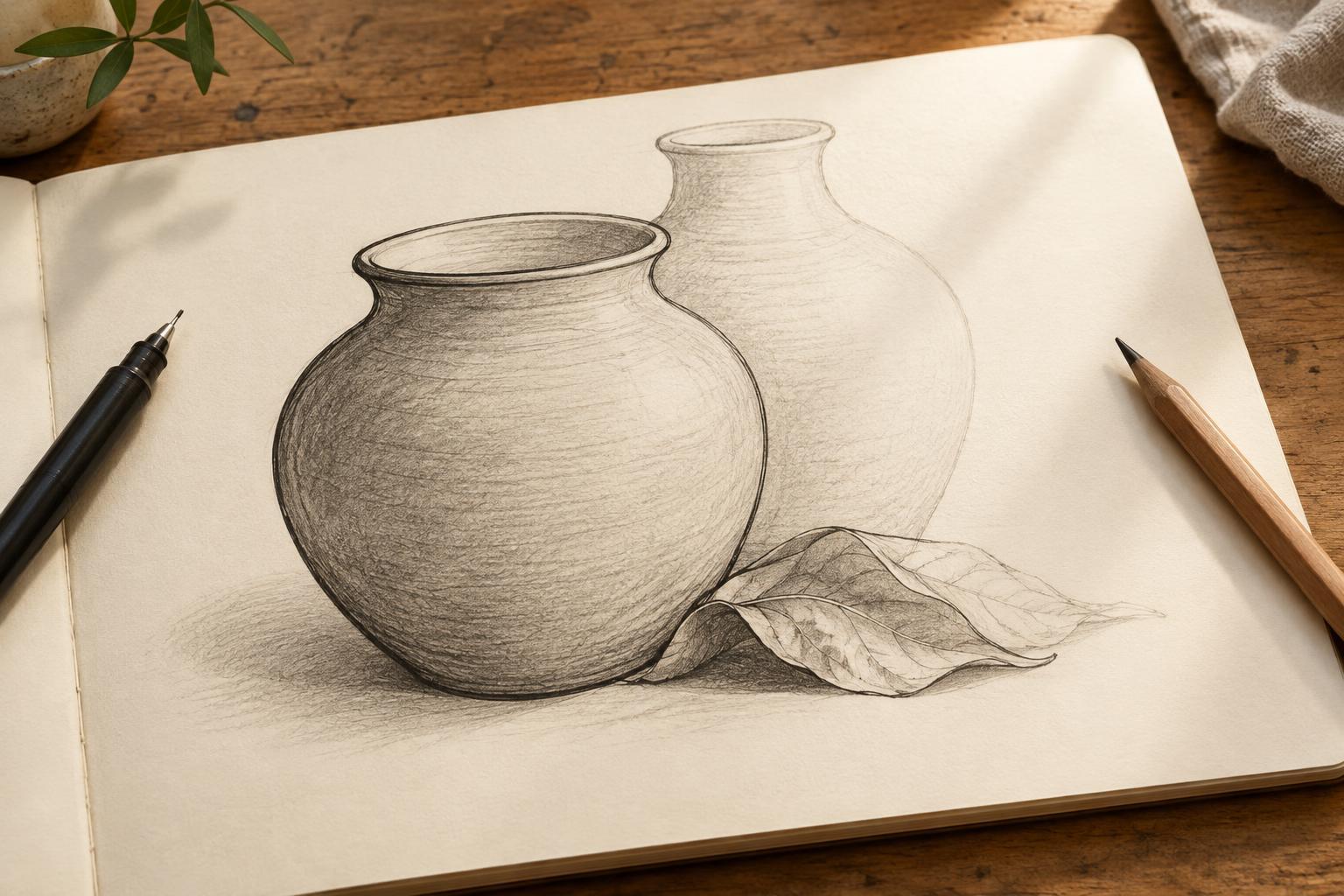
Drawing FoundationsA line can do more than describe an edge. Learn how thicker, thinner, and disappearing lines can help a drawing suggest overlap, light, and three-dimensional form, with exercises you can try using almost any drawing tool.
Read article · 4 min↗
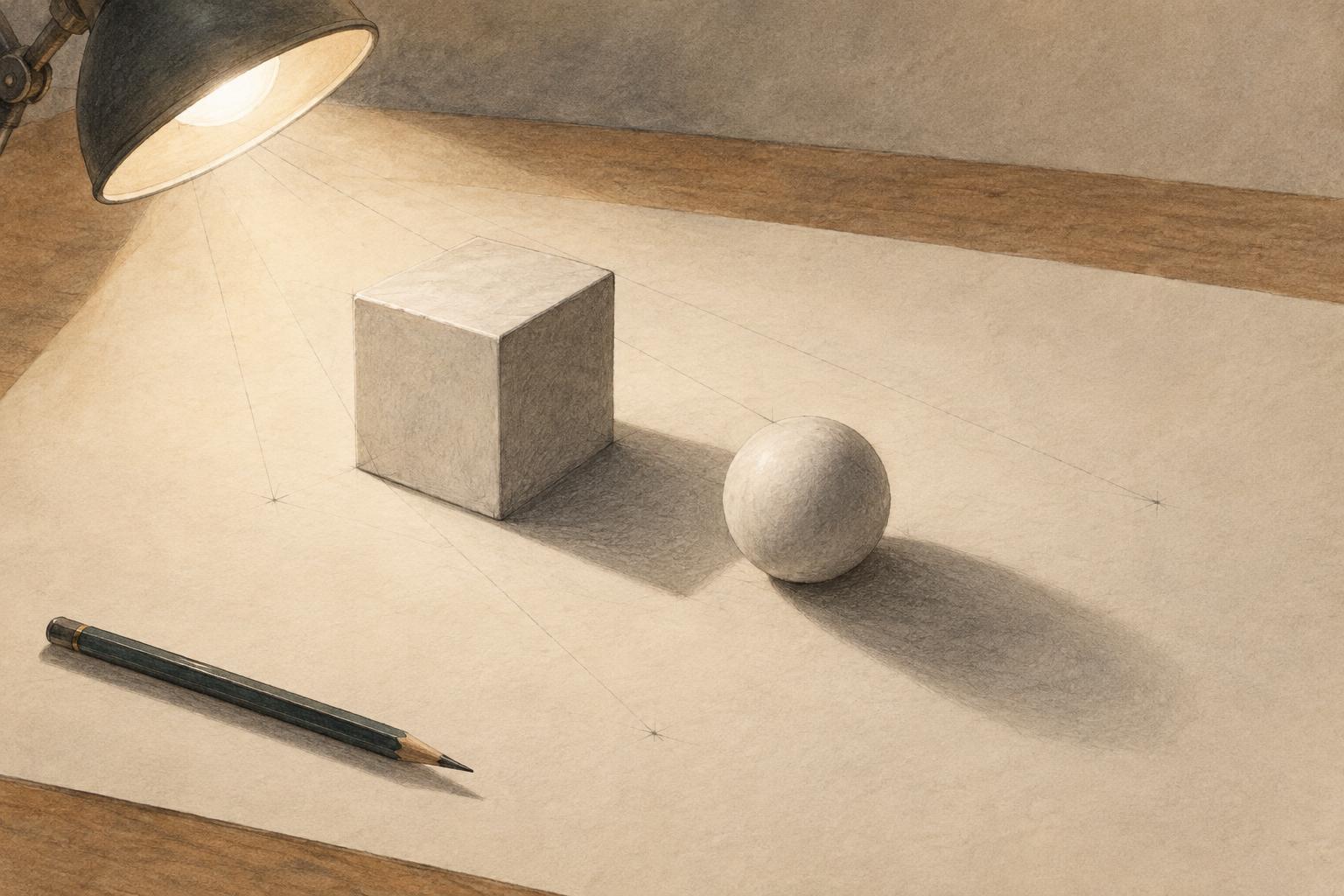
Drawing FoundationsA cast shadow can make a drawing feel grounded, but guessing its shape often leads to confusing results. Learn a simple way to place shadows from one light source, then refine their edges and values to suit the scene.
Read article · 4 min↗
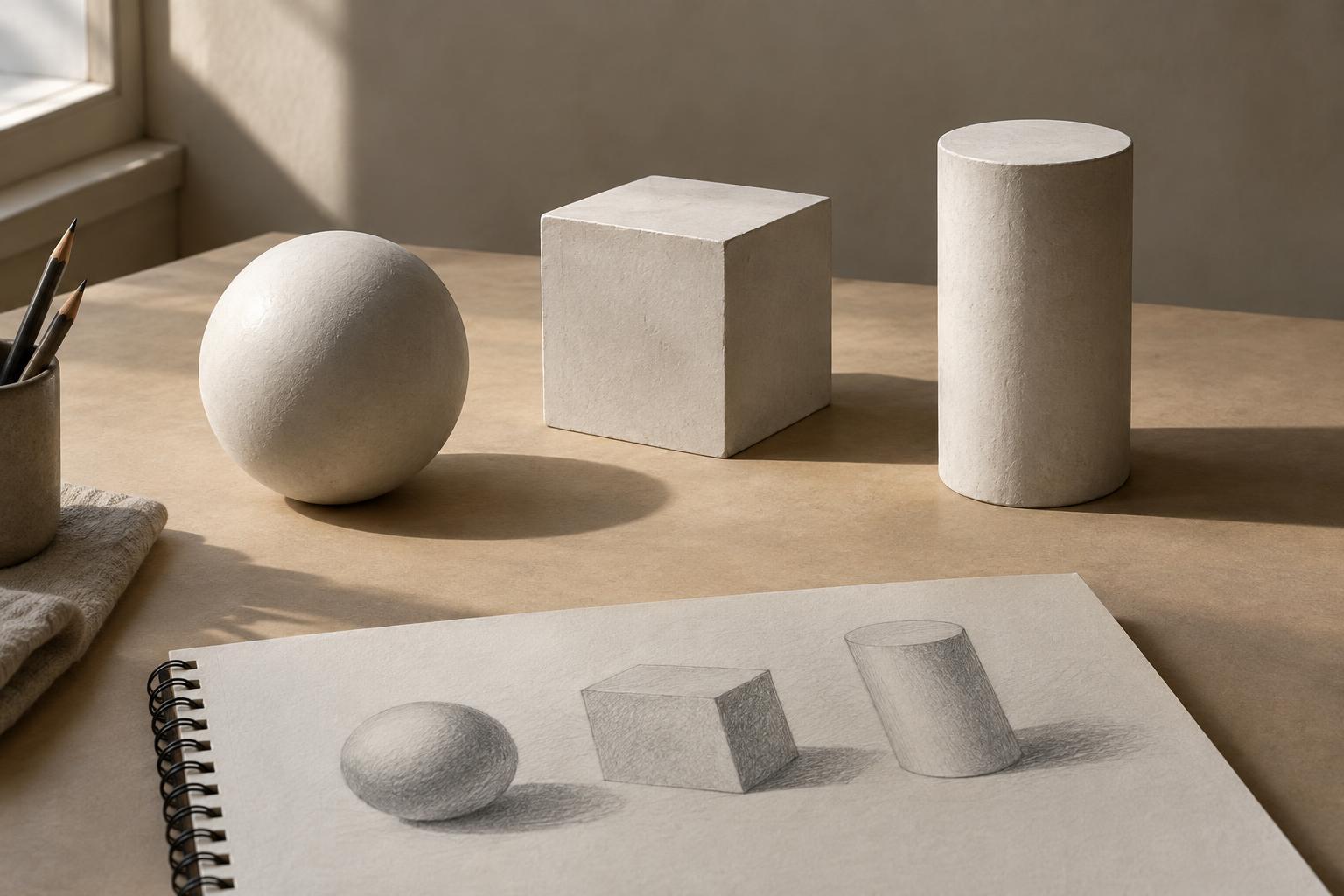
Drawing FoundationsA sphere, cube, and cylinder can teach you how light describes volume. Learn to locate the light source, separate major value shapes, and use a simple drawing exercise to make forms feel solid.
Read article · 4 min↗
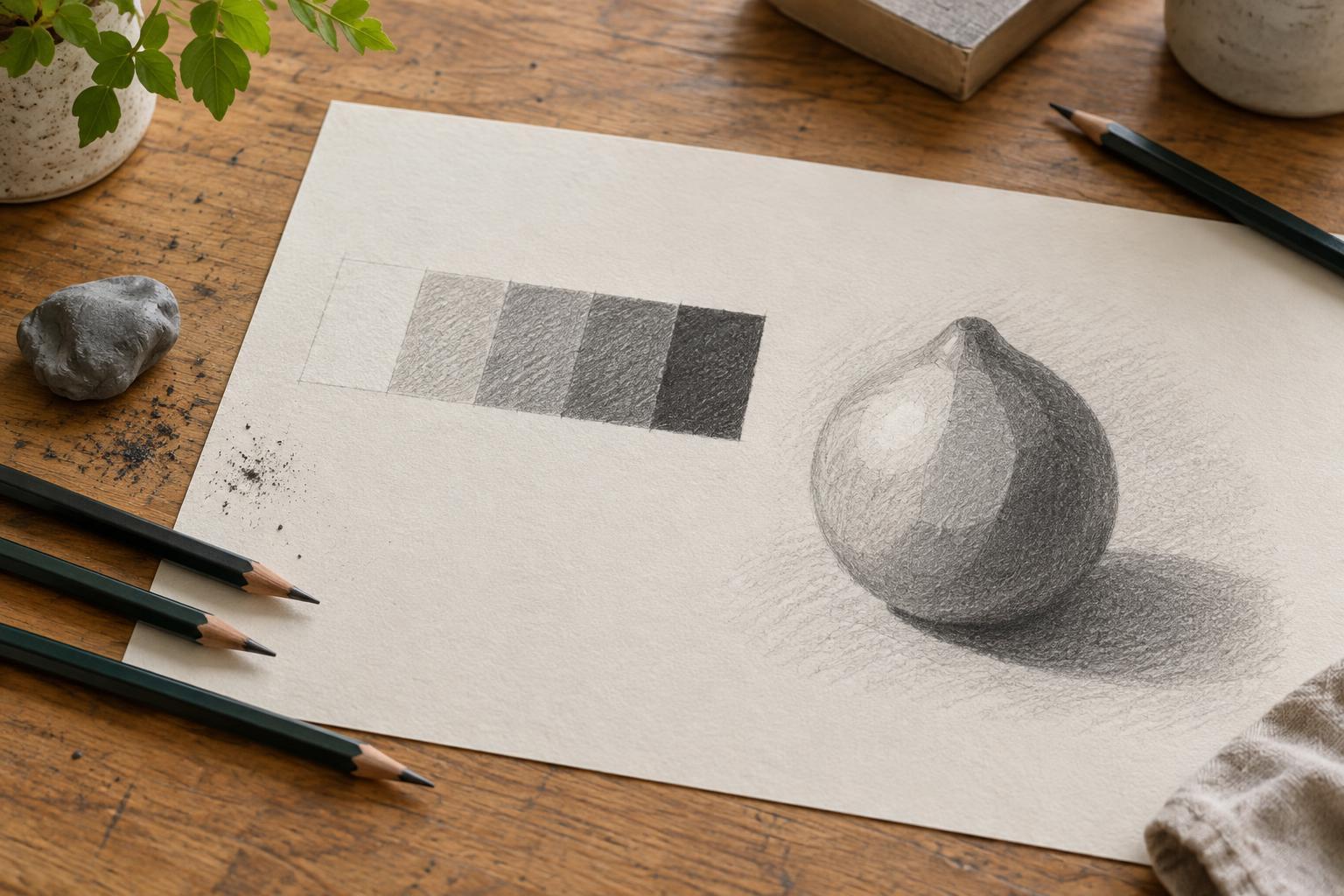
Drawing FoundationsA five-value scale turns a wide range of pencil tones into a manageable drawing tool. Learn how to make one, test its steps, and use it to plan light and shadow before adding detail.
Read article · 4 min↗
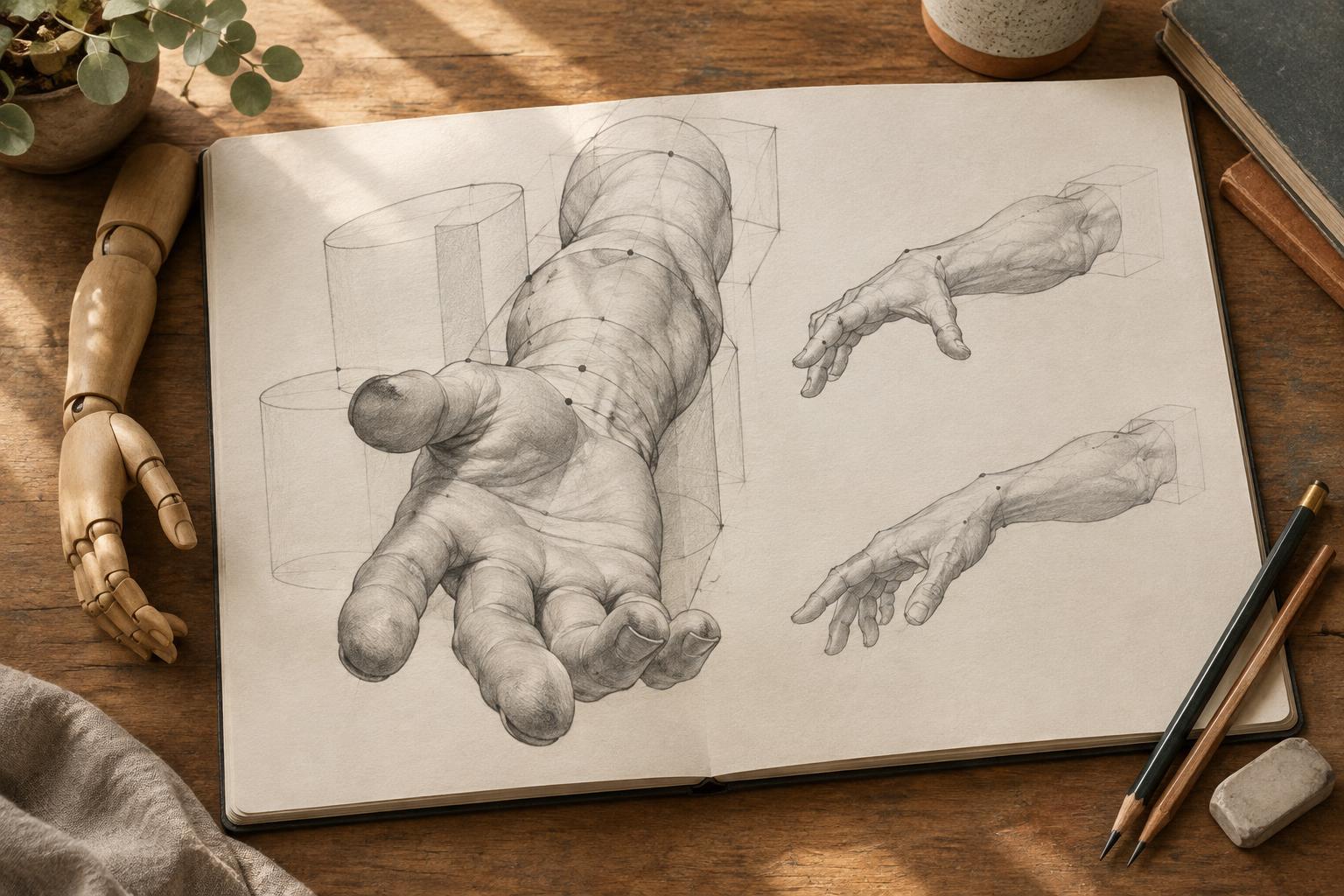
Drawing FoundationsForeshortening makes a form appear shorter when it points toward or away from the viewer. Learn to preserve its structure with simple volumes, clear landmarks, overlap and a few focused drawing exercises.
Read article · 4 min↗
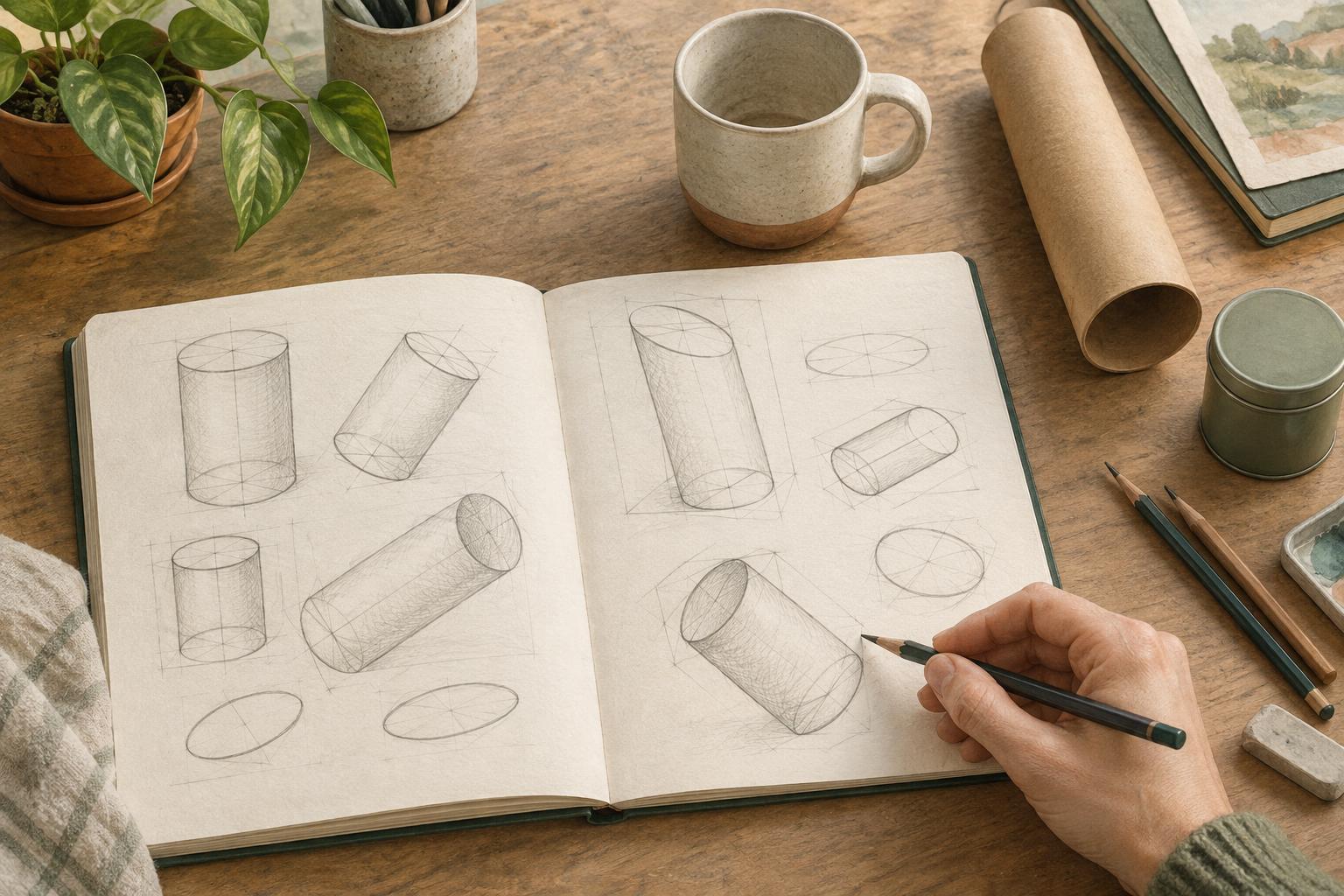
Drawing FoundationsA practical guide to drawing convincing ellipses and cylinders, from understanding an opening’s tilt to building forms with centerlines, bounding boxes and simple exercises.
Read article · 4 min↗
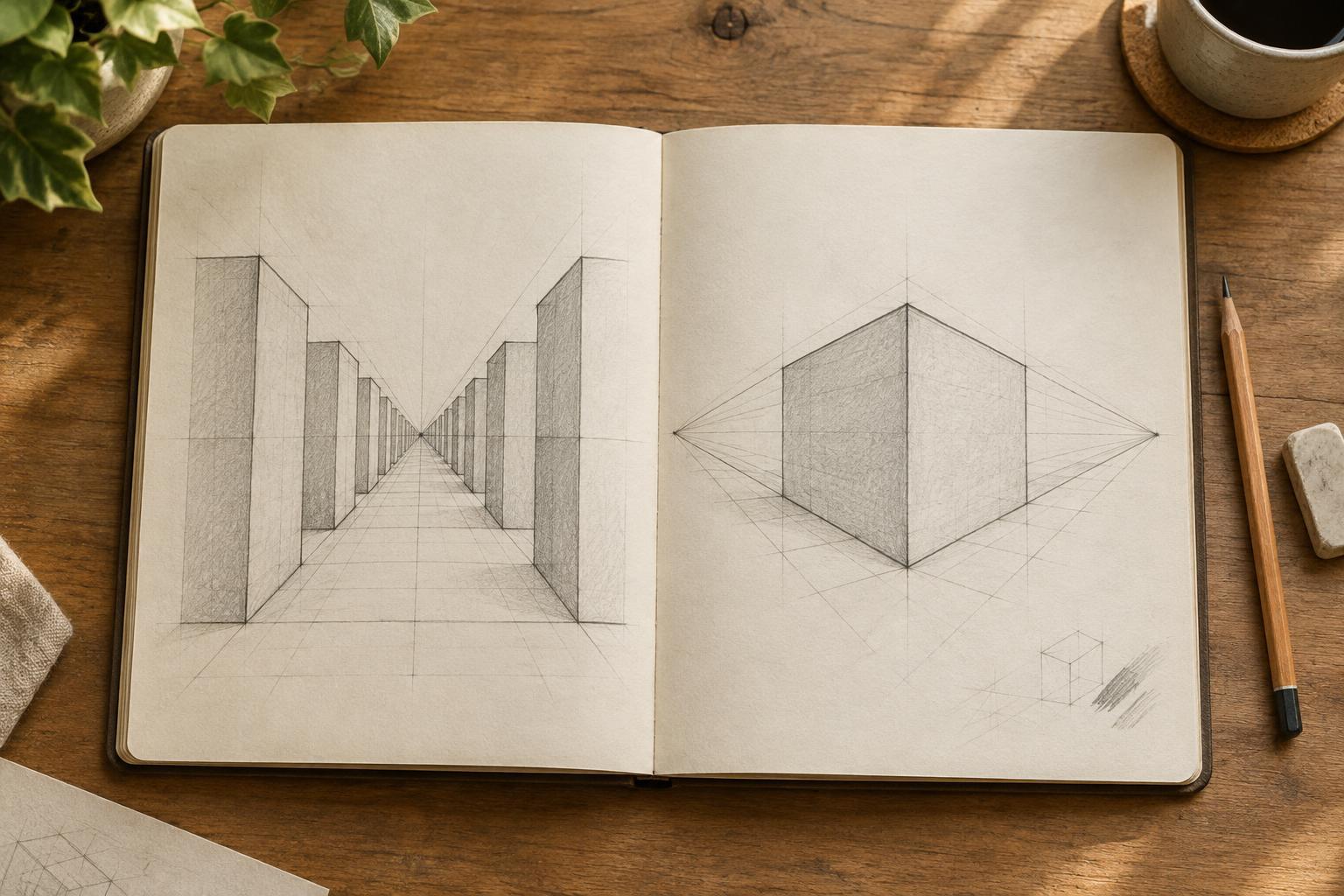
Drawing FoundationsOne-point and two-point perspective solve different drawing problems. Learn how each system organizes space, what it does well, and how to choose one for a scene or illustration.
Read article · 4 min↗
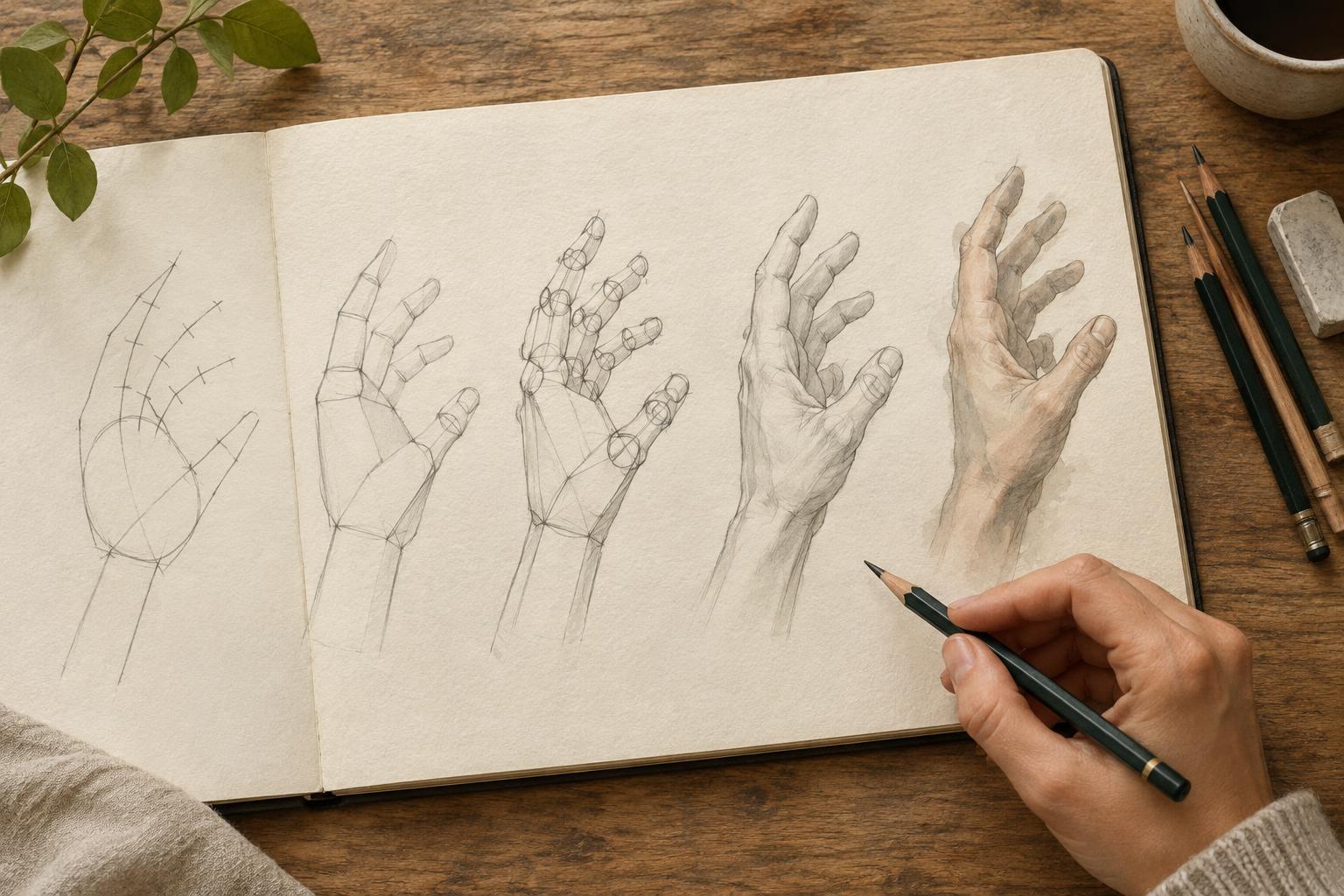
Drawing FoundationsHands become easier to draw when you build their large shapes before chasing finger outlines. Learn to block in the palm, place the joints, and use simple forms to check proportion, overlap, and gesture.
Read article · 4 min↗
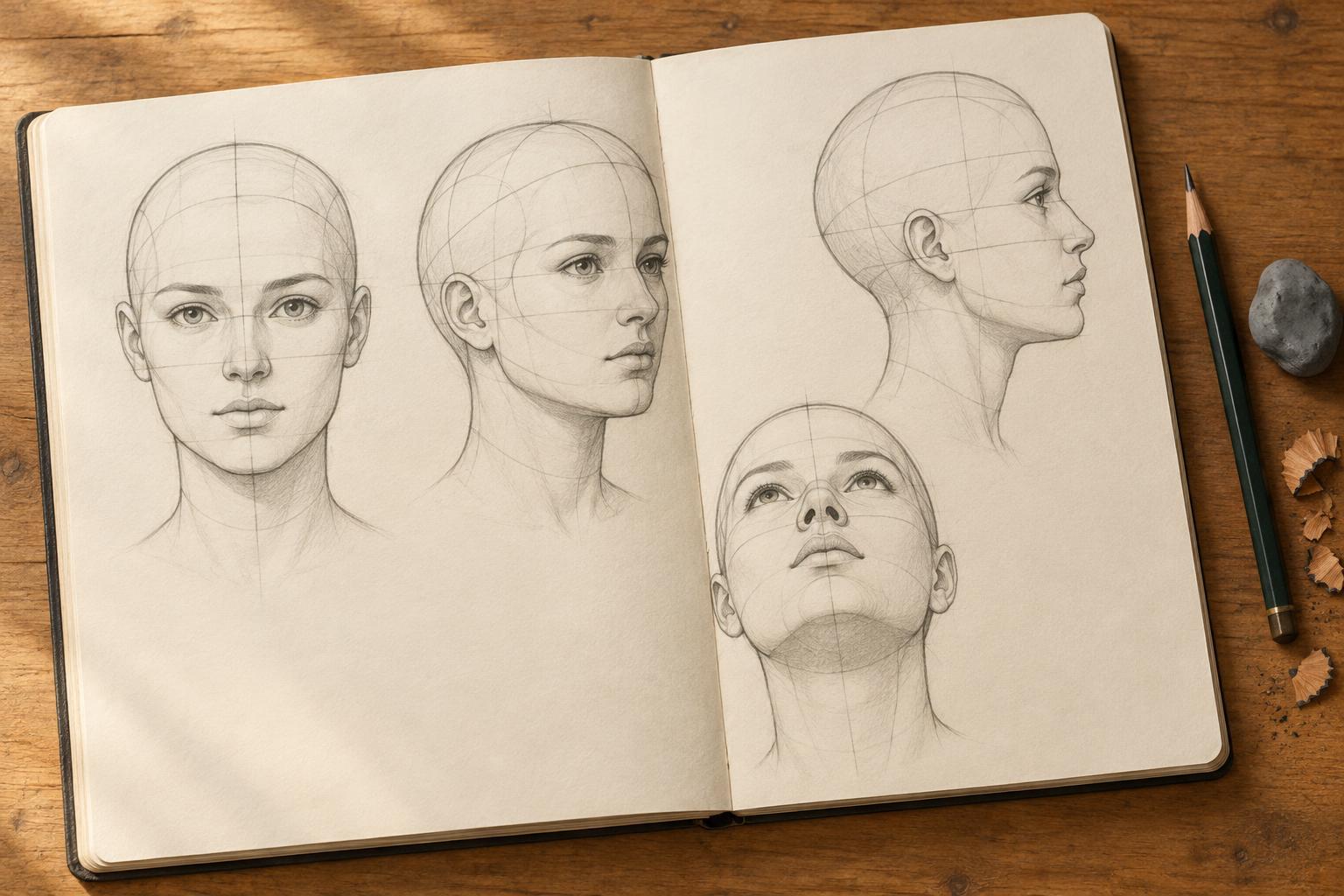
Drawing FoundationsFacial features are easier to place when the head is treated as a turning form rather than a flat oval. Learn how to use a centerline, an eye line and a few flexible landmarks to draw faces from the front, three-quarter view, profile and tilted angles.
Read article · 4 min↗
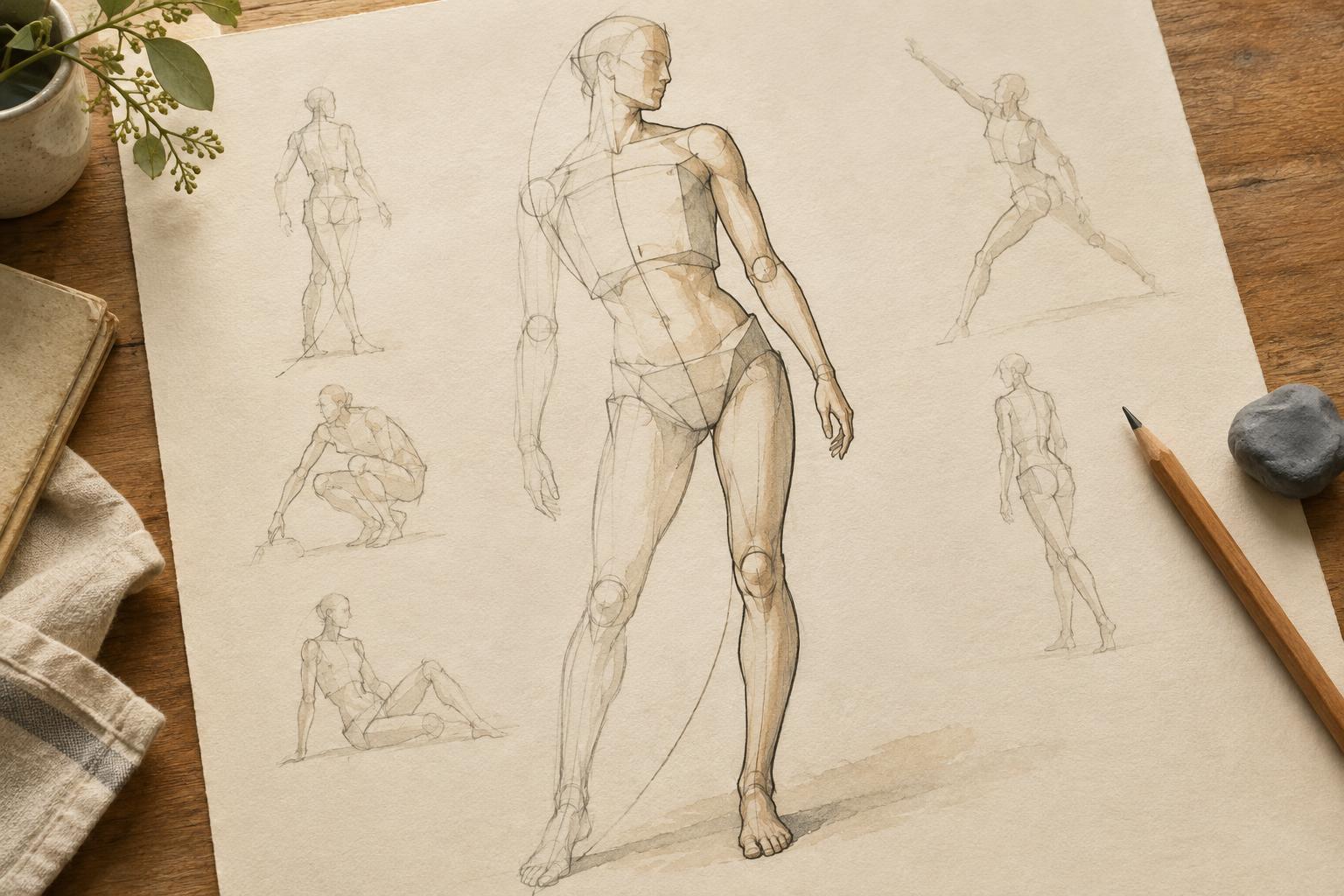
Drawing FoundationsA practical approach to figure drawing that begins with boxes, cylinders and a clear line of action. Learn how to build a pose, check its balance and revise proportions before adding detail.
Read article · 4 min↗
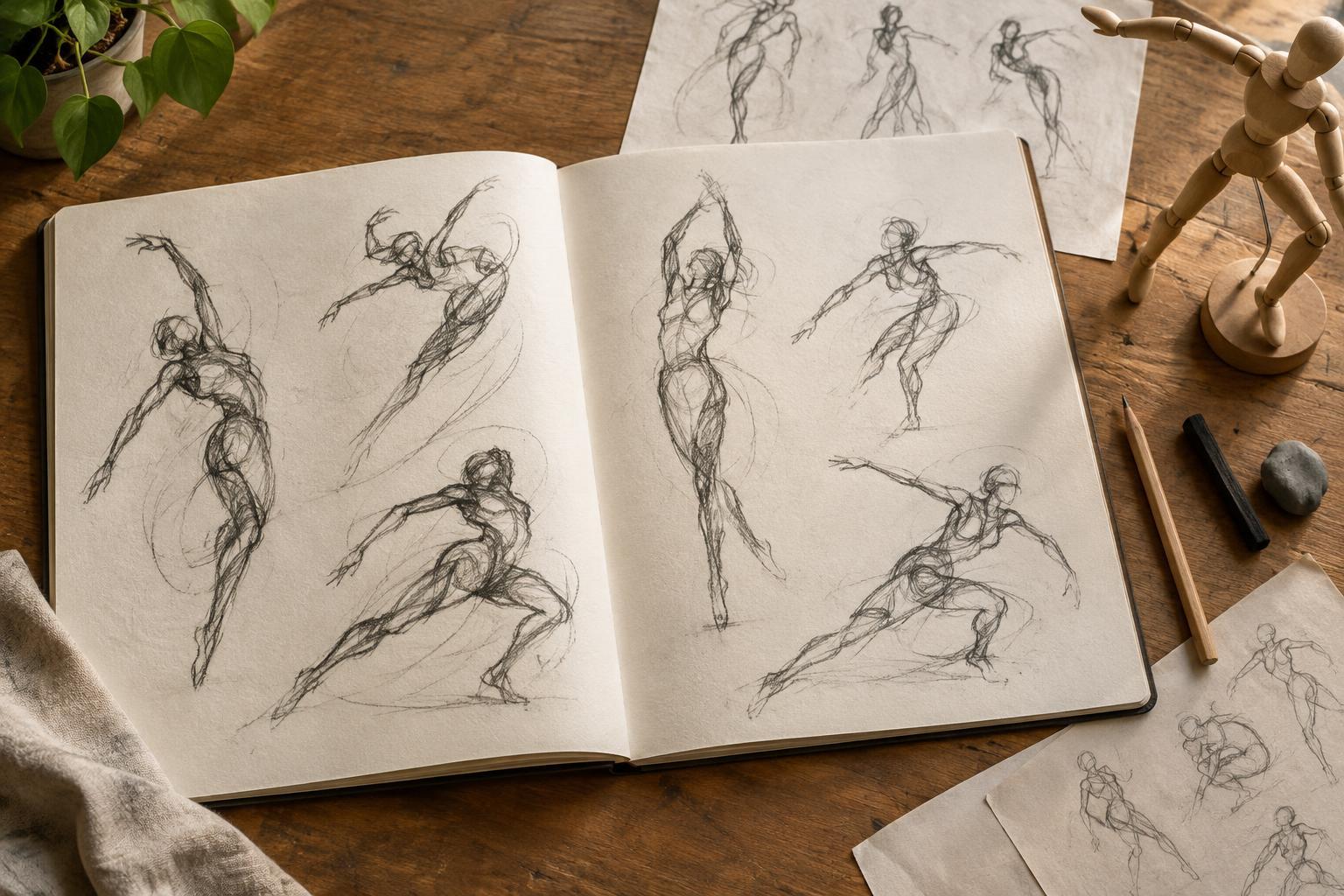
Drawing FoundationsGesture drawing helps you capture what a pose is doing before you worry about what it looks like. Learn how to find a line of action, place the body’s main masses, and use short exercises to draw movement with more clarity.
Read article · 4 min↗
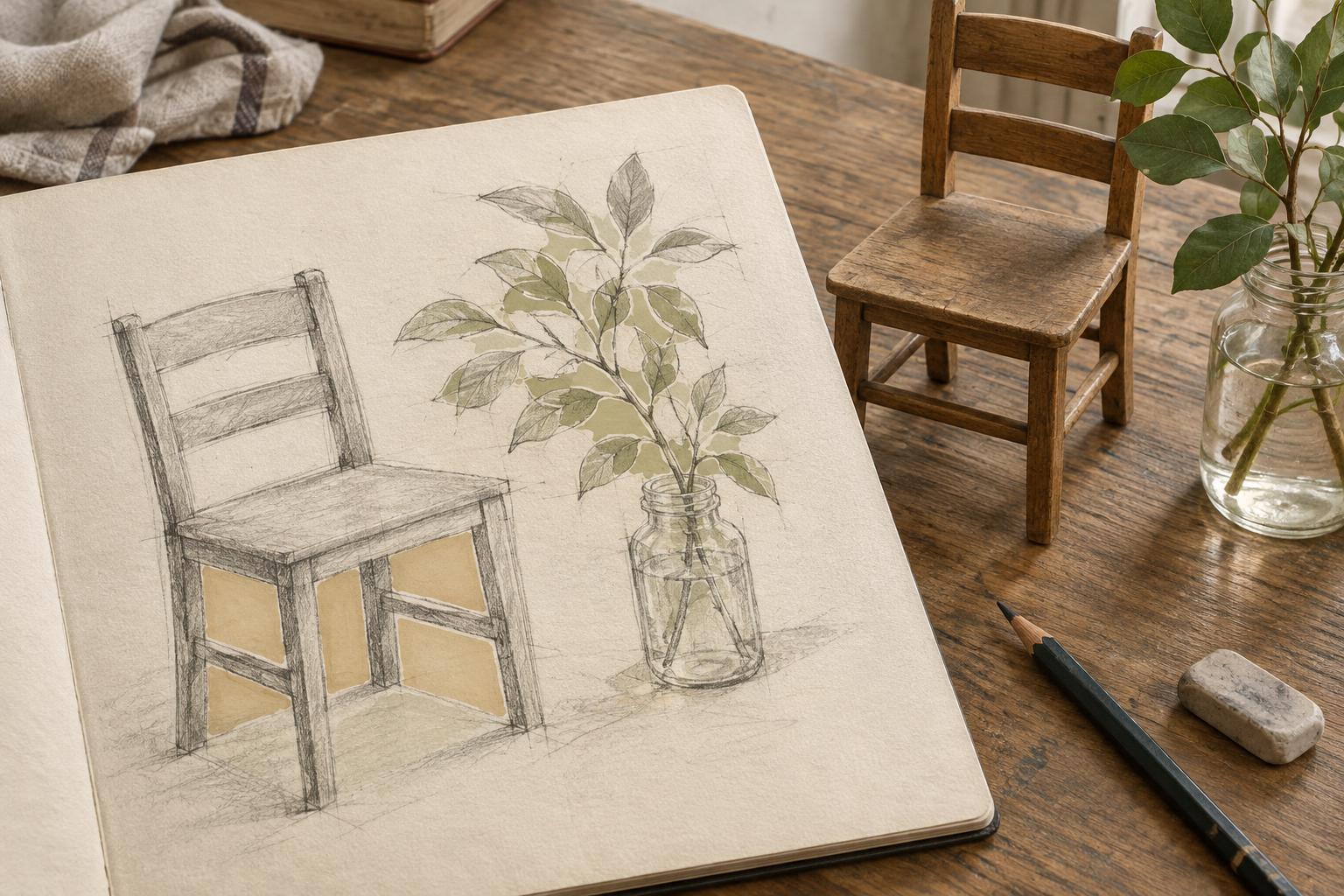
Drawing FoundationsThe empty areas around and between objects can reveal drawing errors that are hard to spot when you focus on the objects themselves. Learn how to compare negative shapes, check their angles and proportions, and use them to revise a drawing without losing its energy.
Read article · 4 min↗
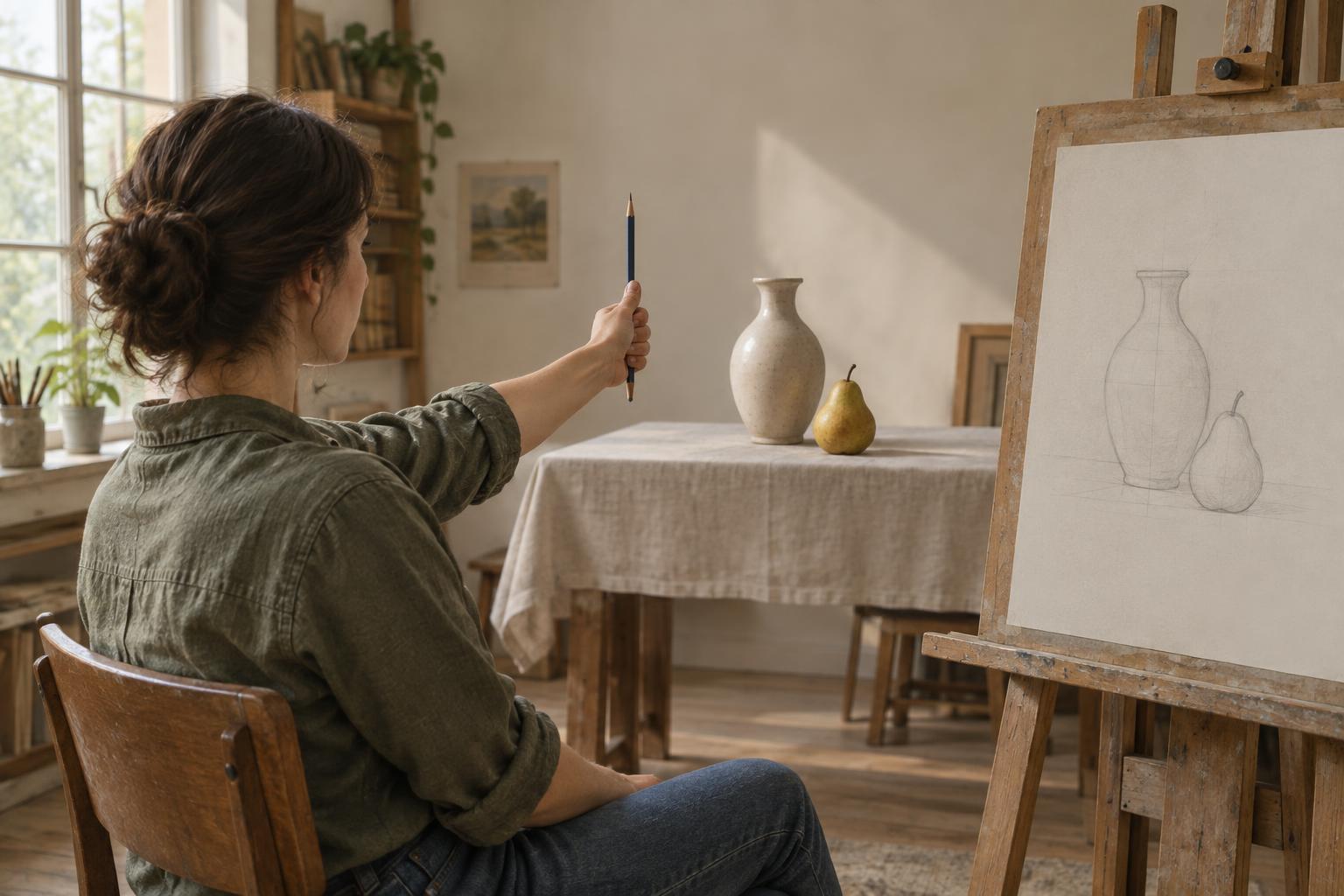
Drawing FoundationsA pencil can help you compare the sizes, angles and positions you see in a subject. Learn a simple sighting routine for building a drawing, checking its proportions and avoiding common measurement mistakes.
Read article · 4 min↗
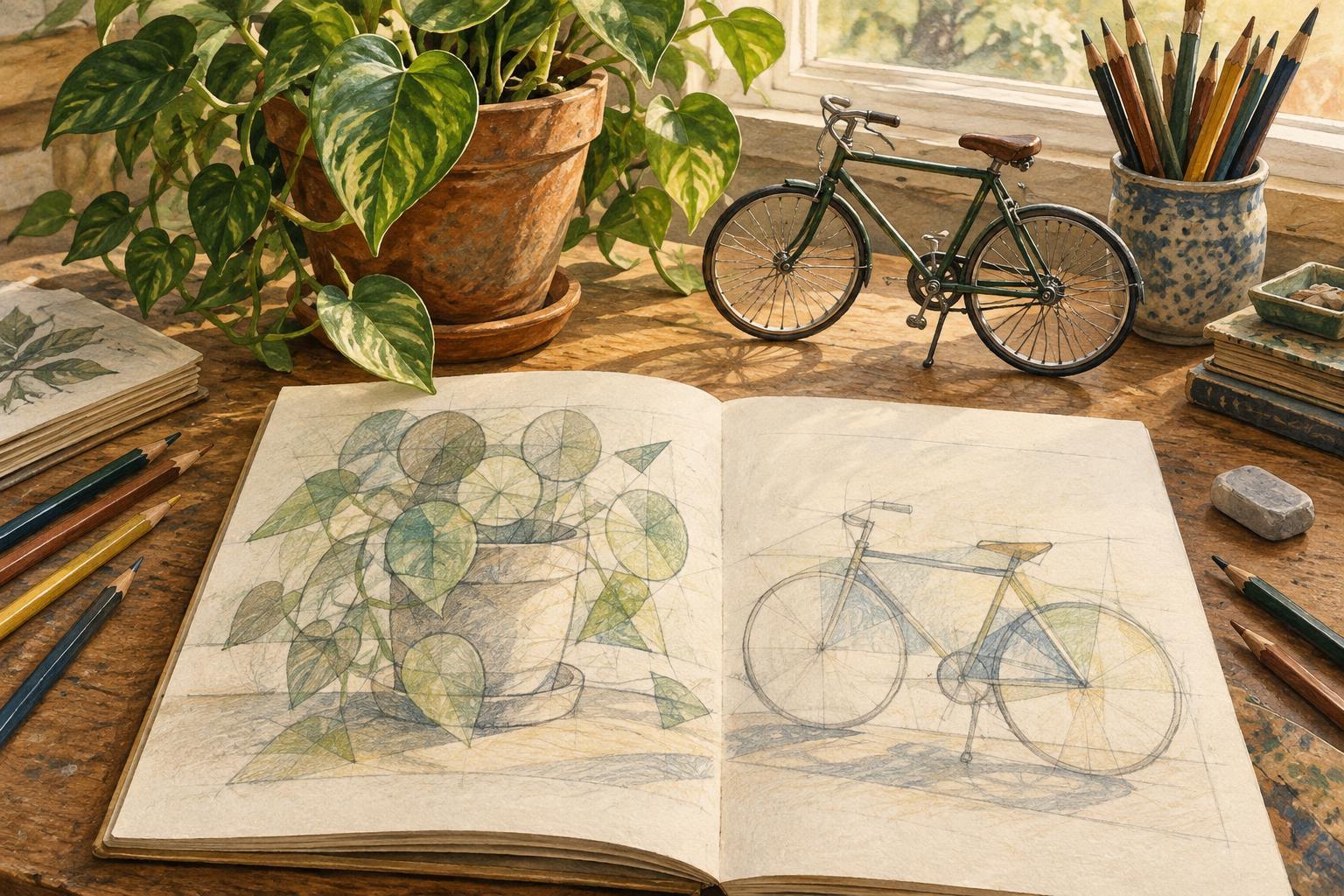
Drawing FoundationsA crowded desk, a bicycle or a leafy plant can feel too complicated to draw. Learn how to look for large shapes, compare proportions and build a clear sketch before adding details.
Read article · 4 min↗
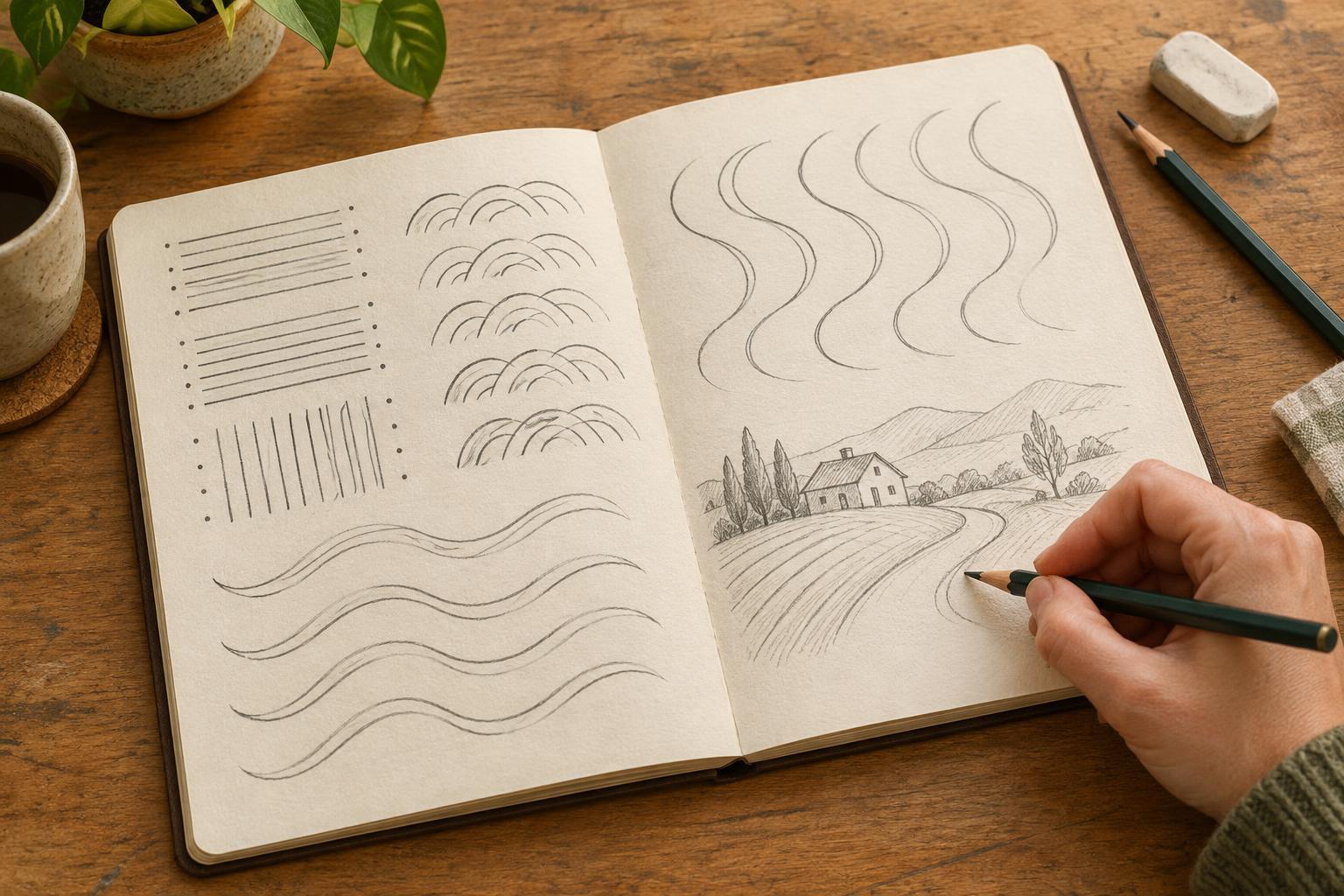
Drawing FoundationsConfident lines come from planning a path, moving with a steady rhythm and practicing without trying to make every mark perfect. These short warm-ups help beginners draw straights, arcs and flowing curves with greater control.
Read article · 4 min↗