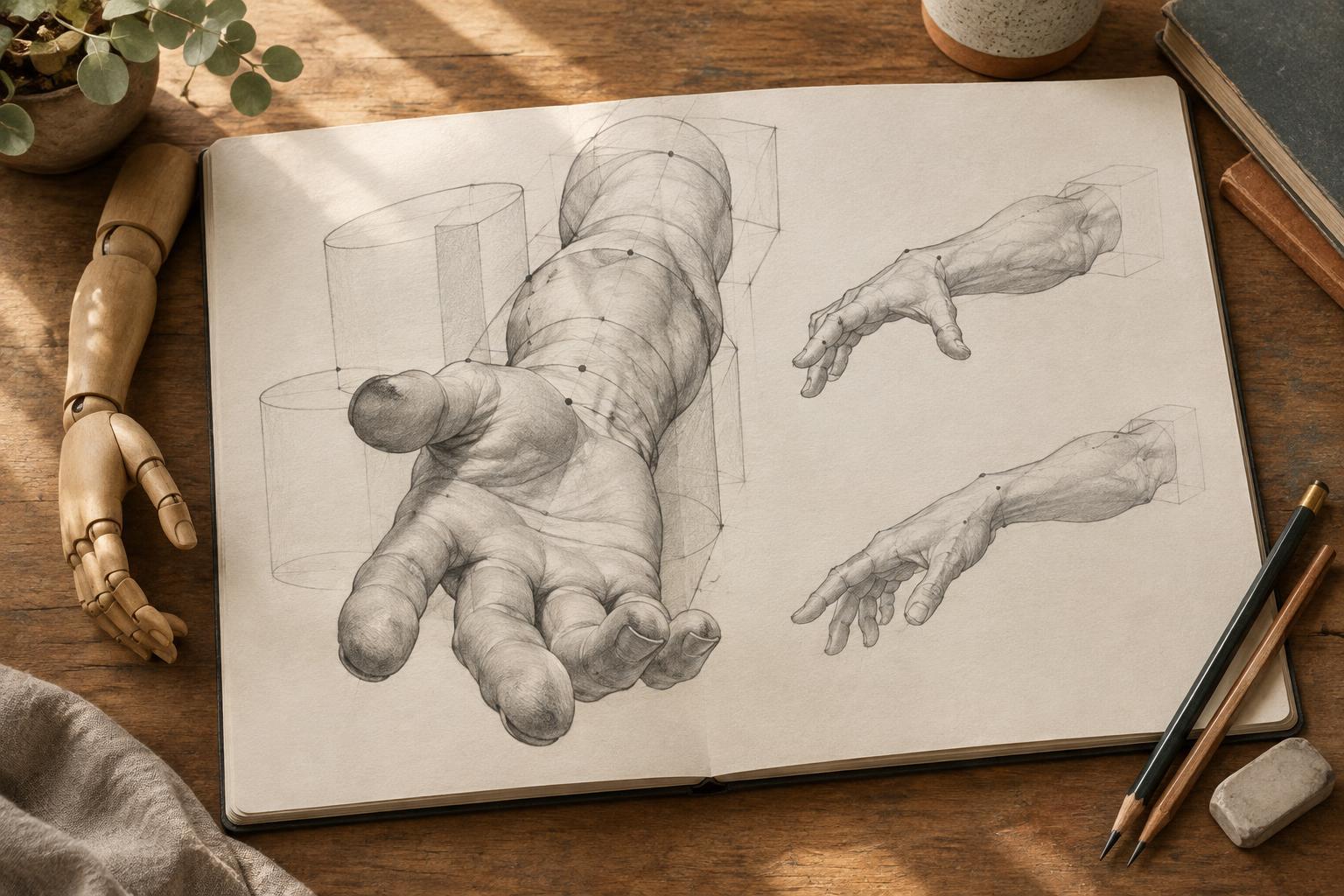
Drawing FoundationsForeshortening makes a form appear shorter when it points toward or away from the viewer. Learn to preserve its structure with simple volumes, clear landmarks, overlap and a few focused drawing exercises.
Read article · 4 min↗
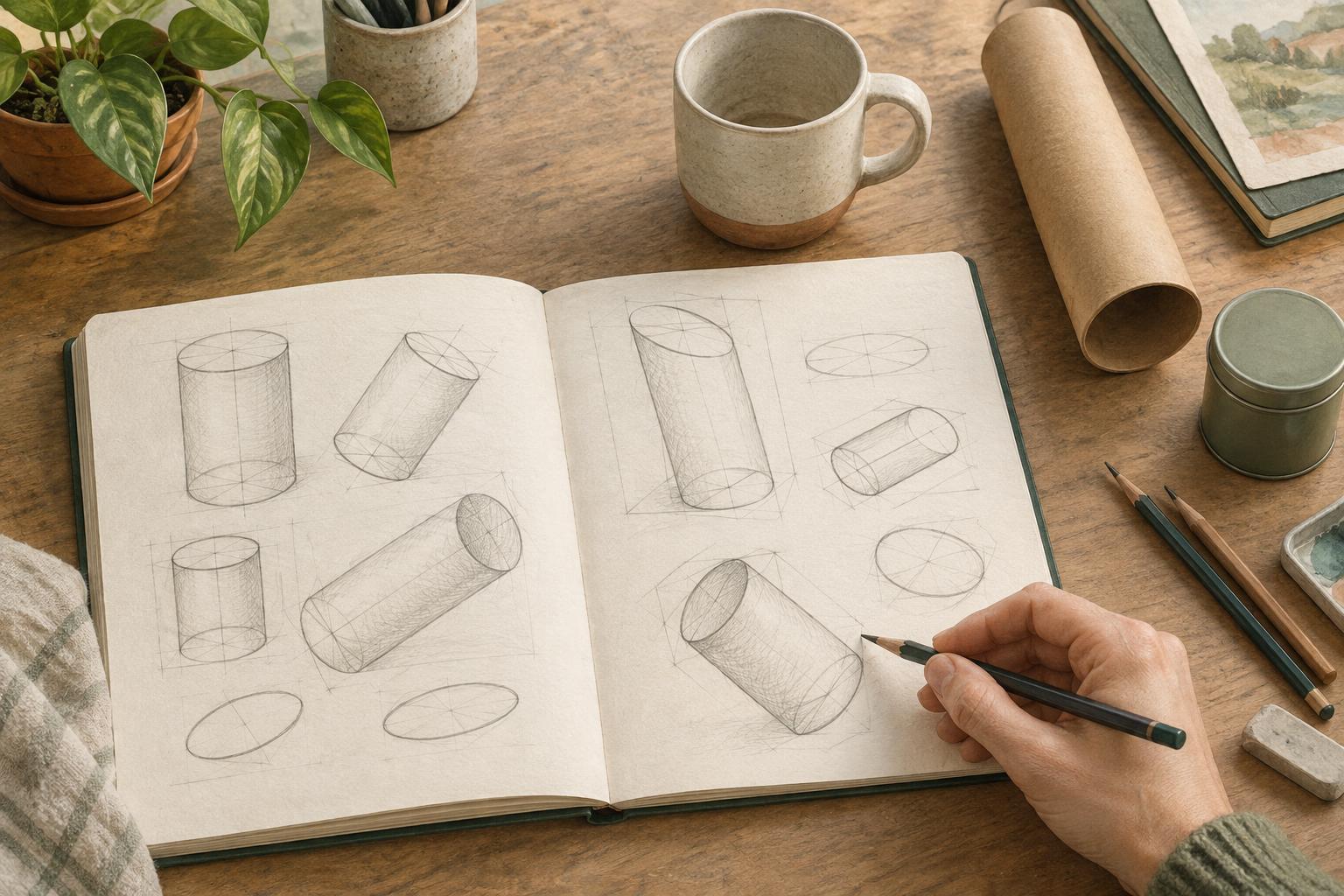
Drawing FoundationsA practical guide to drawing convincing ellipses and cylinders, from understanding an opening’s tilt to building forms with centerlines, bounding boxes and simple exercises.
Read article · 4 min↗
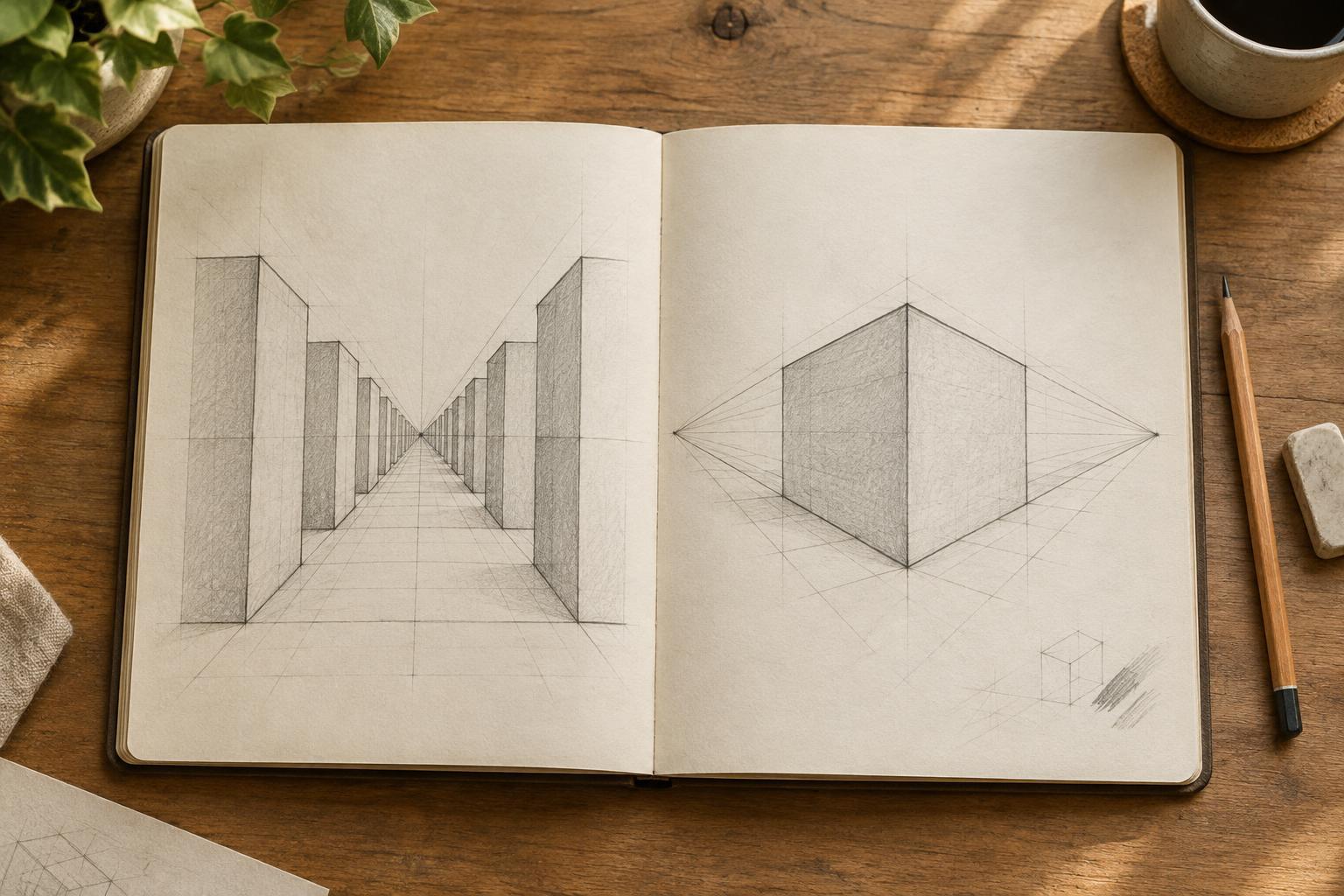
Drawing FoundationsOne-point and two-point perspective solve different drawing problems. Learn how each system organizes space, what it does well, and how to choose one for a scene or illustration.
Read article · 4 min↗
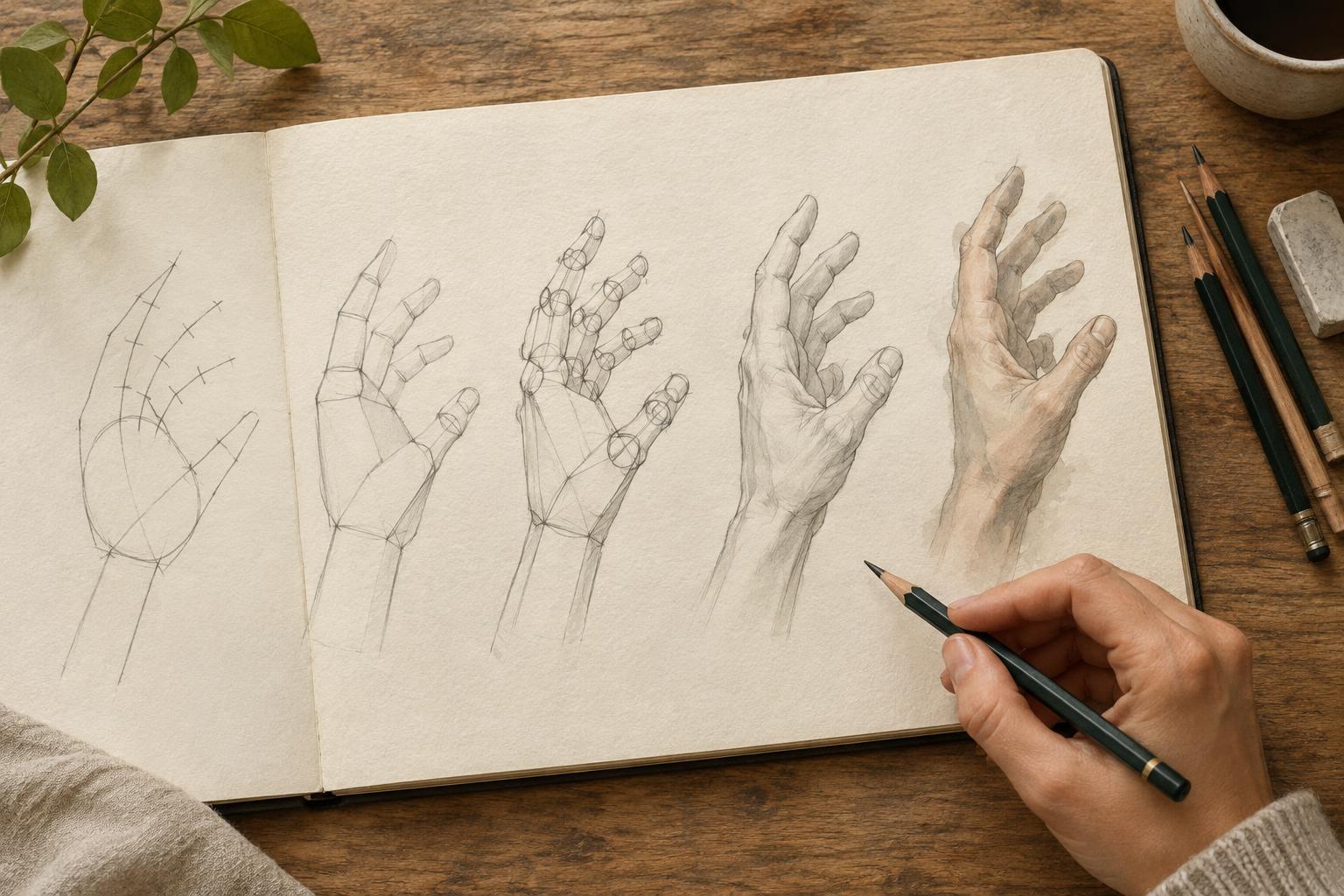
Drawing FoundationsHands become easier to draw when you build their large shapes before chasing finger outlines. Learn to block in the palm, place the joints, and use simple forms to check proportion, overlap, and gesture.
Read article · 4 min↗
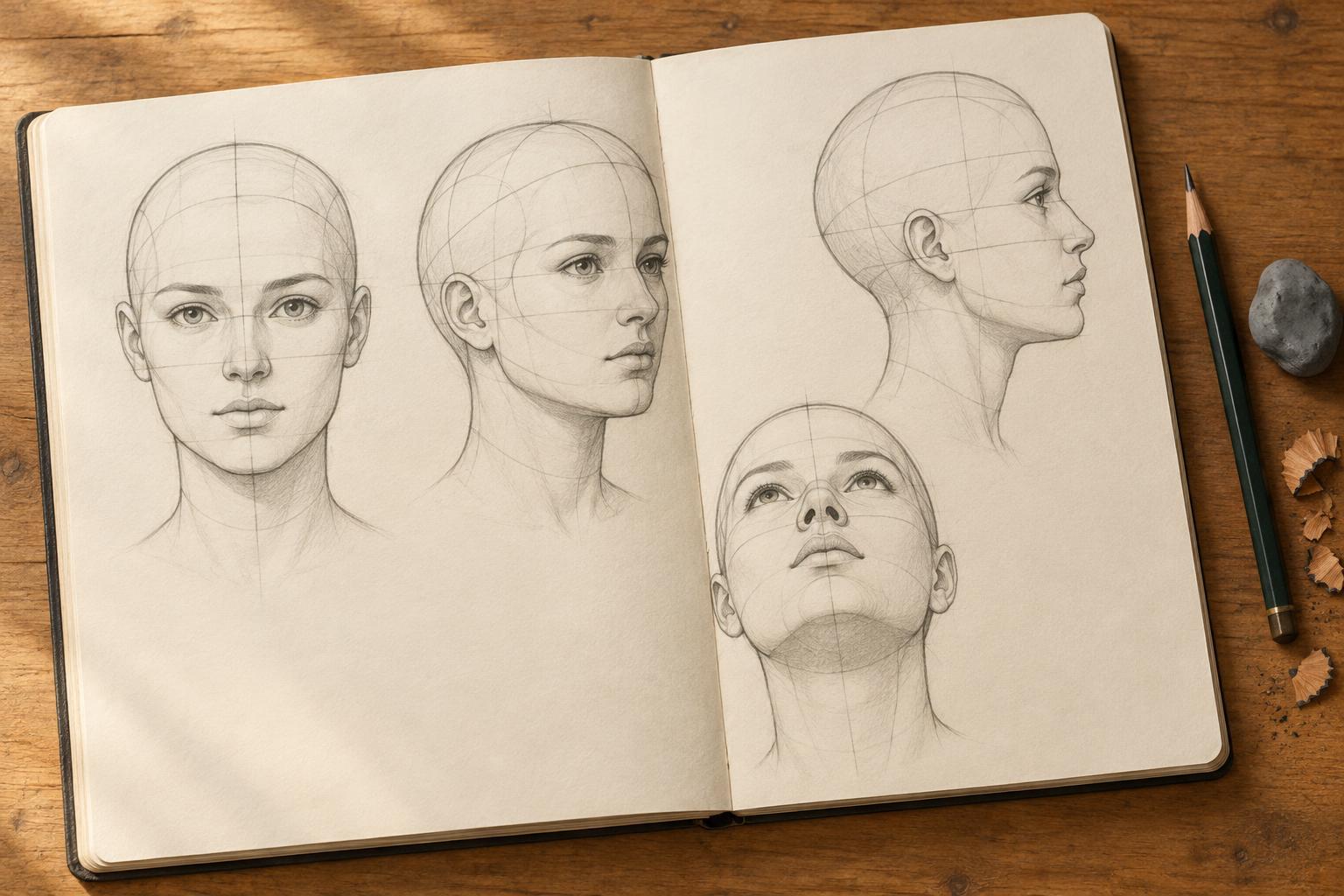
Drawing FoundationsFacial features are easier to place when the head is treated as a turning form rather than a flat oval. Learn how to use a centerline, an eye line and a few flexible landmarks to draw faces from the front, three-quarter view, profile and tilted angles.
Read article · 4 min↗
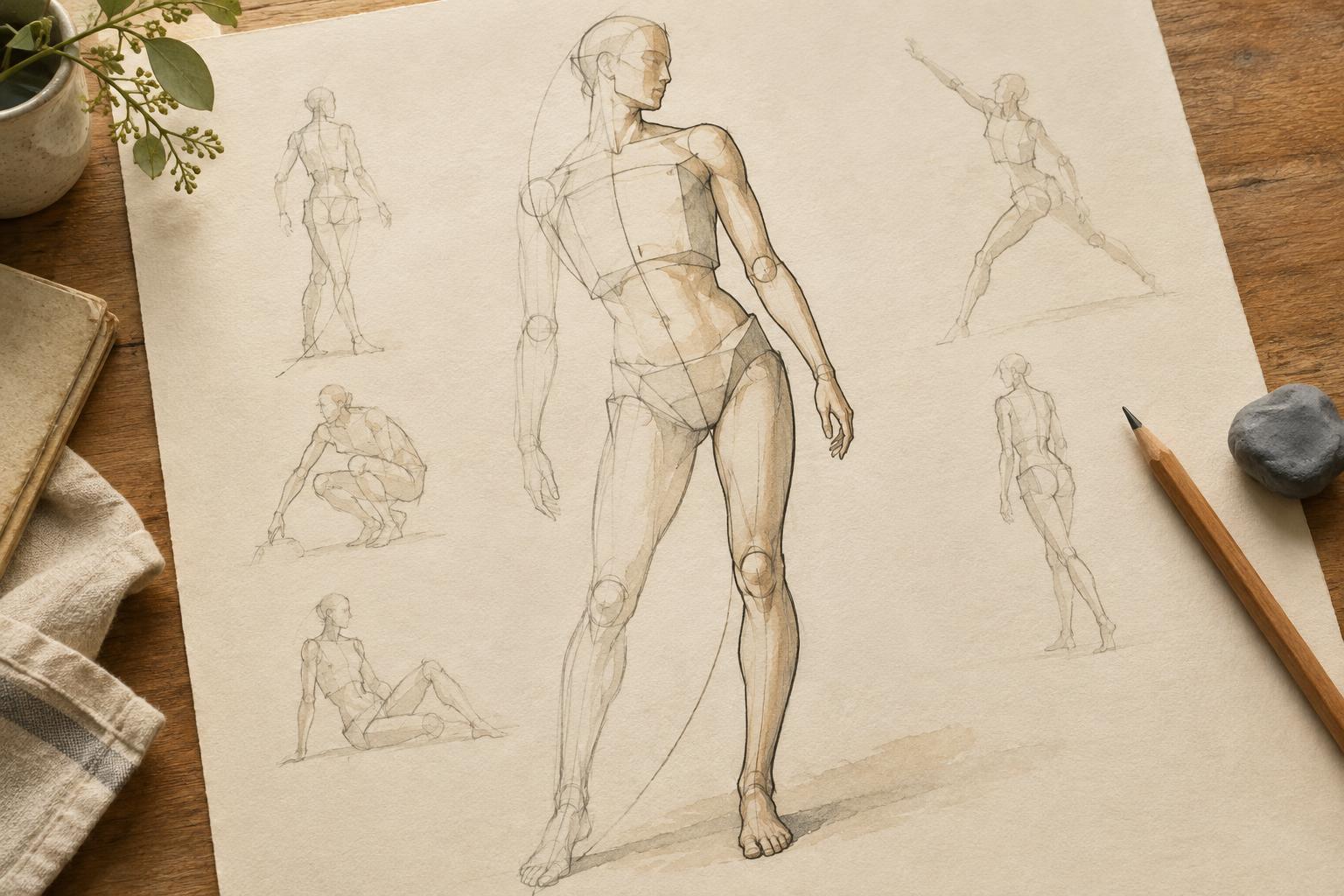
Drawing FoundationsA practical approach to figure drawing that begins with boxes, cylinders and a clear line of action. Learn how to build a pose, check its balance and revise proportions before adding detail.
Read article · 4 min↗
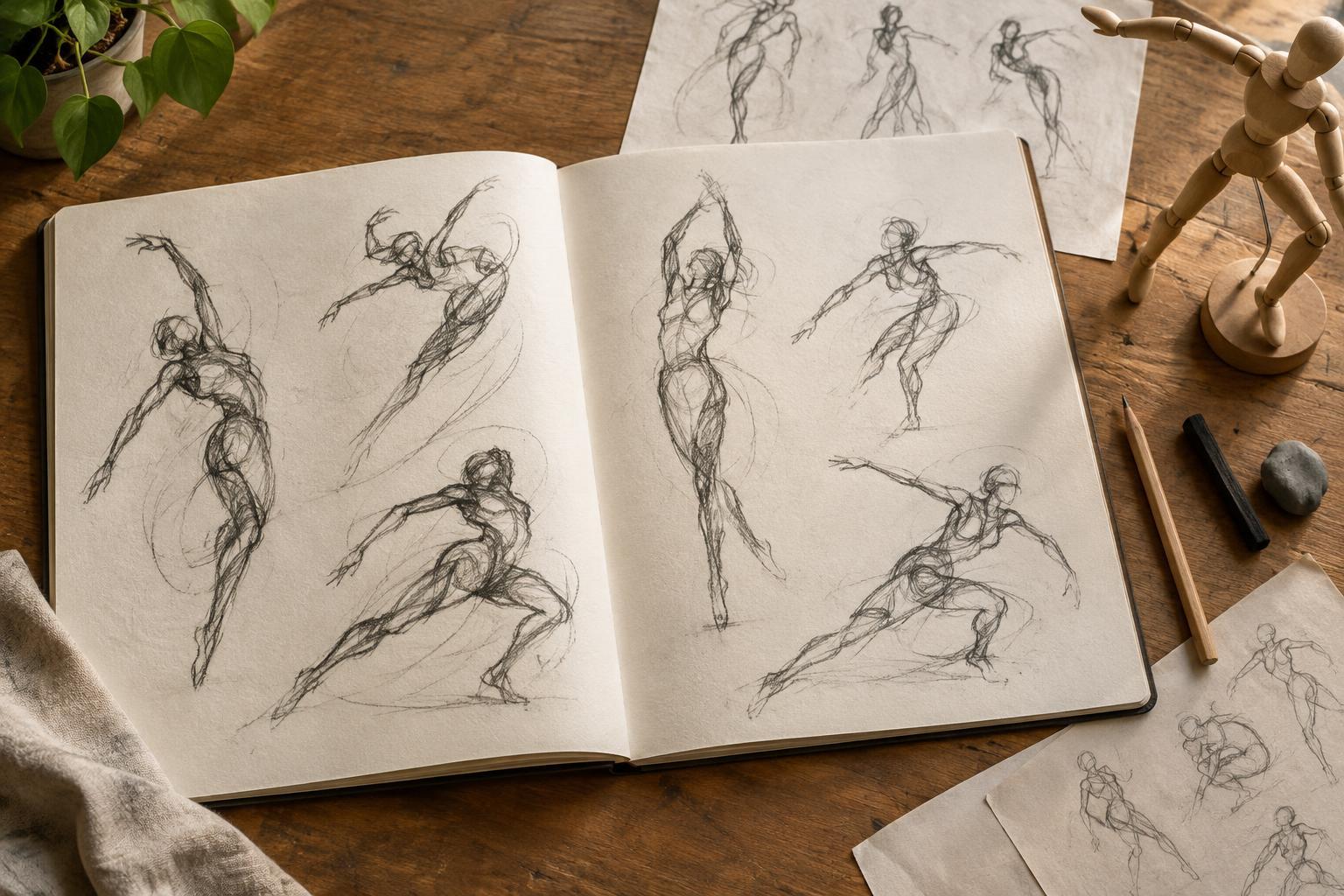
Drawing FoundationsGesture drawing helps you capture what a pose is doing before you worry about what it looks like. Learn how to find a line of action, place the body’s main masses, and use short exercises to draw movement with more clarity.
Read article · 4 min↗
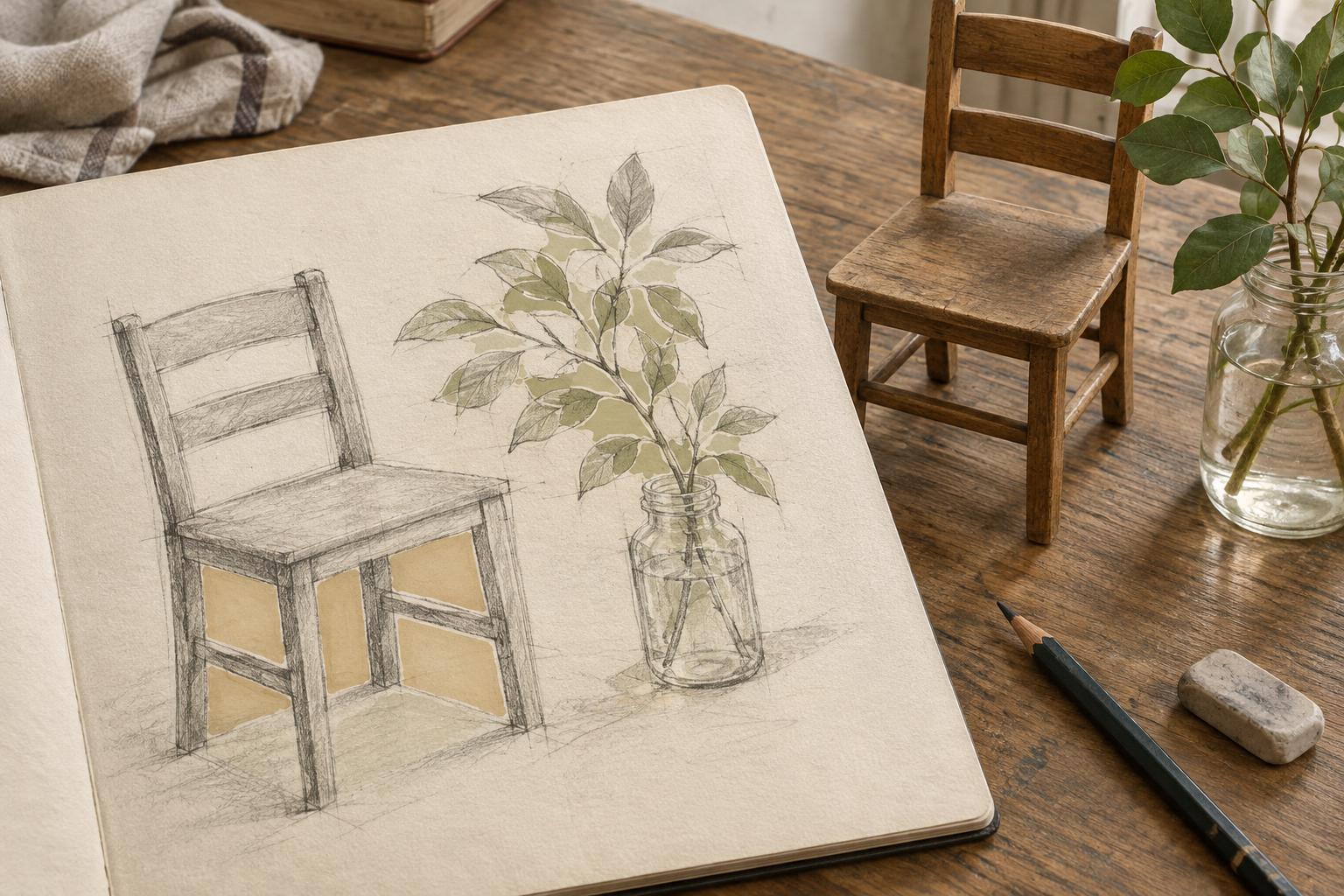
Drawing FoundationsThe empty areas around and between objects can reveal drawing errors that are hard to spot when you focus on the objects themselves. Learn how to compare negative shapes, check their angles and proportions, and use them to revise a drawing without losing its energy.
Read article · 4 min↗

Drawing FoundationsA pencil can help you compare the sizes, angles and positions you see in a subject. Learn a simple sighting routine for building a drawing, checking its proportions and avoiding common measurement mistakes.
Read article · 4 min↗

Drawing FoundationsA crowded desk, a bicycle or a leafy plant can feel too complicated to draw. Learn how to look for large shapes, compare proportions and build a clear sketch before adding details.
Read article · 4 min↗
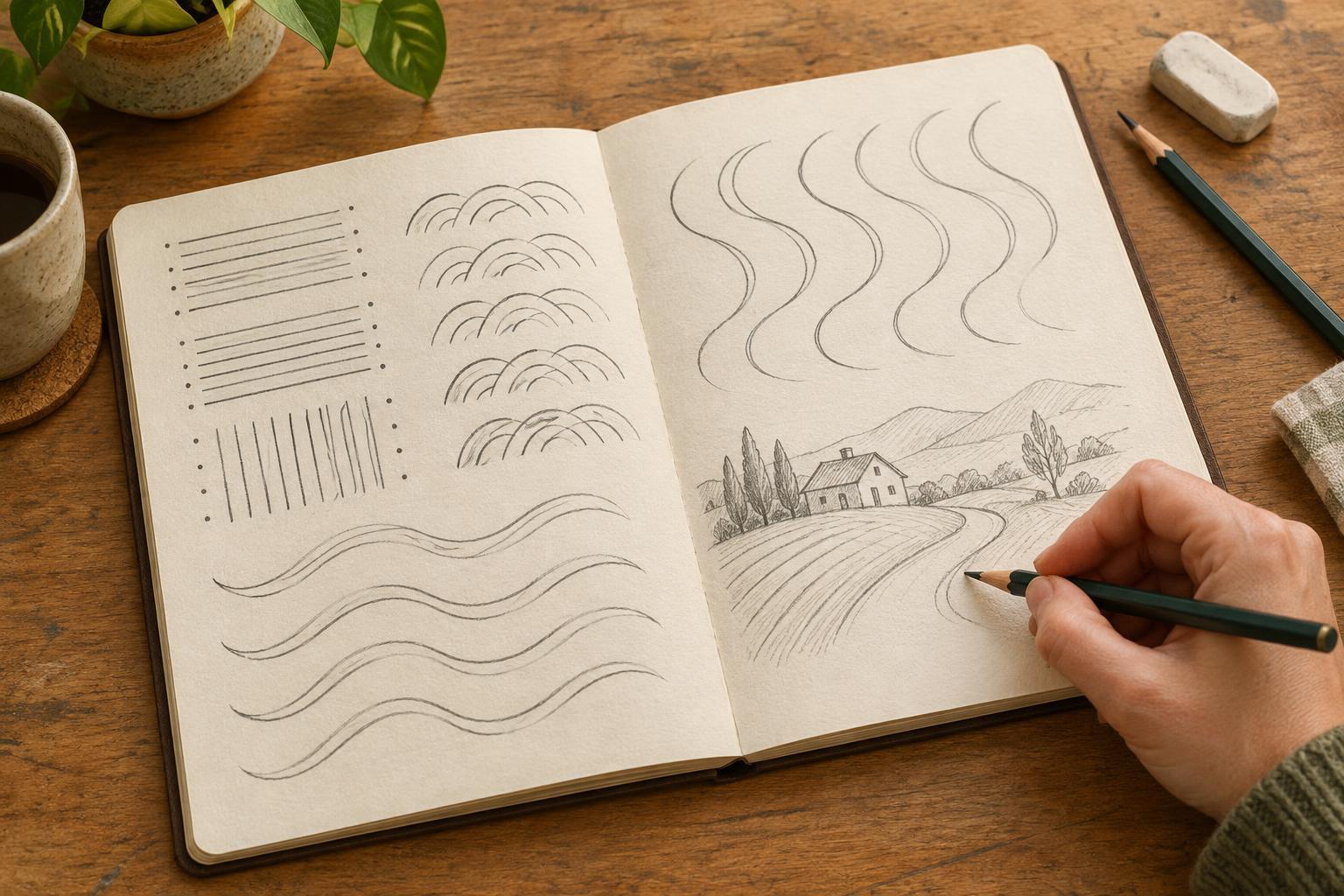
Drawing FoundationsConfident lines come from planning a path, moving with a steady rhythm and practicing without trying to make every mark perfect. These short warm-ups help beginners draw straights, arcs and flowing curves with greater control.
Read article · 4 min↗
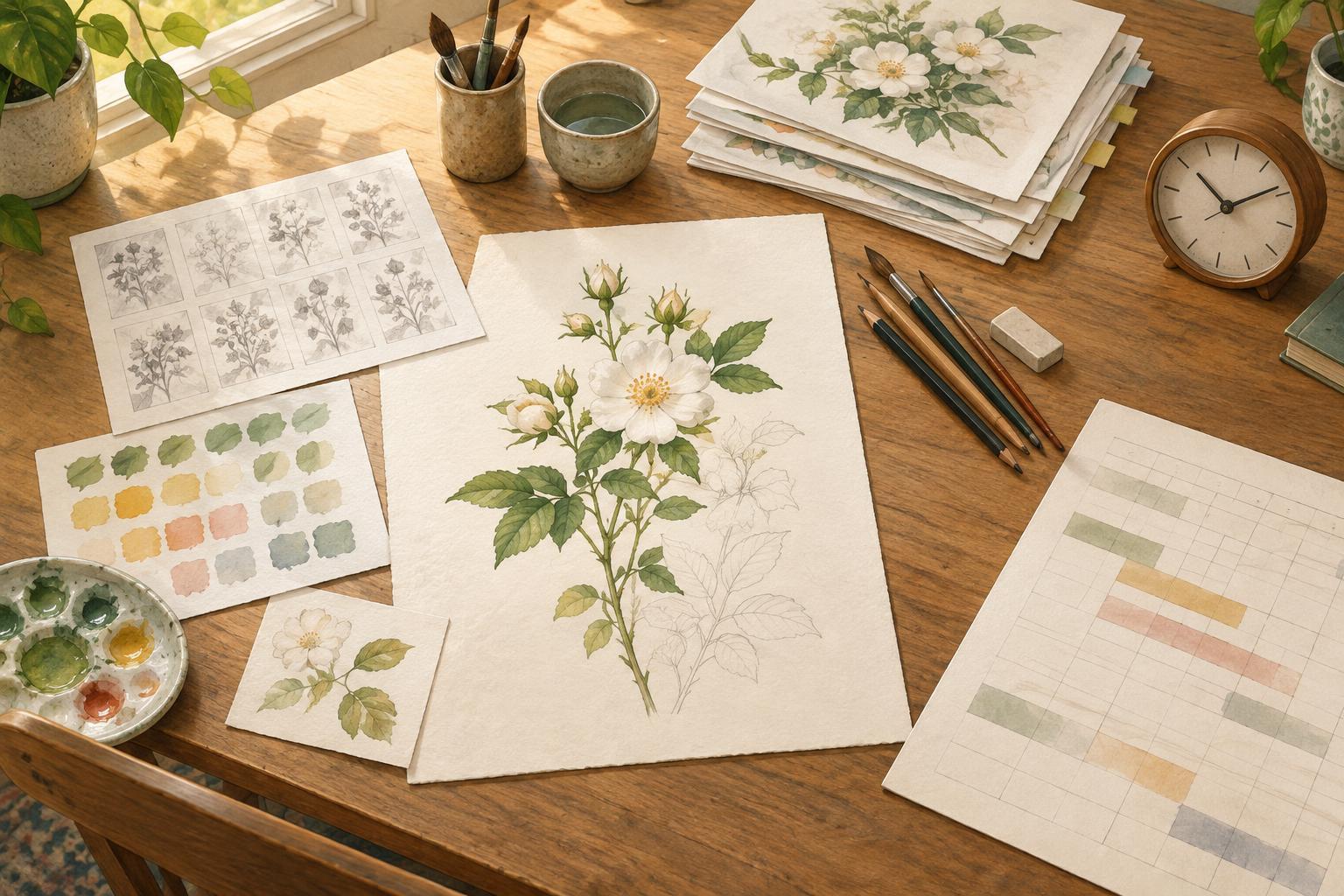
Creative PracticeA useful illustration estimate is more than a guess at drawing speed. Learn how to define the deliverable, divide the work into stages, account for revisions, and build a schedule that leaves room for creative decisions.
Read article · 4 min↗

Creative PracticeA long break from drawing can make the first page feel unusually difficult. Start with small, repeatable exercises, choose subjects that hold your attention, and let your practice grow without trying to recover lost time all at once.
Read article · 4 min↗
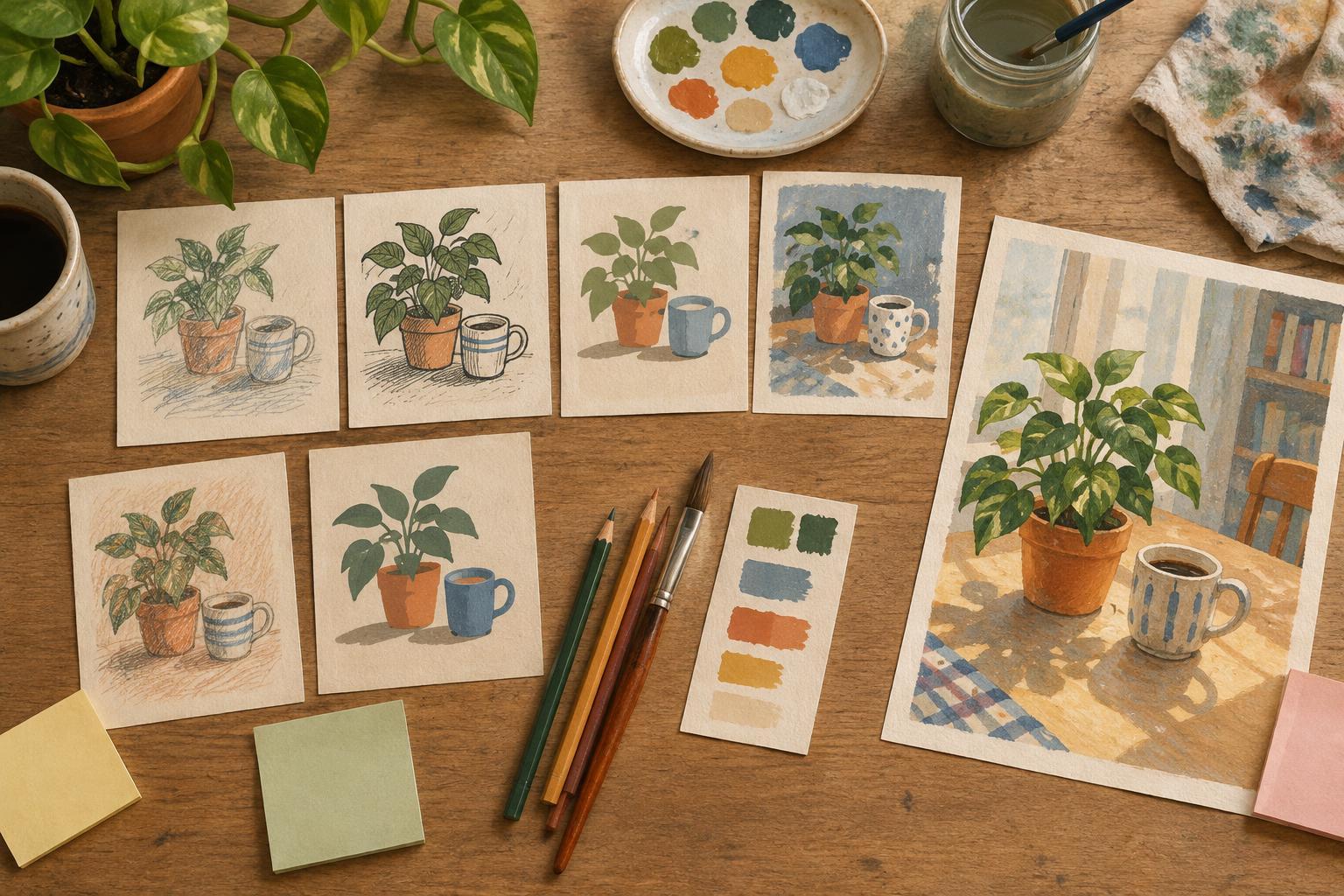
Creative PracticeA new visual style is easier to explore when each drawing asks a small, clear question. Use a repeatable subject, change one decision at a time, and keep notes that help you turn promising tests into a workable approach.
Read article · 4 min↗
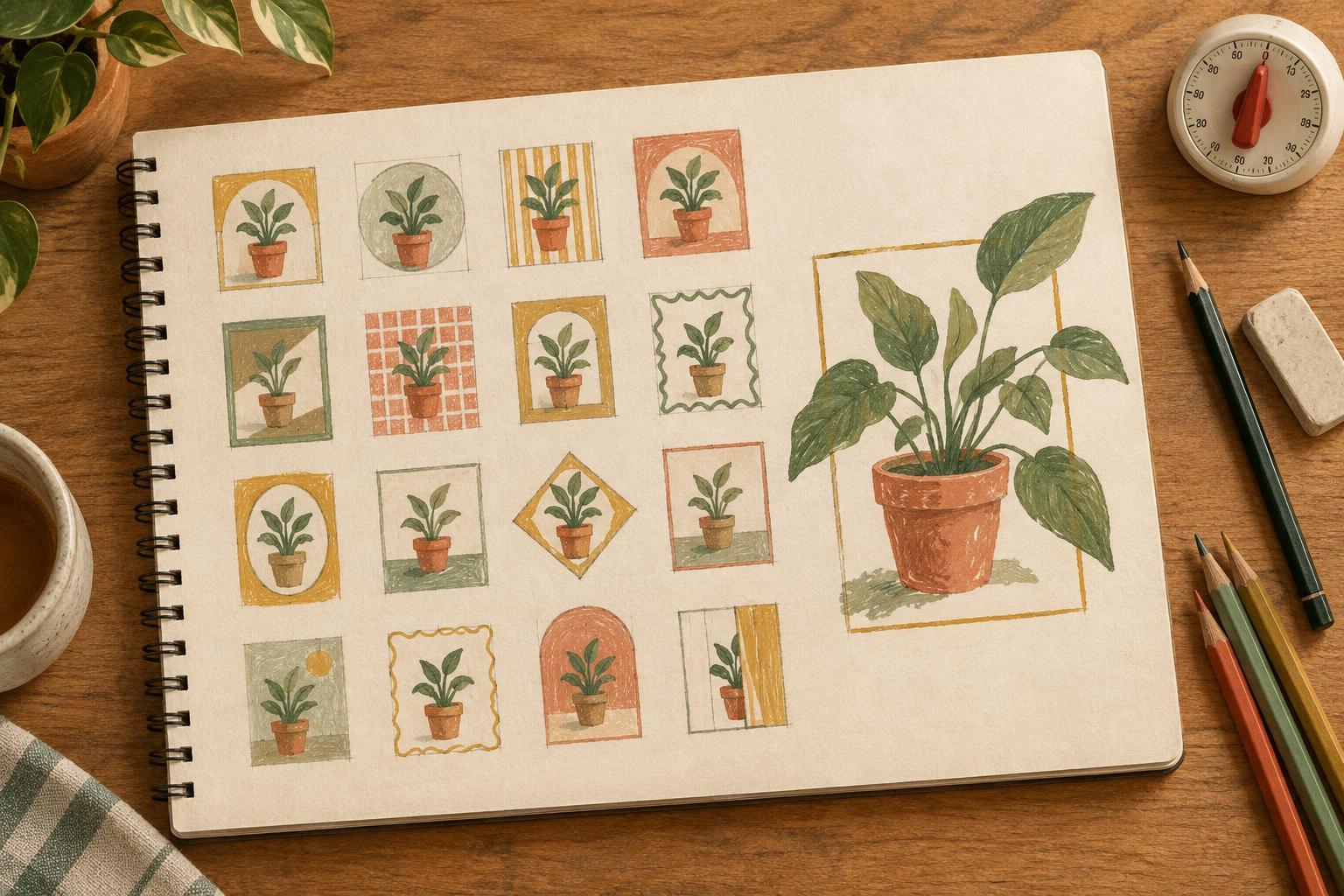
Creative PracticeA blank page can feel less daunting when the possibilities have edges. Learn how to choose useful limits for subject, composition, color and time, then turn them into illustration prompts you can actually draw.
Read article · 4 min↗
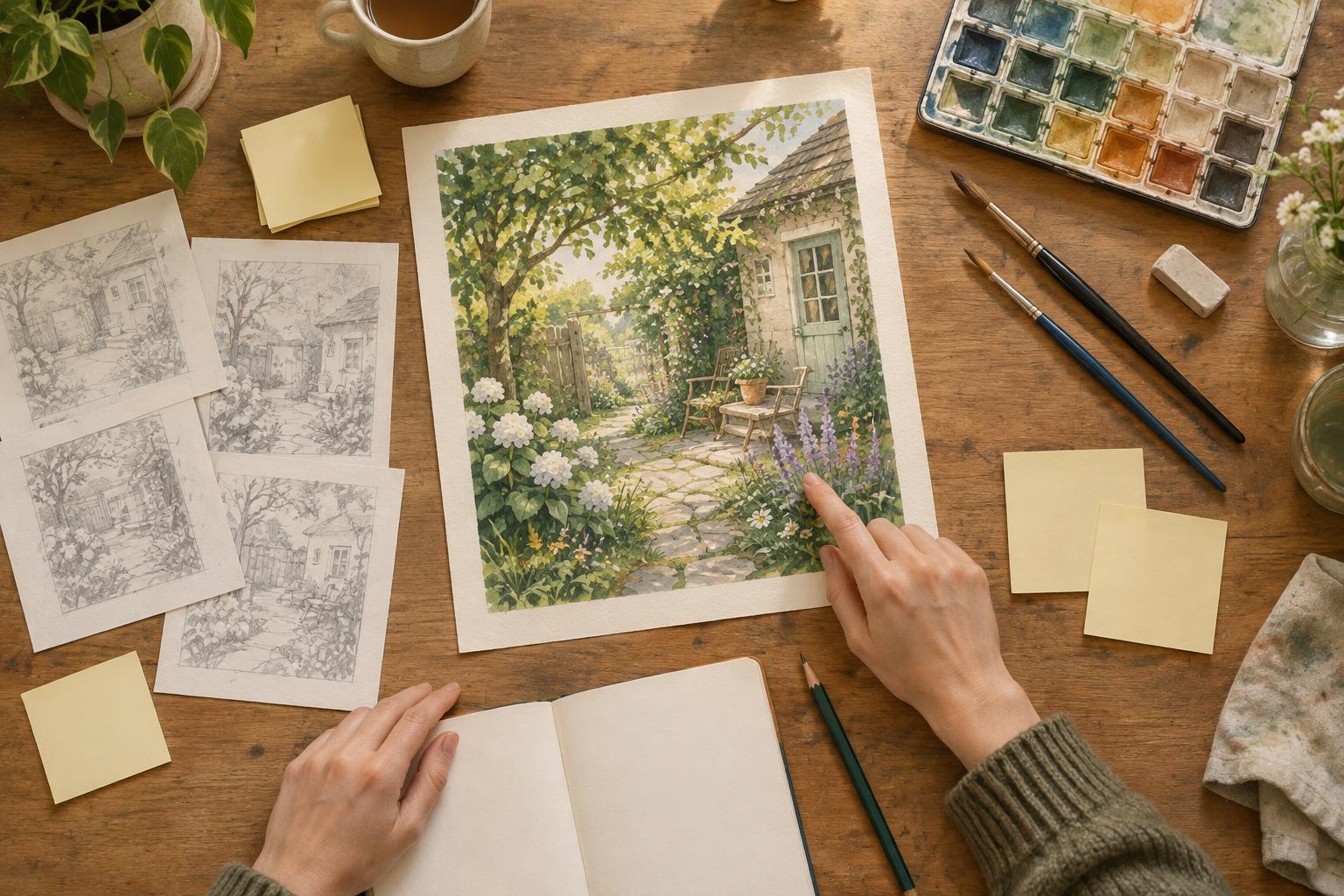
Creative PracticeFinishing an illustration is a useful moment to learn from it. A short review can help you notice which decisions worked, where the process became difficult, and what to try differently next time—without turning every finished piece into a verdict on your ability.
Read article · 4 min↗

Creative PracticeA sketchbook study, a comic, and an illustration idea can all feel worth your time. Use a small project inventory, a realistic view of your available energy, and a clear stopping point to choose what to draw next without abandoning the rest.
Read article · 4 min↗
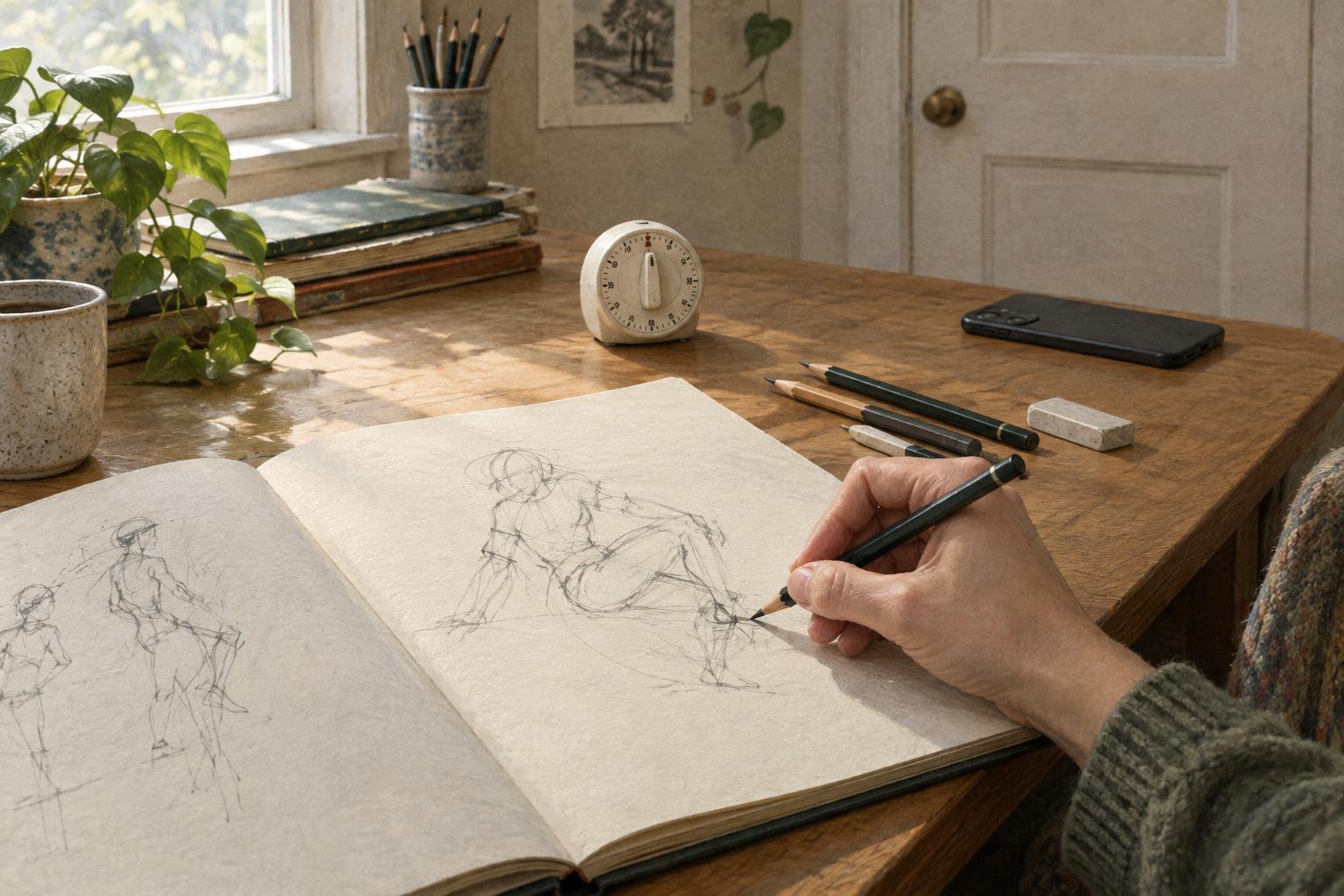
Creative PracticeA focused drawing session does not require a perfect studio or an empty calendar. With a clear task, ready-to-use materials, a few boundaries and a simple way to handle interruptions, you can spend more of your available time drawing.
Read article · 3 min↗

Creative PracticeA finished illustration does not need every possible detail. It needs to communicate clearly and be ready for its intended use. These practical checks can help you decide whether to revise, refine or put the drawing down.
Read article · 4 min↗

Creative PracticeThe first marks of a drawing can feel unusually important, even when they are only meant to explore an idea. Learn how to use rough sketches, small decisions and clear checkpoints to keep a drawing moving without abandoning care.
Read article · 4 min↗
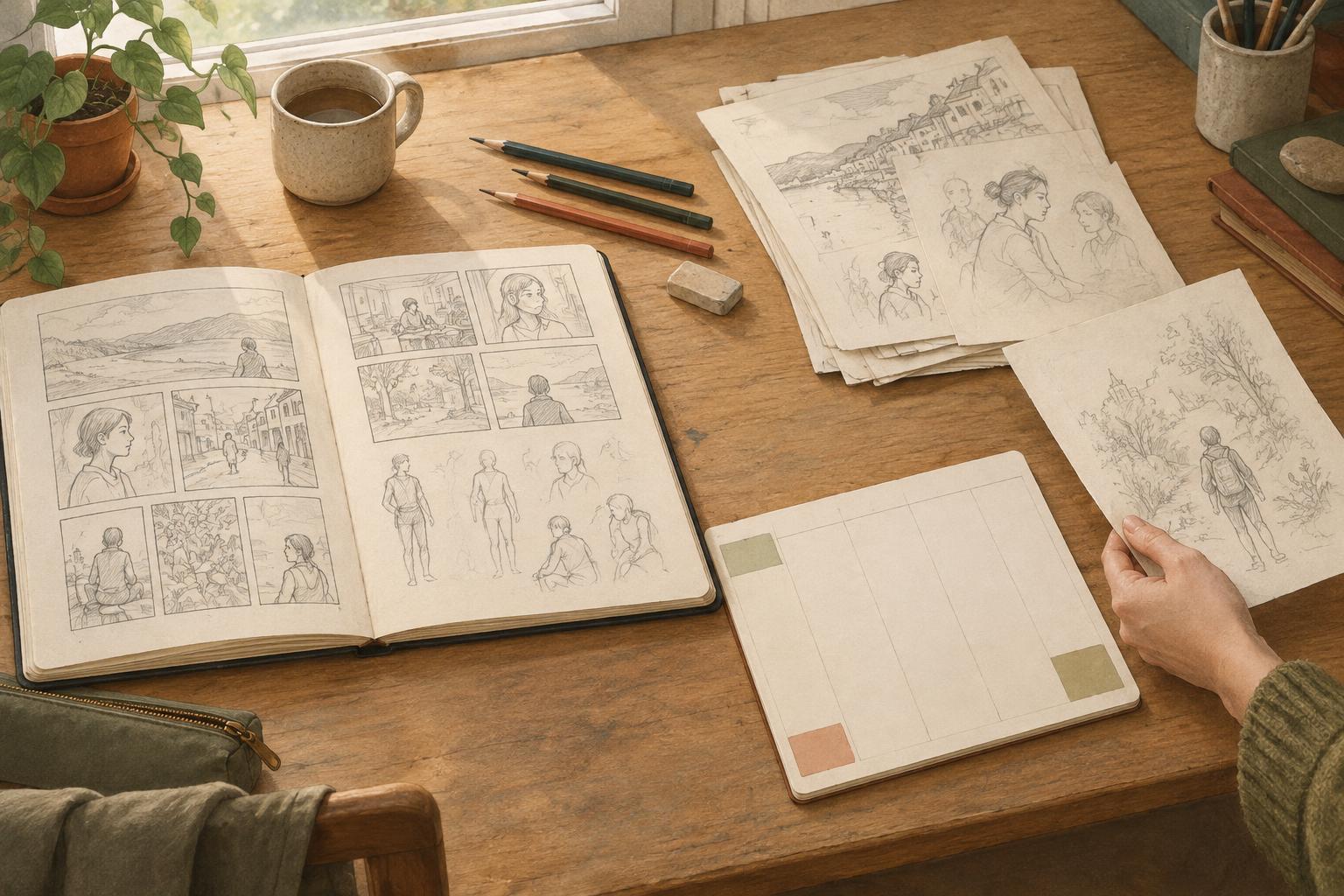
Creative PracticeA full sketchbook and a full schedule are not the same thing. Learn to spot when an illustration or comics workload no longer fits the time and attention available, then make a practical adjustment without abandoning the work that matters.
Read article · 4 min↗
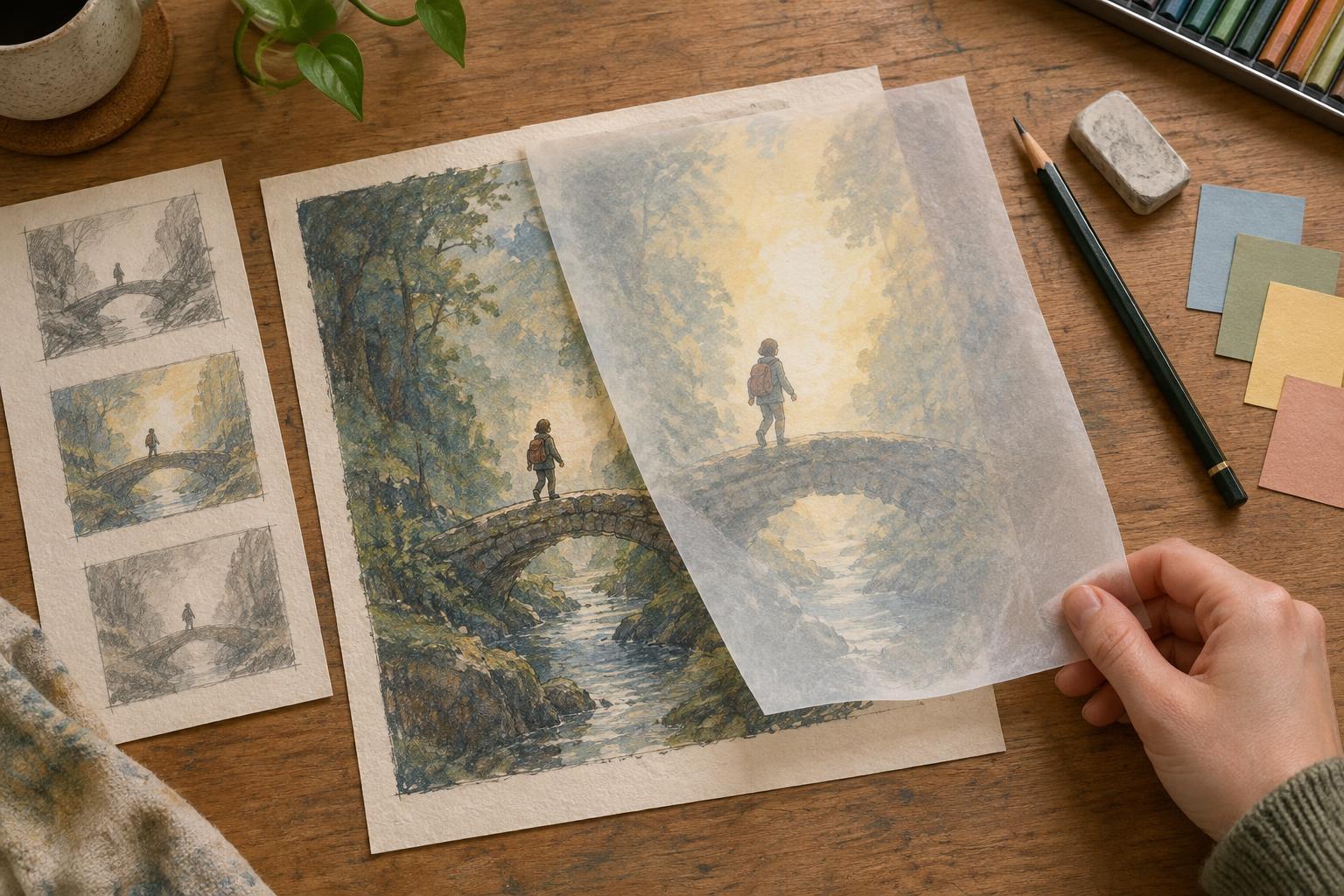
Creative PracticeCritique can reveal where an illustration is unclear, but not every suggestion belongs in the finished piece. A practical revision process begins with the image’s purpose, sorts feedback by the problem it identifies, and tests changes before committing to them.
Read article · 4 min↗

Creative Practice“What do you think?” can lead to encouragement, silence or a list of changes you did not need. A better critique starts with a clear goal, a few focused questions and a plan for testing what you hear. Here is a practical way to ask for feedback on illustrations and comics without handing over every creative decision.
Read article · 4 min↗
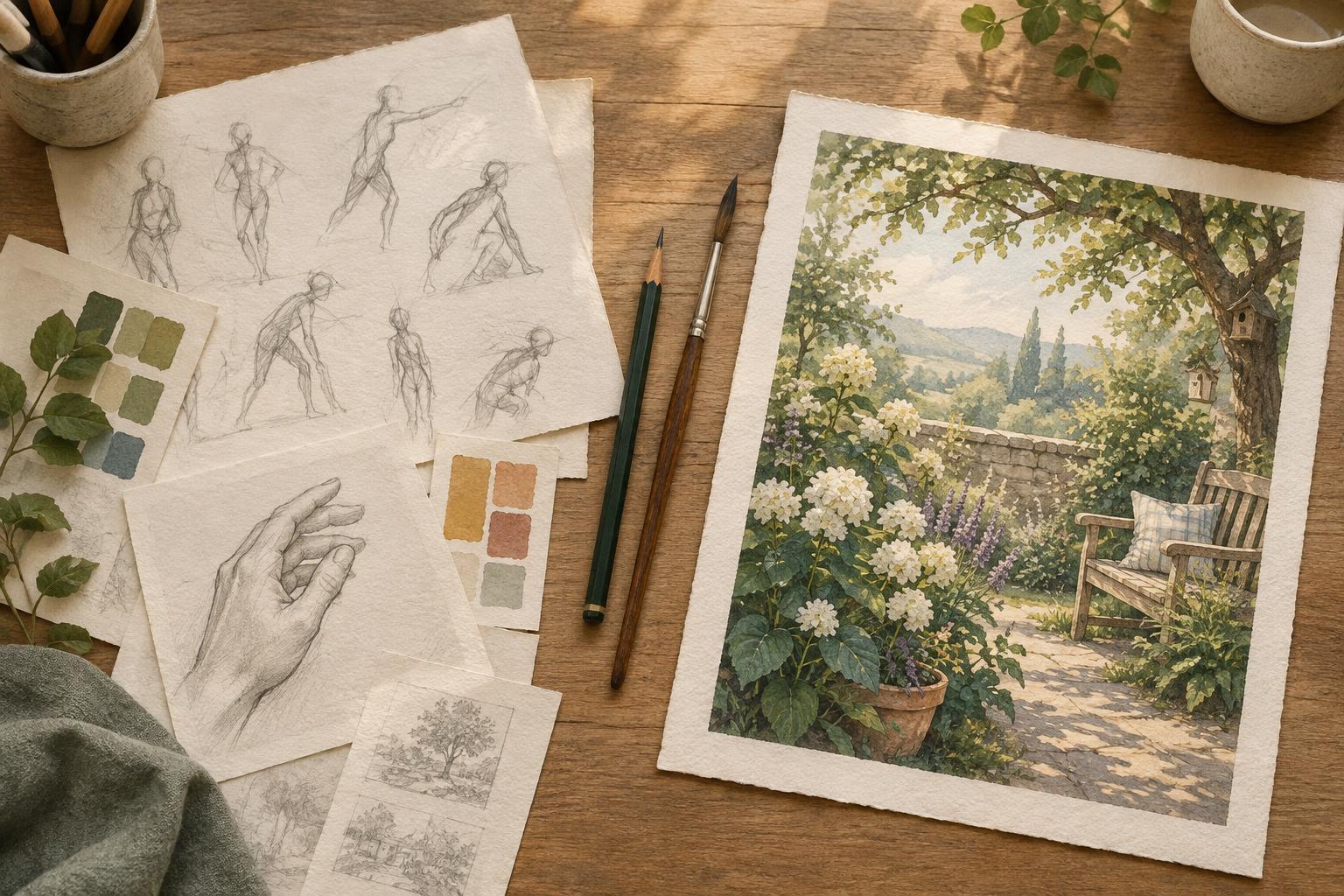
Creative PracticeSkill studies help illustrators isolate problems; finished pieces ask them to make decisions in context. A sustainable practice needs both. Here is a way to connect short exercises to completed work without turning every drawing session into a test.
Read article · 3 min↗
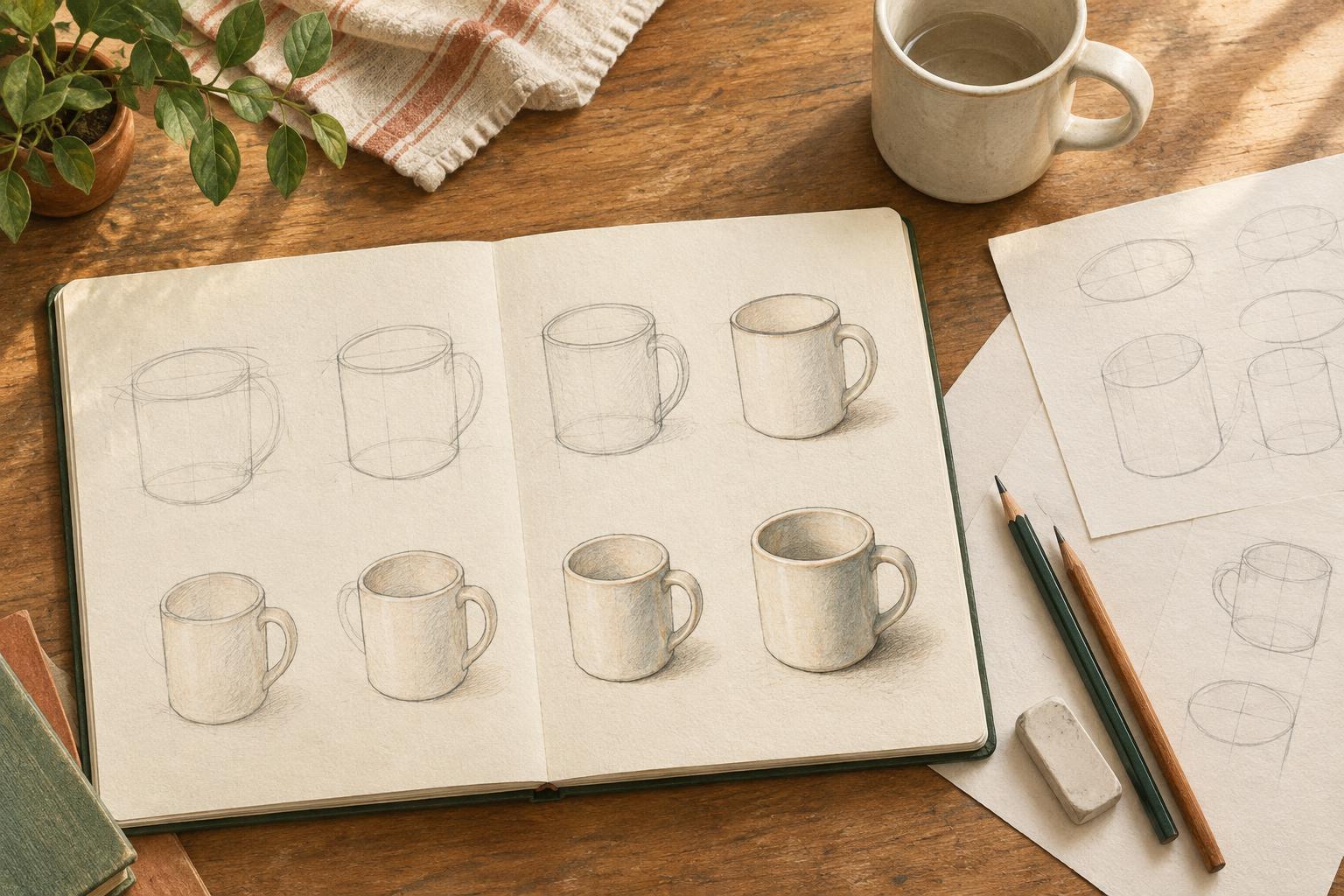
Creative PracticeA useful drawing challenge does not have to be a daily marathon. Choose one skill, repeat a manageable exercise, and review what changes. This guide shows how to set a clear goal, vary your prompts without losing focus, and finish with something you can learn from.
Read article · 4 min↗
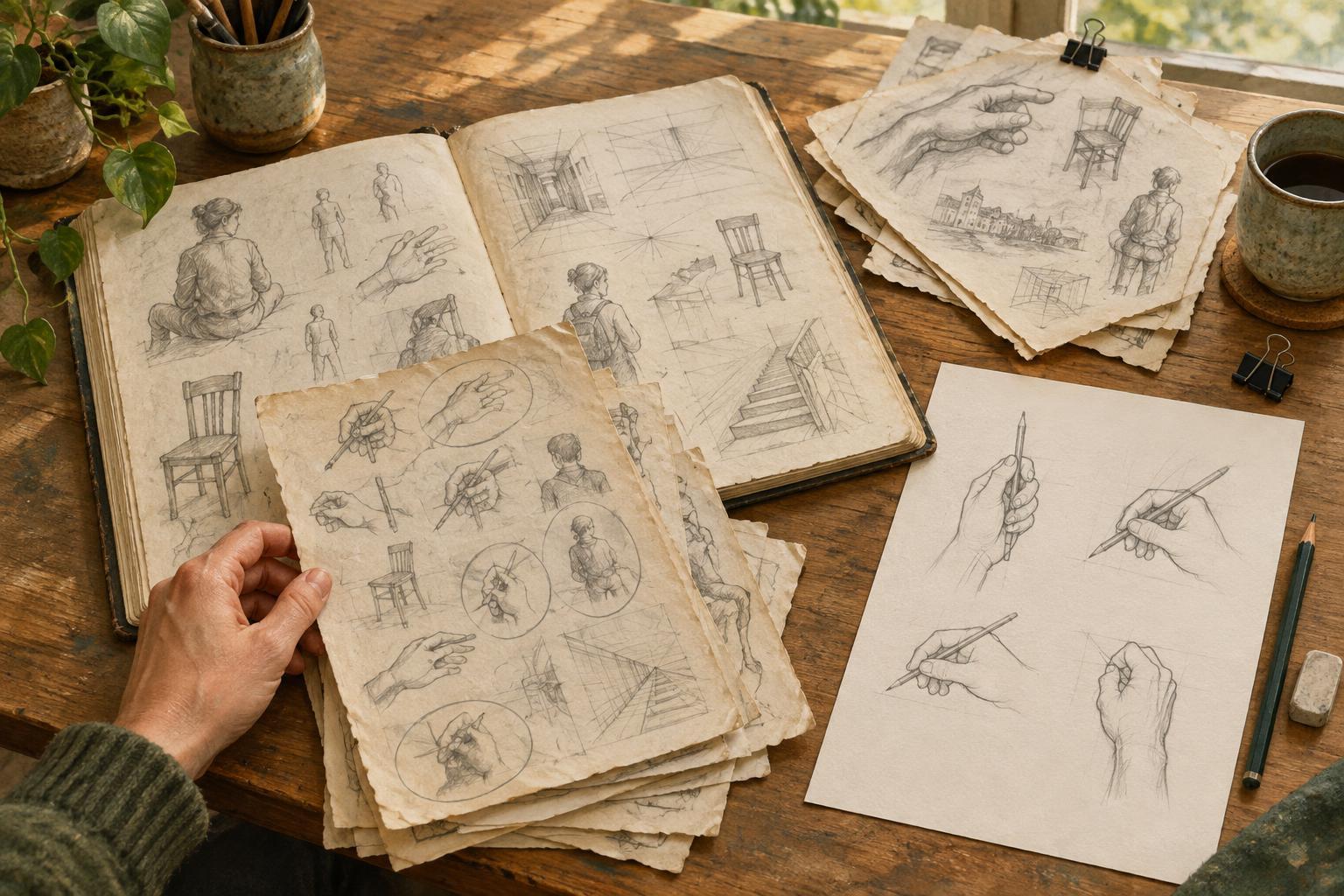
Creative PracticeA stack of old sketches can show more than how your drawing has changed. Learn to review past work without turning it into a verdict, spot recurring challenges, and turn one observation into a useful practice plan.
Read article · 4 min↗
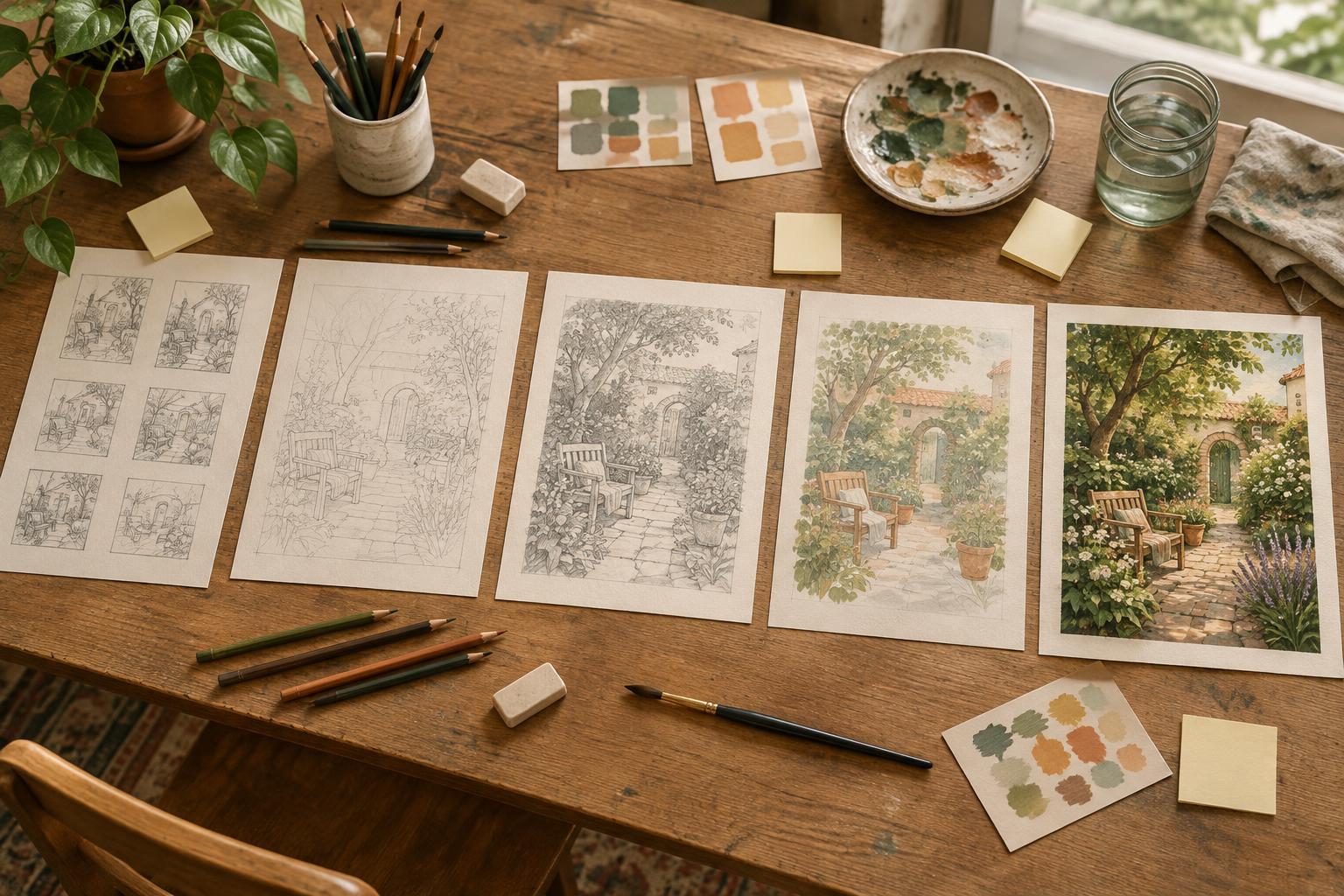
Creative PracticeA large illustration becomes easier to navigate when each stage has a clear purpose and a visible result. This guide shows how to move from a broad idea to a finished image through small decisions, useful checkpoints and a realistic revision plan.
Read article · 4 min↗
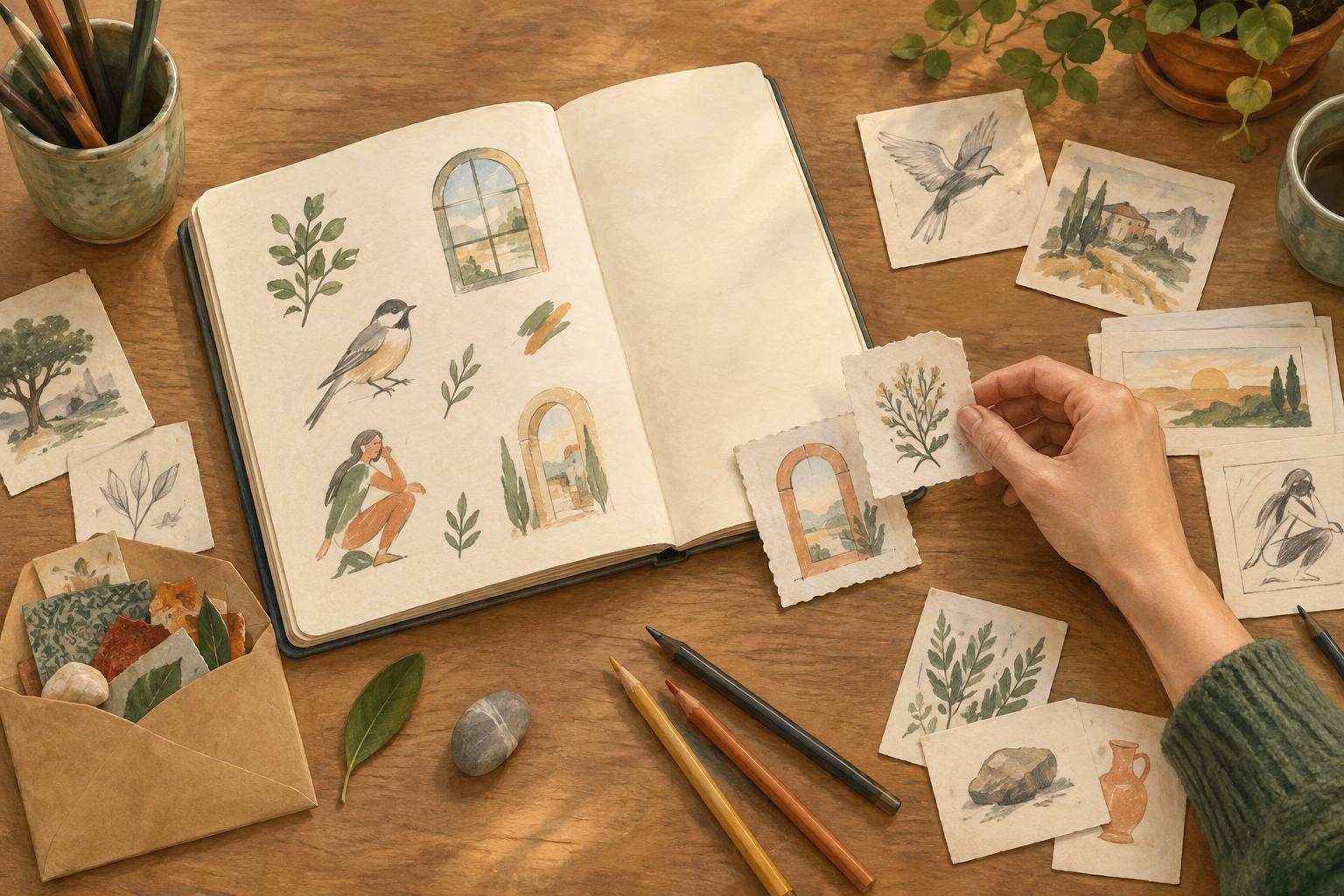
Creative PracticeAn idea bank gives passing observations, loose sketches and half-formed questions somewhere to wait until they are useful. Learn how to capture ideas quickly, organize them lightly and turn promising fragments into illustration prompts.
Read article · 4 min↗
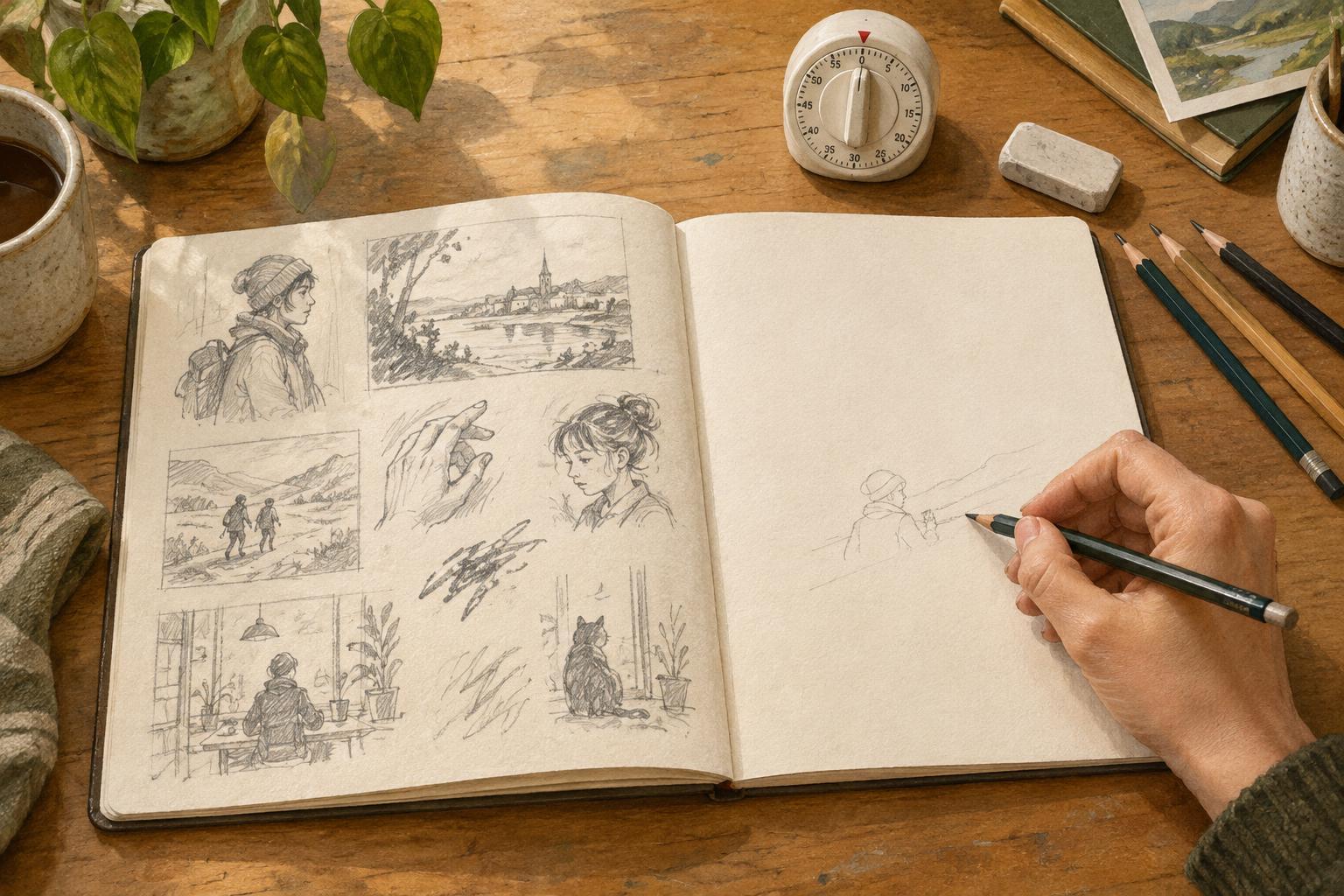
Creative PracticeA blank page can make every first mark feel too important. Short sketch sessions lower the stakes by giving you a small task, a clear stopping point and permission to explore without finishing anything. Here’s how to make them useful for illustration and visual storytelling.
Read article · 4 min↗
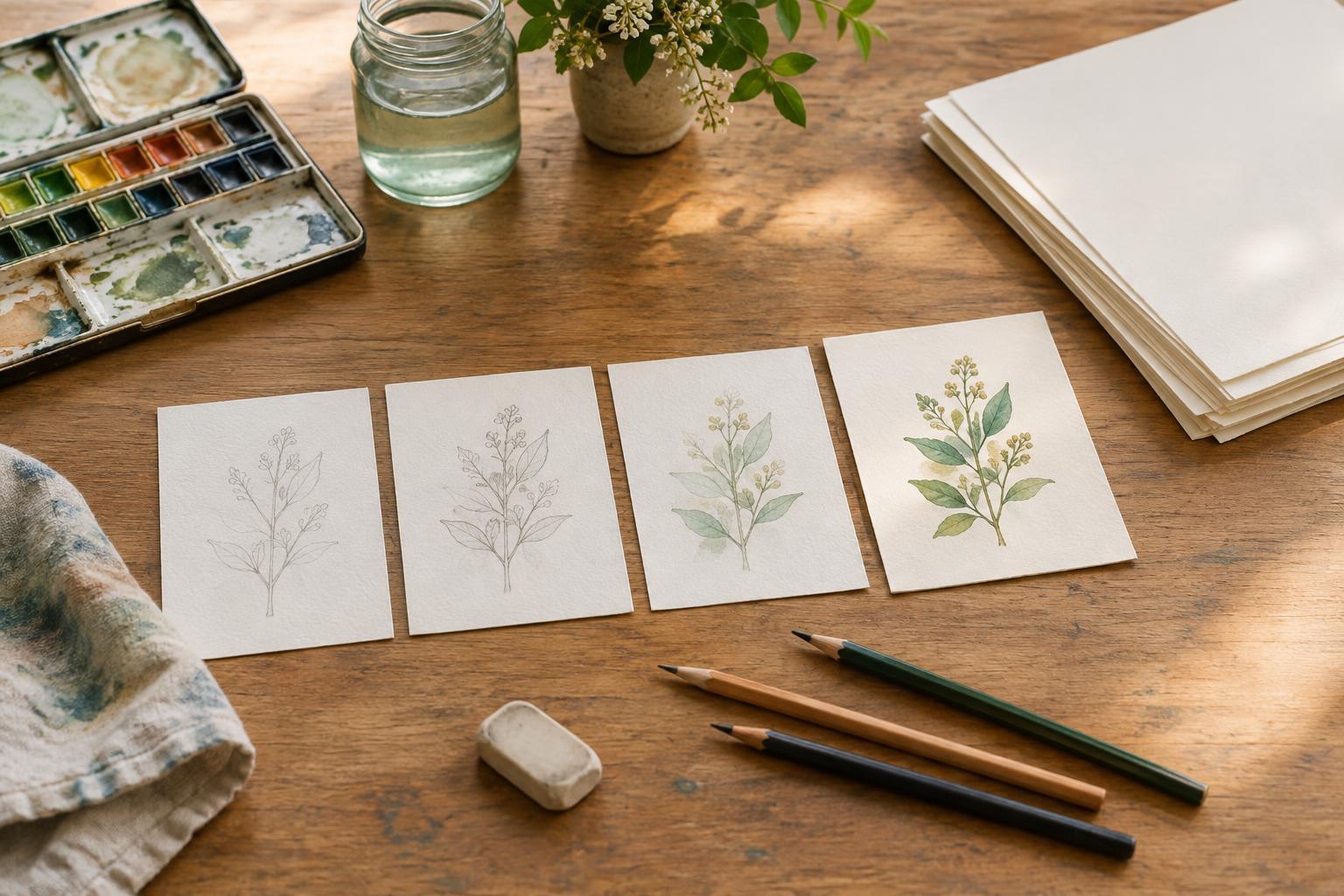
Creative PracticeA useful illustration goal does more than describe the image you hope to make. It defines a manageable scope, a clear finish line and a way to keep working when the first plan needs to change.
Read article · 3 min↗

Creative PracticeA drawing routine works best when it fits the life you have. Learn how to set a manageable weekly rhythm, give each session a purpose, make room for longer projects and return without guilt when plans change.
Read article · 4 min↗
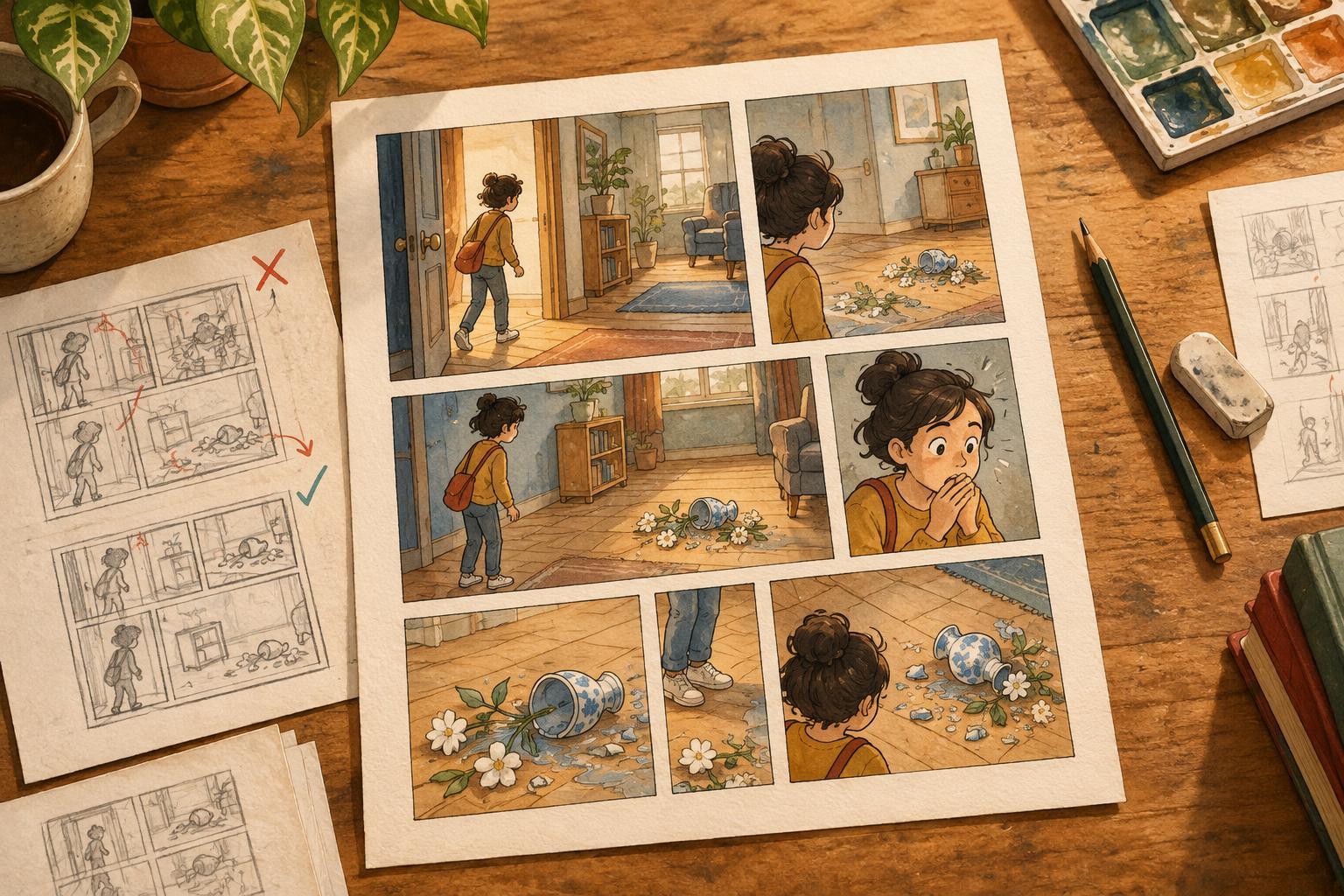
Comics and StorytellingA comic can have appealing drawings and still be hard to follow. Learn how to spot and fix five common storytelling problems: unclear action, rushed pacing, crowded panels, heavy dialogue and endings that do not land.
Read article · 4 min↗
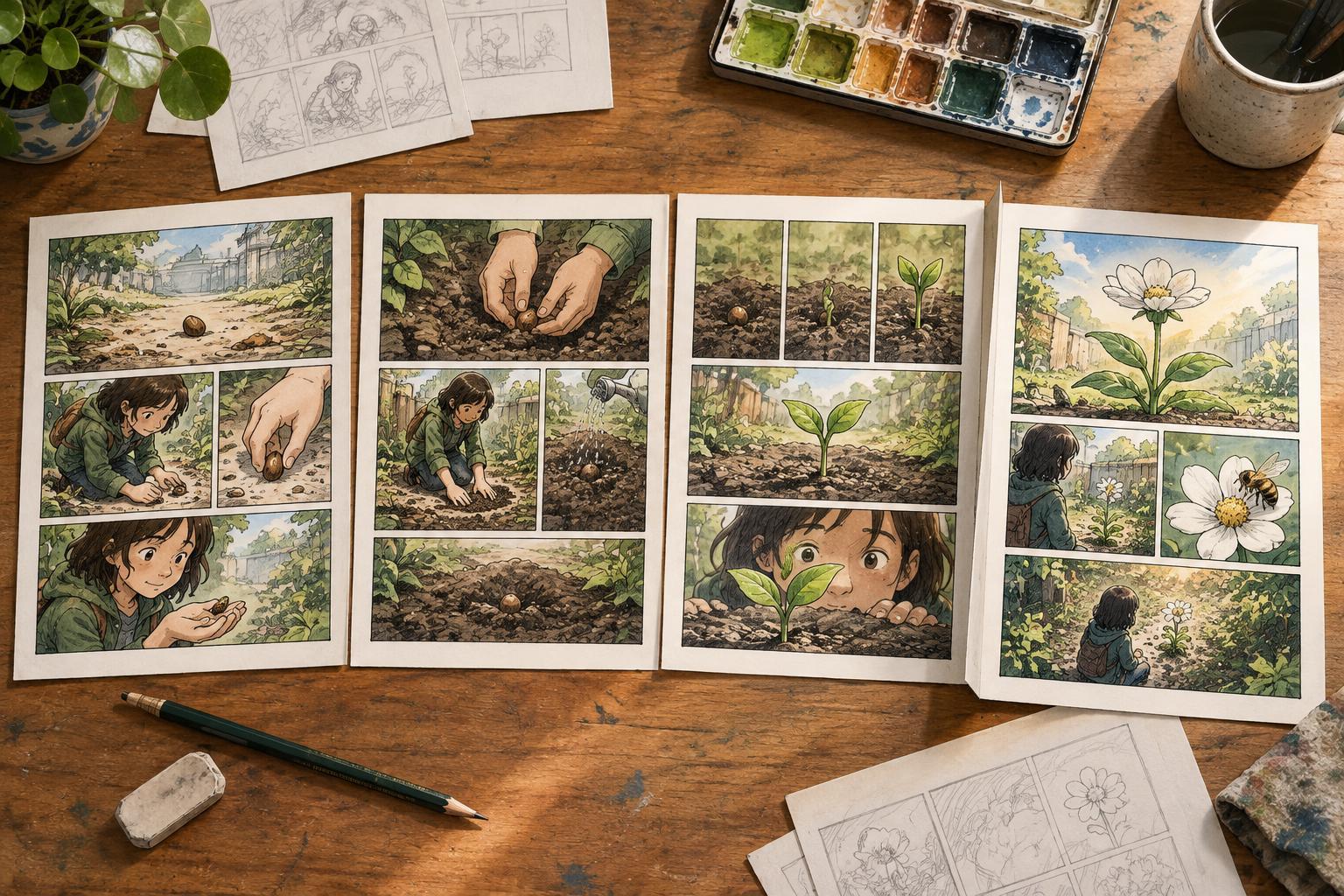
Comics and StorytellingFour pages leave little room for detours, but they can hold a complete story. Start with one meaningful change, give each page a clear job, and use panels and page turns to control what the reader discovers.
Read article · 4 min↗
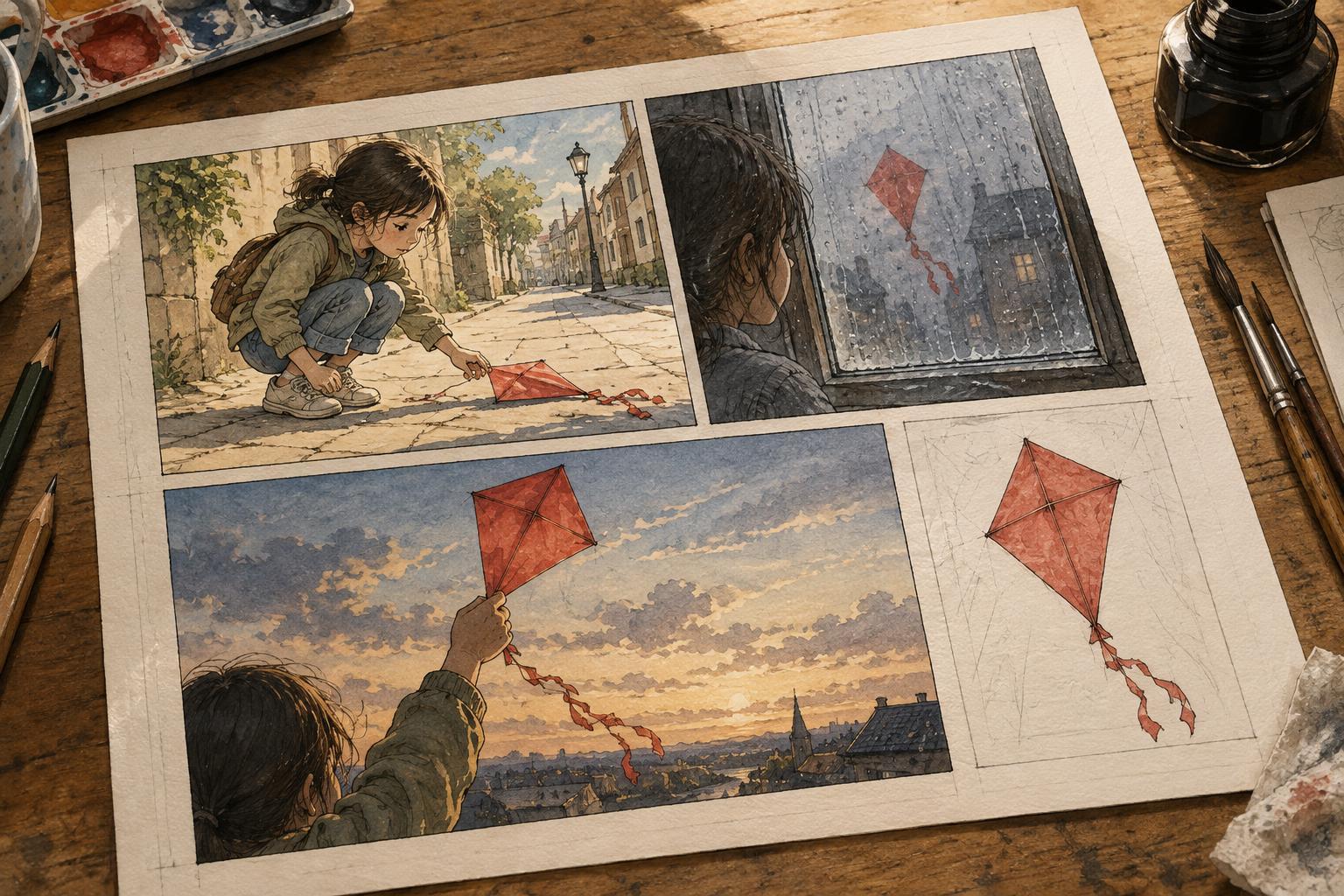
Comics and StorytellingA recurring shape, object or visual arrangement can connect moments across a comic without repeating the same image. Learn how to choose a motif, vary it with purpose and test whether it adds meaning to the story.
Read article · 4 min↗
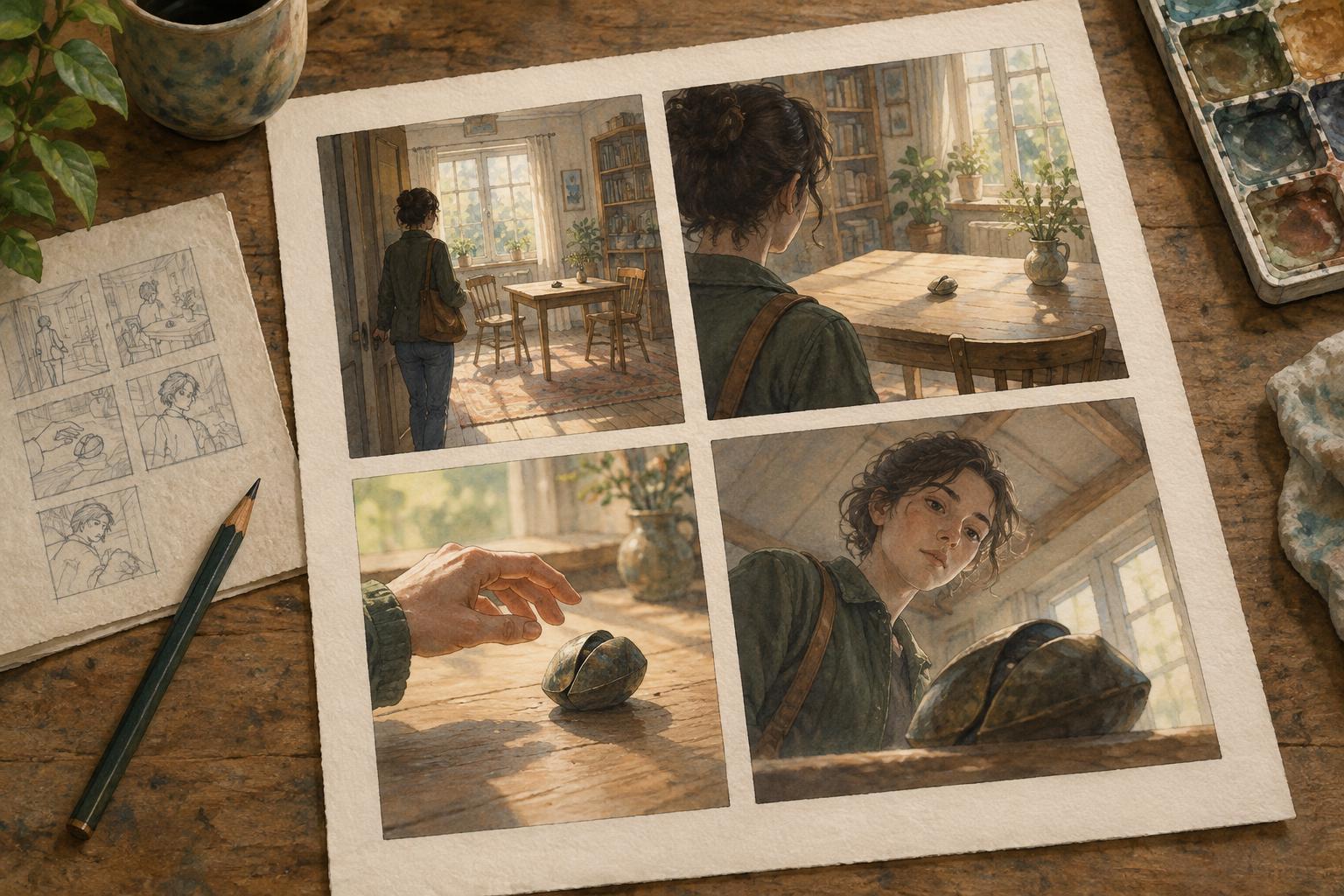

Comics and StorytellingTwo scenes happening at once can create suspense, contrast, or a satisfying reveal. The challenge is helping readers know where they are, whose actions they are following, and how much time has passed. This guide offers practical ways to anchor each scene, choose effective switch points, and check whether the sequence reads clearly.
Read article · 4 min↗
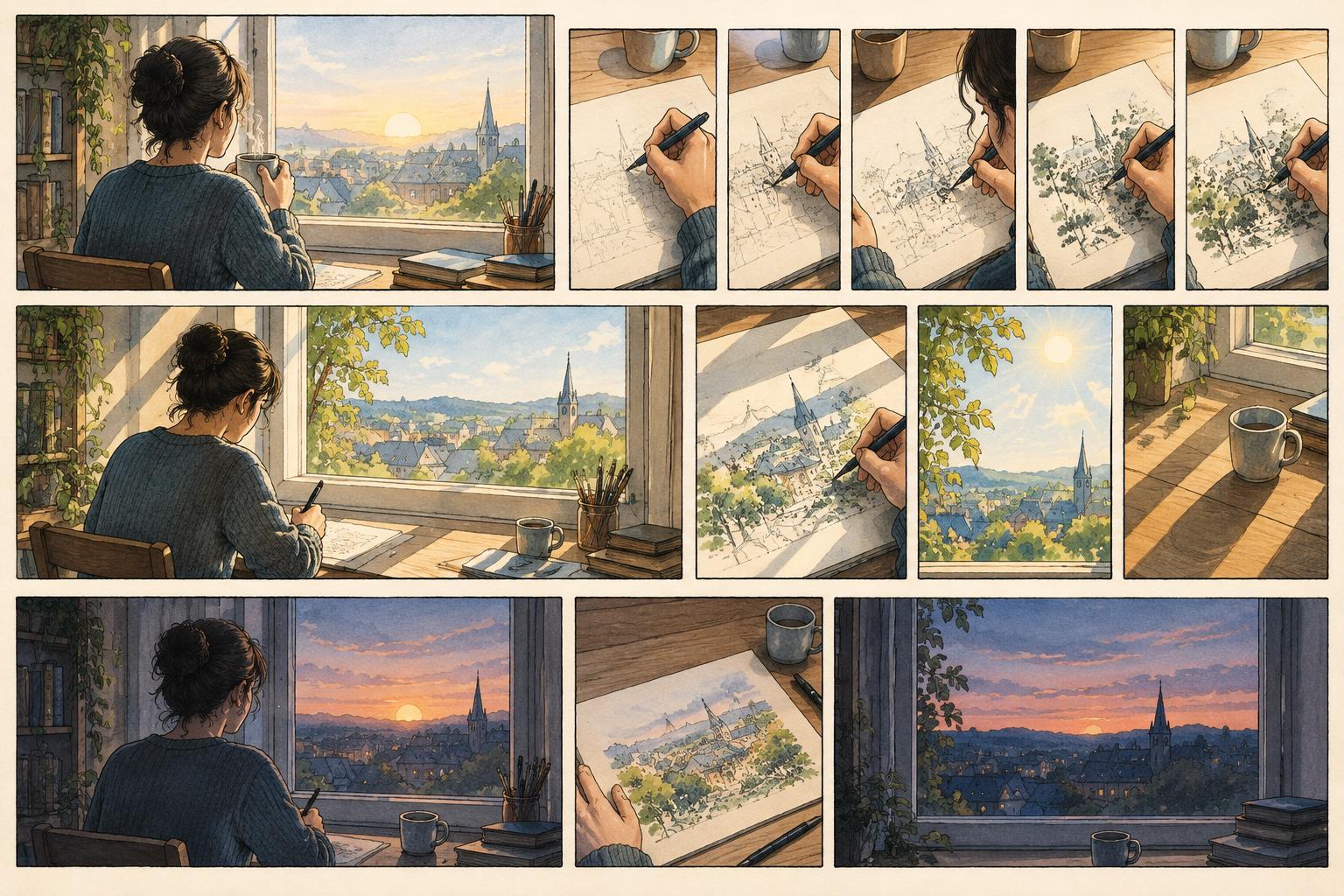
Comics and StorytellingA comic can move from one second to another, skip a week, or linger over a single moment without a clock on every page. Learn how panel size, repetition, transitions, and visual changes help readers feel and understand elapsed time.
Read article · 4 min↗
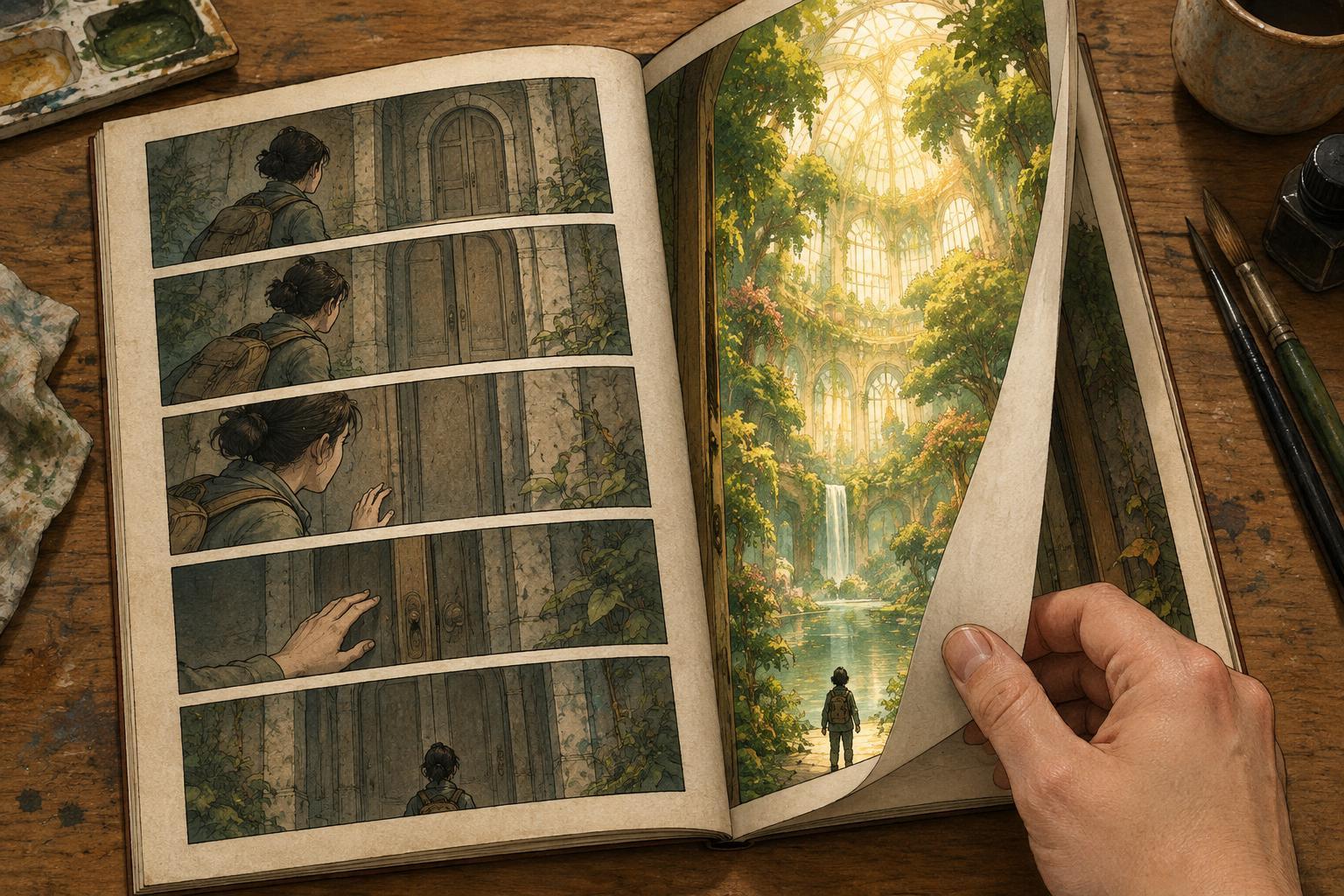
Comics and StorytellingA page turn can hide an image until the reader is ready to see it. Learn how to set up a reveal, choose what belongs before and after the turn, and test whether the surprise serves the story.
Read article · 4 min↗
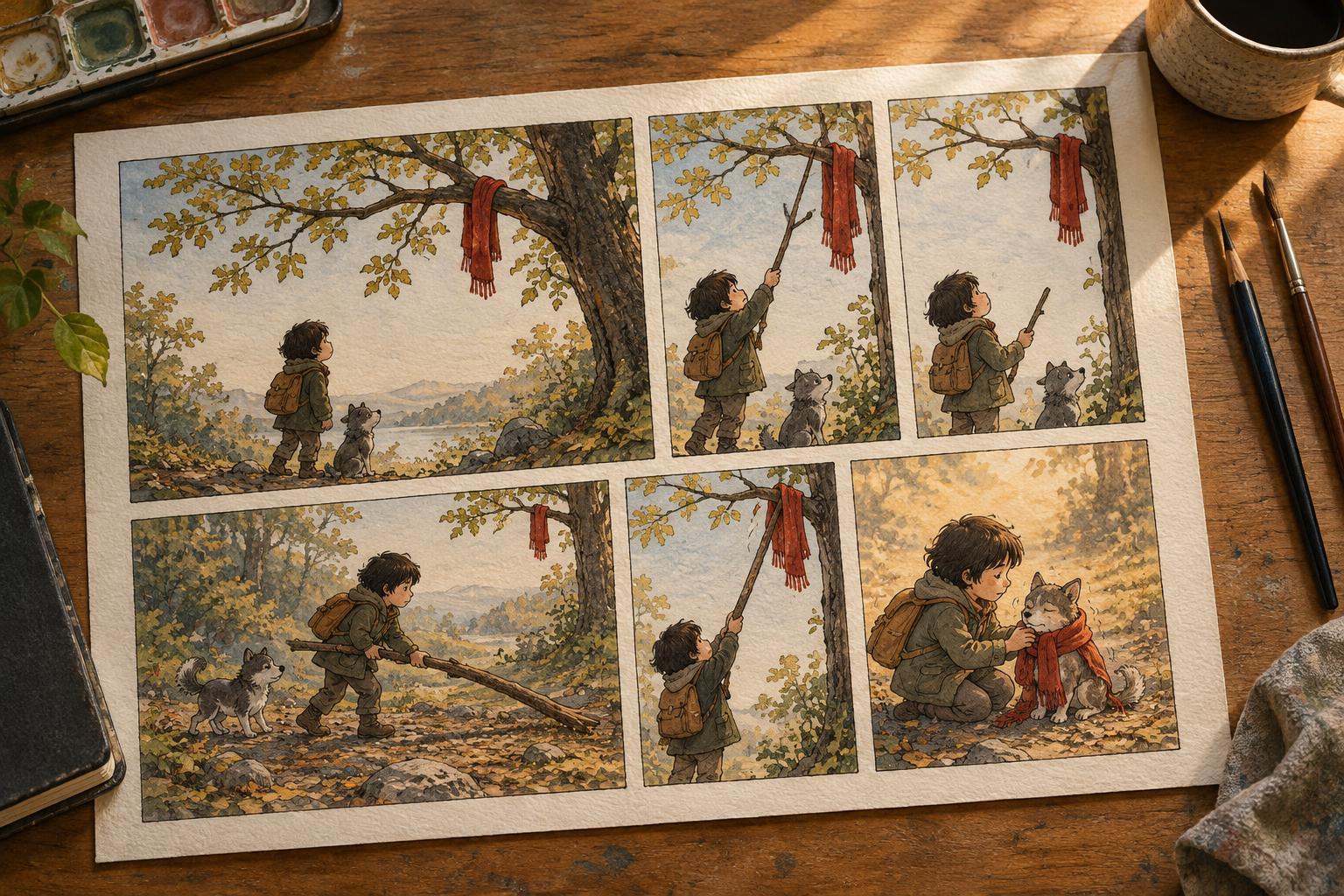
Comics and StorytellingA wordless scene needs more than expressive pictures. Give the reader a visible goal, a meaningful obstacle and a change they can follow from panel to panel. This guide offers a practical way to plan silent comics with clear actions, purposeful pacing and a satisfying ending.
Read article · 4 min↗
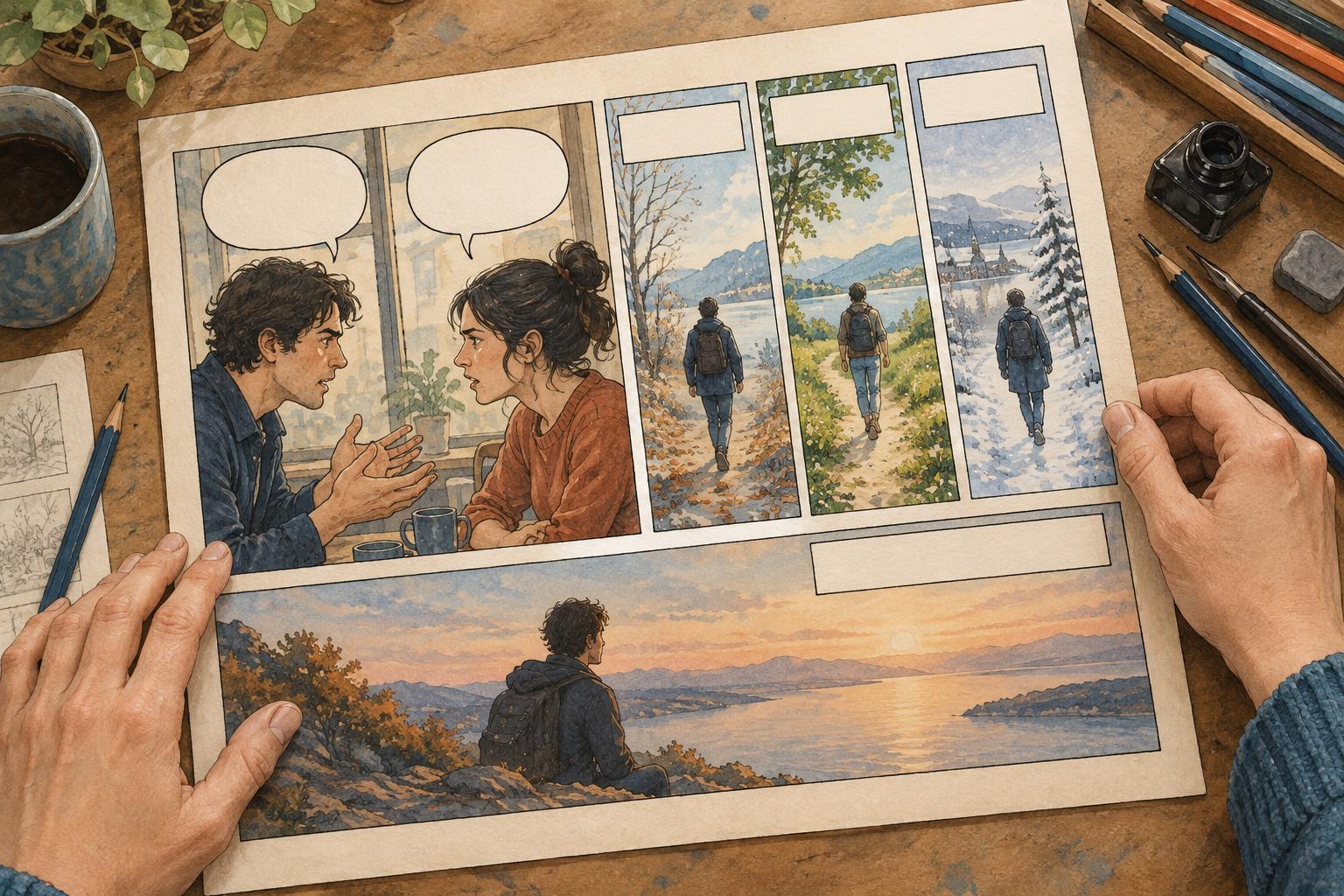
Comics and StorytellingDialogue lets readers hear a scene as it unfolds. Narration captions can carry time, context, memory, or a character’s private interpretation. Learn how to choose between them without crowding the art.
Read article · 4 min↗
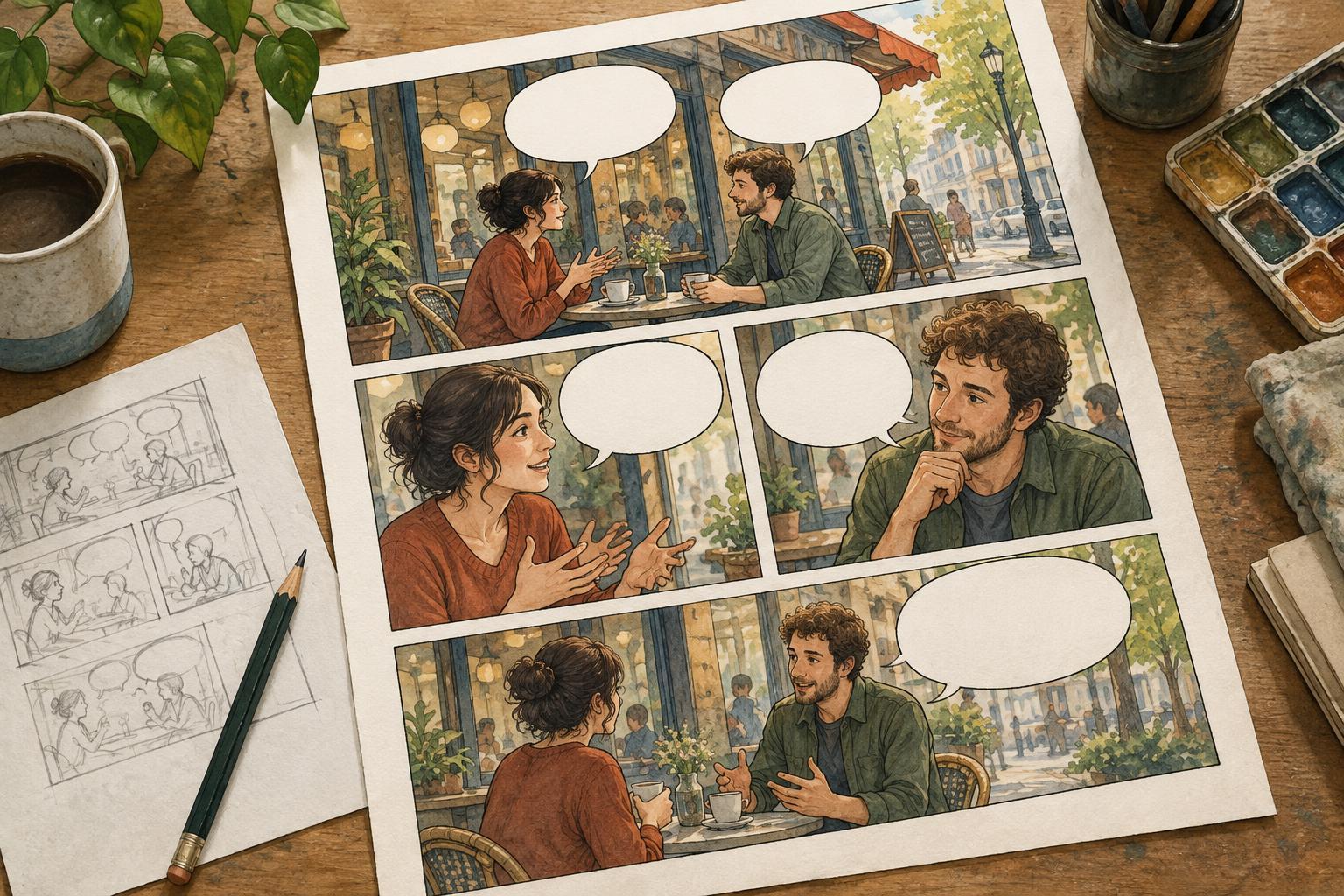
Comics and StorytellingSpeech balloons need room to be read, but they also share the panel with faces, gestures and setting details. Learn how to plan balloon space, guide reading order and revise a crowded comics page without losing its visual impact.
Read article · 4 min↗
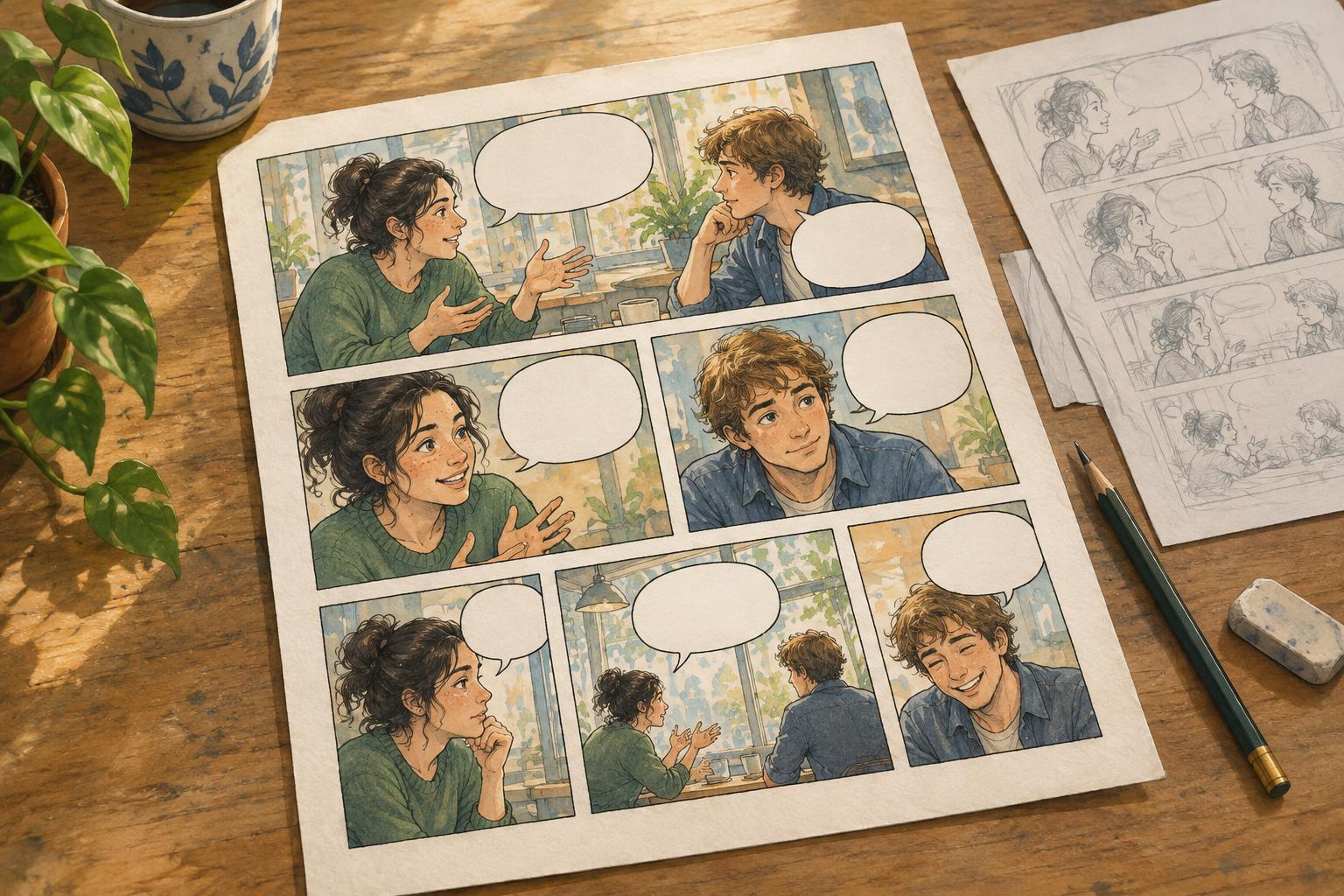
Comics and StorytellingGood comics dialogue works with the drawing, the pace of the page, and the space available for lettering. Learn how to draft and revise speech so it sounds natural without crowding the panel.
Read article · 4 min↗

Comics and StorytellingA character’s feelings can come through in posture, movement, timing and interaction with the setting—not just facial expressions. Learn how to make emotional beats readable across a sequence of panels.
Read article · 4 min↗
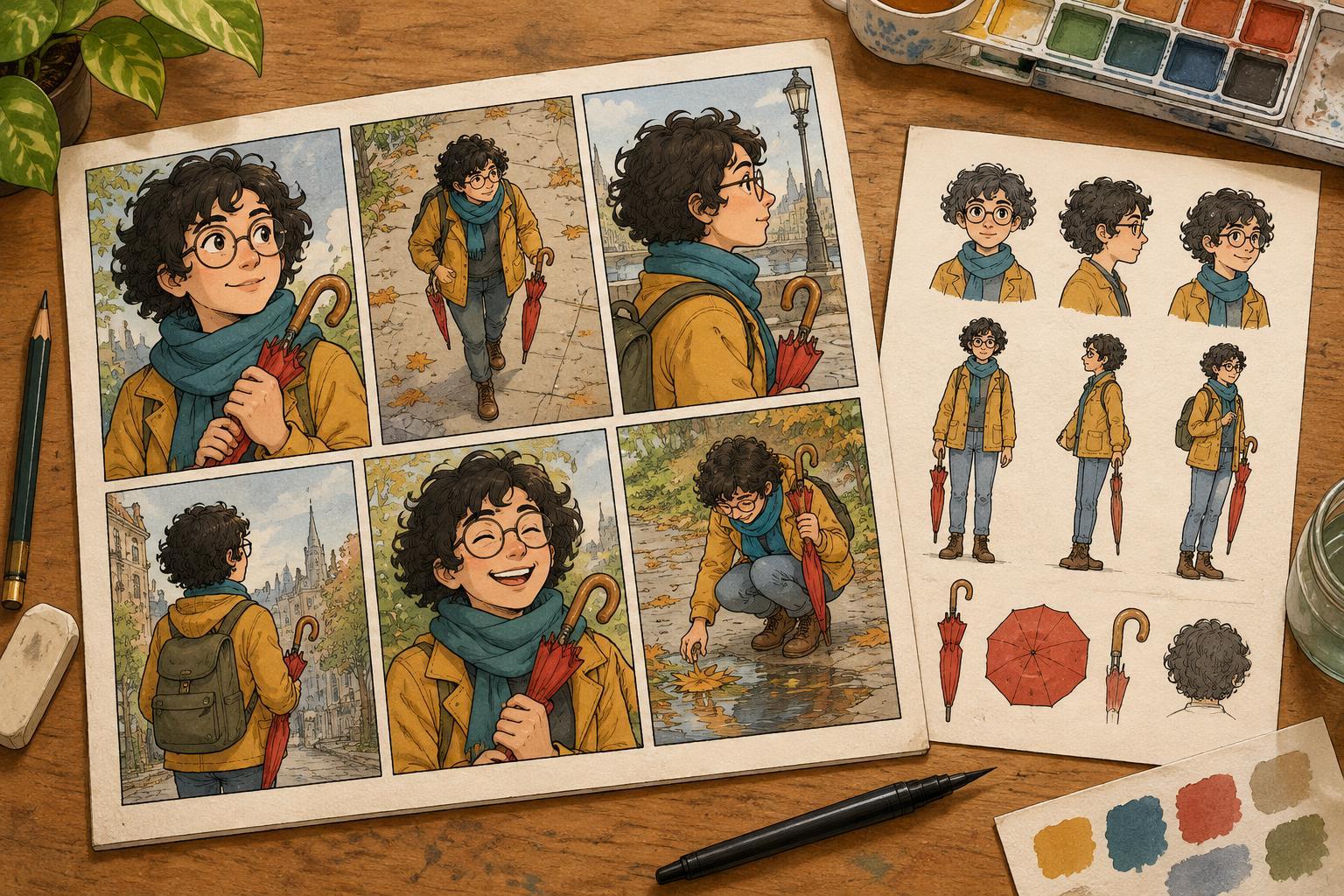
Comics and StorytellingA character should still feel like the same person when the camera angle, pose, or expression changes. Learn how to use simple reference sheets, visual anchors, prop rules, and a continuity pass to keep a comic readable without making every panel look rigid.
Read article · 4 min↗

Comics and StorytellingReaders should be able to tell where characters are, how they relate to one another, and what changes as a scene unfolds. A few deliberate visual anchors can make a comic scene easy to follow without turning every panel into a map.
Read article · 4 min↗
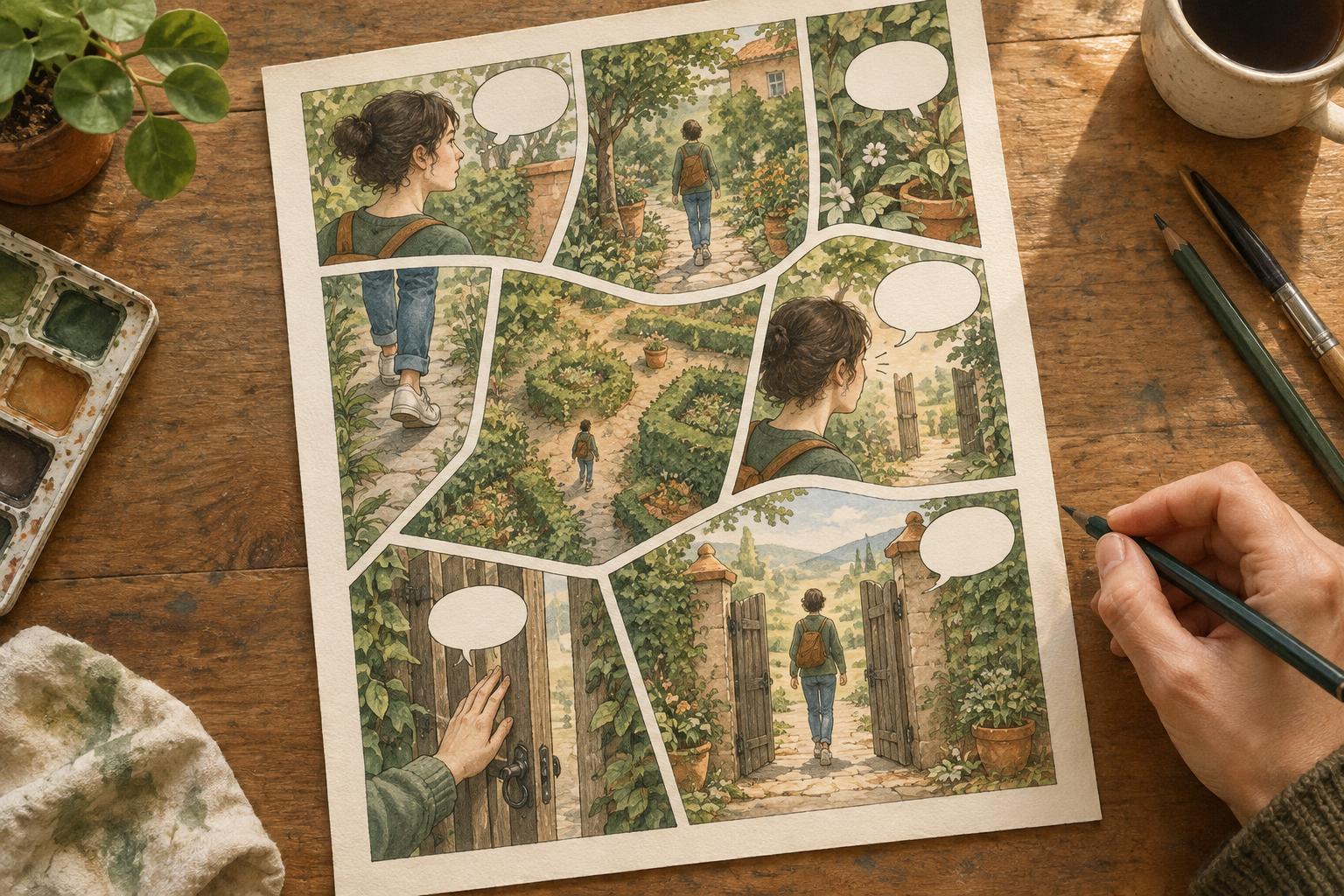
Comics and StorytellingUnusual panel layouts can make a comic page feel like a memory, a maze or a burst of action. Learn how to guide readers through them with clear entry points, visual cues and careful lettering.
Read article · 4 min↗
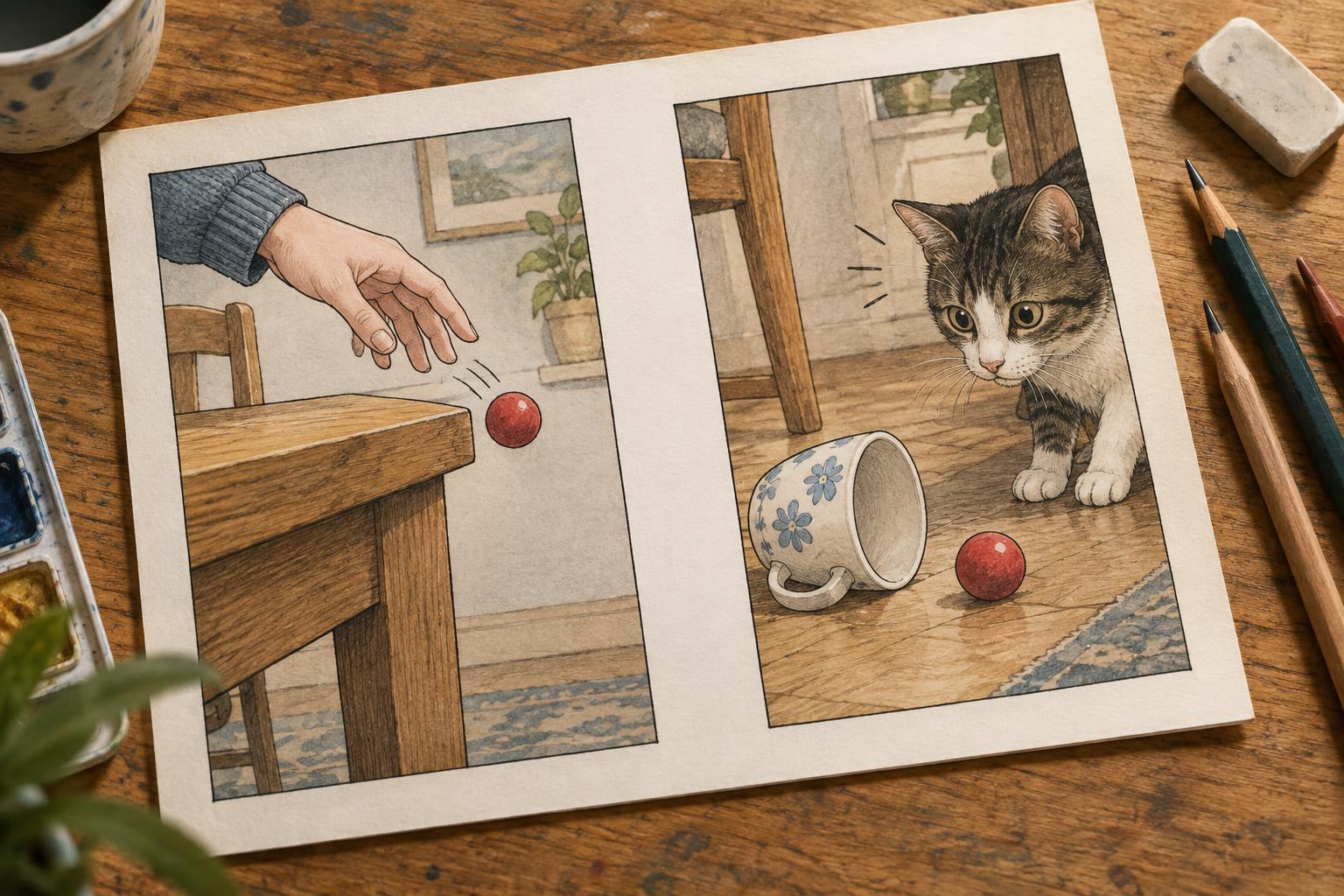
Comics and StorytellingThe space between comic panels can carry a crucial part of the story. Learn how to choose the moments before and after an action, guide readers toward an inference, and test whether a sequence is clear.
Read article · 4 min↗
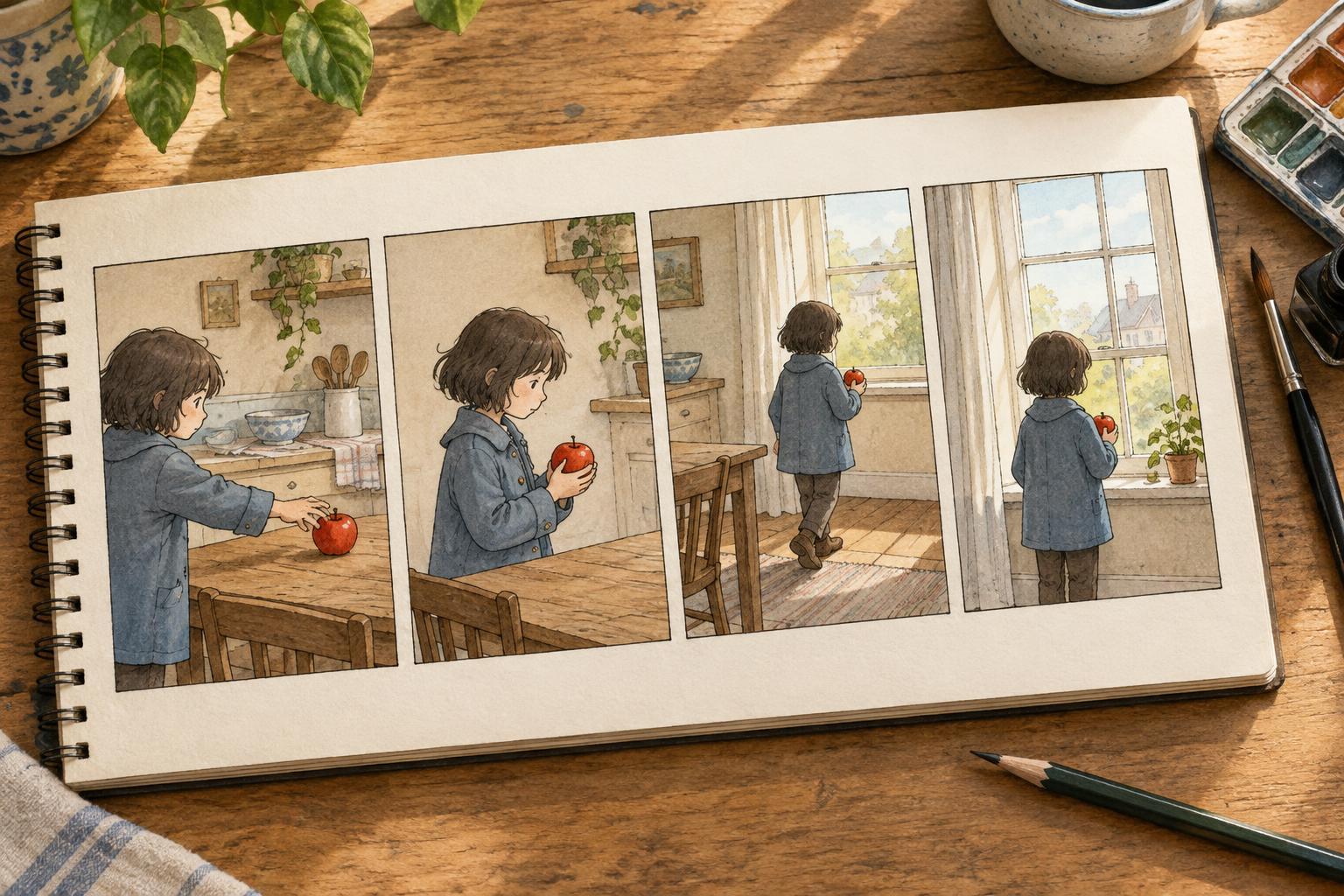
Comics and StorytellingA reader should be able to move through a comic without stopping to work out where to look or what happened between panels. Learn how to use clear staging, deliberate changes, and the space between images to guide that journey.
Read article · 4 min↗
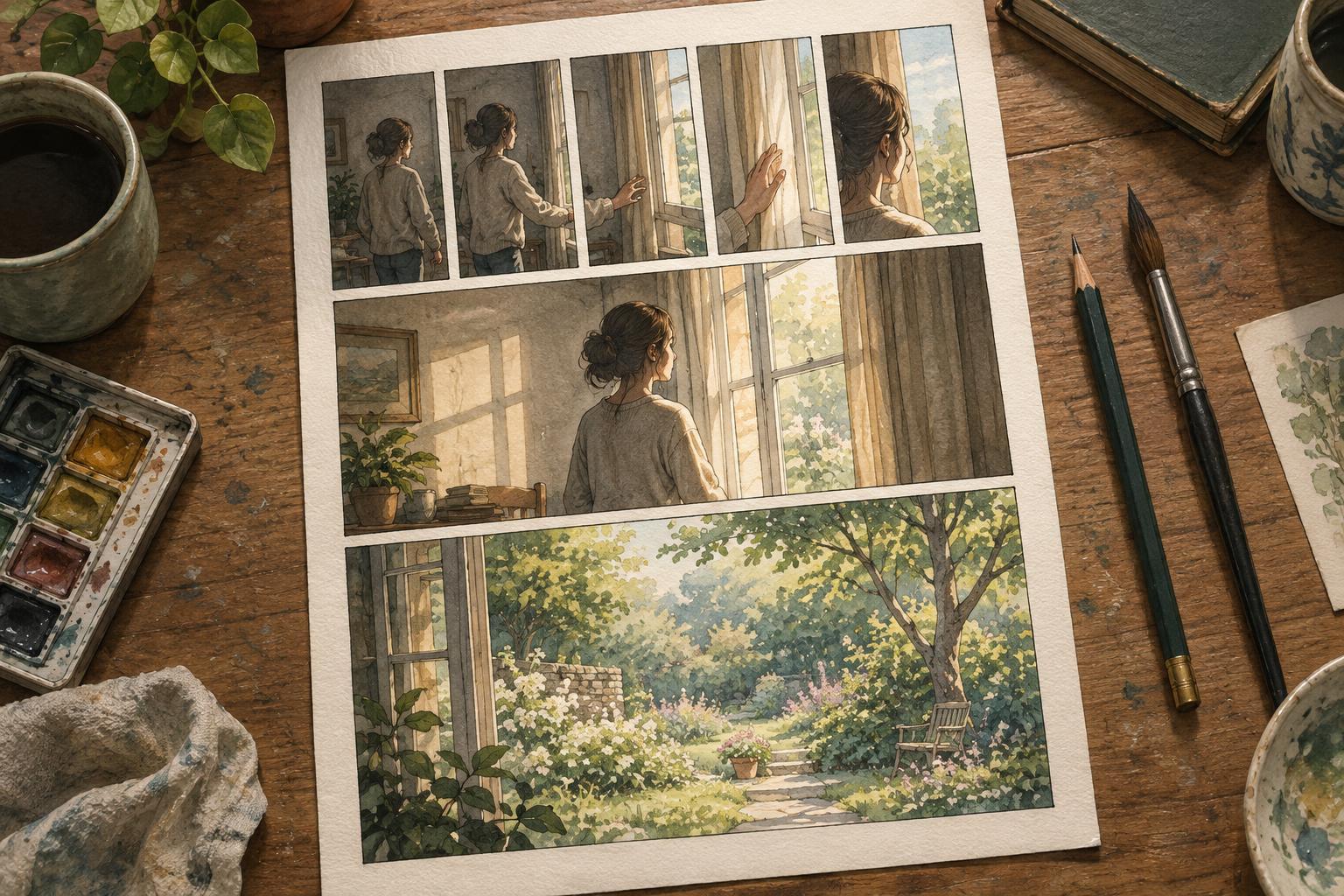
Comics and StorytellingPanel size can change how long a reader lingers on a moment, but it works alongside framing, dialogue, gutters, and page layout. Learn how to choose panel sizes for quick actions, quiet pauses, and important reveals.
Read article · 4 min↗
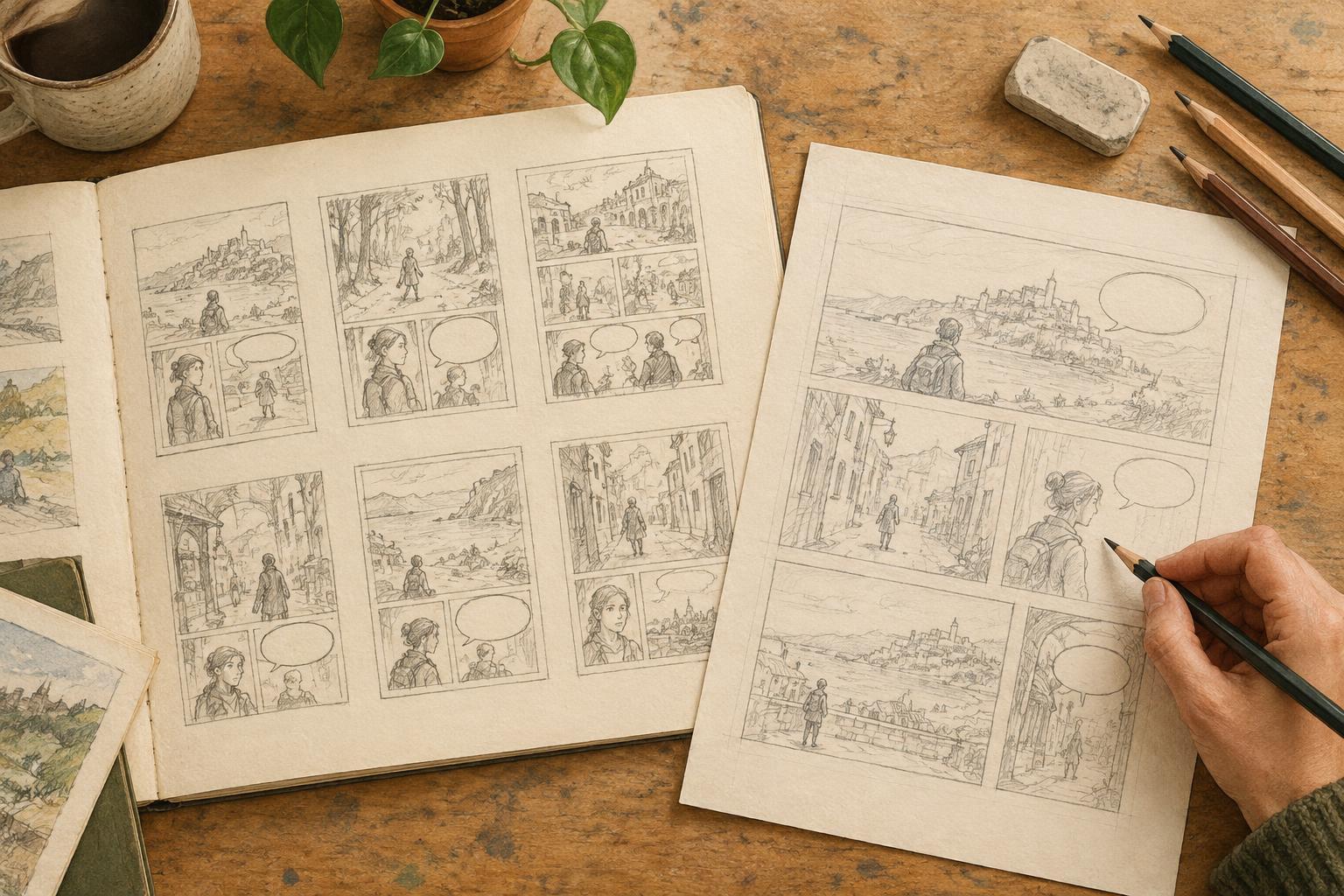
Comics and StorytellingA comic thumbnail is a small, rough plan for a page. Learn how to use quick sketches to test panel order, pacing, dialogue space and visual clarity before committing to finished art.
Read article · 4 min↗
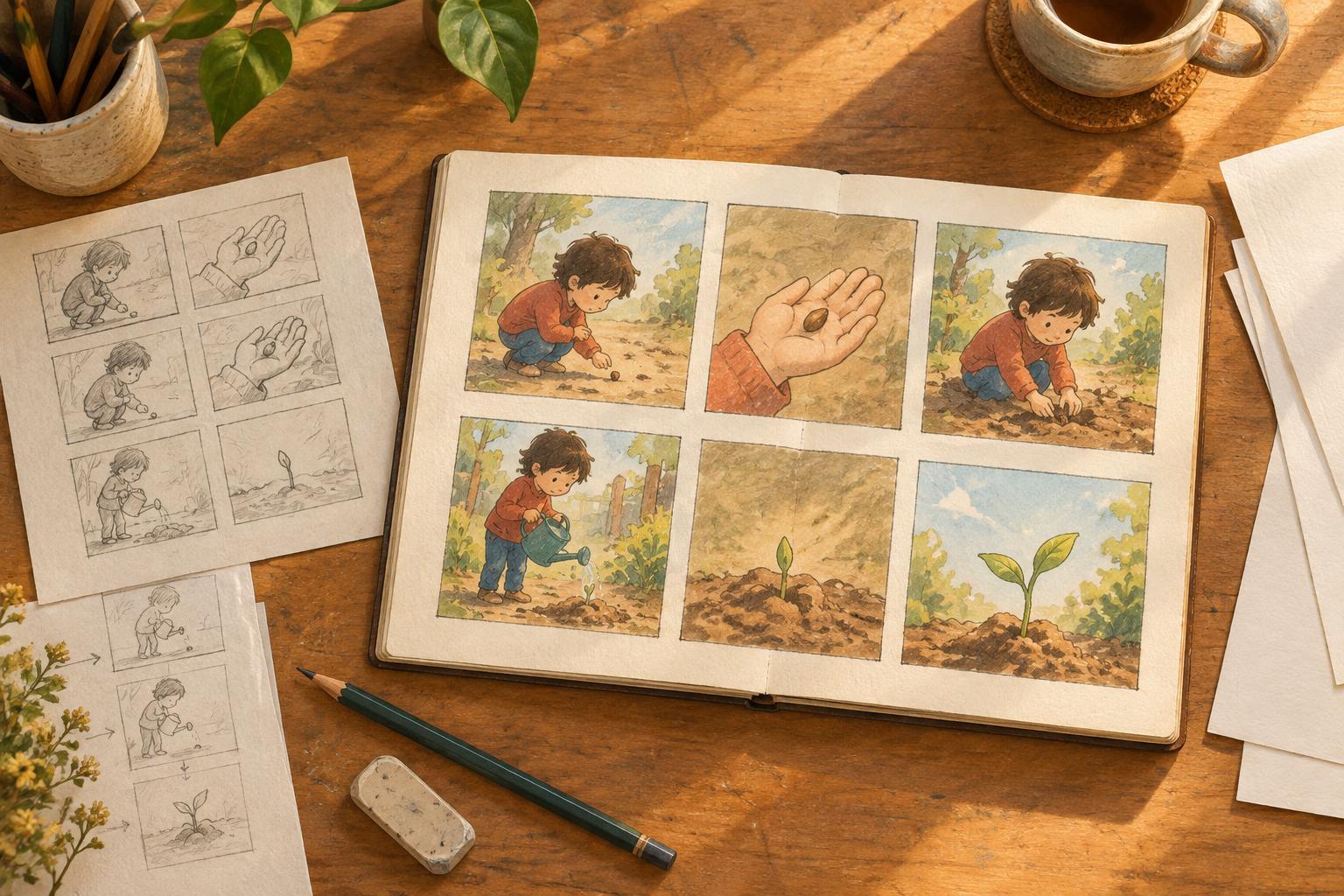
Comics and StorytellingA comic script turns a story idea into actions a reader can see, panel by panel. Learn how to find the central change, shape a short sequence of beats, choose useful moments to draw, and revise dialogue without crowding the page.
Read article · 4 min↗
 Drawing Foundations