Start with the time the reader needs
A panel is not a fixed unit of time. A small panel can hold a long silence, while a large panel can show an instant. Still, size affects the space available for detail and the emphasis a moment receives on the page. Choosing a size begins with a useful question: what does the reader need to notice before moving on?
Mark the beats in a scene before drawing a grid. A beat might be a hand reaching for a key, a character recognizing who owns it, or the decision to leave it behind. If the recognition matters most, give it enough room for a readable expression and a clear view of the key. The reach may need only a narrow panel. This approach assigns space according to the work each beat does, rather than giving every action an equal share.
Use smaller panels to break action into steps
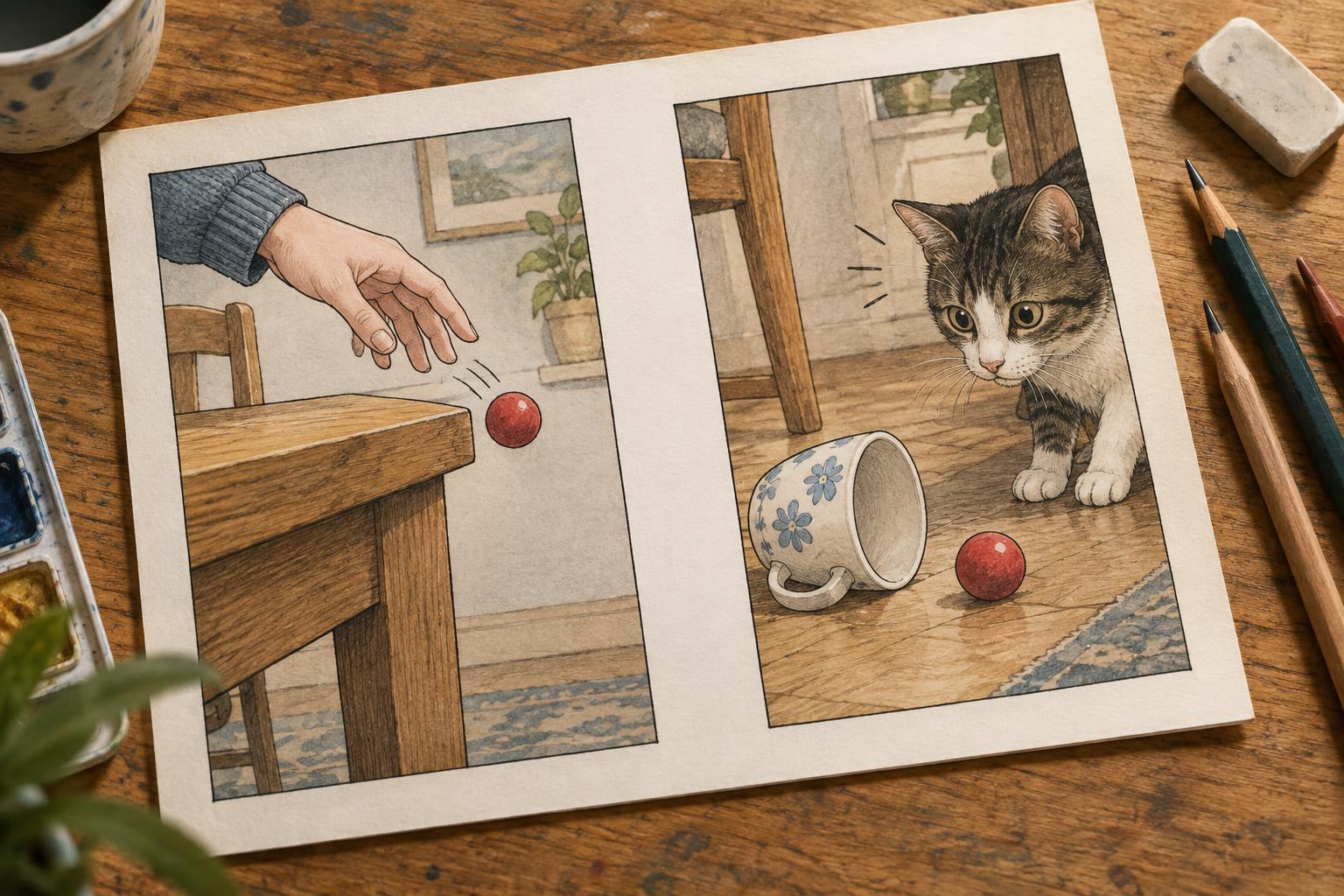
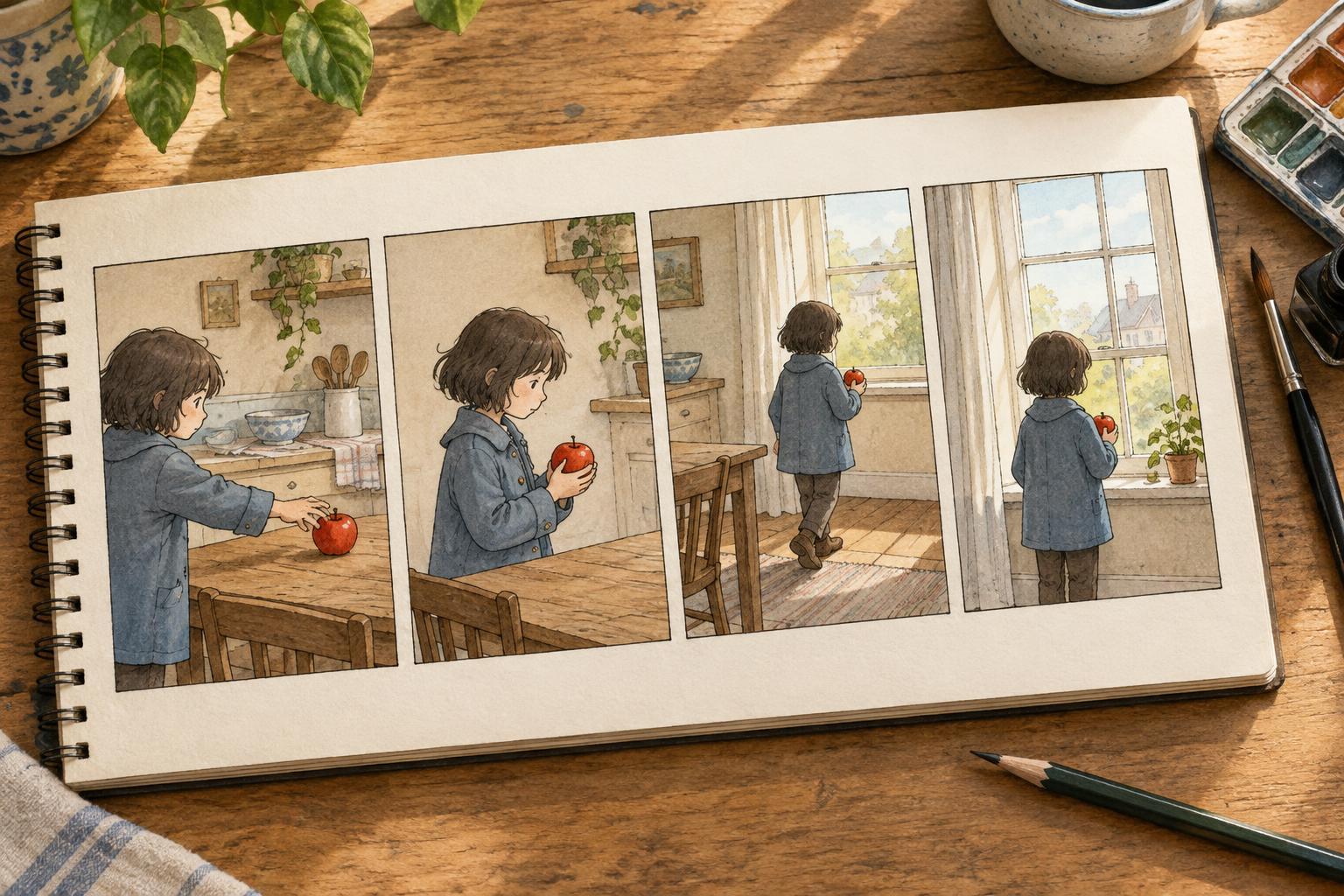
A run of small panels can encourage a quick, steady rhythm, especially when each image contains one simple change. Picture a character hearing a knock, looking up, and turning toward a door. Three compact panels let the reader register those actions in order without spending much time in any one image. Similar panel shapes can make the sequence feel regular; changing one shape can interrupt that rhythm.
Small does not automatically mean fast. Dense backgrounds, long captions, or several speech balloons invite a longer stop even inside a tiny frame. If a sequence should move briskly, simplify what each panel asks the reader to decode. Keep the relevant object or gesture easy to find, and check that the images remain legible at the comic’s intended reading size. A panel that is too cramped may slow the reader for the wrong reason.
Give important moments room to breathe
A larger panel can invite a pause by offering more to explore: the distance between two characters, the state of a room, or a reaction that would be lost in a smaller frame. After several compact action panels, a wide panel showing the door standing open may feel like a held breath. The contrast helps signal that the story has reached a different kind of moment.
Use that extra area with intention. An empty stretch around a figure can make isolation apparent; a detailed setting can show what the character has just noticed. Neither requires an oversized panel every time. If every beat is given maximum space, few beats stand out. Try reserving the largest panel in a short scene for its most consequential image, then ask whether a reader can understand why that image deserves the emphasis.
Plan for the whole page, not just one panel
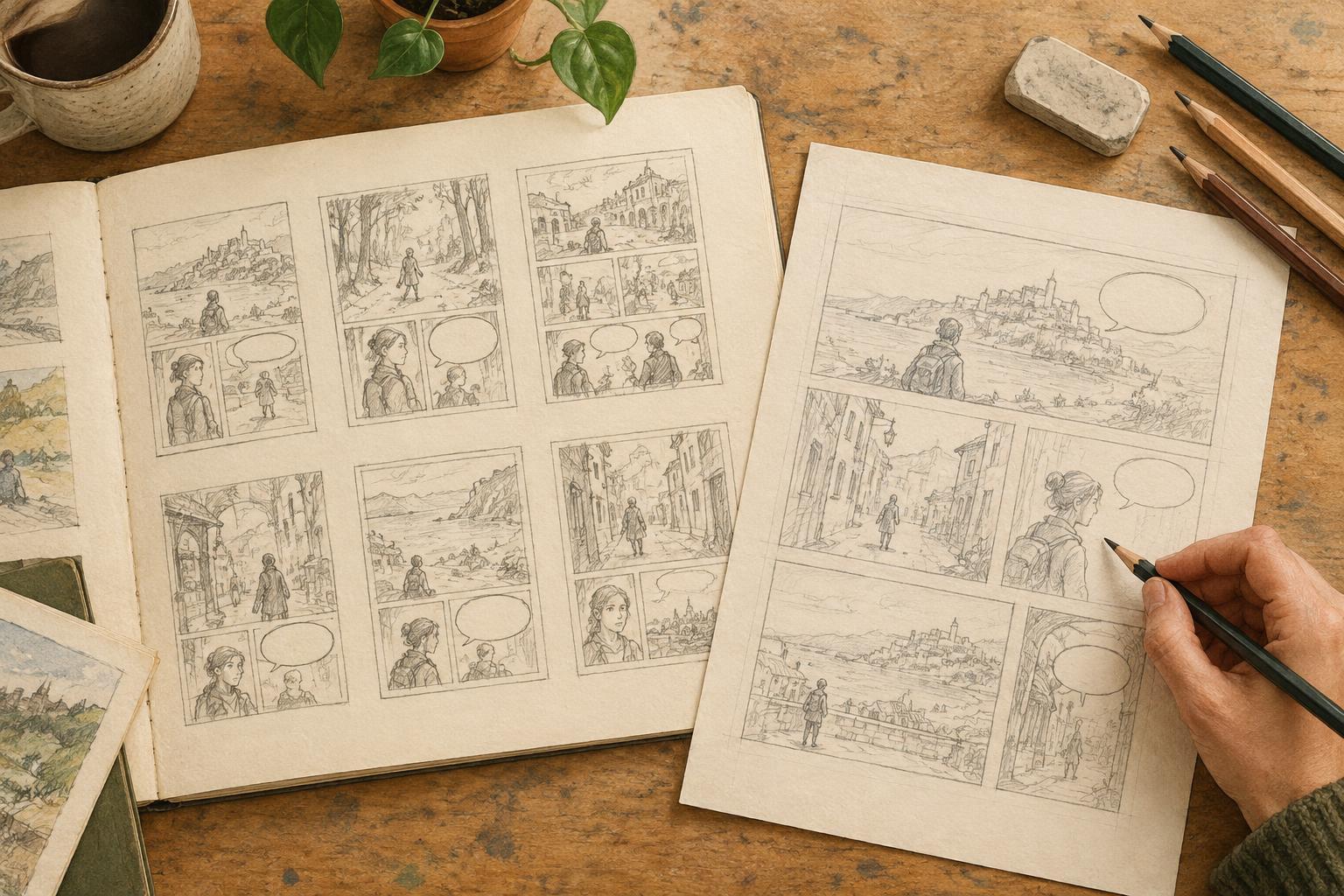
Panel size also shapes the route through a page. A broad panel may establish a setting before the eye moves through a row of smaller reactions. A tall panel might let the reader follow a fall or take in the height of a building. These effects depend on a clear reading order: a striking shape is less useful if the reader cannot tell which panel comes next.
Gutters, speech balloons, and page turns all contribute to pace. Space between panels can separate actions or suggest an omitted interval, while a balloon can pull the eye toward a particular panel. For a reveal, consider what the reader can see before reaching it. An image meant to surprise may lose its effect if it is visible beside the setup. Thumbnail the full page, place temporary balloons, and trace the likely path of the eye before refining the drawings.
Test the rhythm with two quick versions
To practice, choose a simple event: someone enters a kitchen and finds a broken cup. Draw it first as four equal panels. Then make a second thumbnail using at least one very small panel and one panel twice as large as the others. Keep the actions and dialogue the same so the layout is the main variable. Which version draws attention to the discovery? Does either one spend too long getting to it?
Read both thumbnails at their intended size, covering later panels as you go. Note where you stop, where you rush, and where the sequence becomes unclear. You can also remove dialogue temporarily to see whether the visual beats still connect. Revise by changing one thing at a time: a panel’s dimensions, its contents, or its position. Panel size is most effective when it supports a clear sequence, not when it tries to create pace on its own.