Give the character something to do
A face can tell readers that a character is angry or delighted, but acting gives that feeling a place in the scene. A nervous character might straighten a crooked stack of papers while avoiding a question. An excited character might lean so far across a table that they nearly knock over a cup. The action makes the emotion specific: readers see not only what the character feels, but how they handle it.
Before drawing a scene, write a simple sentence for each emotional beat: “She wants to leave, but does not want to be rude,” or “He is proud of the gift and afraid it will be rejected.” Then give the character a small task, such as holding a bag, opening a door or passing an object. Look for a way the feeling can change how they perform that task. A hand paused on a doorknob may carry more tension than a large, generic frown.
Start with posture, then refine the face
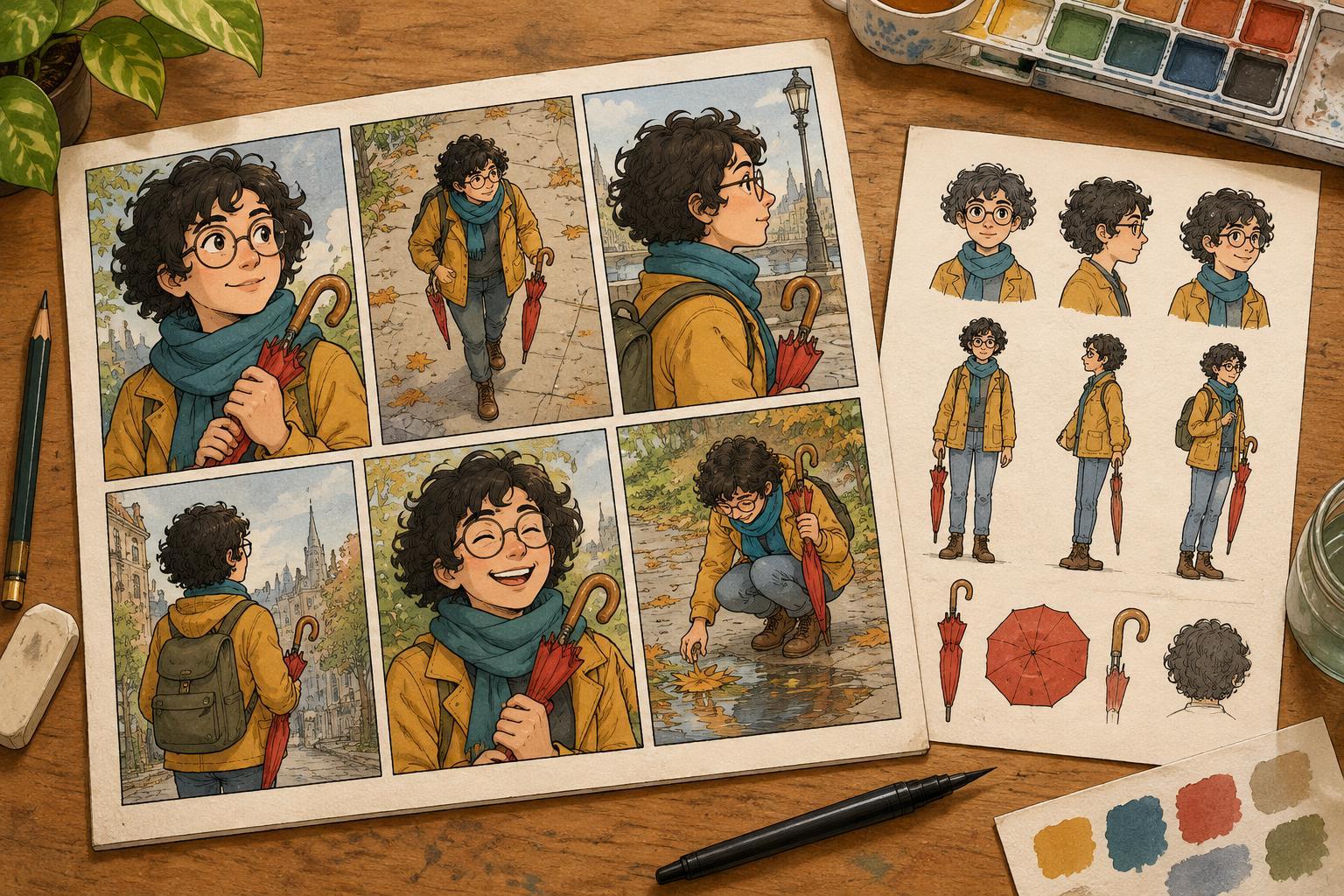
Try sketching a character’s pose as a simple line of action with a few shapes for the head, shoulders and hips. Can the pose suggest the feeling before you add eyes or a mouth? A raised chin, squared shoulders and planted feet may suggest confidence. A character can also appear uncertain by shifting their weight back while reaching forward. These are possibilities, not fixed rules: the same pose can mean something different depending on the scene.
Direction matters, too. Notice whether the torso faces another character while the feet point toward an exit, or whether a person turns their whole body to listen. Small mismatches between parts of the pose can suggest hesitation or divided attention. Once the broad gesture reads, use the face to sharpen or complicate it. A relaxed pose paired with a tight smile can imply an effort to look calm.
Use hands and distance to show relationships
Hands often reveal where a character’s attention is going. They may grip a sleeve, hover over an object, hide in pockets or reach toward someone and stop short. Rather than adding an elaborate hand pose to every panel, choose a gesture that changes over the scene. A character might begin by protecting a letter with both hands, then set it between themselves and another person, then finally let the other person pick it up.
The space between characters is part of the acting. When one person steps closer and the other moves back, the shift can reveal a disagreement without a line of dialogue. Consider eye contact, but also what interrupts it: a glance at a phone, the floor or a shared object. Props work best when they have a clear role in the scene. A mug does not automatically signal anxiety; repeatedly moving it out of someone’s reach might.
Let panel timing carry the feeling
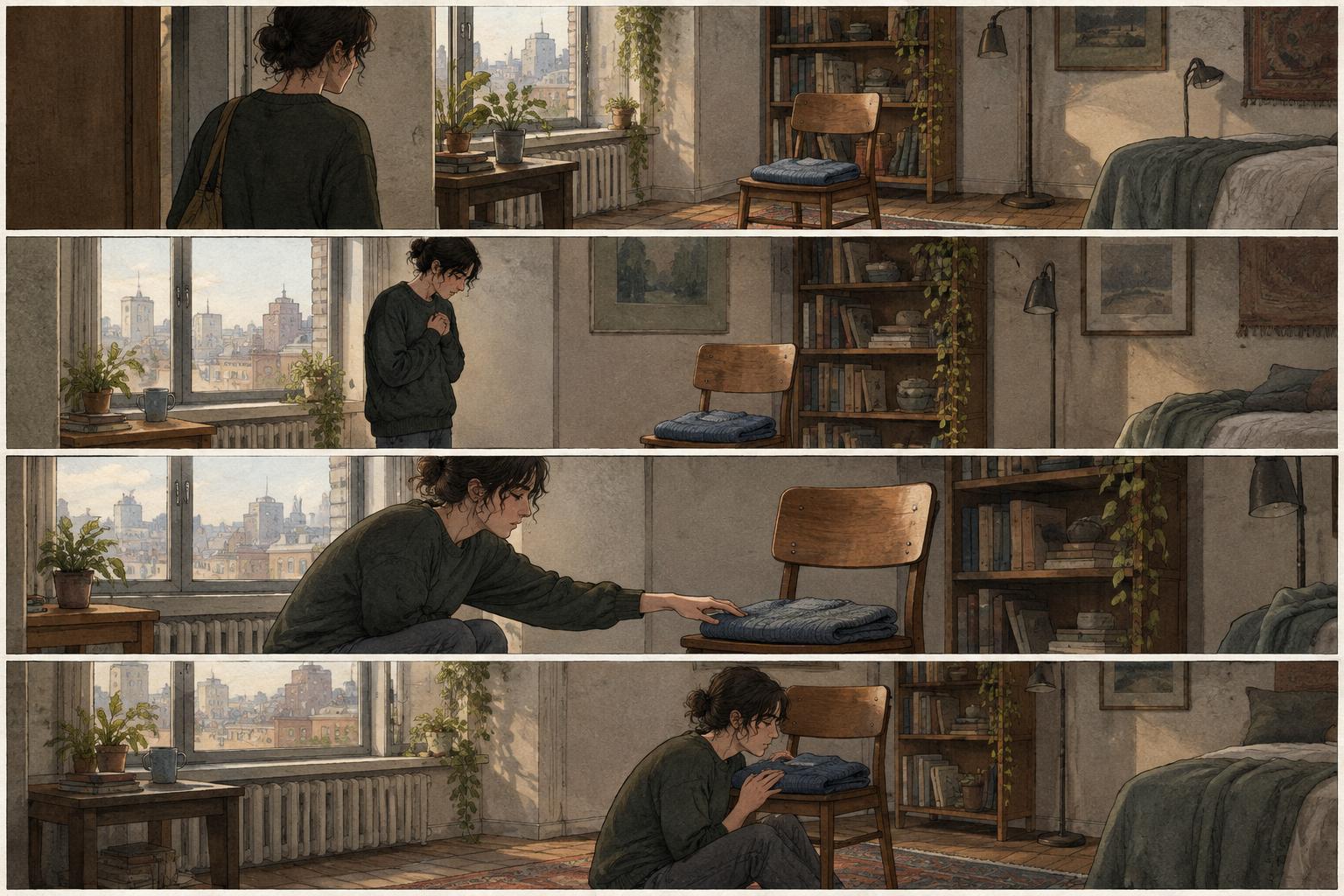
In comics, acting unfolds across panels. A single drawing can capture a reaction, while a sequence can show the effort to conceal it. If a character receives surprising news, try drawing the moment before they respond: their hand stops halfway through an ordinary action. A quiet panel after that pause gives readers room to notice it. A quick response in the next panel will feel different from one delayed by several beats.
You can also vary what the reader sees. A wider panel establishes how characters stand in relation to each other; a closer panel can draw attention to a hand releasing its grip. Avoid cropping so tightly that the gesture loses its cause. If the important action is a character pulling away, readers may need to see both the person and what they are pulling away from.
Restraint helps important changes stand out. If every panel has an extreme expression and dramatic pose, a subtle shift has little room to register. Let a character’s usual manner provide a baseline, then change one element at a time: the angle of the shoulders, the speed of a movement or the direction of a glance.
Test the acting without dialogue
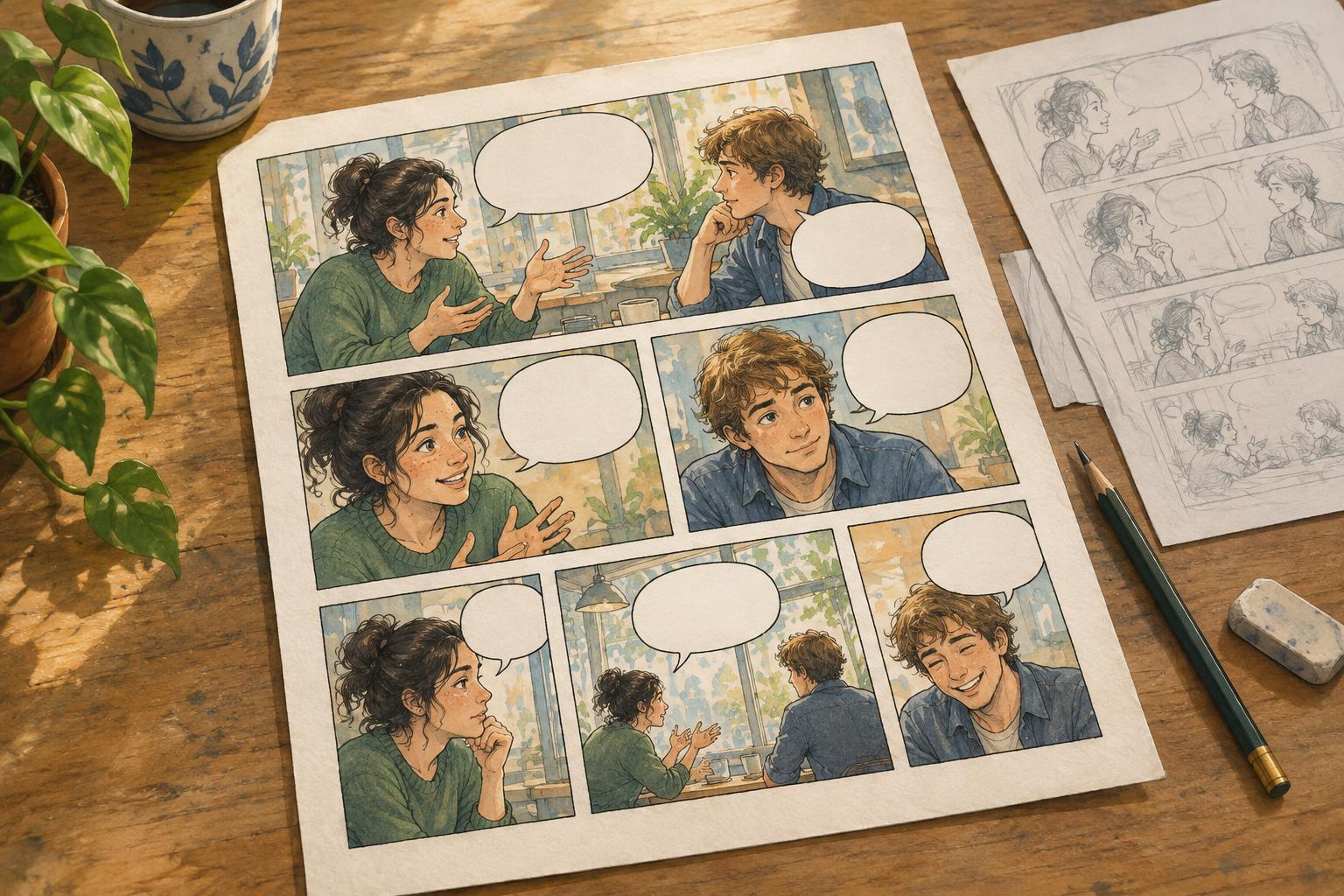
To revise a page, temporarily cover the speech balloons and captions. Read the sequence using only the characters’ poses, actions and placement. You need not identify one exact emotion in every panel, but you should be able to follow the important changes: who approaches, who withdraws, who makes a decision. If a turn in the scene disappears without the words, try changing the action rather than simply enlarging an expression.
For practice, draw a four-panel exchange in which one character offers help and the other declines, then changes their mind. Keep the dialogue out. Give each character a different way of handling the same object, such as a heavy box. Make quick thumbnails first, checking that their bodies and the box remain easy to track. This exercise focuses attention on acting that serves the story: visible choices, made one beat at a time.