Start with a week you can actually repeat
An ambitious drawing schedule can feel exciting on Sunday and impossible by Wednesday. Before deciding how often to draw, look at the week you already have. Notice which hours are usually calm, which days are unpredictable and how much energy remains after other commitments. A routine built around those realities is more useful than one built around an ideal day.
Choose a small number of drawing appointments you can reasonably protect. Two short sessions and one longer session may serve you better than a daily target you regularly miss. Put them on a calendar if that helps, but treat the times as a plan rather than a test of commitment. The aim is to make returning to the page familiar.
Give each session a clear, modest job
It is easier to begin when you know what you will do. Give different sessions different purposes: one for observing, one for experimenting and one for developing a piece. An observation session might involve sketching hands, household objects or people from memory and then checking what you missed. An experiment might test three ways to ink the same shape. These tasks are specific enough to start, yet small enough to finish.
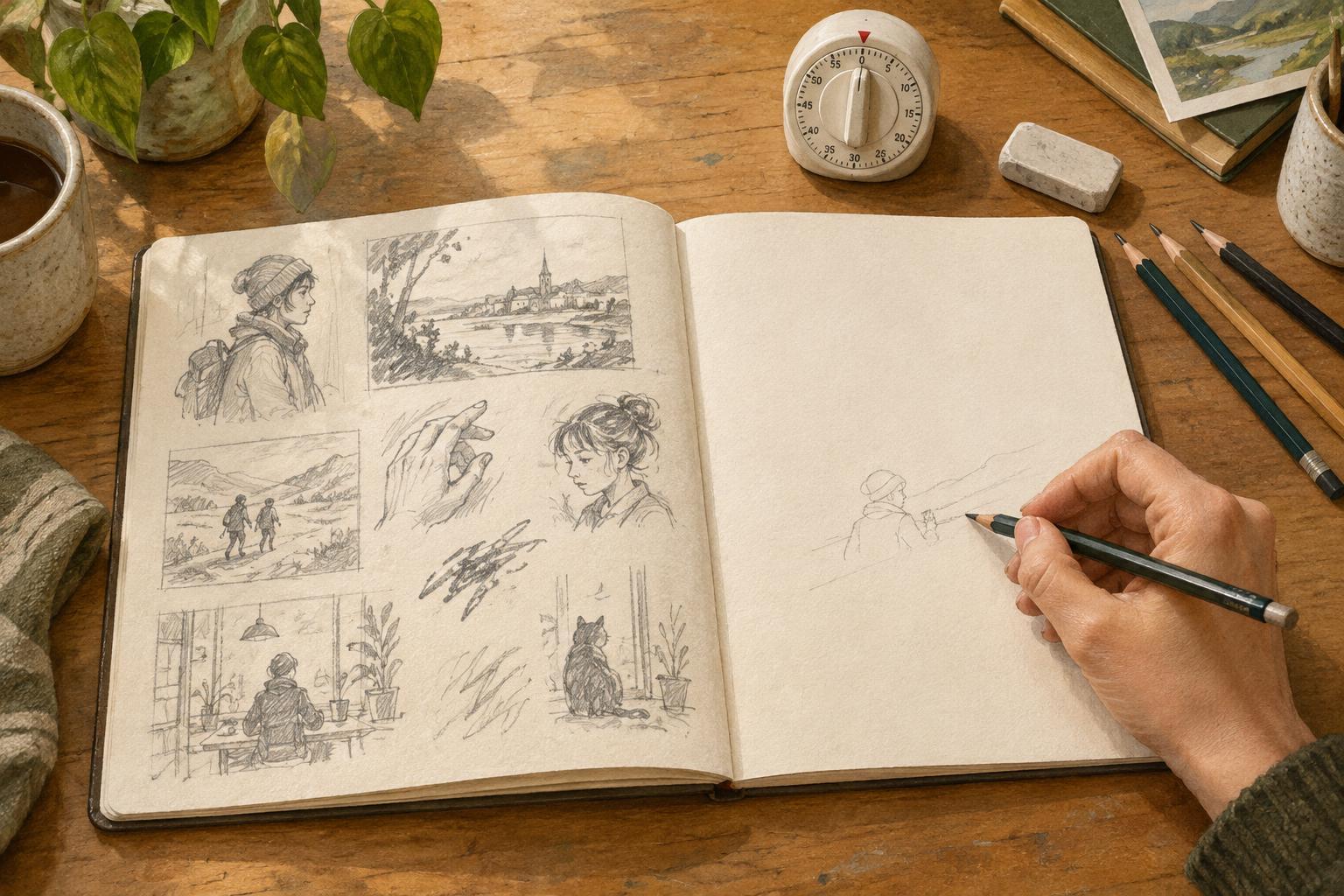
Match the task to the time available. In ten minutes, draw several tiny compositions for an illustration or comic panel. With half an hour, choose one and explore its values or silhouettes. A longer session can carry a page, character sheet or finished illustration forward. Deciding on the task before the session begins reduces the time spent wondering what to draw.
Keep practice and projects connected
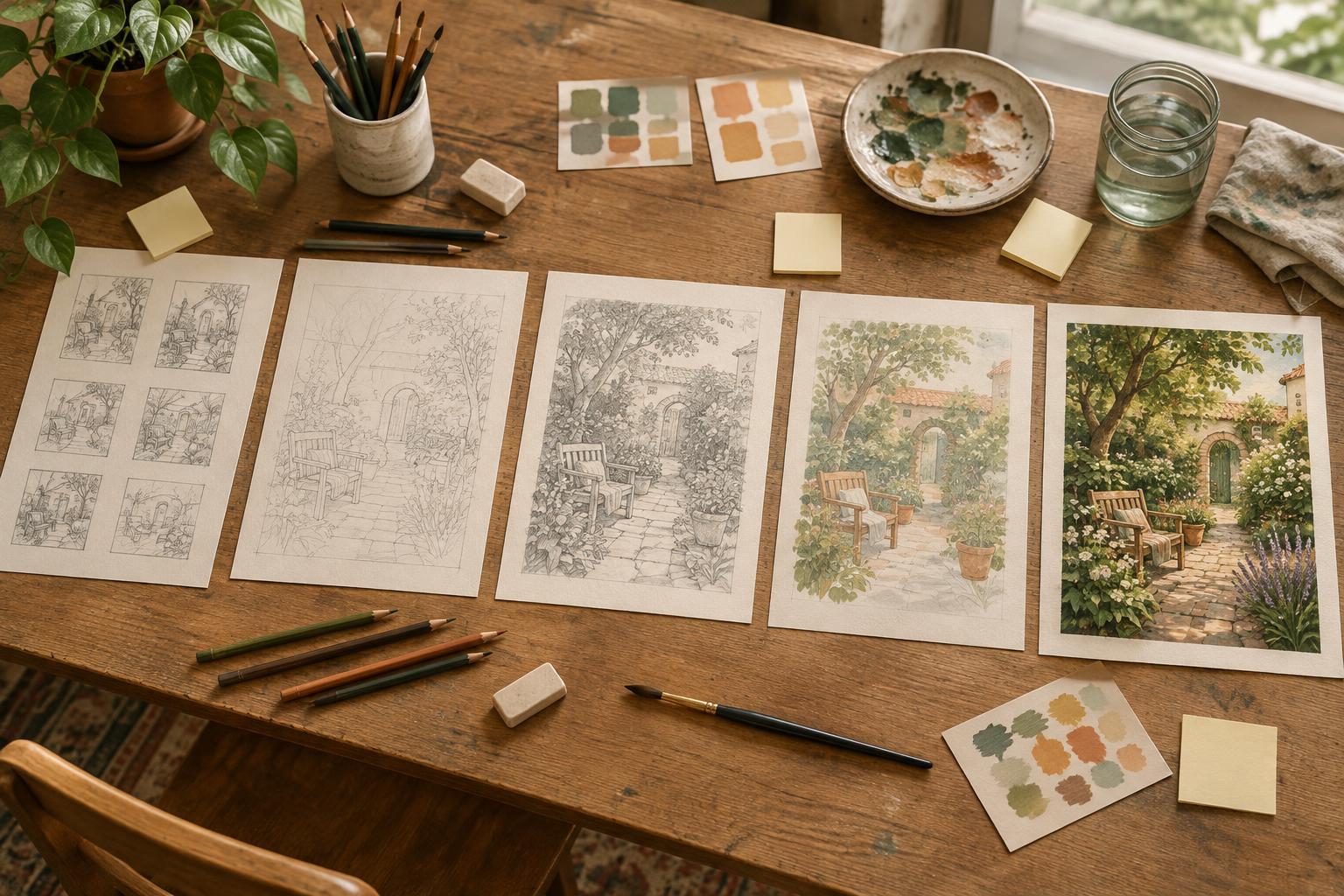
Exercises can sharpen a skill, but they may feel detached if you never use the results. Let an active project suggest what to practice. If a comic scene feels stiff, spend a session drawing gestures that show a character turning, reaching or reacting. If an illustration looks crowded, make small thumbnail studies that separate the main subject from the background. The exercise now has a reason, and the project gains a possible next step.
Leave room for drawing that has no planned outcome, too. A page of playful marks or strange character ideas can be worthwhile without becoming publishable work. A sustainable routine does not require every sketch to earn its place in a portfolio. Alternating focused work with open exploration can help keep the week from feeling like an unbroken list of assignments.
Make starting easy and stopping clear
Friction often appears before the first mark. Keep a sketchbook and a dependable tool within reach, or prepare a digital file with the canvas size you commonly use. At the end of a session, write one sentence about the next action: “Try a lower viewpoint” or “Redraw the second panel.” That note gives your future self a place to begin, especially when several days pass between sessions.
A stopping point matters as much as a starting cue. If you have set aside twenty minutes, you do not need to turn it into two hours to make it count. Save the file, photograph the sketch if needed and leave a brief note. Stopping when planned helps drawing remain compatible with work, relationships and rest, rather than making each session a negotiation over everything else you could be doing.
Review the pattern, not your worth
At the end of the week, spend a few minutes looking through what you made. Ask which session was easiest to begin, which task held your attention and where the plan ran into trouble. You might find that evening sketching rarely happens, while a short session before another regular activity works well. Adjust the schedule accordingly. A missed appointment is information about the plan, not a verdict on your ability.
Keep a fallback version for crowded weeks: one small drawing, a handful of thumbnails or a few notes about a scene you want to draw later. If even that does not happen, resume with the next available session rather than trying to repay a backlog. Over time, a useful routine is one you can revise and return to—one that supports both the drawings you want to make and the life in which you make them.