Define what “finished” means
An illustration can be a quick drawing or a complex visual system. Before estimating its duration, describe the actual deliverable: its dimensions, level of detail, color approach, number of characters or scenes, and intended use. A single spot illustration with a simple background is different from a full-page scene with lettering, even if both count as one image.
Write down what must be supplied at the end. Does the project call for one final image, several size variations, or editable files? Are there reference materials or a written brief to review? If any of these details are undecided, mark them as assumptions rather than quietly building them into the estimate. An estimate becomes more useful when everyone can see what it covers.
Estimate stages instead of one long drawing session
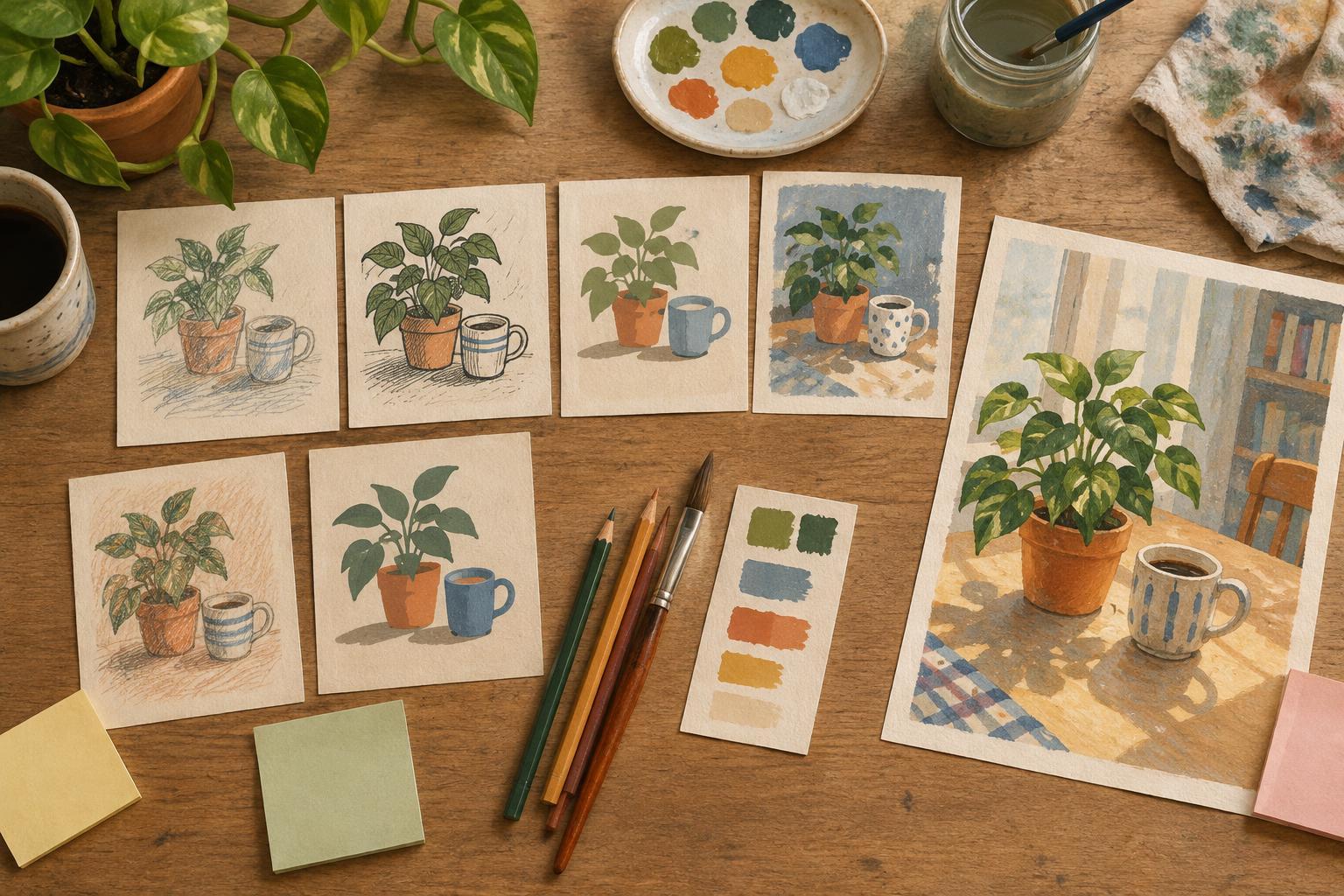
Break the project into tasks that have recognizable stopping points. A practical sequence might include reading the brief, gathering reference, making thumbnails, choosing a direction, creating a refined sketch, producing final artwork, reviewing it at its intended size, and preparing files for delivery. Not every project needs every stage, but even a short list makes hidden work visible.
Assign time to each stage separately. Consider how many thumbnails you expect to make and whether the composition is familiar or experimental. A detailed rendering may take longer than sketching, while a difficult concept can reverse that balance. Include time for exporting, naming, and checking files; those tasks are easy to forget because they happen after the artwork feels complete.
Then add the stage estimates together and compare the total with the calendar. Six hours of hands-on work does not necessarily fit into one uninterrupted day. Other commitments, breaks, and the need to look at a draft with fresh eyes can spread that work across several days.
Use past work to calibrate your estimate
Your own completed projects are a better starting point than an imagined ideal pace. Look for an illustration with a similar format, amount of detail, and number of approval steps. If you recorded your time, use that record. If not, reconstruct the sequence as best you can: how long did the concept take, where did you pause, and what required reworking?
If you have little to compare with, time a small sample task. Render a representative object, test a color approach, or take one thumbnail through to a refined sketch. A sample will not predict the whole project, but it can reveal whether a technique is slower than expected. As you finish more work, keep a simple log of estimated and actual time by stage. The aim is not to turn drawing into a race; it is to learn which parts of your process are reliably quick and which need more space.
Make room for uncertainty and feedback
An estimate should include more than the best-case path. New subject matter, intricate backgrounds, unfamiliar tools, and unresolved direction all add uncertainty. Instead of applying the same buffer to every job, give extra room to the stages where you expect decisions or technical problems. A familiar coloring method may need little allowance, while an untested composition may need several attempts.
Separate active work from waiting time. Feedback from an editor, collaborator, or client can pause the project even when the requested change is small. Agree on when feedback is expected and how many review rounds the schedule includes. Reserve time to interpret comments and make changes, not just to receive them. If the scope changes after a sketch is approved, revisit the estimate rather than treating new work as part of the original plan.
Turn the estimate into a workable schedule
Once you have a total, place the stages on a calendar in their likely order. Set an internal checkpoint for the concept, another for the refined sketch, and a final check before delivery. Leave a little distance between finishing the artwork and sending it: that gap gives you time to catch a missing element, test legibility, or correct an export.
When sharing an estimate, state both the expected turnaround and the assumptions behind it. For example, a schedule might depend on receiving a complete brief and consolidated feedback at agreed checkpoints. This makes it easier to adjust plans when something changes. After delivery, compare the schedule with what happened. A good estimate is not one that predicts every minute; it is one that helps you make decisions, protect the work, and improve the next plan.