What the distinction means on the page
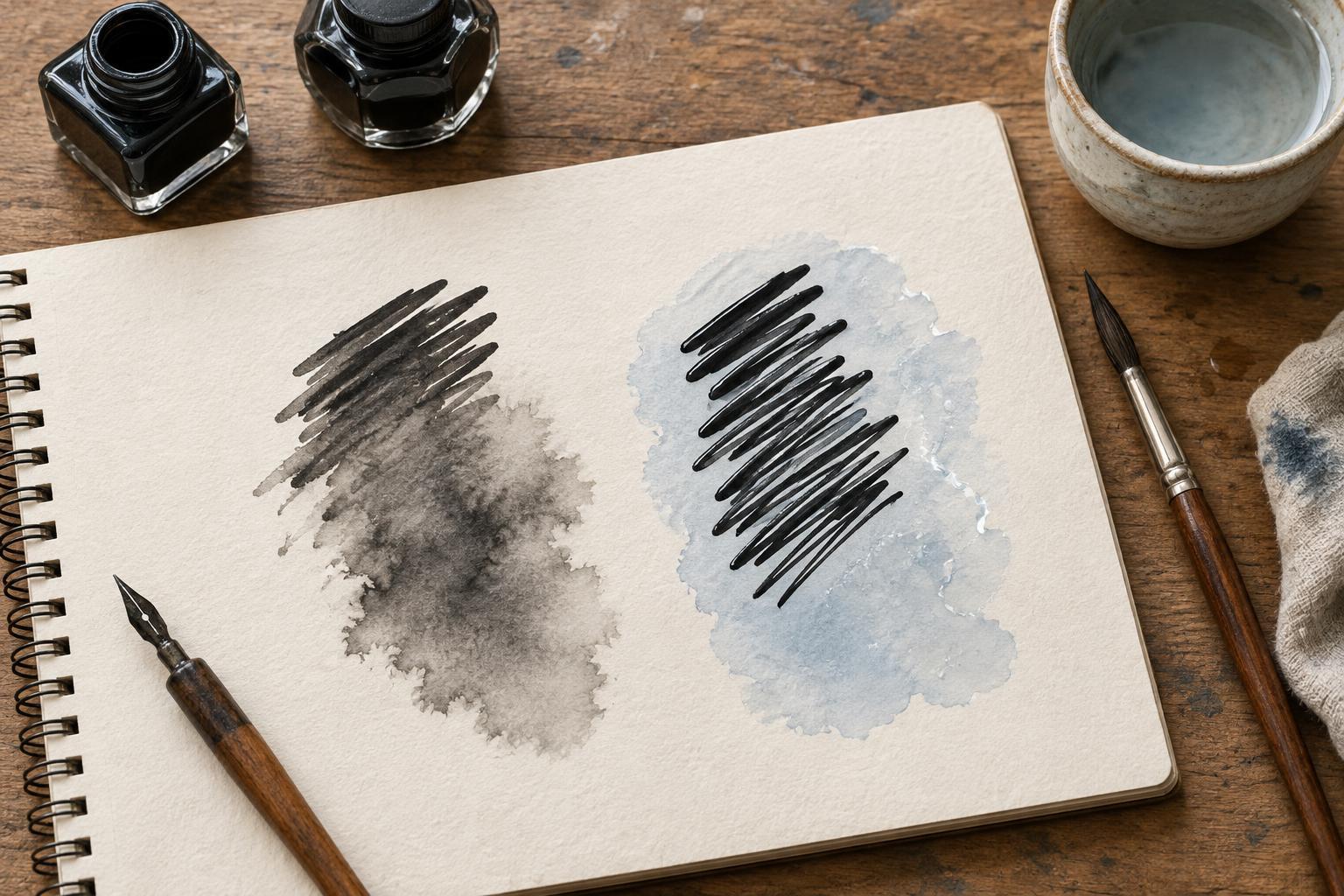
The difference between waterproof and water-soluble drawing ink becomes important when you add water after the line is drawn. A waterproof ink is intended to stay largely in place once it has dried or cured. A water-soluble ink can dissolve or lift again, allowing a damp brush to pull color from the mark. That movement might be exactly what you want for a soft shadow, or it might muddy a watercolor wash you meant to keep clear.
These are useful descriptions, not perfect guarantees. Some inks resist a quick pass with a wet brush but smear under repeated scrubbing. Others seem stable on one paper and lift on another. Drying time matters too: an ink described as waterproof may move if you wet it before it has fully set. Treat the label as a starting point and the mark on your own paper as the final test.
Read the label without overreading it
Look first for a direct statement such as “waterproof when dry” or “water-soluble.” “Water-resistant” suggests some resistance, but it does not promise an unmoving line beneath a wet wash. “Permanent” can refer to more than one property and does not, by itself, tell you how a mark will behave under water. Likewise, “archival” and “lightfast” address concerns other than whether a damp brush will lift the ink.
Ingredient descriptions offer clues, but they are not a substitute for testing. Pigment-based and dye-based inks can behave differently, yet the way an ink is formulated and binds to a surface also affects water resistance. The same caution applies to a pen labeled for illustration or technical drawing: its intended use does not tell you everything about your particular combination of paper, drying time, and painting technique.
Make a small swatch before committing to a drawing
Use a scrap of the paper planned for the finished piece. Draw several strokes, a filled patch, and a few short marks close together. Let them dry according to the product guidance; if none is available, give them more time than a quick touch test suggests. Then brush clean water across one group of marks. Try a single light pass first, followed by a second pass on another group to see whether repeated wetting changes the result.
Watch for three things: color bleeding into the clear water, the line becoming lighter, and the edges of the mark spreading. Blot a separate area with a clean, damp brush if you want to know whether the ink can be deliberately lifted. Allow the test to dry before judging it; a wet paper surface can make slight bleeding hard to distinguish from a temporary dark halo. If your project will use watercolor or a large wash, test with that method as well as plain water.
Paper can change the outcome. A smooth, well-sized sheet may hold a crisp line while a more absorbent surface encourages feathering. A heavily applied line may also take longer to become water-resistant than a thin one. Testing the actual tool, paper, and application you plan to use is more informative than testing ink alone.
Choose by the effect you want
For crisp outlines beneath watercolor, choose an ink explicitly described as waterproof when dry, then confirm it with a swatch. This can help keep a character’s silhouette, lettering, or small details intact while you paint over them. Even then, avoid assuming every tool filled with that ink will behave identically: a dense pool of ink at the end of a stroke may need more drying time.
Water-soluble ink is useful when you want one drawing tool to make both lines and tones. Draw a contour, then touch part of it with a damp brush to draw color into a shadow. You can leave some lines untouched for contrast and soften others to suggest depth or atmosphere. For controlled work, keep the brush only lightly damp at first; adding water gradually is easier than trying to restore a line after it has dissolved.
Keep the test and the tools practical
If you use bottled ink with a dip pen or brush, check whether the ink is suitable for that tool and clean the tool as directed. An ink that sets firmly on paper may also dry firmly in a nib or brush. Do not assume bottled drawing ink is safe for a fountain pen; use it there only if its maker specifies that use.
Keep a labeled swatch with your materials so you can compare inks without relying on memory. Note the paper, tool, and whether the line moved under one wash or several. The most useful distinction is not simply which bottle says “waterproof.” It is which mark stays put, or moves pleasingly, in the kind of drawing you actually make.