The difference is where you look
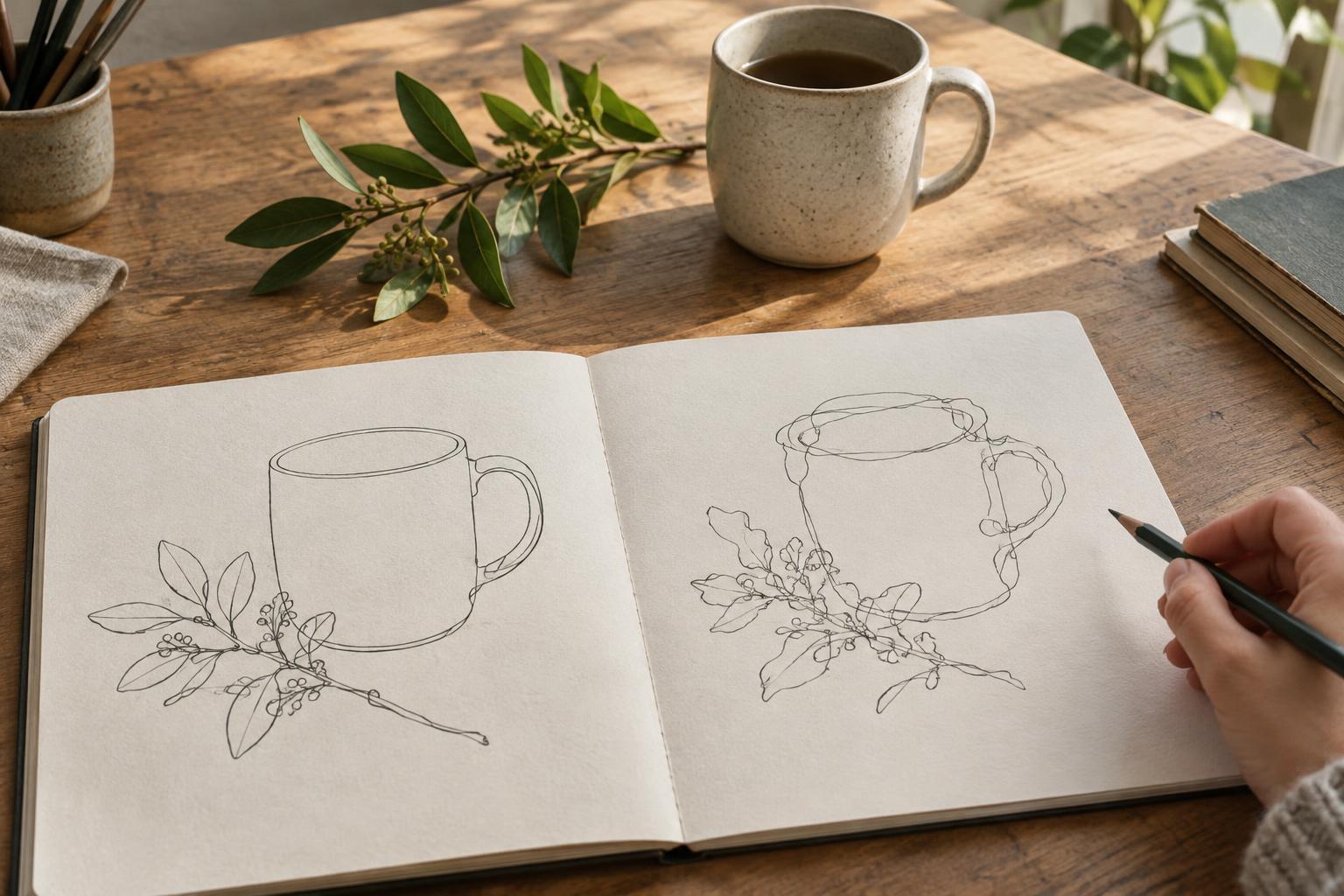
Contour drawing follows the visible edges and boundaries of a subject. Those boundaries might include an outer silhouette, the edge where a sleeve meets a hand, or a line separating two overlapping objects. In ordinary contour drawing, you look back and forth between the subject and your paper. You can check where a line has landed, then adjust the next mark to preserve a useful sense of shape and proportion.
Blind contour drawing uses the same attention to edges, with one constraint: once you begin, you keep your eyes on the subject rather than looking down at the paper. Your drawing may stretch, overlap, or fail to connect. That is not a mistake to correct during the exercise. The point is to notice more about the subject instead of repeatedly checking whether the drawing looks right.
What ordinary contour drawing teaches
Ordinary contour drawing helps connect observation with placement. Each time you glance from subject to paper, you make a decision about where the next edge belongs in relation to marks already made. You can compare the width of a mug to its height, notice where its handle attaches, or see that the rim is more curved than you first assumed. The exercise gives you room to revise your course as you go.
Try drawing a shoe, a houseplant leaf, or a crumpled paper bag without shading. Move slowly enough to follow changes in direction, but do not feel obliged to trace every tiny wrinkle. Look for edges that clarify the form: the silhouette, an overlap, or a seam. If you lose your place, pause and find a recognizable point on both the subject and the page before continuing.
This version is useful when you want to practice both looking and building a readable drawing. It can also serve as a first step before adding tone or color: a simple contour sketch reveals whether the main shapes and connections are where you intended them to be.
What blind contour drawing teaches
Blind contour drawing shifts the emphasis from a convincing result to sustained observation. Because you cannot check the page, you must keep following the subject with your eyes and let your hand respond. You may begin to notice small turns that a quick glance would miss: the uneven edge of a leaf, the way a finger bends at a joint, or the gap between a cup and its handle.
Choose a subject that will stay still for a few minutes. Put your pen on the page, pick one point along its edge, and imagine your eye moving slowly across that edge while the pen moves with it. When you reach an overlap or want to explore an interior boundary, move your attention there and keep drawing. You do not need to keep the pen on the paper for the entire exercise unless you want to add that as a separate challenge.
The result may look tangled. Resist evaluating it by likeness alone. Ask instead whether you slowed down, stayed with the subject, and found details you might otherwise have skipped. Blind contour can loosen the urge to make every early mark presentable, though it is not a shortcut to accurate proportions on its own.
Use the two exercises together
Set an everyday object where you can see it clearly, and make two drawings from the same viewpoint. Spend a few minutes on a blind contour first. Then make an ordinary contour drawing, allowing yourself to glance at the page. Keep the drawings separate so you can compare your decisions without trying to repair the first one.
Look for differences in attention rather than declaring one drawing better. Did the blind version include a notch or curve missing from the second? Did the ordinary version make the object's parts easier to understand? If you want a third attempt, borrow one observed detail from the blind drawing and place it more deliberately in a new contour sketch.
Repeat with subjects that offer different kinds of edges: a simple bottle, a folded jacket, or two overlapping kitchen tools. Keep the sessions short enough that you can remain curious. Ordinary contour practice develops choices about placement and clarity; blind contour practice strengthens the habit of looking closely before judging the page. Together, they make drawing less about guessing what an object should look like and more about responding to what is actually in front of you.