Name the job of the image
Feedback is easier to use when you can say what the illustration is meant to do. Before revising, write one sentence that describes its main effect: “The viewer should notice the small figure before discovering the enormous shadow,” or “This spot illustration should make a complicated process feel approachable.” Keep that sentence beside the image. It gives you a way to judge proposed changes without treating every comment as a command.
Purpose is more specific than subject matter. An image of a crowded kitchen might be intended to feel warm and lively, or cramped and overwhelming. A suggestion to remove background objects could strengthen the first version’s focus while weakening the second version’s atmosphere. Note any practical constraints too, such as where text will sit, the required format, or whether the image must remain legible at a small size.
Separate what a viewer noticed from what they prescribed
Critique often combines an observation with a proposed fix. “I didn’t notice the letter on the table; make it bright red” contains useful information even if red is wrong for the scene. The observation is that the letter is being missed. Possible responses include changing its position, value, surrounding detail, or the direction of a character’s gaze. Record the problem separately from the suggested solution so you have room to solve it in the language of your image.
Look for repeated observations, especially when viewers describe the same confusion in different words. One person may say the scene feels flat; another may say they cannot tell which figure matters. Both could point toward weak visual hierarchy. Conflicting responses deserve attention as well, but they do not always require compromise. Ask whether each viewer understood the intended audience, context and mood before deciding how much weight to give the comment.
Sort the feedback by impact
Make a short revision list with three groups: changes that support the image’s purpose, issues that need testing, and preferences that you can set aside. Put problems of reading first. If the focal point is unclear, adjusting a decorative texture is unlikely to help much. If the expression communicates the wrong emotion, a polished background will not restore the intended story.
Try to identify the smallest change that addresses each high-impact issue. Cropping an image may improve emphasis without redrawing every object. Simplifying the shapes behind a character may make their silhouette readable without changing the palette. Smaller interventions are not automatically better, but they make it easier to see which decision produced an improvement.
Test changes before rebuilding the piece
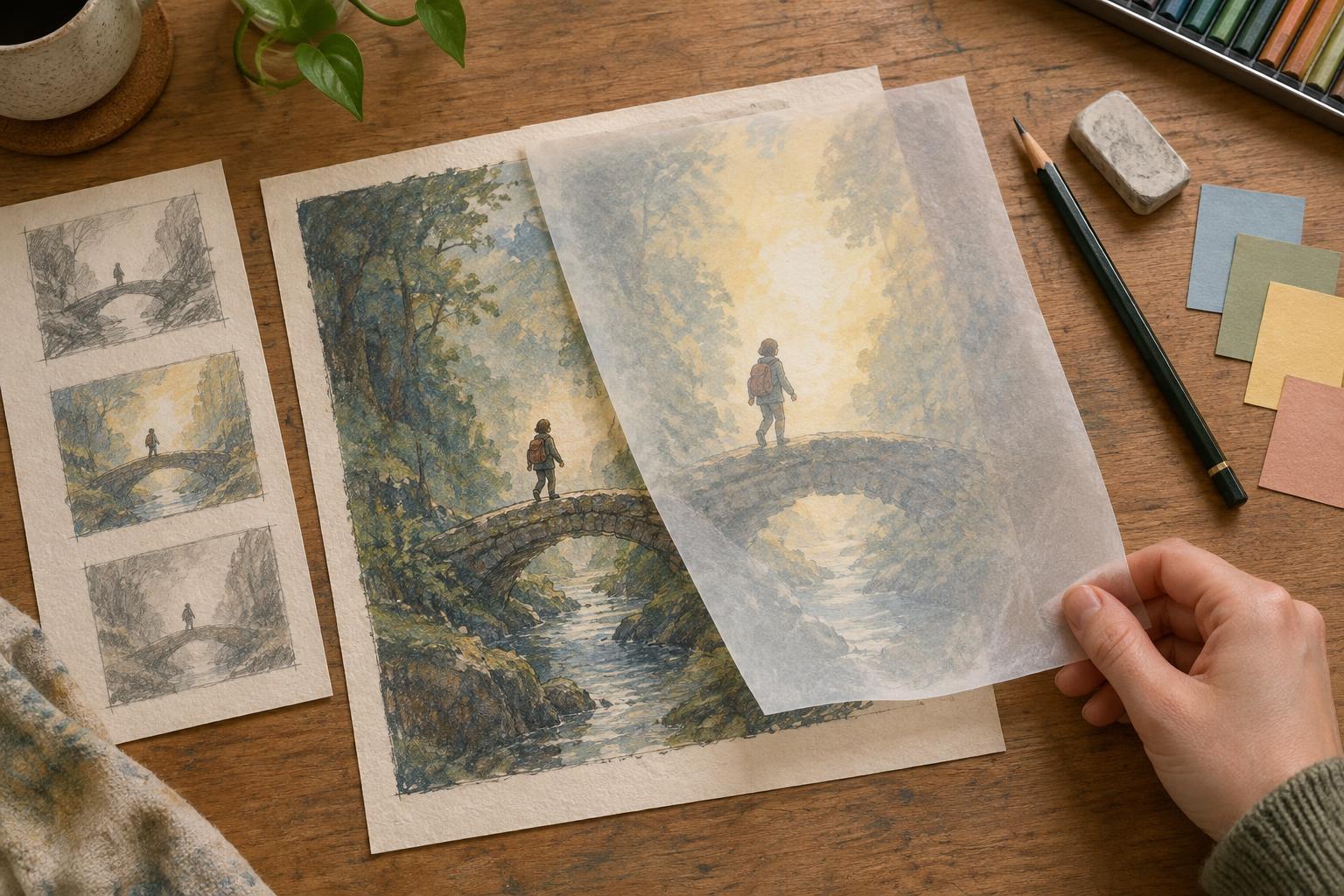
Work on a duplicate or make a quick set of thumbnails before committing to a major revision. At a small scale, compare two or three options for composition, value grouping, or the placement of an important object. Rough tests are useful because they keep you focused on the reading of the image rather than the effort already invested in its finish.
Check each option against the original purpose sentence. For example, if a quiet illustration depends on a pause between two characters, enlarging both faces might clarify their expressions but remove the space that makes the pause felt. You could instead adjust their gestures or the contrast near their hands. View the options at the size in which the illustration is likely to be seen, then step away and return for a fresh first impression.
Finish with a deliberate comparison
Once the main changes are in place, compare the revision with the earlier version rather than relying on memory. Ask what became clearer, what feeling changed, and whether anything distinctive was lost. You can keep a feature that some viewers questioned if it carries the image’s central idea and the surrounding choices now help it read. You can also reverse a revision that solves a minor complaint at the expense of the whole.
Set a reasonable stopping point: the image should communicate its intended emphasis, meet its practical constraints, and contain no unresolved issue you consider essential. Critique is a way to learn how the work is being received, not a vote on every mark. A strong revision answers the most useful questions the feedback raised while remaining recognizably committed to the image you set out to make.