Choose a session, not a favorite project
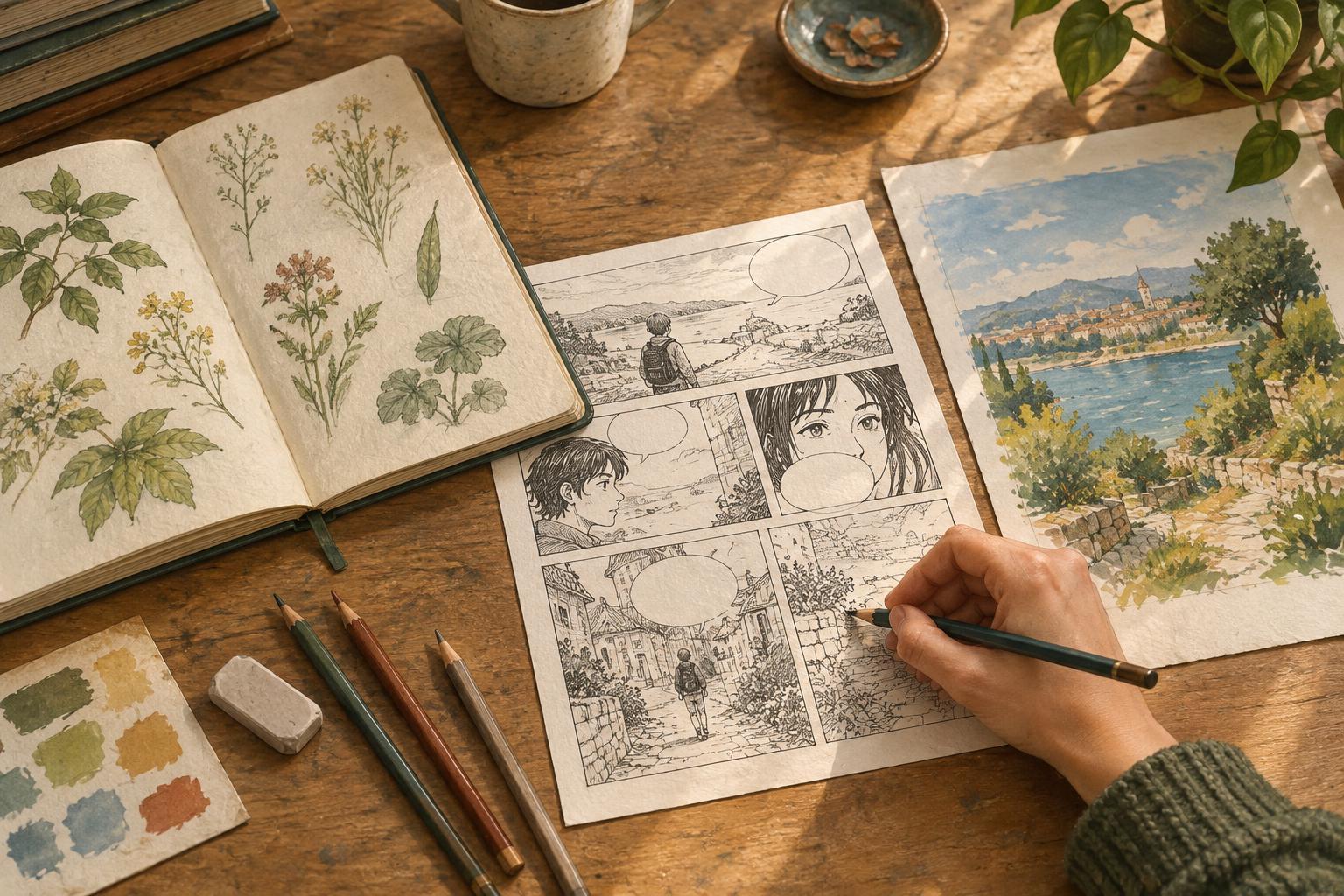
When several projects are open, deciding what to draw can feel like deciding which idea matters most. That is a heavier question than a drawing session needs to answer. You may care equally about a comic, a character study, and a finished illustration, but they do not all need your attention today. The useful question is narrower: which piece of work fits this session?
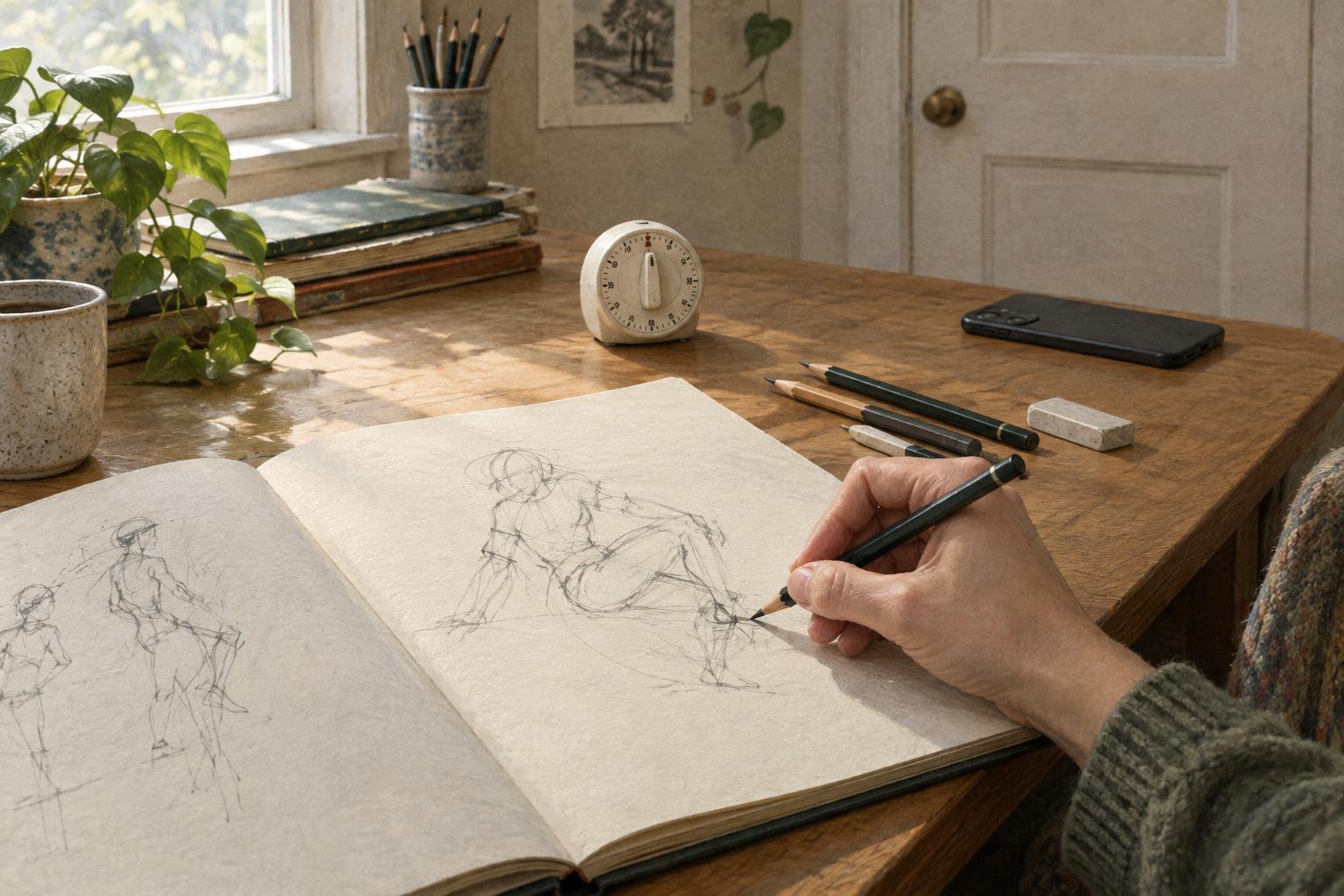
Start by naming the time and attention you have available. A quiet afternoon may suit thumbnailing an entire sequence. Twenty minutes before another commitment may be better for testing three facial expressions. The smaller choice protects you from treating every drawing session as a referendum on your creative direction. You are selecting a next step, not closing every other path.
Make a brief inventory of open work
Put your active projects on one page. For each, write its current state and its next visible action. “Comic” is too broad to begin easily; “draw four rough panels for the kitchen scene” gives you a place to start. “Improve anatomy” is similarly vague; “sketch six hands gripping the same object” turns an intention into an exercise.
Note any genuine constraints beside each action. One task may need a large work surface, another may depend on reference images you have not gathered, and a third may be ready with only a pencil. Also mark commitments to other people separately from self-directed work. This does not mean every commitment must always win, but it makes the consequences of postponing it easier to see.
Keep the inventory short enough to scan. An archive of every idea you have ever had will not help you choose between the projects already in motion. Put distant ideas on a separate list, where they can wait without competing for today’s drawing time.
Match the task to your energy
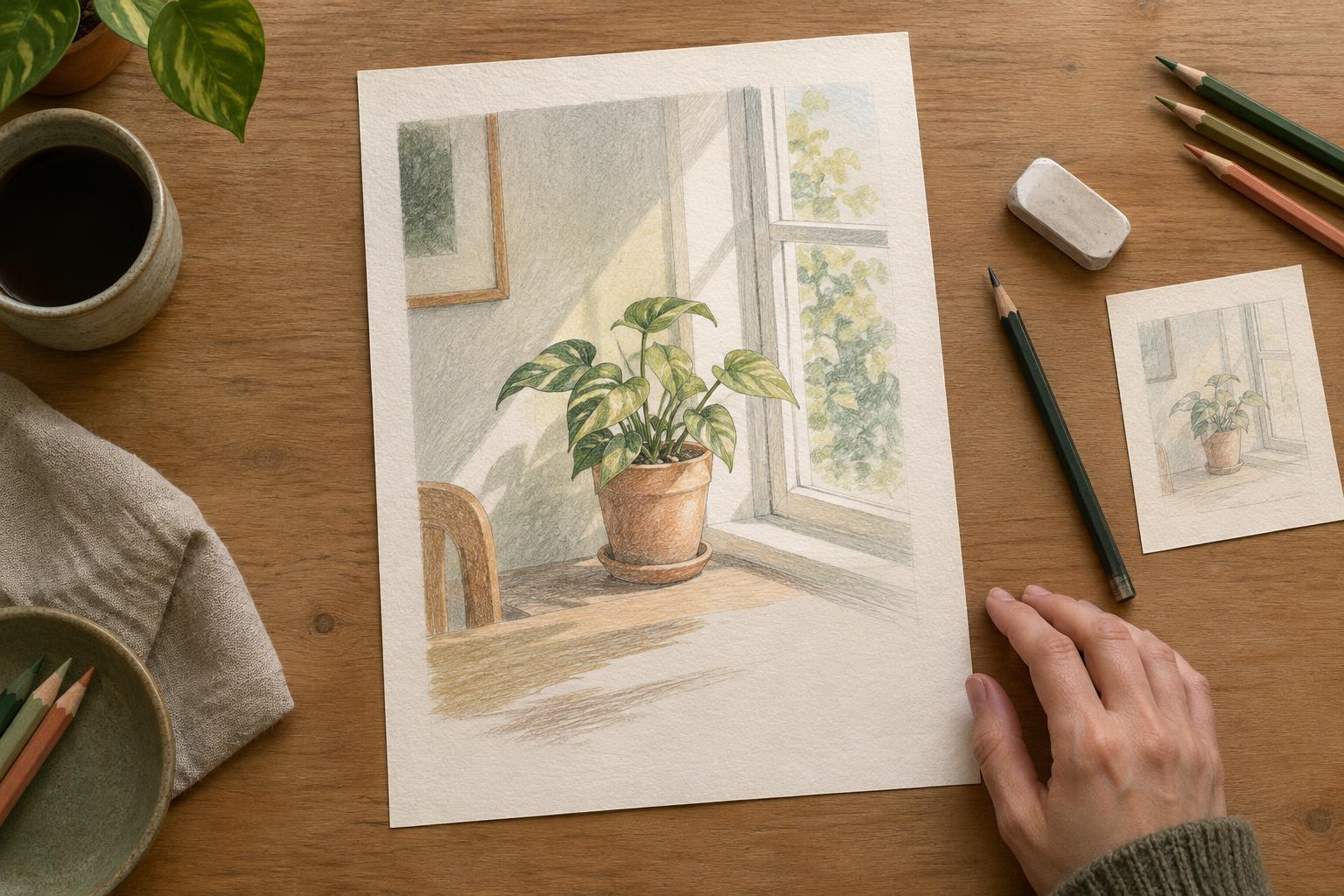
Different stages of visual work ask for different kinds of attention. Planning a comic scene often requires decisions about pacing, viewpoint, and what the reader needs to understand. Inking an approved drawing may require steadiness and care, but fewer story decisions. A materials test can be useful when you are curious yet not ready to commit to a finished image.
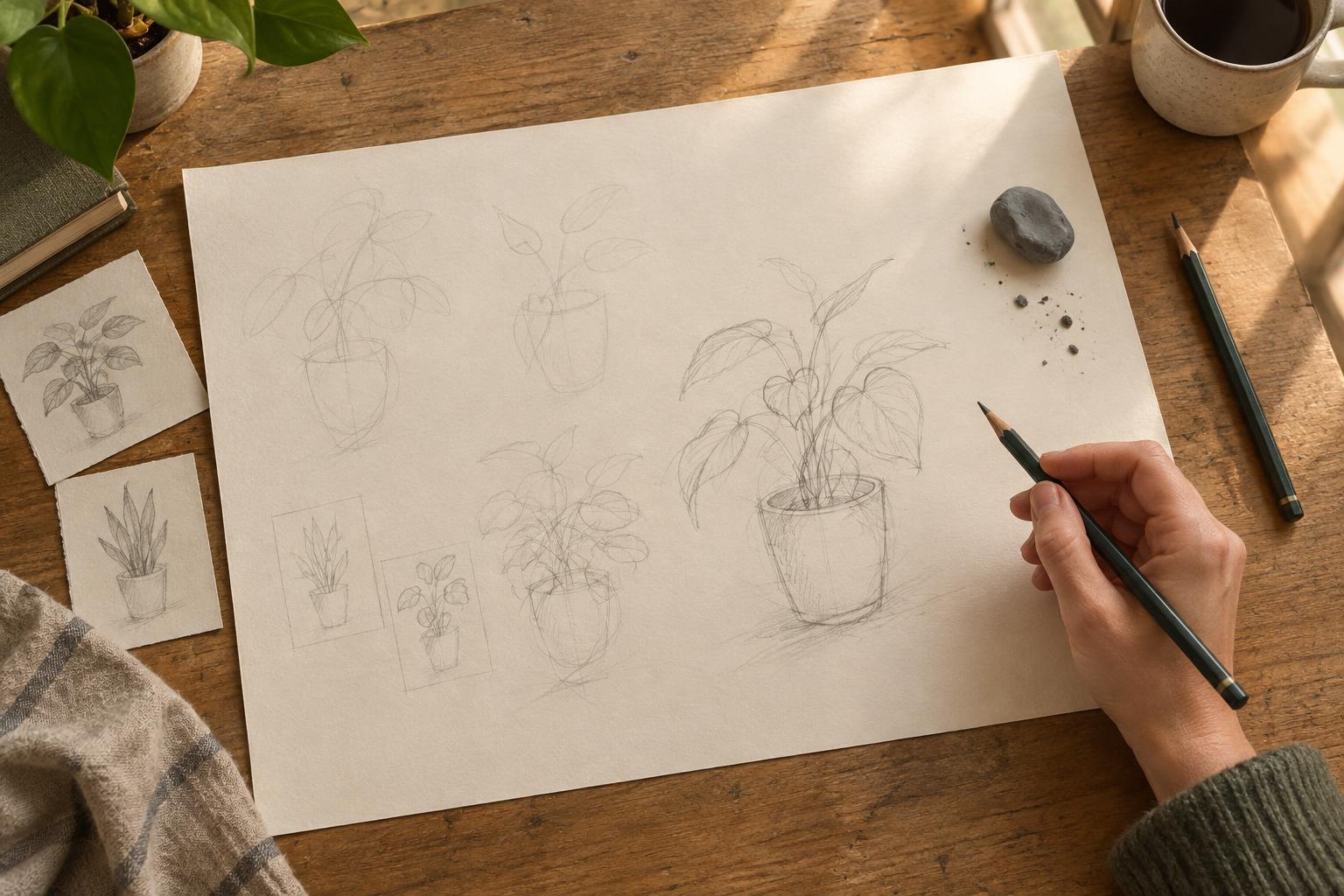
Before starting, ask whether you have energy for invention, problem-solving, or execution. Then look for a task that matches. If you want to draw but cannot settle a composition, doing another full sketch may only multiply your options. You could instead make a page of tiny thumbnails with one variable changed each time, such as camera distance or the placement of a figure.
Low-energy work still deserves a purpose. Cleaning up file names, preparing a palette, or sorting reference can reduce friction for a later session, but it should not become a permanent substitute for drawing. Choose a preparation task because it clears a specific obstacle, not simply because it feels safer than making marks.
Use a small rule to break a tie
If two projects still seem equally appealing, apply a simple rule rather than reopening the whole debate. Work on the one with an upcoming commitment, the one whose next step is clearest, or the one you have avoided for the longest. Any of these can be reasonable; pick a rule that addresses the difficulty you actually face.
Set a stopping point before you begin. You might draw three composition options, rough one page, or spend half an hour testing a brush. A defined endpoint makes it easier to start because you are not promising to finish the entire project. When you reach it, leave a note about what you learned and the next action. Even an unfinished attempt then gives your future self something concrete to use.
If the session reveals that the project needs a different approach, that is progress too. A rough page may show that a scene needs fewer panels; a color test may show that the values need work first. Record the discovery rather than judging the session only by how polished the drawing looks.
Keep the other projects warm, not constantly active
Choosing one project today does not require forgetting the others. Give each paused project a brief re-entry note: where the work stands, what question remains, and the first action to take when you return. This is especially helpful for comics and layered illustrations, where a week away can make the next step hard to remember.
Review your active list occasionally. A project that repeatedly loses out may need a smaller entry point, a different format, or permission to rest. Pausing it deliberately frees attention without declaring the idea a failure. The aim is not to keep every project moving at the same speed. It is to make each drawing session specific enough that you can begin, learn something, and return to your wider body of work with less friction.