Start with a question, not a reinvention
The wish to develop a new visual style can make every drawing feel like a test of identity. That is a lot to ask of a single page. A smaller experiment is more useful: it gives you one choice to investigate and a way to notice its effects. Instead of asking, “What should my style be?” try asking, “What happens if I draw this scene using only broad shapes?” or “How does a limited palette change the mood?”
Choose a familiar subject so you can spend less attention inventing content. A person waiting at a bus stop, a cluttered desk or two characters sharing a meal can all support repeated studies. If you make comics, choose a moment with a clear action and reaction. Keep the subject roughly consistent across versions. Differences in the results will then be easier to connect to the visual choices you made.
Change one variable at a time
Make a short list of style ingredients you want to explore: line weight, shape language, texture, colour, proportions, lighting or panel density. Pick one for your first set of sketches. For example, draw the same character three times with rounded, angular and mixed shapes. Keep the pose and viewpoint similar. You are not looking for the best drawing yet; you are learning what each choice makes easier, harder or more expressive.
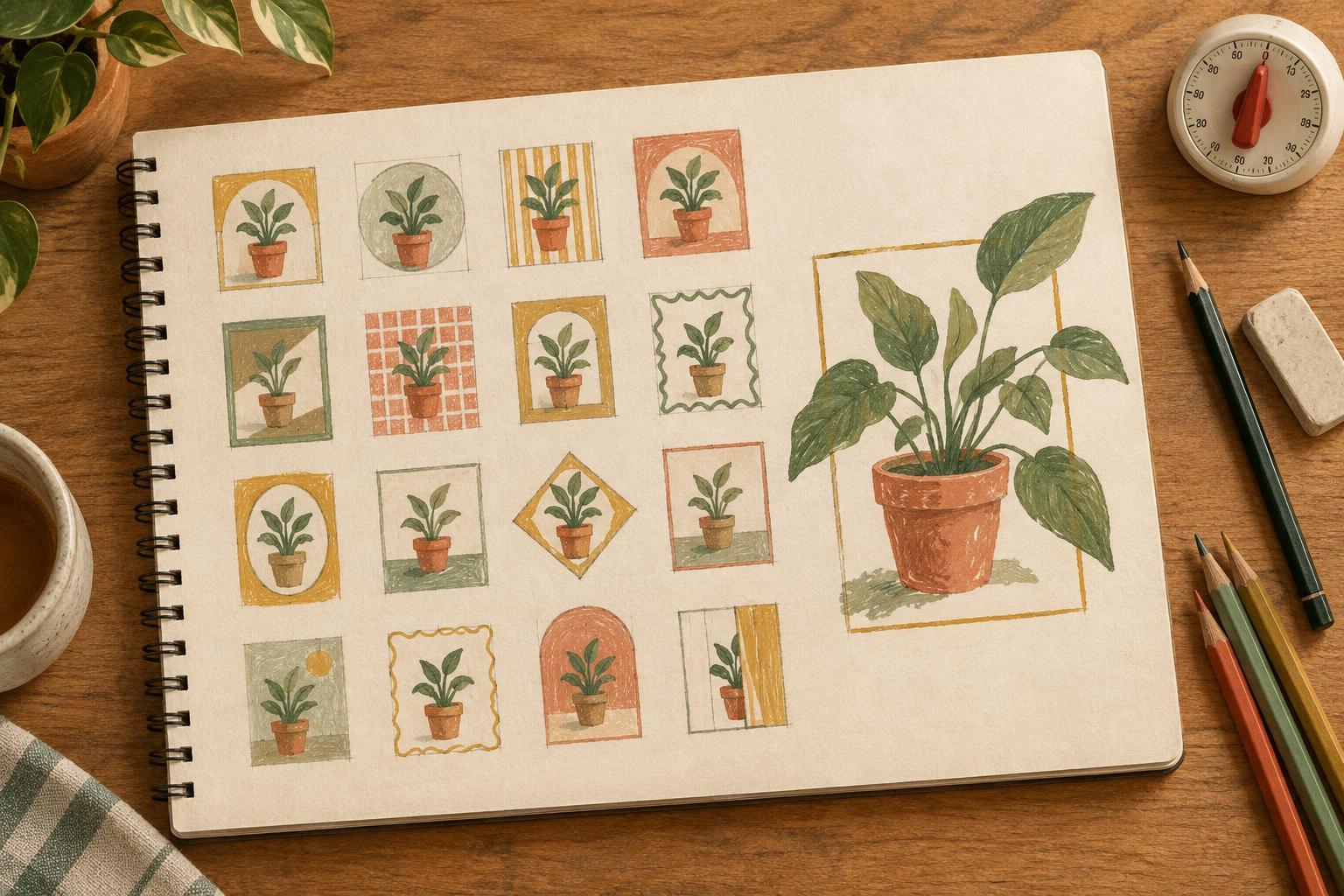
Give the experiment useful limits. Set a small drawing area, a modest time window or a fixed set of tools. Limits reduce the temptation to polish one version until it no longer compares fairly with the others. If the first results surprise you, repeat the test rather than changing several ingredients at once. When you do combine choices, label the combination so you can remember what produced it.
Test style against the story
A visual approach may look appealing in a single portrait but behave differently across a sequence. Try your most promising choices on a tiny story task: three images showing a character noticing something, deciding what to do and acting. You can also redraw one panel at a close, medium and wide distance. These tests reveal whether a line treatment remains readable at small sizes, whether simplified faces carry emotion and whether details compete with the action.
Pay attention to the work required, not just the finished image. A dense texture might add atmosphere to a cover illustration but slow down a page of comics. A spare approach might feel unfamiliar in a standalone drawing yet leave room for gesture and timing in a sequence. Neither result makes the approach good or bad in general. It tells you where it may serve the work you want to make.
Review the experiments without ranking everything
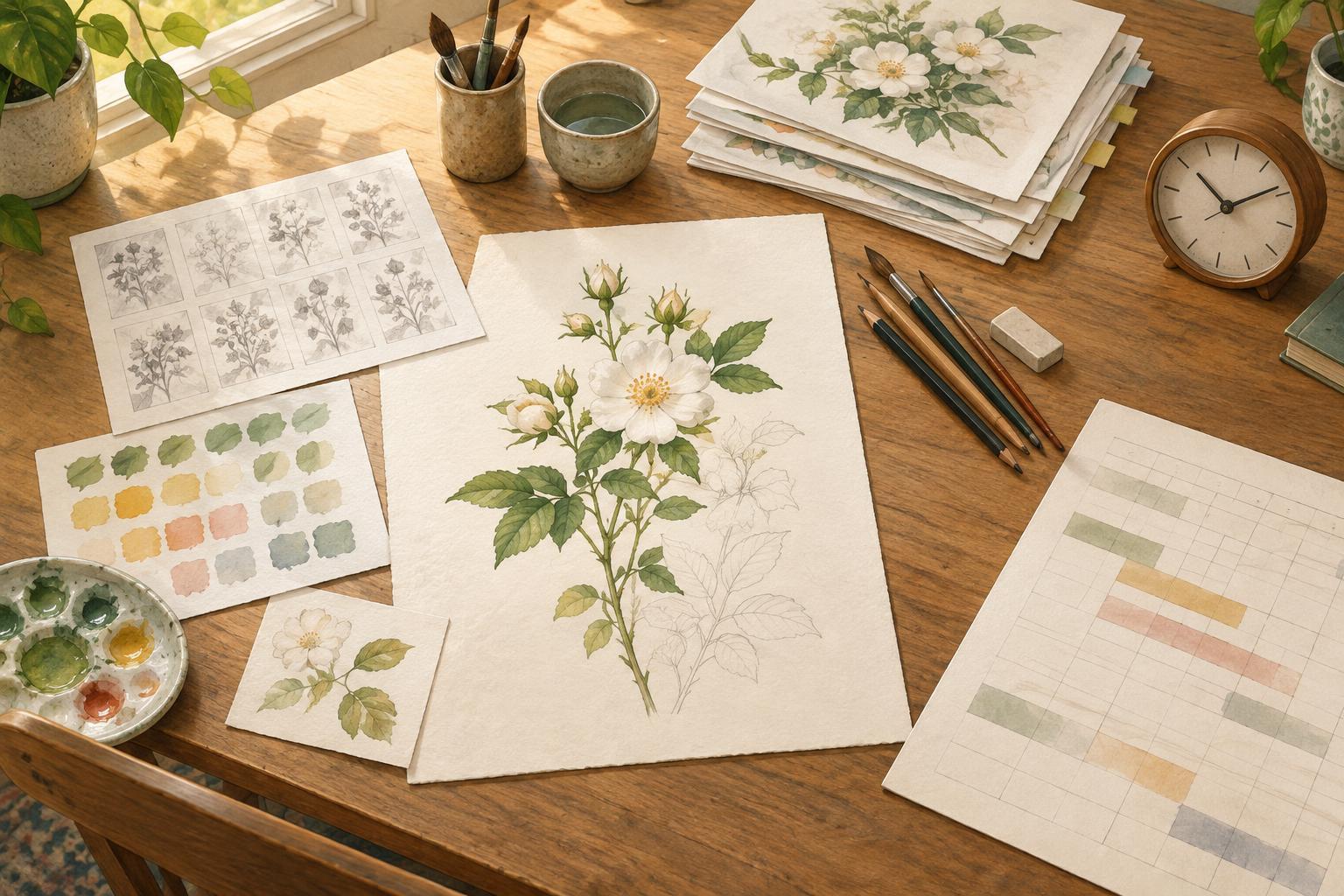
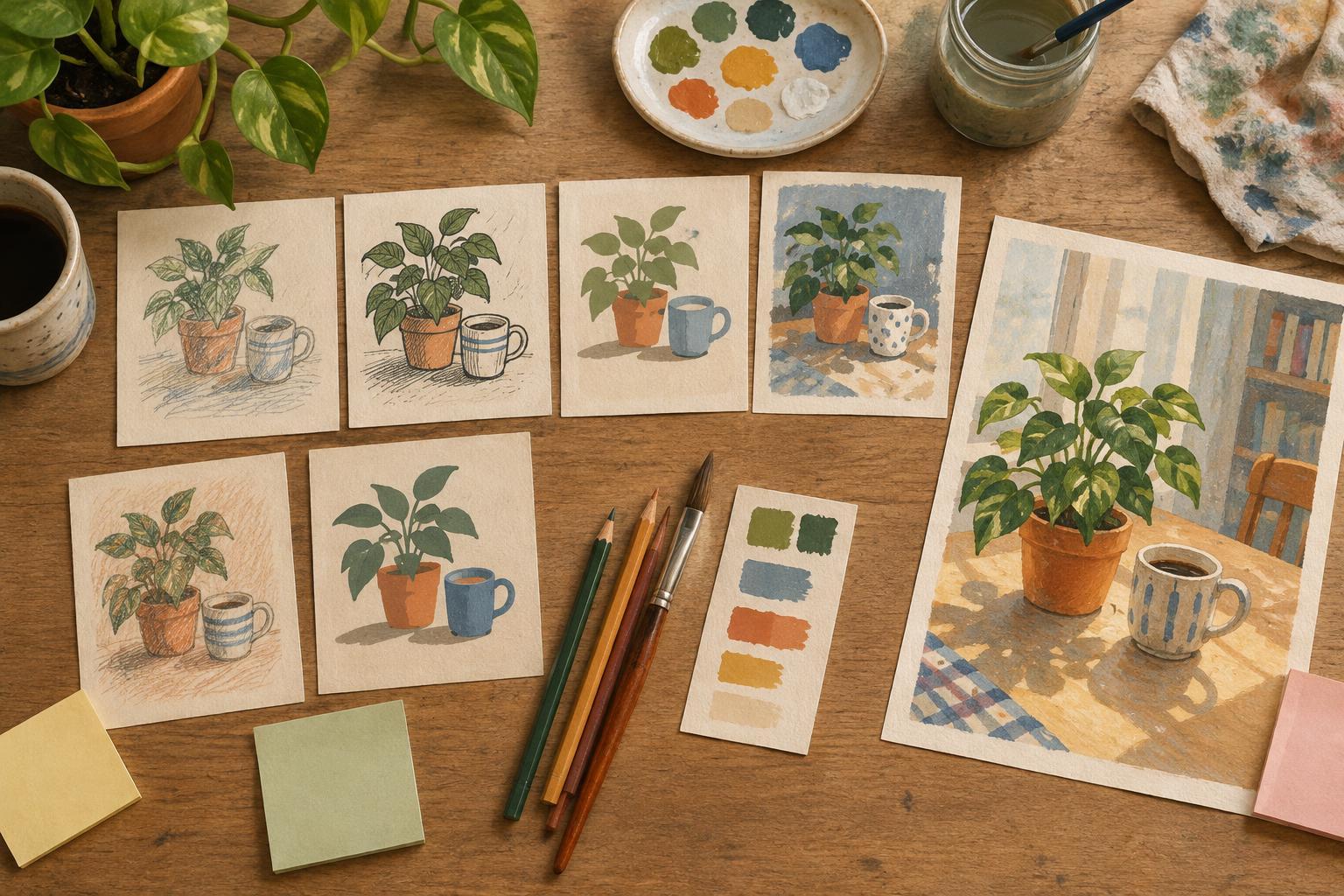
Place the versions side by side and describe what you see before deciding what you like. Notes such as “the heavier outline separates the figures” or “the pale background makes the pause feel quieter” are more useful than “this one is better.” Look for recurring effects across several drawings. If a choice works only once, it may depend on that particular composition; if it helps repeatedly, it may be worth developing.
Keep both visual and practical notes. Which version communicates the action quickly? Which invites a longer look? Which could you repeat without losing interest? If you share work with a trusted reader, ask a focused question, such as what they noticed first or where the action became unclear. Their response can help you check whether your intended effect comes through, while the final choice remains yours.
Carry one discovery into a finished piece
An experiment does not need to produce a complete style guide. Choose one useful discovery and apply it to a small finished illustration or comic page. You might keep the broad shapes from one sketch but return to your usual colours, or use an unfamiliar texture only in quiet backgrounds. This step tests whether the idea still works when composition, characters and finishing all demand attention.
Save the studies with brief labels, including choices you decided not to use. A rejected test can become useful for another kind of story. Over time, your notes form a record of what different visual decisions do, rather than a collection of attempts to arrive at one permanent look. A workable style can grow from those repeated, specific choices.