Make the first page easy to begin
Returning to drawing can feel less like picking up a familiar skill and more like meeting an old expectation. You may remember what you used to make, notice that your hand feels uncertain, and want the first drawing back to prove something. That is a lot to ask of a page. Instead, give the first session a smaller job: help you become comfortable making marks again.
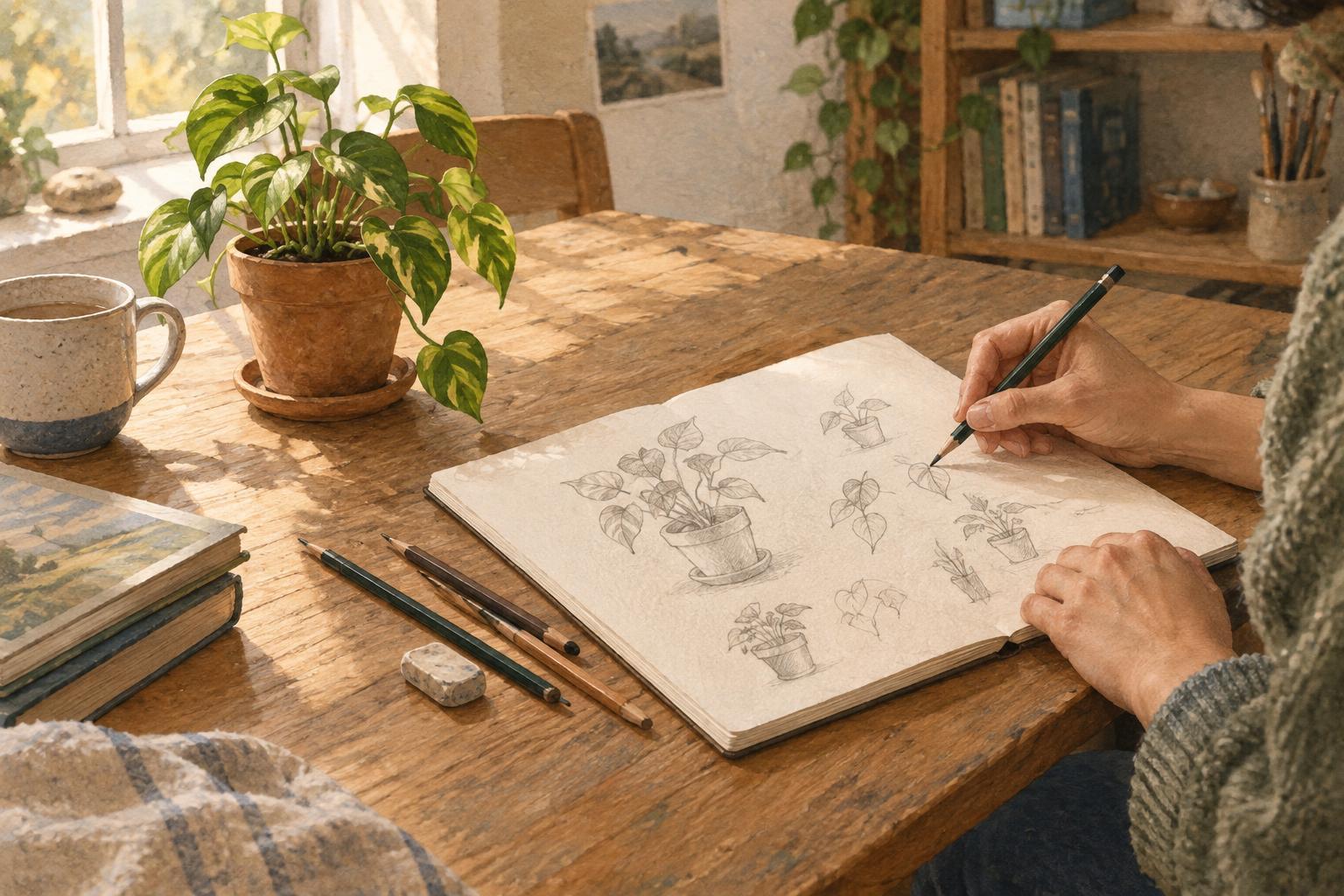
Choose a subject that is already nearby, such as a mug, a shoe, or the view from a window. Set out one tool and one sheet of paper. Draw the subject for ten minutes without correcting every line. If you finish early, draw it again from another angle. The exercise succeeds when you have looked closely and put marks on the page; it does not need to produce a drawing you would share.
Choose exercises that remove decisions
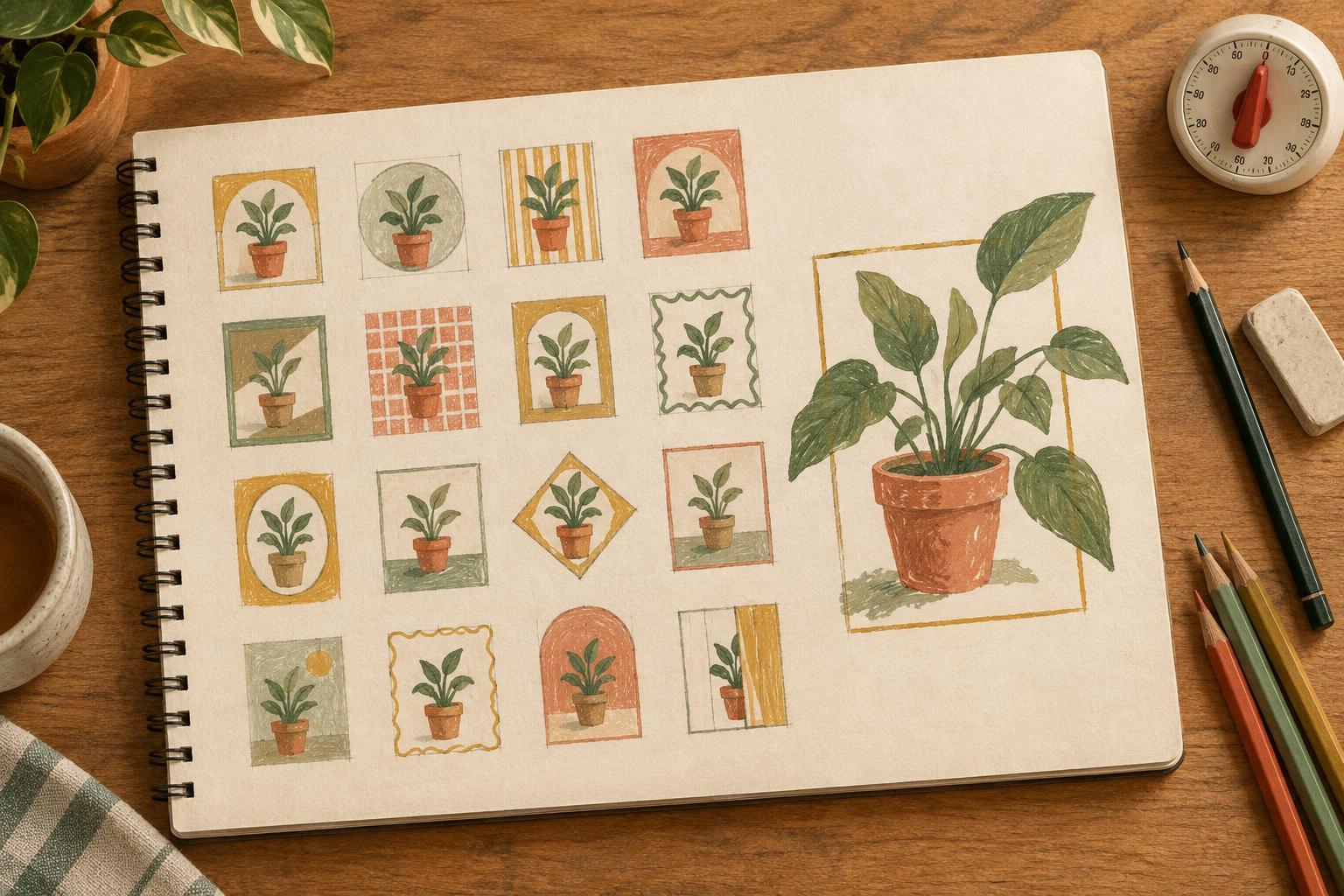
A blank page offers too many possibilities when your practice is new again. A narrow prompt gives you a place to start. Try drawing five small silhouettes of the same object, then add details to only one. Or fill a page with quick studies of hands holding ordinary items. You can also draw a simple room from memory and then look at the room to notice what you left out.
Keep the exercise short enough that you could repeat it on an ordinary day. Use a timer if it helps you stop before a study turns into a test of endurance. Save the pages, including the awkward ones. After several sessions, they can show you which subjects invite curiosity, which tools feel comfortable, and where you might want more focused practice.
Let your routine fit the life you have
A useful drawing routine does not have to resemble a daily challenge. Think about when you can usually find a little attention, rather than designing a schedule around your most energetic day. That might mean a short session twice a week, a sketchbook beside the sofa, or a few minutes drawing while you wait for something else. A regular place to keep your tools can make beginning easier.
It also helps to define a minimum session. One small sketch, a page of loose shapes, or a quick study of a panel from a comic can all count. On days when you have more time, you can continue; on busy days, you can stop there. If you miss a planned session, return at the next opportunity instead of trying to make up every missed drawing. The routine is there to support the work, not to become another subject you have to manage.
Work with comparison instead of fighting it
Looking at older drawings can be encouraging, but it can also make a new sketch feel disappointing. Remember that an old finished piece and a fresh warm-up are doing different jobs. You may still have a strong sense of composition or character while needing time to regain control of a particular tool. Treat those observations as information, not a verdict on whether you still know how to draw.
When a drawing bothers you, name one specific thing you want to investigate. “The pose feels stiff” gives you a direction: make several gesture drawings with attention to the line of action. “The room feels flat” might lead to a few studies of overlapping shapes and viewpoint. Pair that question with one thing you want to keep, such as an expressive face or an interesting arrangement of shadows. Specific notes are more useful than deciding the whole page is good or bad.
Follow interest into a small project
Exercises can help you restart, but interest often helps you continue. Once you have a few pages behind you, choose a small project with a clear finish. Draw three objects from the same shelf, design a character in four different moods, or make a one-page comic about a minor everyday mishap. A project gives your practice a direction without requiring a major commitment.
Keep the scope modest and decide what “finished” means before you begin. It might mean three sketches with captions, a rough comic with readable panels, or an illustration using only two values. When it is done, look back for choices you enjoyed and questions you want to explore next. Returning to drawing is not a race to recreate an earlier version of your work. It is a chance to build a practice that suits your attention, interests, and circumstances now.