When readers cannot tell what happened
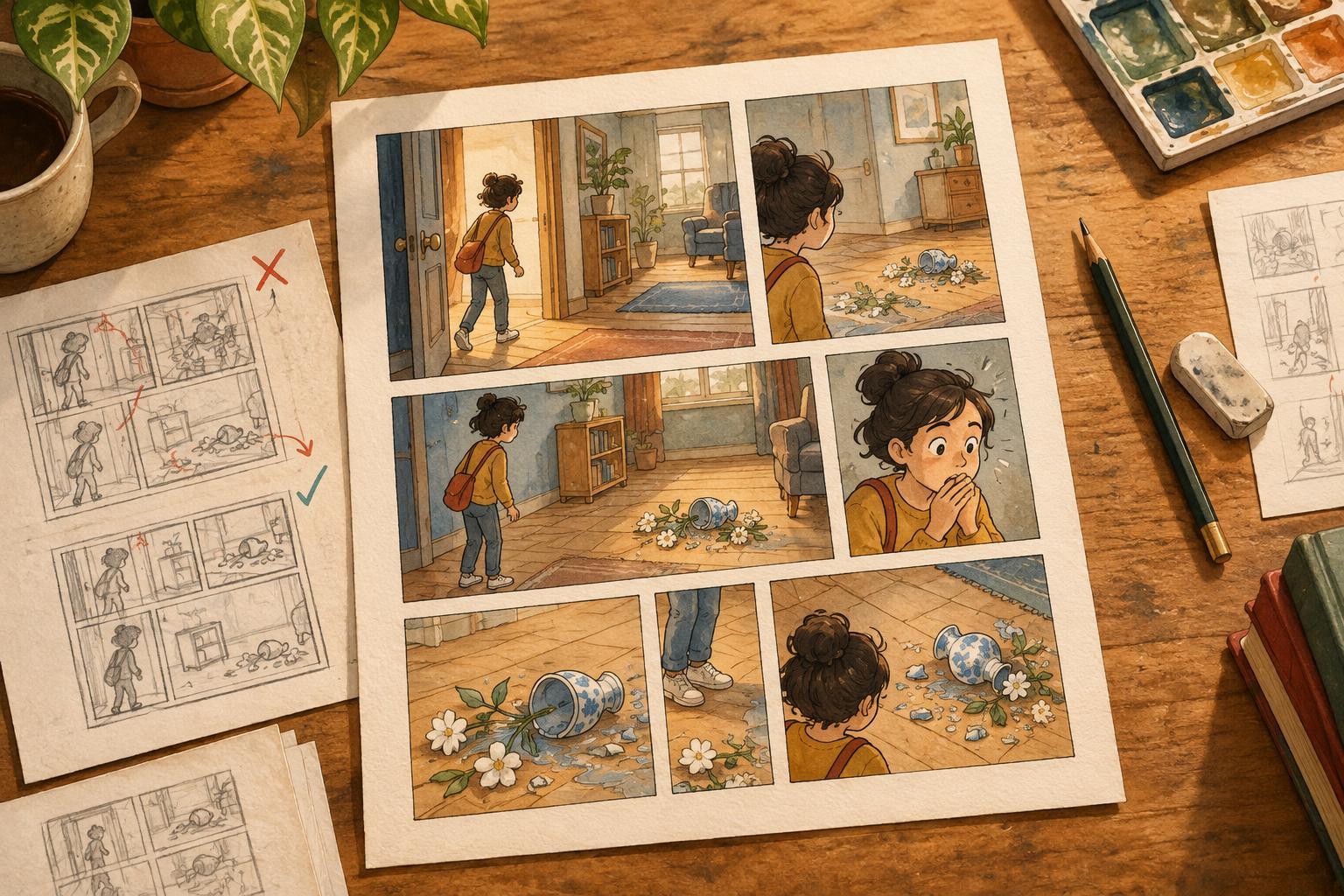
A reader should not have to solve a spatial puzzle to understand a simple action. If a character reaches for a cup in one panel and the cup is broken in the next, show enough of the intervening action to make the change clear. A small panel of the cup slipping, or a drawing of the character reacting to its fall, may be all the bridge the sequence needs.
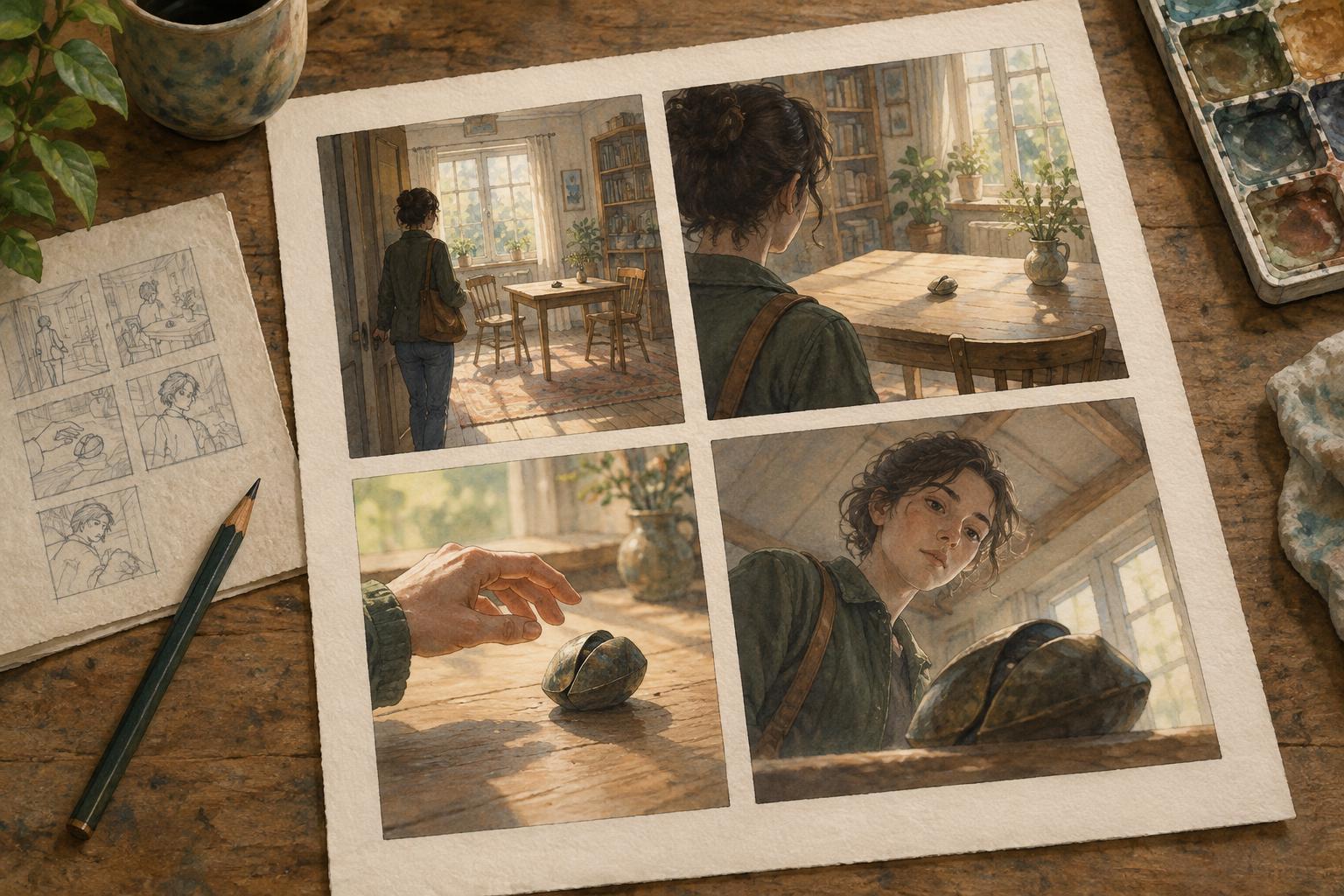
Confusion can also come from changing the viewing angle too abruptly. Establish where the characters and important objects are before moving in for close-ups. Keep useful landmarks in the background, and pay attention to which side of the panel each character occupies. A close-up can heighten emotion, but if readers no longer know who is looking at whom, it may interrupt the scene instead.
To test a sequence, cover the dialogue and read only the pictures. Can you identify who acts, what changes and where the characters are? If not, revise the drawings or add a connecting panel before asking captions to explain the action.
When every moment gets the same amount of space
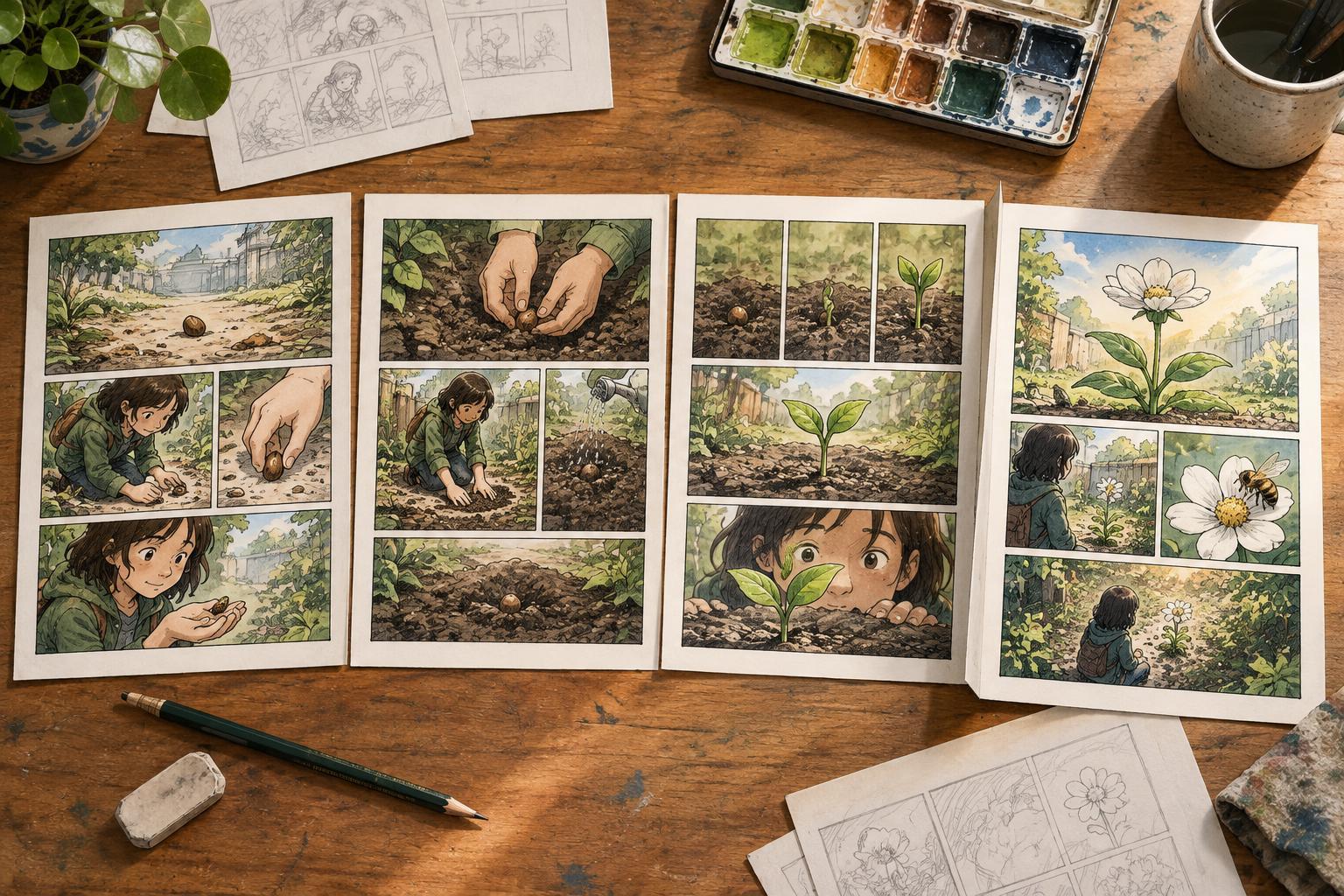
Giving every action one equally sized panel can make a dramatic scene feel mechanical. The opposite mistake is rushing past the moment the reader came to see: a decision, a discovery or a reaction. Panel size and count affect how long a reader spends with an event, so allocate space according to its story value rather than the number of physical movements involved.
Before drawing a page, write its main change in one sentence, such as “Mira realizes her friend kept the letter.” Then mark the beat that carries that change. Routine steps can often be combined or omitted. The revealing detail and Mira’s response may deserve separate panels, allowing the reader to register the discovery before moving on.
A useful exercise is to thumbnail the same scene twice: once in four panels and once in eight. Compare what each version emphasizes. More panels do not automatically mean better pacing; use them when an extra pause, gesture or piece of information improves the experience.
When panels compete instead of guiding the eye
Crowded layouts can make readers work out where to look before they can engage with the story. Several strong focal points in one panel, speech balloons placed far from their speakers, or an unusual panel arrangement can all disrupt the intended reading order. Experimentation has a place, but it works best when the route through the page remains legible.
Start with small thumbnails and trace the path your eye takes across them. Give the most important action a clear visual emphasis through placement, contrast, scale or surrounding space. Position balloons so their order is apparent and their tails point unambiguously to the speakers. If a page still feels busy at thumbnail size, removing a competing detail may help more than polishing it.
Check each panel for a single primary job. It might establish a place, deliver a line, show an action or hold a reaction. A panel can do more than one job, but knowing its main purpose makes decisions about cropping and detail easier.
When dialogue does all the storytelling
A character explaining every feeling and action can leave the artwork with little to contribute. Dense balloons also reduce room for expressions, gestures and setting details. When a page feels text-heavy, look for lines that merely repeat what the picture already shows or explain an emotion the character’s behavior could convey.
Try removing the dialogue from one exchange. What can a glance, a turned shoulder or an object left untouched communicate? Then restore only the words needed to add information, reveal voice or create a contrast with the image. A character saying “I’m fine” while carefully hiding a trembling hand gives the words and drawing different roles.
Read the page at its intended display size, whether that is a printed page or a phone screen. If the lettering becomes difficult to read, consider shorter lines, fewer balloons or another panel. Treating text as part of the composition early is easier than squeezing it into finished art.
When the scene ends without a clear change
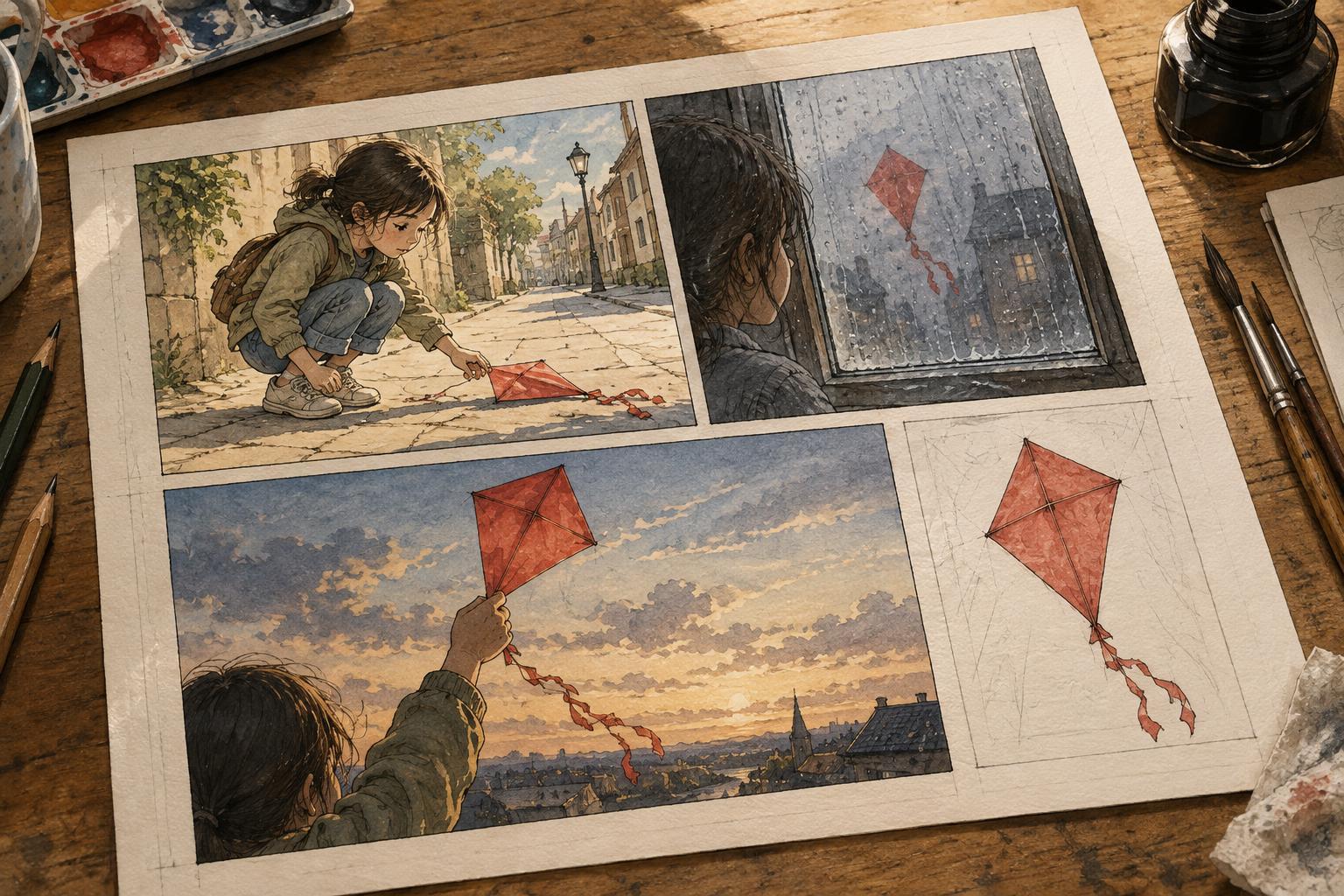
A scene can contain lively drawings and still feel unfinished if its ending leaves the reader unsure why the exchange mattered. The final panel does not need a twist, but it should usually show a consequence: someone chooses a direction, learns something, loses an opportunity or sees another person differently.
During revision, identify what the central character knows or wants at the start of the scene and what is different at the end. If the answer is “nothing,” consider whether the scene needs a stronger final beat or belongs elsewhere. Sometimes the fix is modest: hold on a reaction rather than cutting away immediately, or show the character acting on what they have learned.
Finally, ask someone unfamiliar with the draft to describe what happened, where they hesitated and which moment stayed with them. Do not explain the page first. Their reading can help you distinguish an intentional mystery from a missing piece of storytelling.