Give the reader a point of departure
A panel-to-panel transition begins before the reader reaches the next panel. The first image establishes a situation: who is present, where they are, and what matters at this moment. If a character is about to pick up a key, showing the key on the table gives the reader something specific to track. The following panel can then show the hand closing around it without having to reintroduce the room.
Before drawing a sequence, write a brief description of what changes from one panel to the next. Try sentences such as “She sees the key,” “She reaches for it,” and “The door opens.” If you cannot name the change, two panels may be doing the same job. If several important changes happen in one jump, the reader may need another image or a clearer clue.
Keep important visual anchors steady
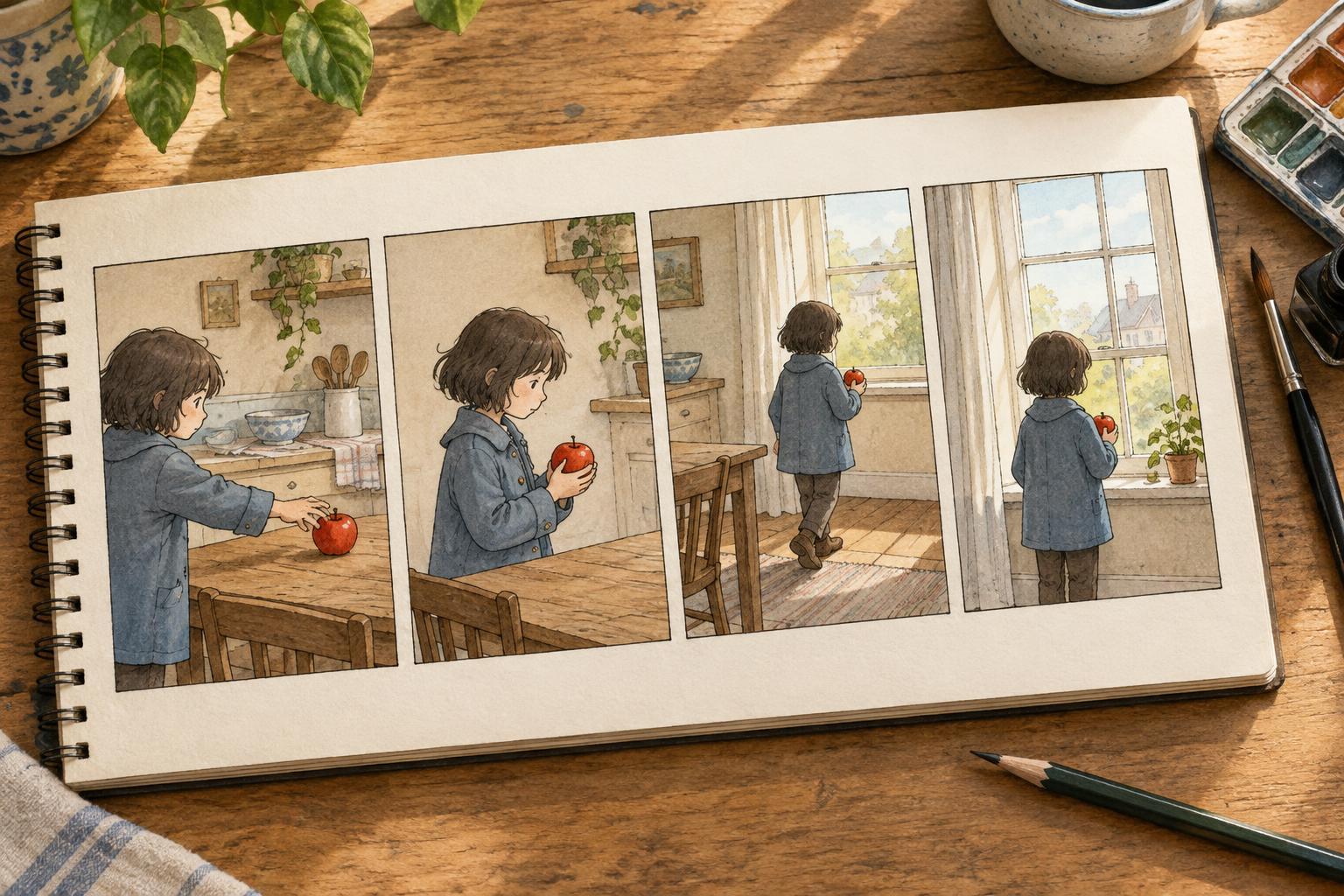
Readers use recurring details to connect separate images. A distinctive coat, a window behind a character, or a mug at the edge of a desk can confirm that the scene is continuing even when the viewpoint shifts. You do not need to redraw every object. Keep the details that help readers identify the subject and understand its position.
Spatial consistency matters most when movement is the point of the scene. Imagine a character walking toward a door on the right side of a hallway. If the next panel suddenly places the door on the left without showing a change in viewpoint, the character may appear to have reversed direction. You can avoid that confusion by keeping the direction consistent or by including a wider panel that makes the new viewpoint understandable.
A useful thumbnail exercise is to cover the dialogue and look only at the figures and major objects. Can you tell who moved, where they went, and what they touched? If not, try repeating one visual anchor across the panels before adding more detail.
Choose what happens in the gap
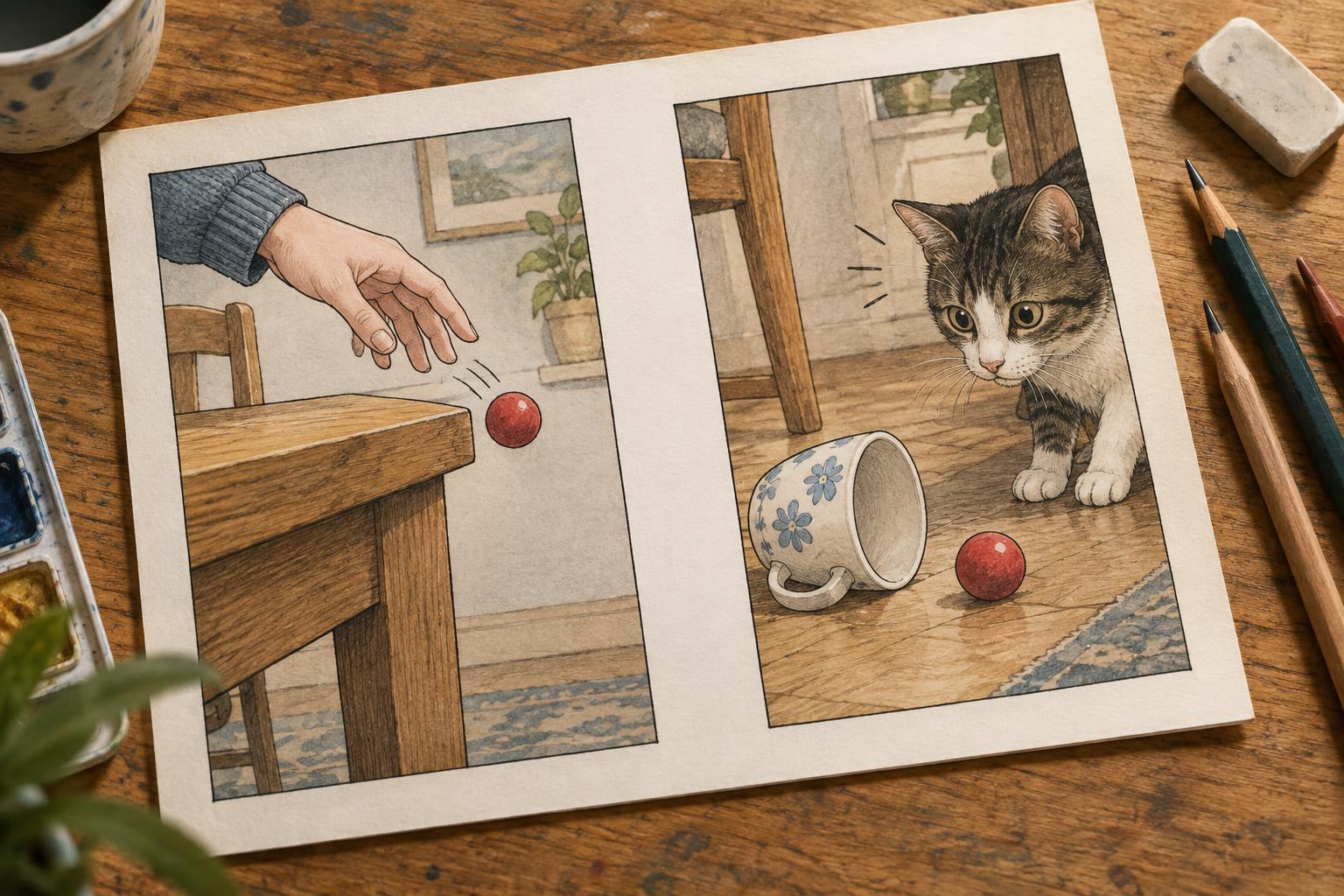
The space between panels invites readers to supply missing action. A panel showing a hand pushing a glass toward the edge of a table can be followed by one showing the glass broken on the floor. The fall itself may not need to appear. The two images provide enough information to connect cause and result.
Not every action benefits from a large jump. If the important moment is a character deciding whether to catch the glass, a panel of their reaction or outstretched hand could make that hesitation visible. Ask what readers need to experience: the speed of an accident, the effort of an action, or the weight of a decision. Then show the moments that carry that experience and leave routine motion in the gap.
When a transition feels hard to follow, check whether the panels share a clear subject or cause. A broken glass immediately after the push has an obvious connection. A sudden close-up of a different object may need an establishing detail, a character’s glance, or another link to explain why attention has shifted.
Use pacing to control attention
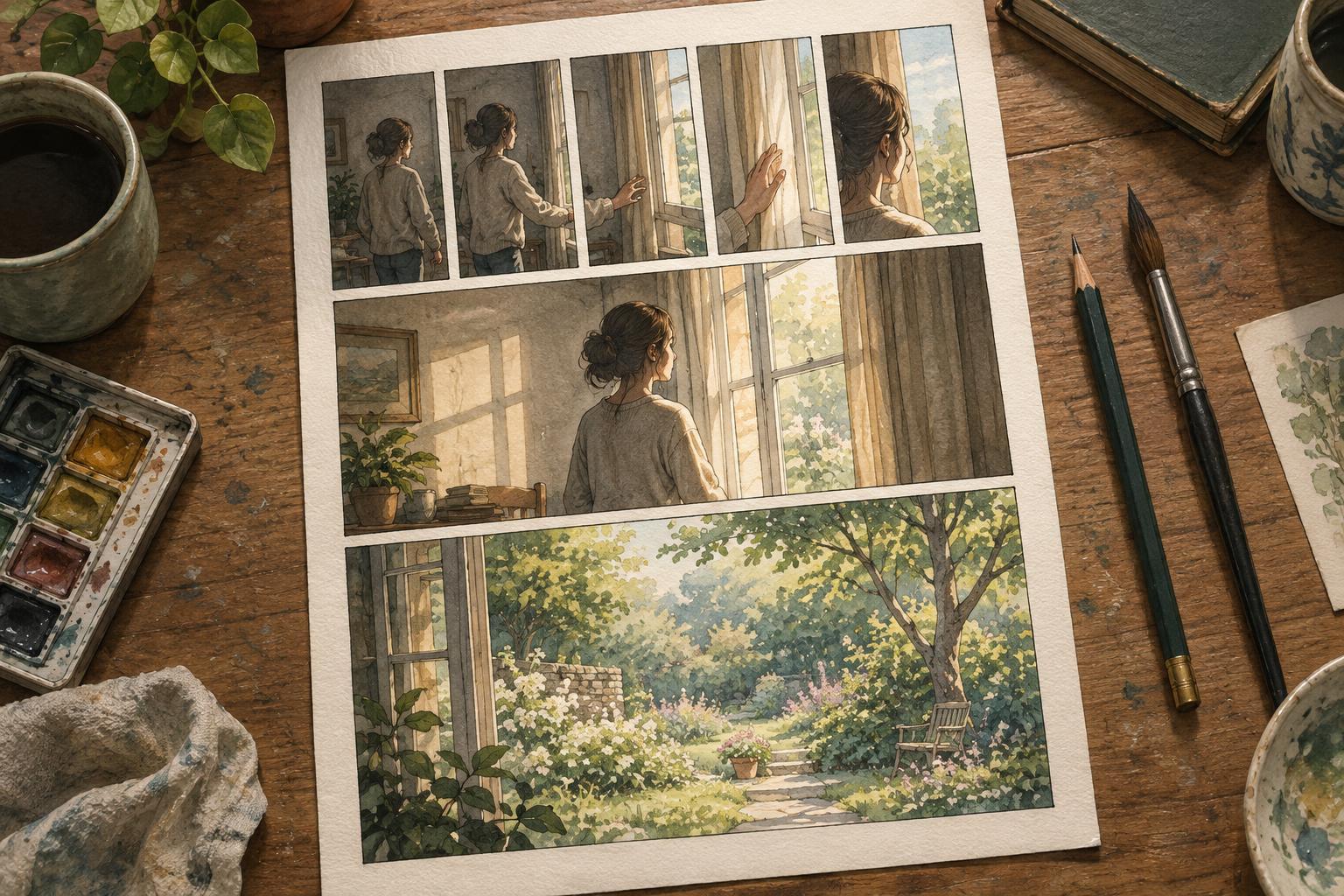
Several panels showing small changes can slow a moment down. A character hears a sound, pauses, and turns toward it. Giving each beat its own panel lets the pause register. A larger leap, such as cutting from a packed suitcase to the character arriving at a station, moves the story forward quickly. Neither approach is automatically clearer; each works when the amount of time skipped suits the scene.
Panel size and composition can support the transition. A close-up draws attention to a hand, expression, or clue; a wider view can restore the layout of a space. If a page contains many close-ups in a row, readers may lose track of where the characters are. A wider panel at the right moment can reconnect their actions to the setting.
Also consider the route the eye takes across the page. Place the main point of interest where a reader is likely to look after leaving the previous panel. Speech balloons, faces, and high-contrast shapes can all attract attention. If those elements compete, simplify the panel or adjust their placement so the reading order remains easy to follow.
Test the sequence before finishing it
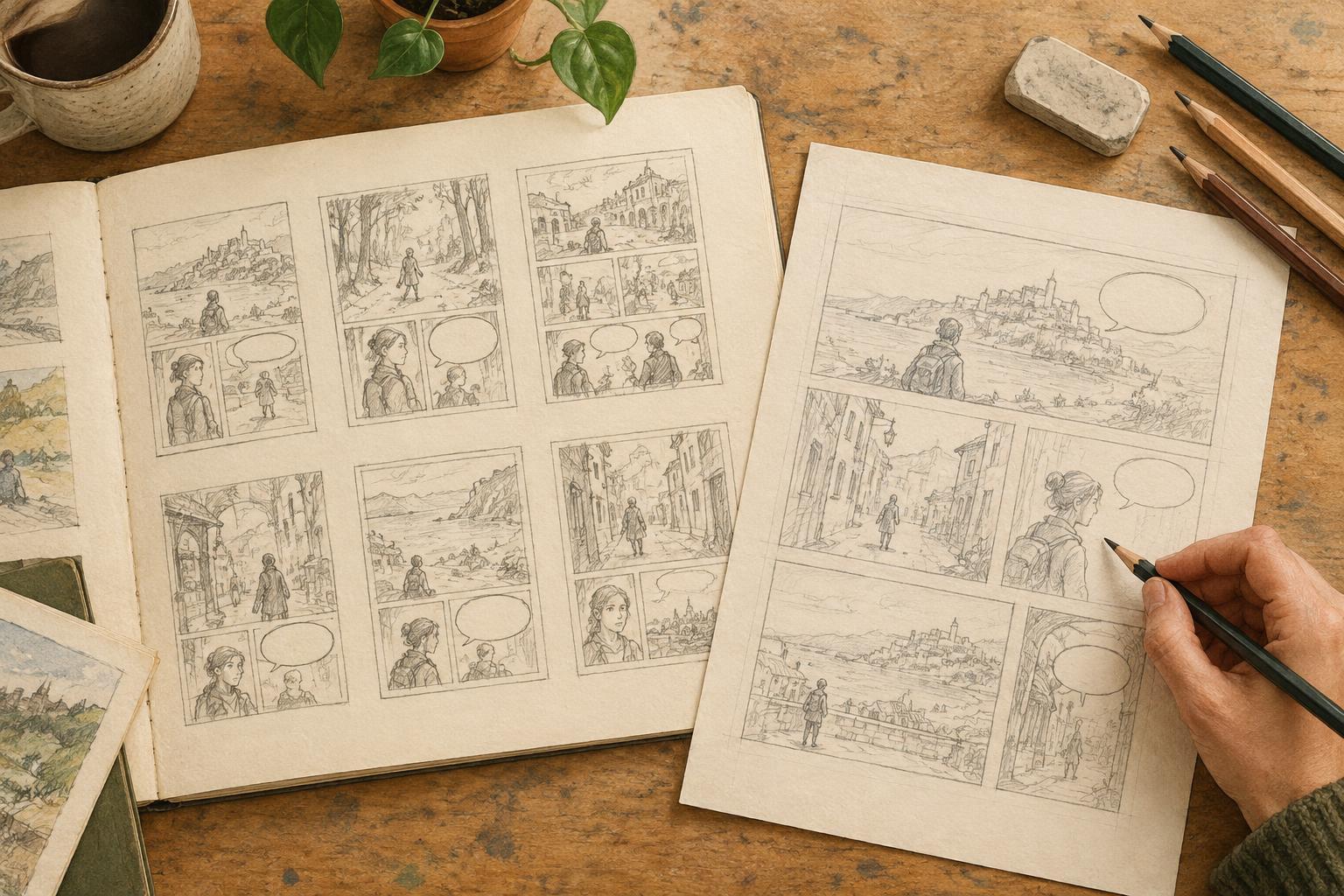
Thumbnails are a practical place to check transitions because they are quick to change. Draw a scene as small, simple panels, then read it without your script. Note each place where you have to pause to identify a character, locate an object, or infer why something happened. Those pauses point to questions the drawings may need to answer.
Try showing the thumbnails to someone without explaining the scene first. Ask them to describe what happened and where they felt unsure. Their reading may differ from what you intended, but it gives you a concrete problem to solve. You might add an anchor, change a viewpoint, separate two actions, or remove a panel that repeats information.
Clear transitions do not require every movement to be illustrated. They give readers enough to move confidently through the story while leaving room for imagination. The goal is not to eliminate every gap, but to make each gap feel like a deliberate part of the sequence.