Start with a skill you can observe
A self-directed drawing challenge works best when its goal is narrower than “get better at drawing.” Pick something you can look for on the page: clearer silhouettes, more convincing hands, varied facial expressions, or better use of light and shadow. A focused goal makes it easier to choose exercises and notice what needs attention.
Turn the goal into a question. If you want to improve character poses, ask, “Can someone understand the action from the outline alone?” If you want to practice backgrounds, ask, “Can I show which objects are closest without adding detail everywhere?” The question gives you a way to assess each drawing without requiring a perfect result.
Make one drawing before you begin the challenge and save it as a baseline. Give it the same time limit and materials you expect to use later. It is not a test you have to pass; it is a record of where you started.
Set boundaries that make repetition possible
Decide how many sessions you can reasonably complete and how long each one will take. A challenge of eight short sessions may teach you more than an ambitious plan that becomes difficult to sustain. Leave room for missed days by defining the challenge in sessions rather than insisting on an unbroken streak.
Keep your tools and format mostly consistent. For example, draw on the same size of paper with one pencil, or use one digital canvas size and brush set. This removes decisions that can consume practice time. It also makes changes across the drawings easier to see. If a tool itself is the skill you are studying, keep the subject matter simple instead.
Write down what counts as a finished session. You might make three small sketches, circle the clearest one, and add a sentence about what helped. A modest finish line prevents one difficult drawing from taking over the whole challenge.
Vary the prompt, not the goal
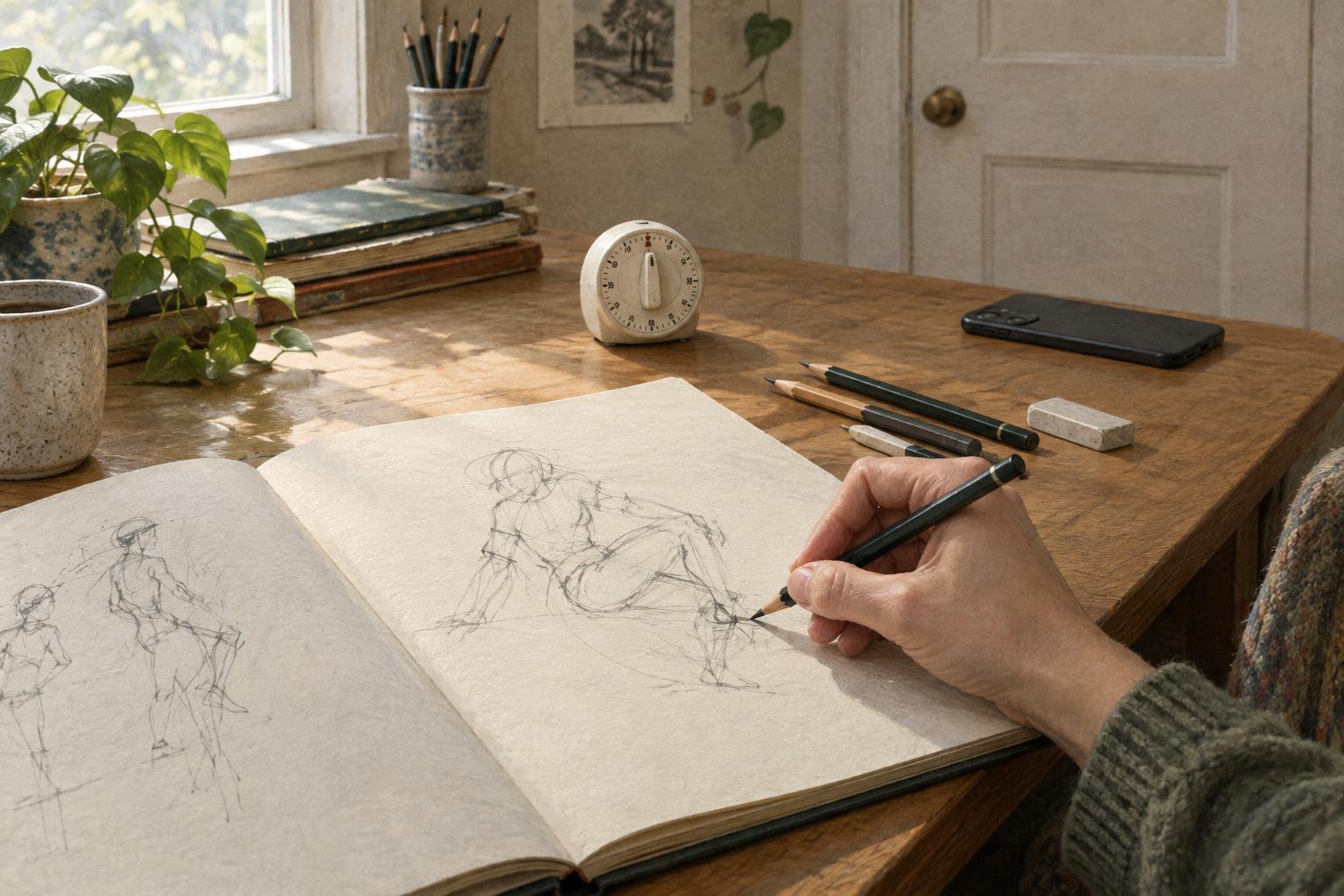
Repeating an identical drawing can be useful, but some variation helps you apply the skill in new situations. Keep the question you are practicing constant while changing one condition at a time. To study silhouettes, for instance, draw a person carrying different objects, changing direction, or performing actions at different speeds. In each case, check whether the pose reads before adding facial features or clothing details.
You can arrange prompts from simple to complex. Start with a single figure against a blank background. Next, add an object the figure must handle. Later, place the action in a cramped space. If the later prompts become overwhelming, return to the simpler version. The challenge is meant to reveal which conditions make the skill harder, not to prove that every drawing must improve.
Keep a short prompt list ready before the first session. That way, your drawing time goes toward making and observing images rather than searching for an idea. If you use references, choose ones you have permission to use and note whether you drew from observation, memory, or imagination; each approach asks something different of you.
Build feedback into each session
Pause before you polish. Look at the drawing from a distance, shrink it on screen, or cover its details with a sheet of paper. For a silhouette challenge, ask whether the action is still legible. For a value challenge, ask whether the main subject stands apart from its surroundings. These checks should relate to your chosen skill, not become a general critique of everything on the page.
After each session, record one thing that worked and one adjustment to try next time. Be specific: “The bent arm overlaps the torso, so the gesture is unclear” is more useful than “Bad pose.” You do not need a long journal. A brief note beside the drawing is enough to carry an observation into the next session.
End by comparing, then choose what comes next
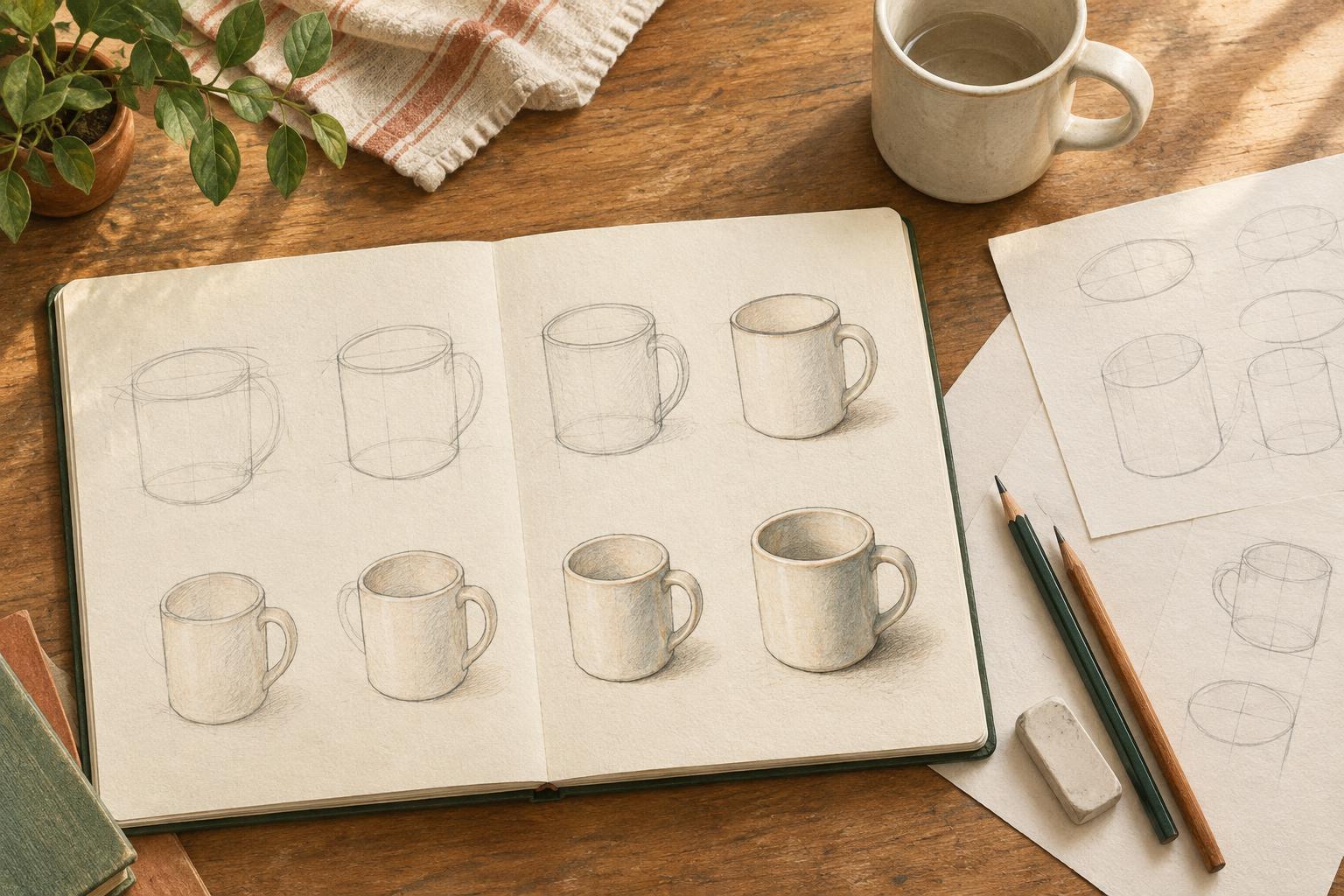
When the planned sessions are complete, repeat your baseline prompt under similar conditions. Put the first and last drawings side by side, then look through the work between them. You may find a clearer solution, a recurring difficulty, or a new question. One successful final drawing is encouraging, but the full set tells you more about which choices you can repeat.
Finish with a short summary: What helped? What remained difficult? What would you change if you ran the challenge again? You might continue the same skill with harder prompts, switch to a related skill, or take a break to use what you practiced in a comic or illustration. The challenge has done its job if it leaves you with a more precise way to practice.