Decide what the reader needs to feel
Before choosing a time cue, ask what the interval is doing in the story. Is the reader meant to feel a character’s impatience, notice a sudden change, or simply understand that the next scene happens later? Those goals call for different amounts of page space. A long wait that matters emotionally may deserve several panels. A journey that changes nothing may need only a brief transition.
It helps to distinguish story time from reading time. An action that takes one second can occupy a large panel that invites a pause. Hours can disappear in the narrow gap between two panels. Neither choice has to represent time literally; the arrangement guides how long the moment seems to last. Start by marking the important beats of a scene, then decide where readers should linger and where they can leap ahead.
Use panel rhythm to stretch or compress a moment
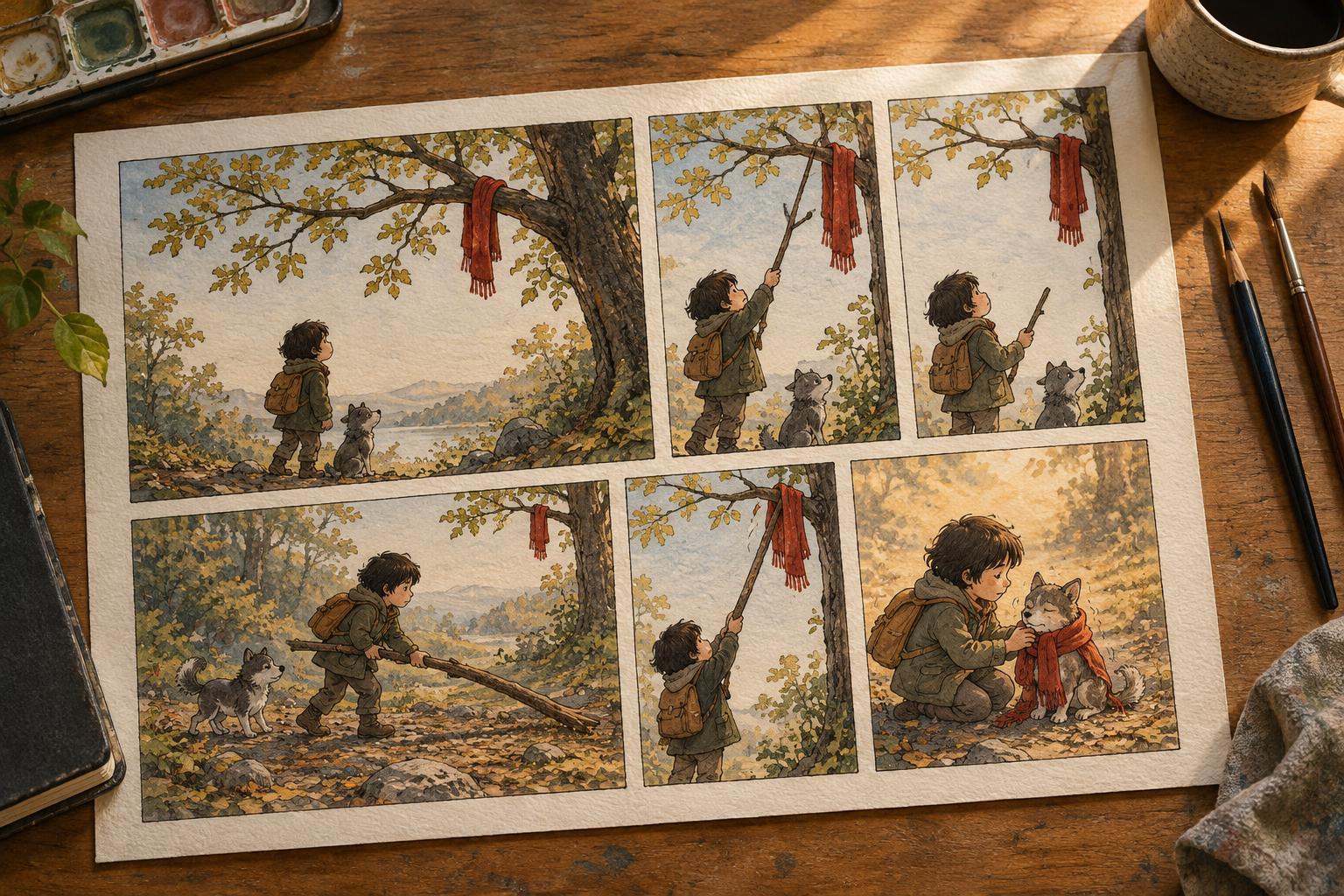
A sequence of similar panels can make a short interval feel long. Imagine a character waiting for a reply. One panel shows the unread message, another shows their hand hovering over the phone, and a third returns to the unchanged screen. Very little happens, but the repeated attention makes the wait visible. Small changes in posture or expression keep the sequence from looking like an accidental duplicate.
To speed things up, show only the beats needed to follow a change: the character sends the message, the light outside the window shifts, and the reply arrives. A reader can supply the time between those images. A larger panel after several quick ones can also give a consequence room to land. Panel size is not a fixed measure of seconds, though. Composition, detail, dialogue, and the surrounding panels all affect the pace.
Try thumbnailing the same event in three panels and then in six. In the shorter version, remove intermediate actions. In the longer version, add only moments that change the reader’s anticipation or understanding. This comparison can reveal whether extra panels create a useful pause or merely repeat information.
Make elapsed time visible in the setting
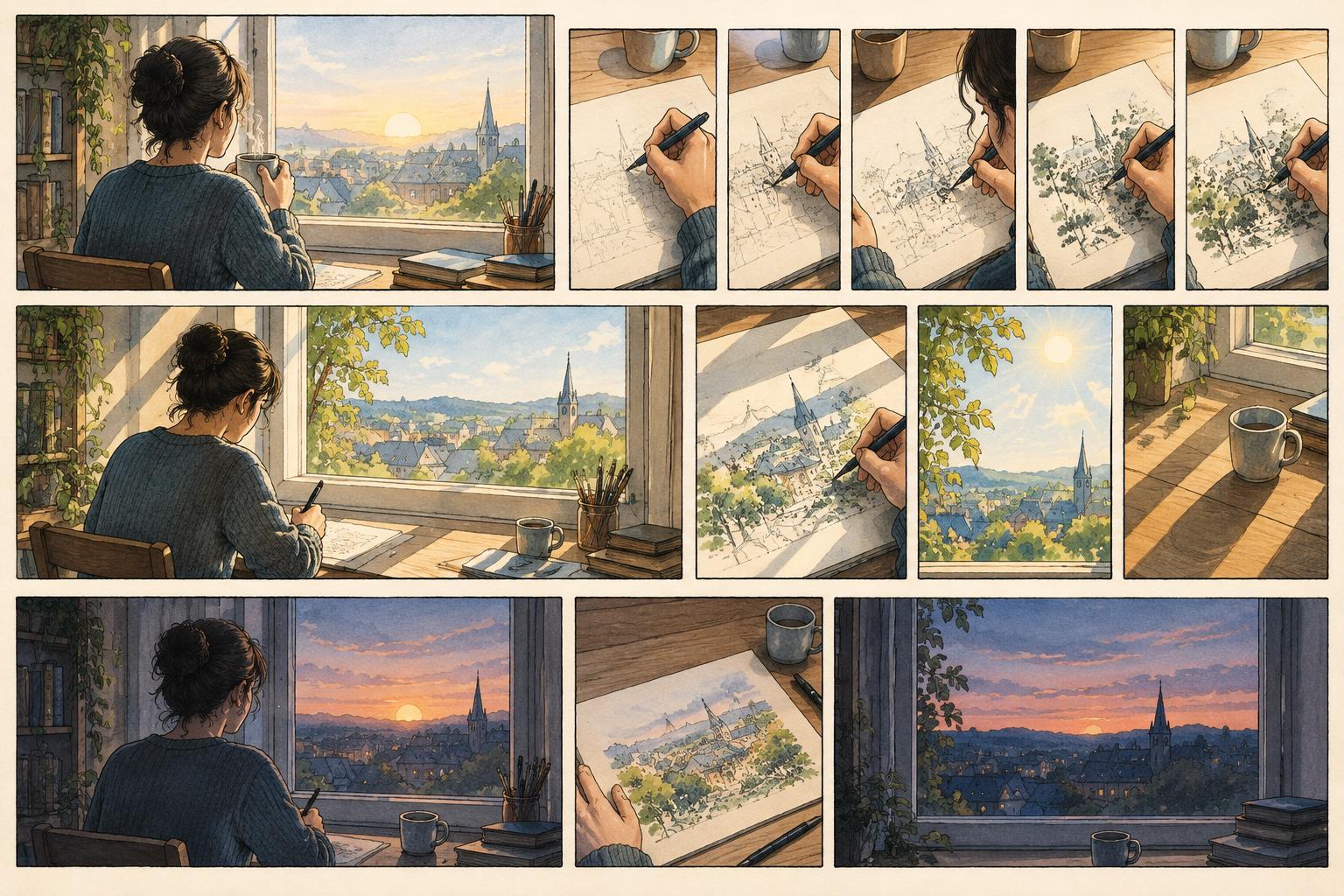
Visual changes can establish a time shift without an explanatory caption. A cup goes from full to empty. Shadows move across a desk. Rain starts, then leaves the street wet. A crowded platform becomes quiet. Choose cues that suit the interval and are easy to recognize at the size the comic will be read.
A repeated viewpoint makes these changes especially clear. If two panels frame the same window, readers can compare the light, weather, and activity outside. The stable composition acts as an anchor while the details indicate what has changed. For a longer jump, a more substantial change may be needed: a growing plant, a repaired storefront, or a character returning in a different season.
Be careful when a visual cue could mean something other than elapsed time. A dark room might indicate night, a power cut, or a closed curtain. If the distinction matters, pair the cue with another one, such as a familiar routine repeated later in the day or dialogue that places the scene. Clarity need not mean labeling every hour; it means giving readers enough evidence to follow the story.
Guide the jump between scenes
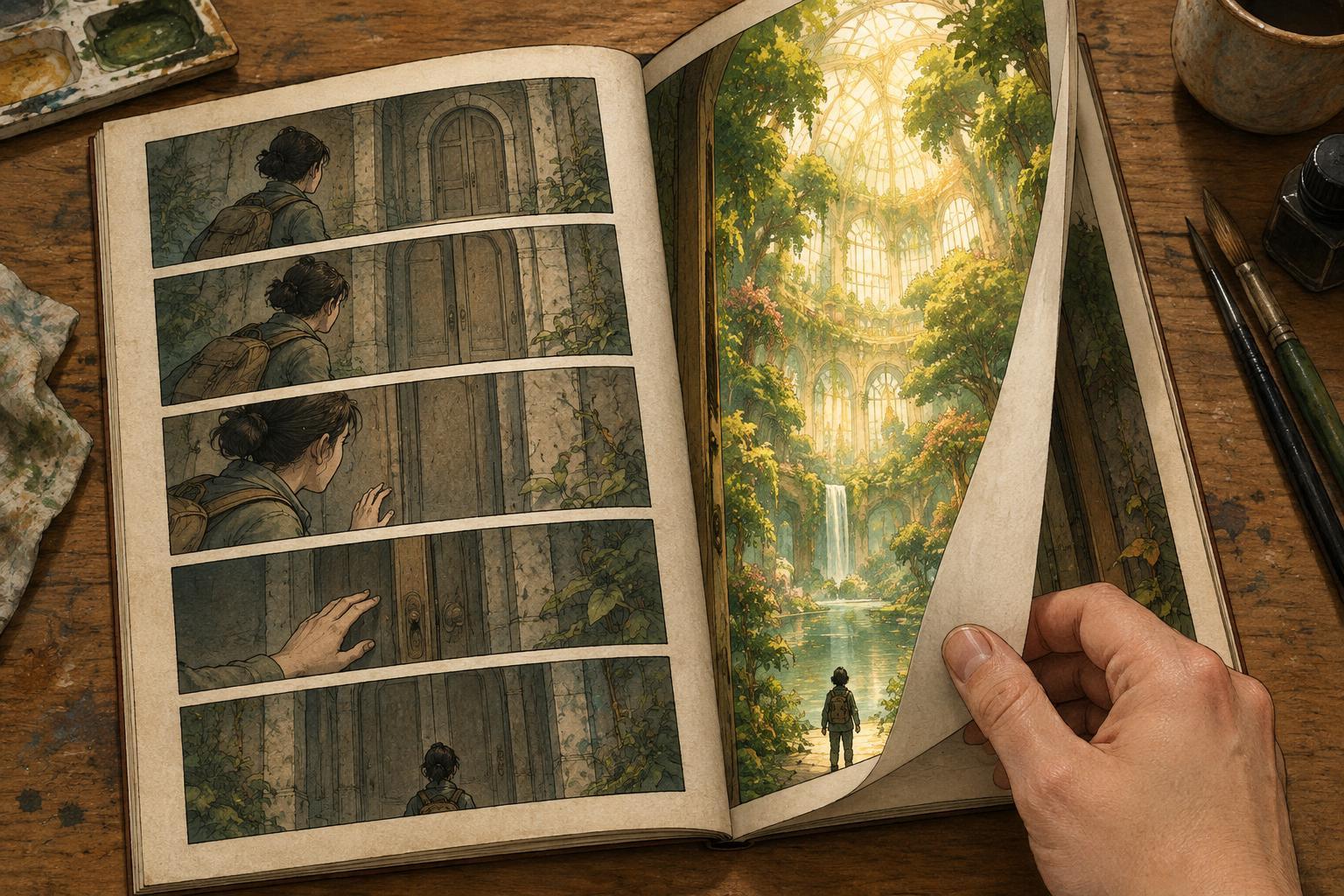
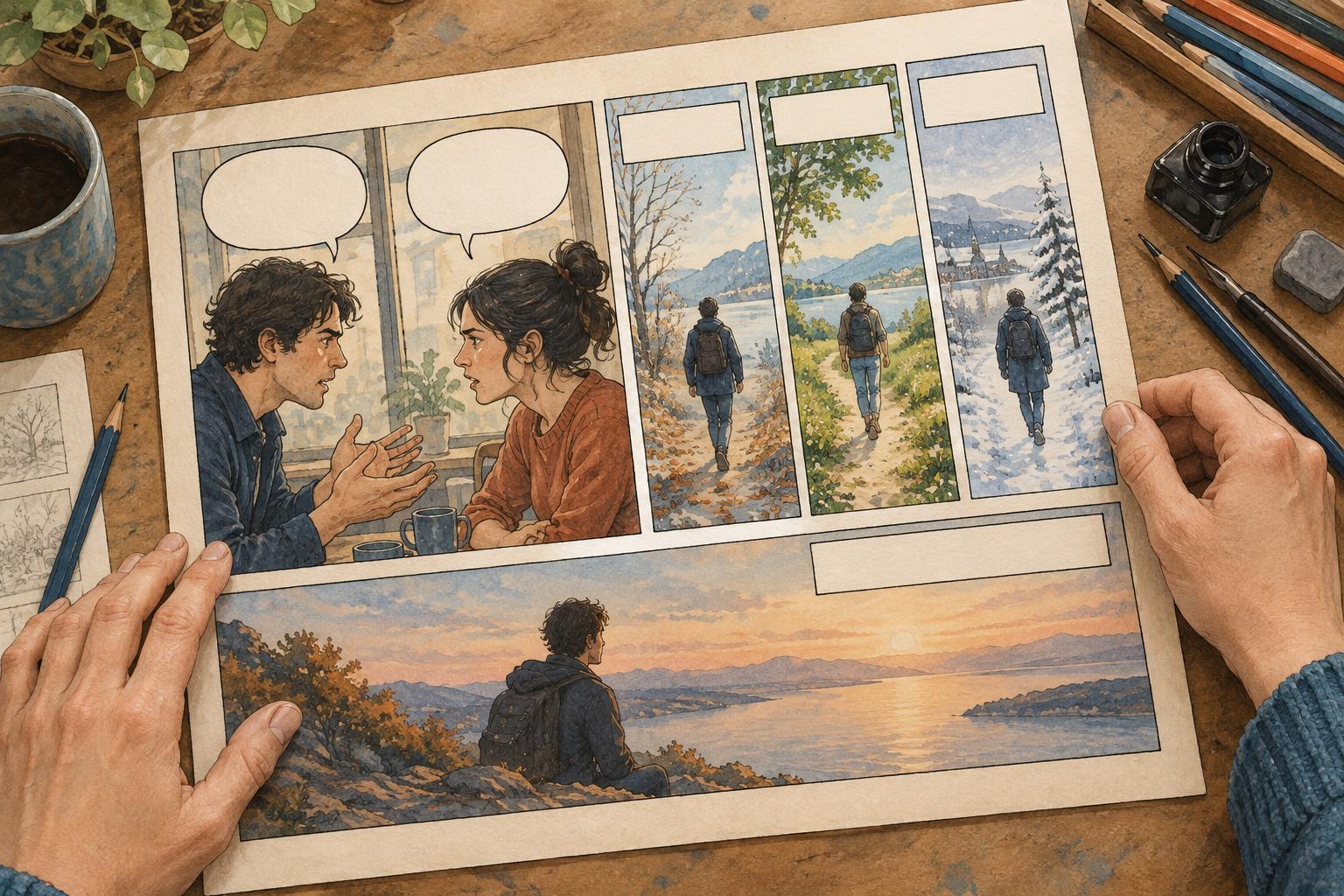
The space between panels is a useful place to skip time. A cut from a character packing a bag to that character arriving at a destination can omit the journey entirely. Readers will usually connect the actions if the character, goal, or object carries across the cut. When the connection is less obvious, a small bridge can help: the same bag in the new location, a recognizable landmark, or a brief time caption.
Captions such as “Later” are useful when precision matters more than atmosphere. They can prevent readers from mistaking a flashback, a new day, or a change of location for a continuous action. Use them to support the sequence rather than to explain what the art already makes plain. If a page contains several jumps, give each scene a distinct visual anchor so readers do not have to stop and reconstruct the timeline.
Check the sequence from a reader’s point of view
Once a page is drafted, read it without looking at the script. At each transition, ask three questions: What happened before this panel? How much time seems to have passed? What visual or verbal clue supports that impression? If an answer depends on information only the creator knows, the page may need a clearer cue.
For a focused exercise, draw a person making tea while waiting for someone to arrive. Create one version in which the wait feels brief and another in which it feels uncomfortable and long. Keep the basic actions the same, but change the number of panels, the repeated views, and the details in the room. The aim is not to find one correct timeline. It is to see how deliberate choices make elapsed time part of the story.