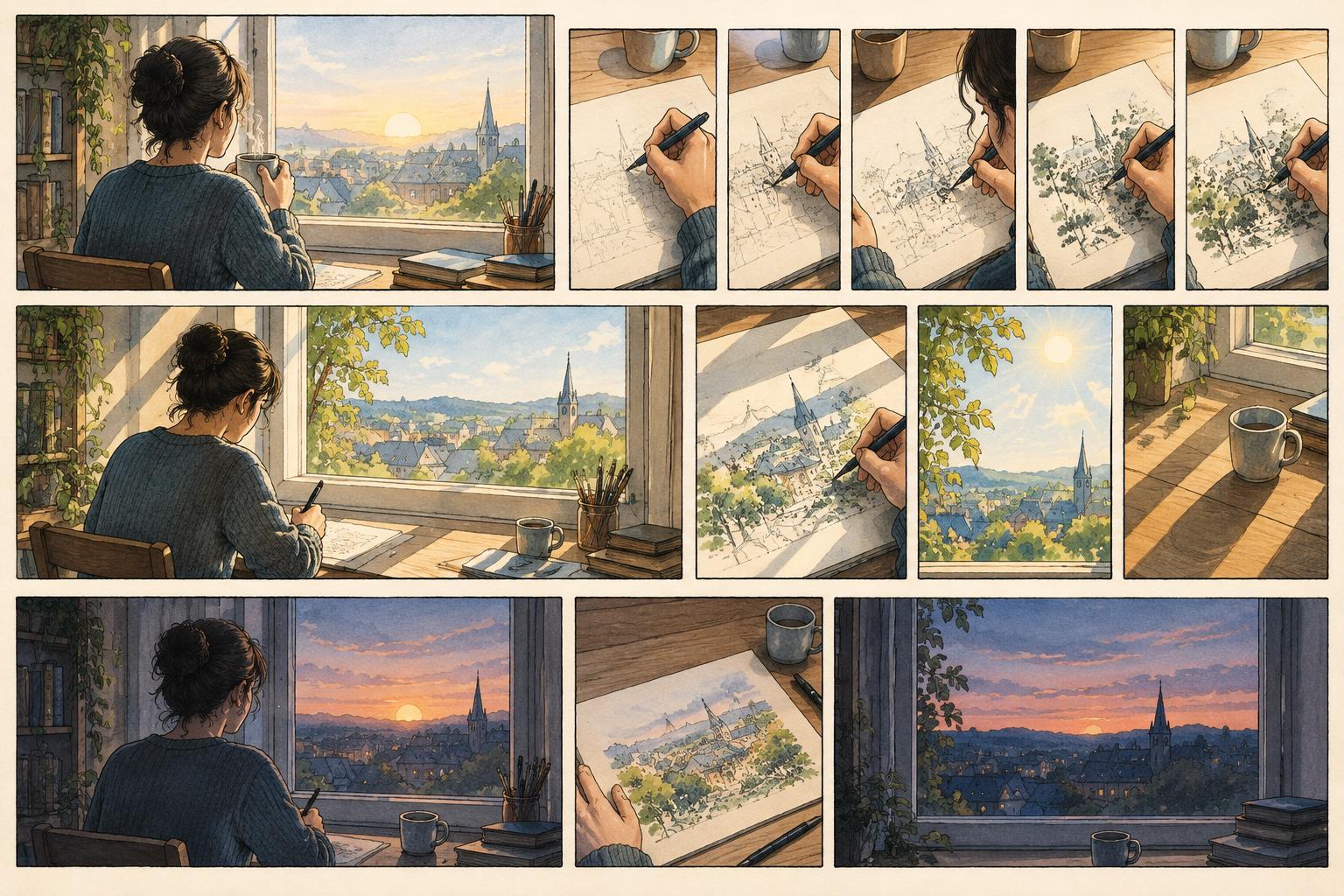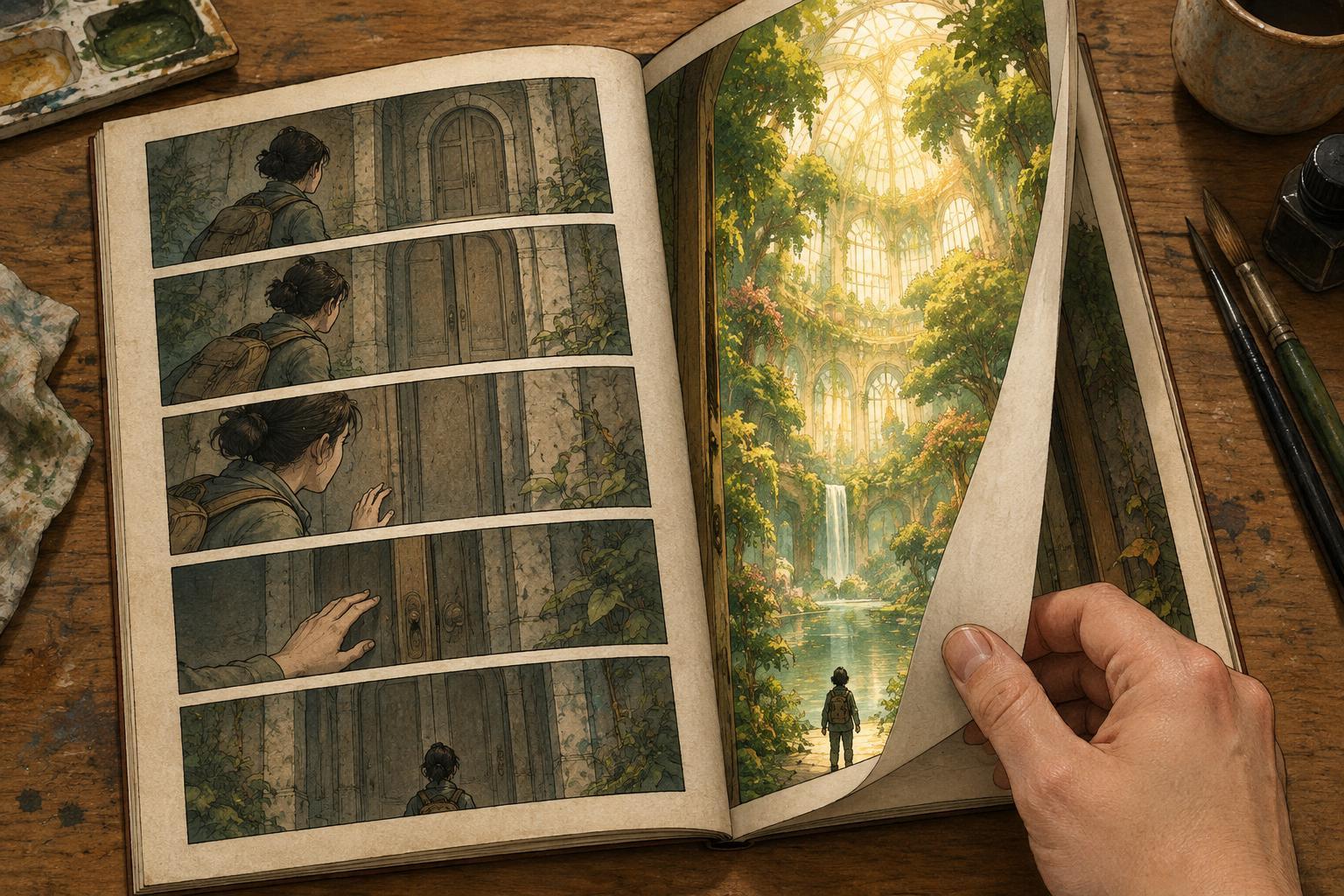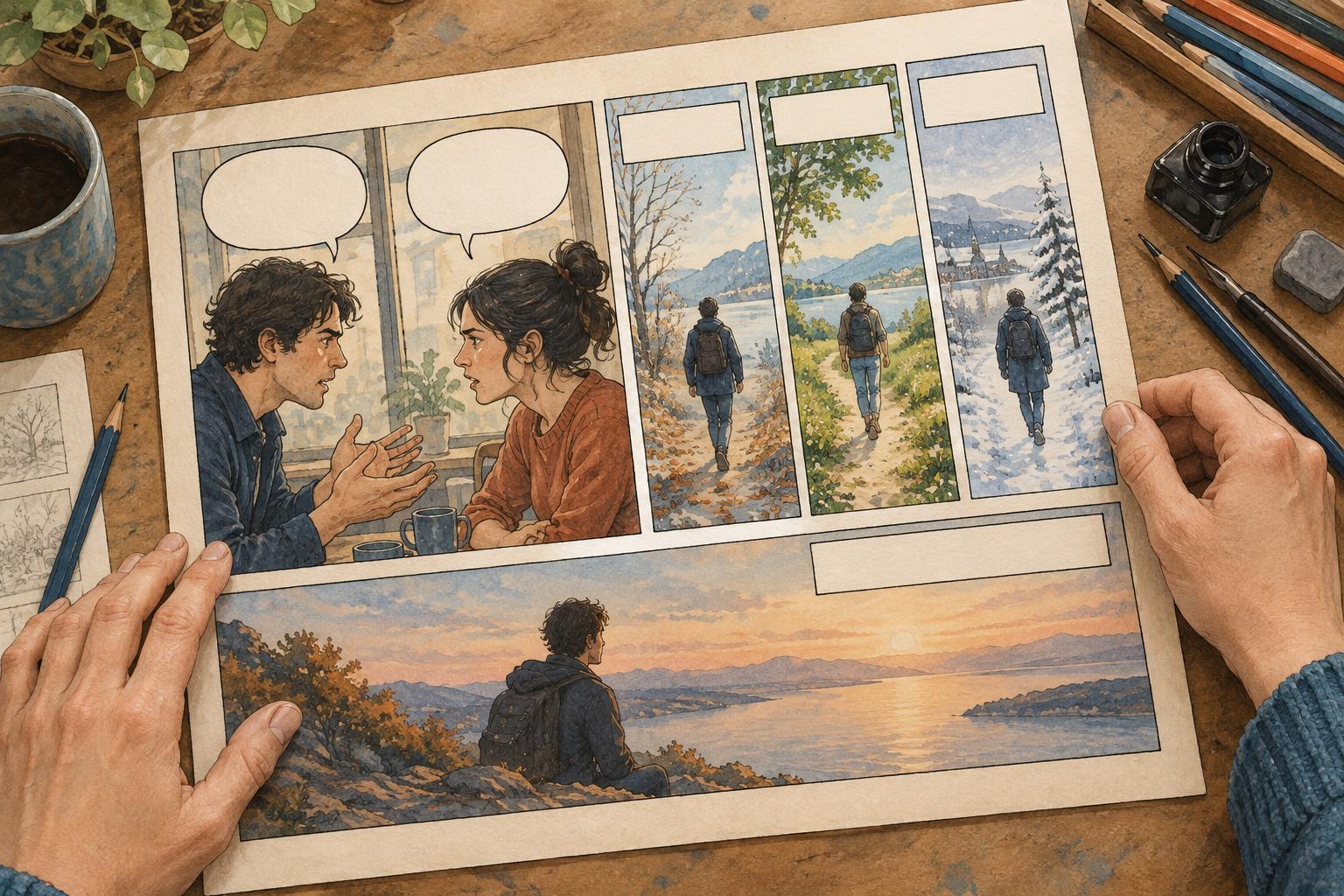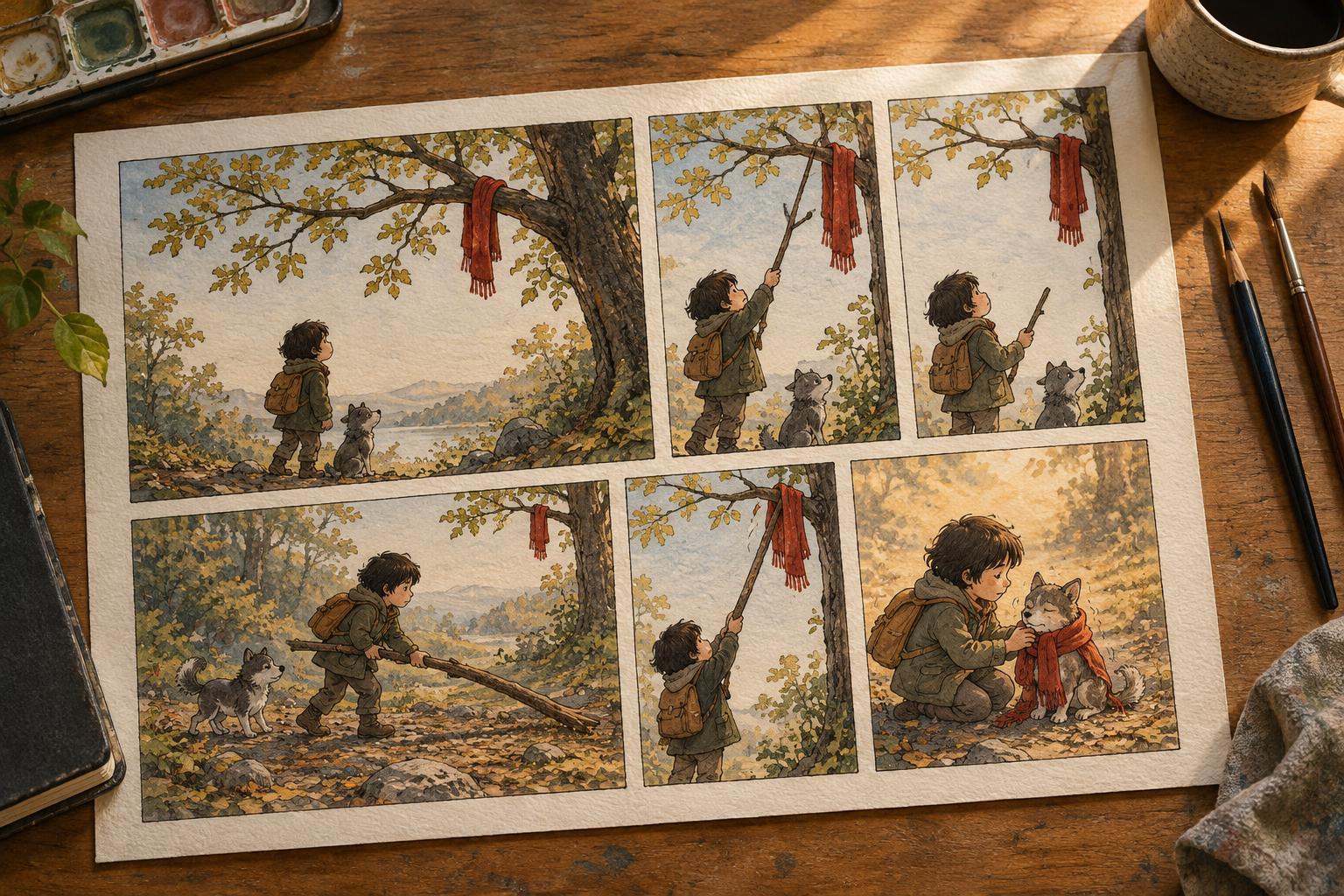
Start with a change the reader can see
A complete scene is not simply a series of images featuring the same character. Something should be different at the end: an object has changed hands, a plan has failed, a relationship has shifted or a character has made a choice. In a wordless comic, that change must be visible. Before drawing, write one private sentence describing the scene’s beginning and end, such as: “A child tries to rescue a kite, then decides to help someone else reach it.” The sentence is a planning tool, not text that needs to appear on the page.
Keep the first attempt small. One character, one immediate goal and one obstacle are often enough. If the scene depends on explaining a complicated history, choose a later moment when that history produces a concrete action. A hand hesitating over a door handle can show uncertainty; a character returning to pick up a discarded object can show a decision. The reader may not name every emotion exactly as you intended, but they should be able to follow what happened and why the final image matters.
Establish the space before changing it
Give readers a stable view of the important elements early on. Show where the character is, what they want and what stands between them and it. A wide panel might place a dropped key on the far side of a locked gate; a closer panel can then draw attention to the gap beneath it. This opening orientation lets later panels focus on details without making the reader reconstruct the setting each time.
Maintain useful visual landmarks as the scene progresses. If the gate is on the character’s right, an unexplained reversal may make a simple reach look like a new location. You can change angles, but retain enough familiar shapes or relative positions to keep the action clear. Props deserve the same care: an object should not vanish between panels unless its disappearance is the point. Clarity does not require drawing every brick or branch. It requires preserving the information a reader needs to understand the next action.
Build the middle from attempts and consequences
The middle of a scene becomes engaging when each action changes the character’s options. Instead of showing three similar panels of someone pulling at a stuck drawer, let the first pull fail, the second reveal that something is caught inside and the third show a new approach. Each panel then gives the reader a reason to continue. A useful planning question is: “What does the character notice or learn here that affects what they do next?”
Separate actions when the order matters. A hand reaches for a cup; the cup begins to tip; another hand catches it. Those beats create a different experience from one image of a caught cup. You need not show every fraction of movement, however. Readers can fill a gap between a character winding up to throw and an object landing, provided the setup and result are unmistakable. Use that gap deliberately: a short, predictable action can happen between panels, while a surprising consequence may deserve its own panel.
Control pace with panel size and repetition
Panel layout can guide attention without telling readers how fast they must read. Several small panels can isolate a glance, a pause and a tiny adjustment. A larger panel gives space to a reveal or a result worth examining. Before enlarging a moment, ask what the extra room contributes: perhaps the character looks small beside an obstacle, or a changed expression needs to register alongside the surrounding scene.
Repetition is useful when something changes within it. Keep the framing similar across two panels, then alter one detail: an empty chair is occupied, a light goes out or a character who was turned away now looks back. The repeated view helps the reader spot the difference. Avoid relying on tiny distinctions that may disappear when the comic is viewed at a smaller size. If a change carries the scene’s meaning, make it legible through pose, placement or contrast as well as detail.
Test the ending, then test the reading
A wordless ending should answer the immediate question the opening raised, even if it leaves a larger story unresolved. The character may get the key but discover it opens a different door, or fail to retrieve it and choose another route. Give the outcome a distinct image rather than stopping at the moment before it happens. A final gesture, altered arrangement of props or return to the opening composition can show what changed without adding a caption.
Once you have thumbnails, look through them without referring to your outline. Check whether you can identify the goal, the obstacle, each important cause and the outcome from the drawings alone. Then show the sequence to someone who has not heard the premise and ask what they think happened, without first explaining it. If they miss a crucial step, try adding an establishing view, separating two actions or making a consequence more visible. The aim is not to eliminate every possible interpretation; it is to make the scene’s sequence of events clear enough to carry its emotional turn.