Choose a change small enough to fit
A four-page comic does not need a large plot. It needs a situation that becomes different by the end. A character might decide to return a borrowed object, discover why a familiar place feels strange, or attempt a task that requires them to ask for help. The event can be modest as long as the reader understands what matters to the character.
Before planning panels, finish this sentence: “At first, the character ___; by the end, the character ___.” If the two blanks describe the same state, look for a stronger choice, discovery, or consequence. Then identify the one obstacle that makes the change difficult. Resist adding a second major conflict or a long explanation of the setting. In a short comic, a specific object, gesture, or exchange can suggest a larger world without requiring the story to explore all of it.
Give each page a job
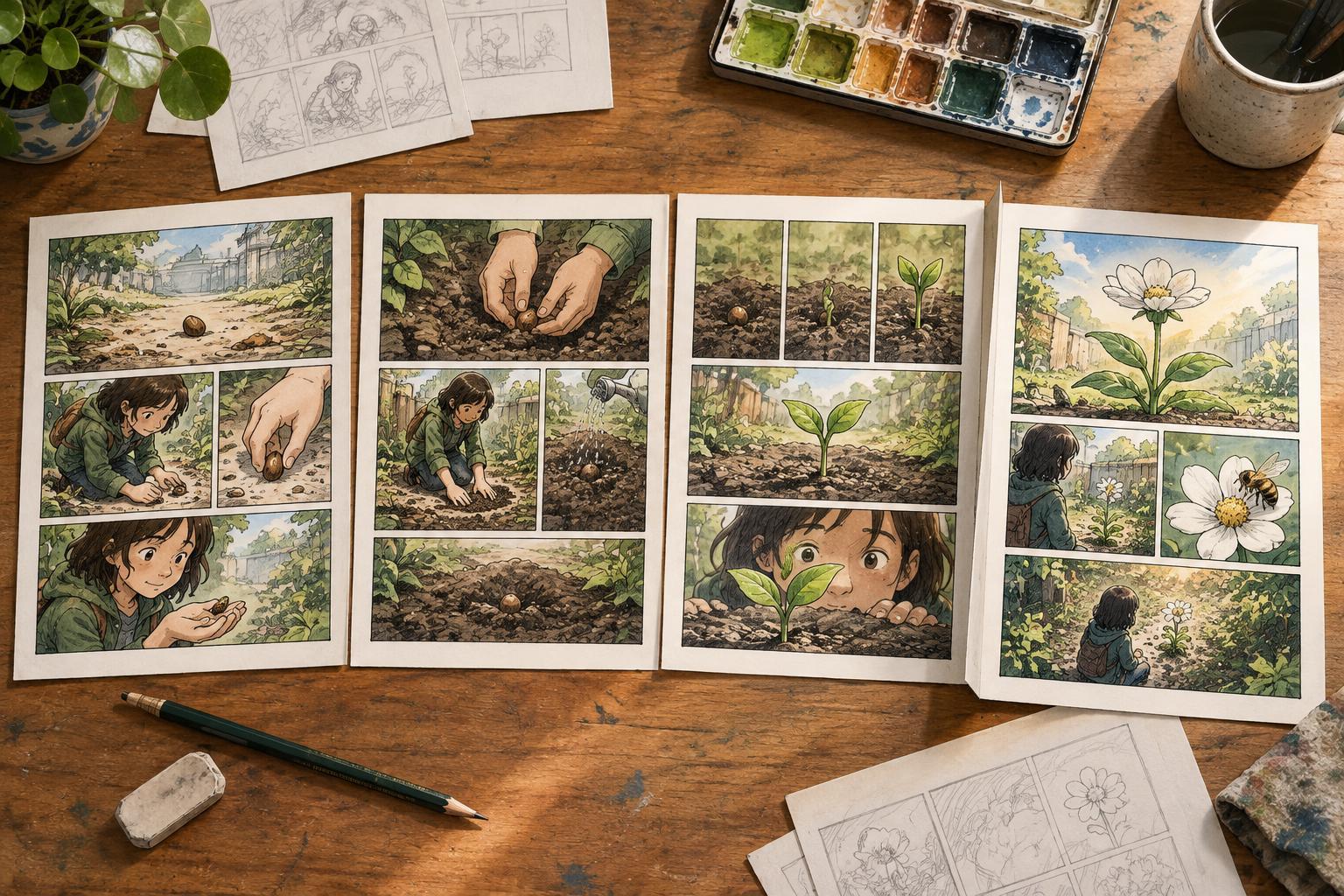
Think of the four pages as a sequence of promises and payoffs, not four equal containers for events. Page one establishes the situation and gives the reader a reason to continue. Page two complicates the character’s first approach. Page three forces a choice or changes the reader’s understanding. Page four shows the result and leaves a clear final impression. This is a planning framework, not a rule: a quiet story may put its decisive moment earlier and spend more space on the aftermath.
Write one sentence for each page before writing dialogue. For example: “She finds an unsigned note in her library book.” “She tries to identify its writer and makes a wrong assumption.” “She realizes the note was meant for someone else.” “She passes it on, then writes a note of her own.” If a page sentence only says that the character travels somewhere or repeats what the reader already knows, ask whether that page can carry a more meaningful turn.
Use panels to shape the reader’s time
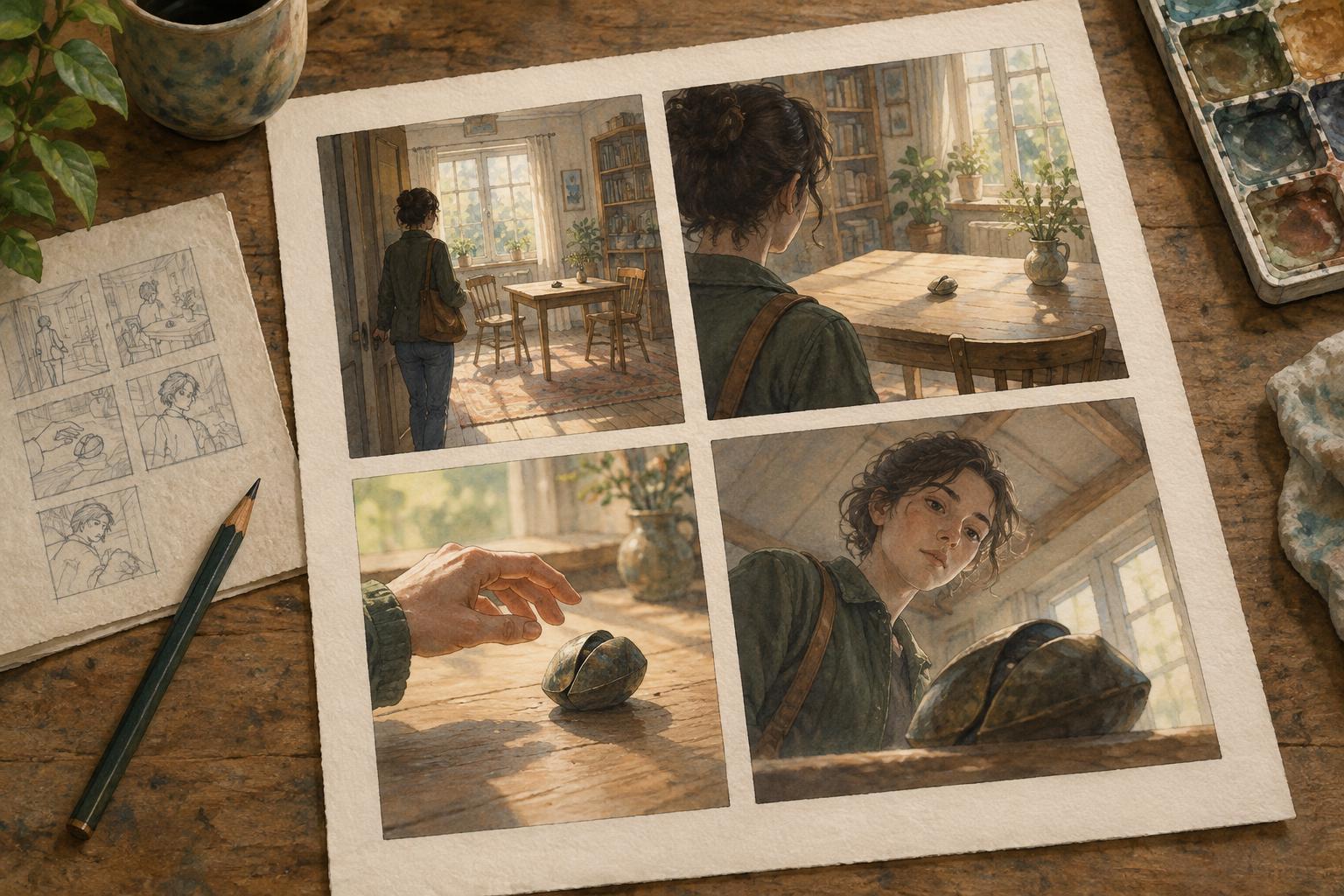
Once the page beats work, break them into panels. A panel can introduce information, show an action, register a reaction, or let a moment linger. You do not need a new panel for every sentence of dialogue or every small movement. Choose the moments a reader must see to understand what changes, and allow the space between panels to carry ordinary motion.
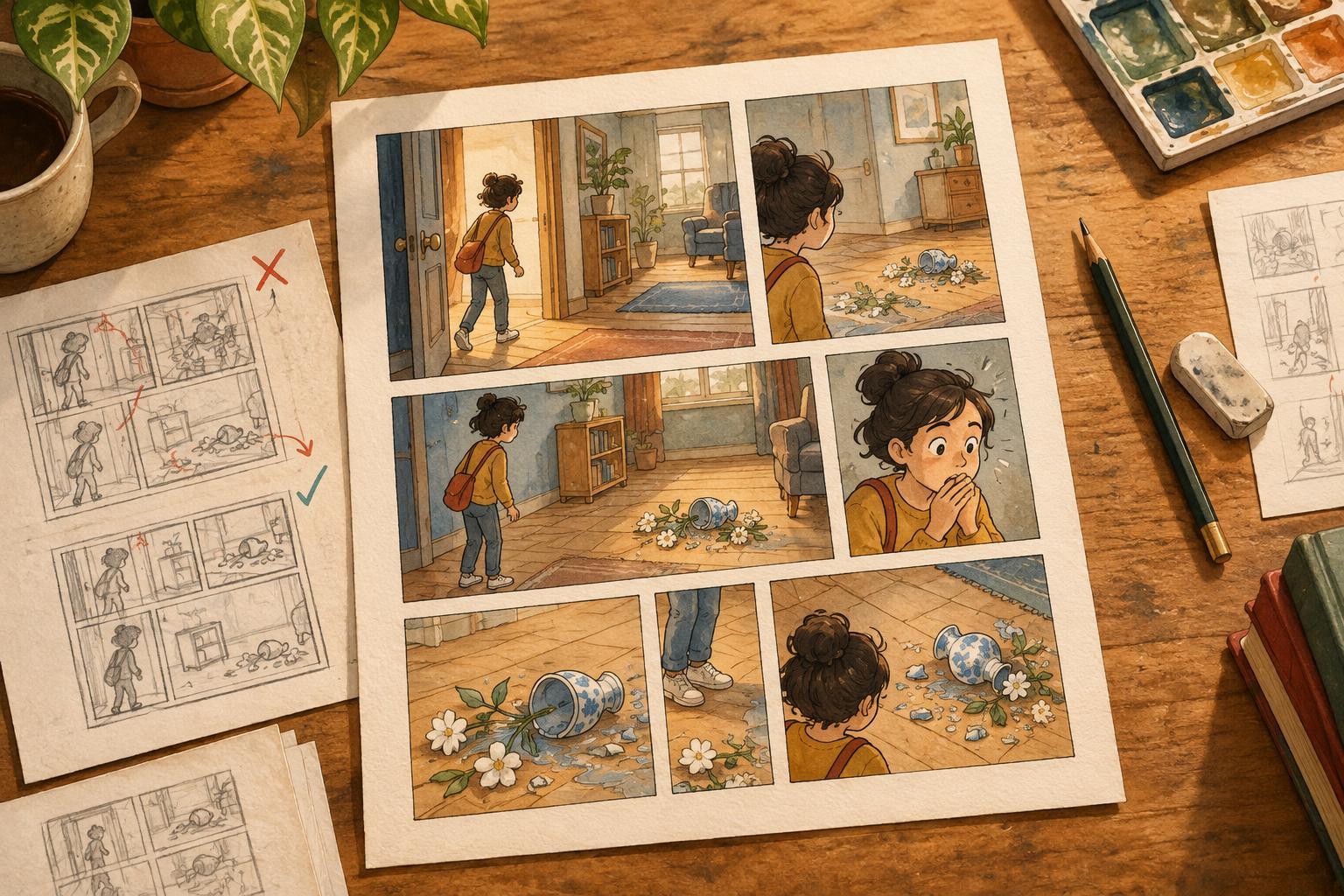
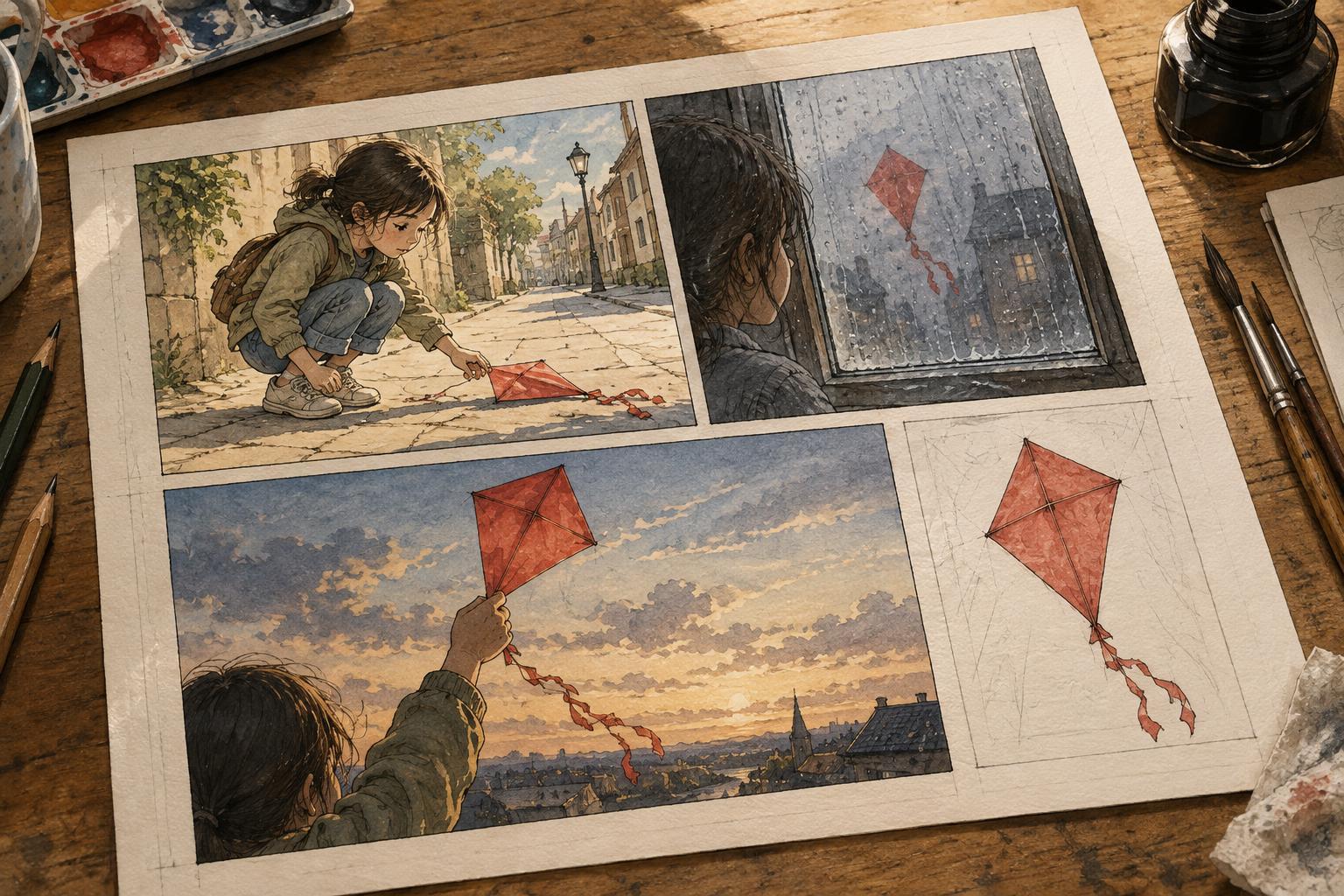
Varying panel size can help establish emphasis, but clarity matters more than spectacle. A series of small panels may make a character’s hesitation feel long; a larger panel may give a discovery room to land. Check that the eye can follow the intended reading order and that speech balloons have space without covering the important action. If a page feels crowded in a thumbnail sketch, simplify the action or cut dialogue before relying on tiny drawings to make everything fit.
Make the page turn earn its place
The move from one page to the next can create a useful pause. Put a question, decision, or incomplete action near the end of a page, then use the next page to answer it. The answer does not have to be a dramatic surprise. It might be a character’s expression, a revealed detail in a room, or the result of a choice the reader has been waiting to see.
Avoid withholding information solely to manufacture suspense. The turn is more satisfying when it changes the story rather than merely concealing an obvious next step. Read the comic page by page, covering what comes next. At each turn, ask what the reader currently expects and whether the following page rewards that expectation, complicates it, or redirects it in a way the earlier pages have prepared.
Test the ending before finishing the art
A short comic can resolve its central question while leaving some details open. The reader should be able to tell what the character did, learned, or lost, even if the wider world continues beyond the final panel. An ending image can add meaning without explaining it in a caption: an object placed differently, a repeated composition with one important change, or a gesture that would have been impossible on page one.
Make a rough four-page version using stick figures and temporary dialogue. Read it without referring to your outline, then note where you had to supply missing information in your head. Mark any panel that repeats a point, and check whether the final page follows from the choices shown earlier. Revising this small version is usually easier than repairing fully rendered pages. When the sequence reads clearly at thumbnail size, you have a stronger foundation for the finished comic.