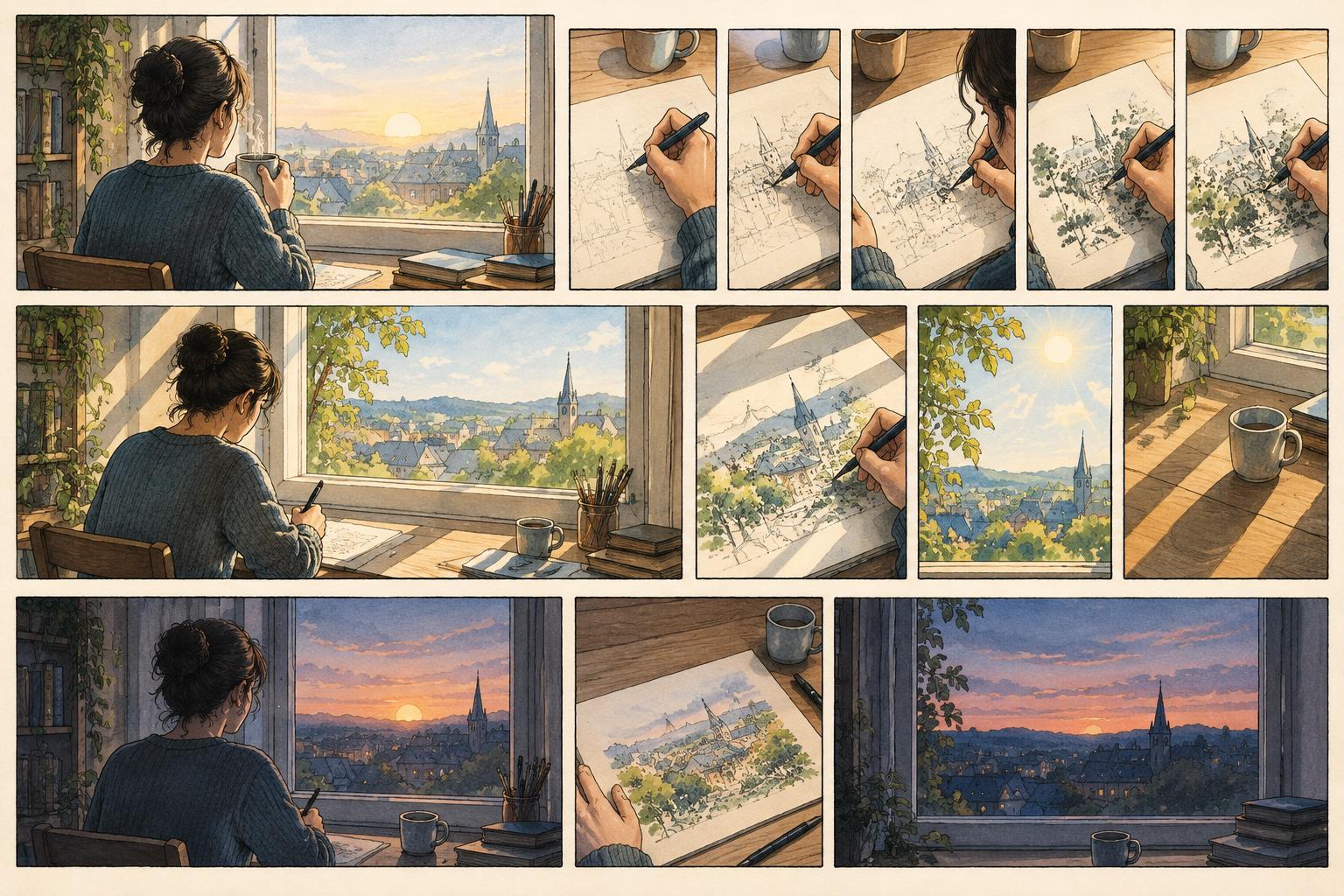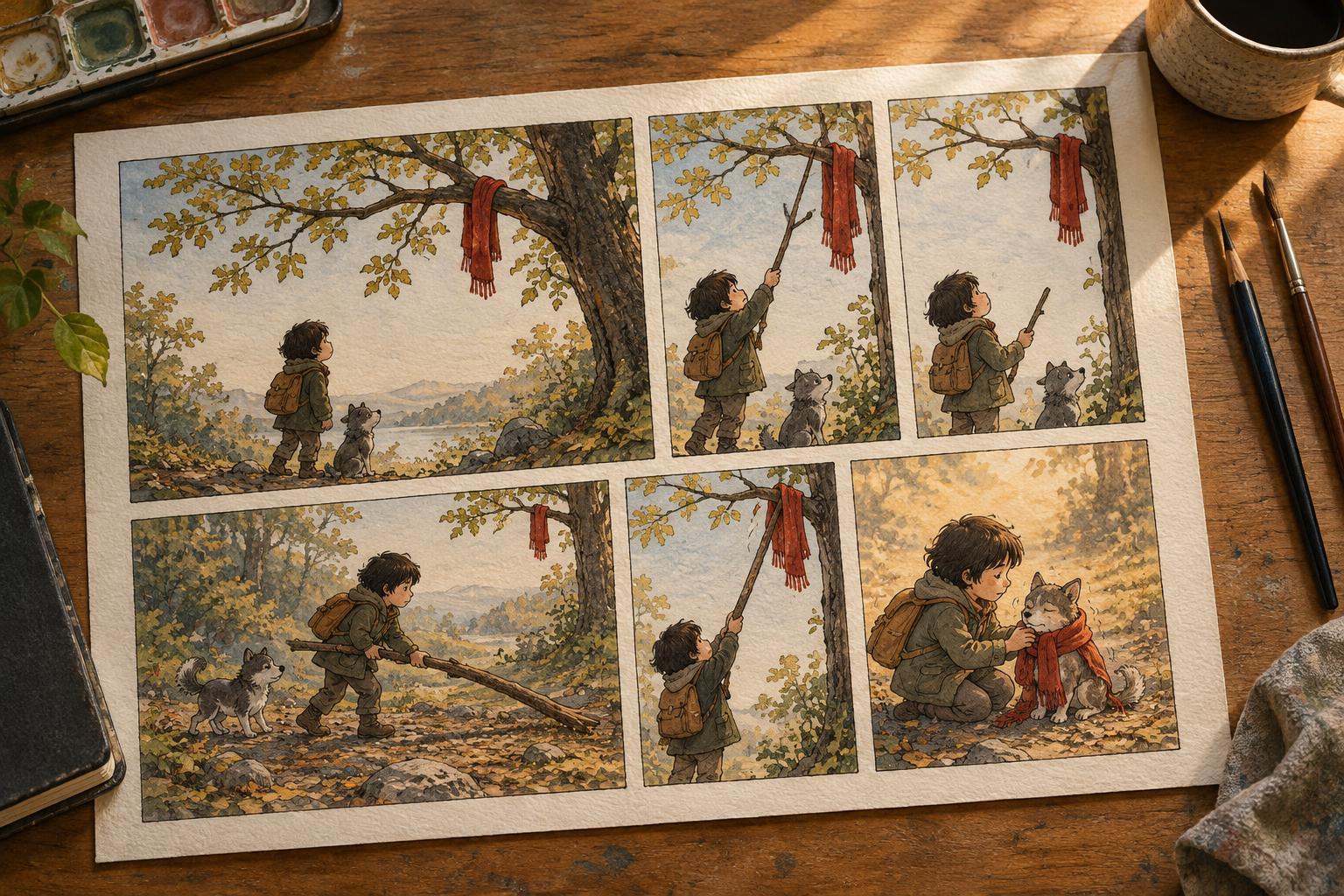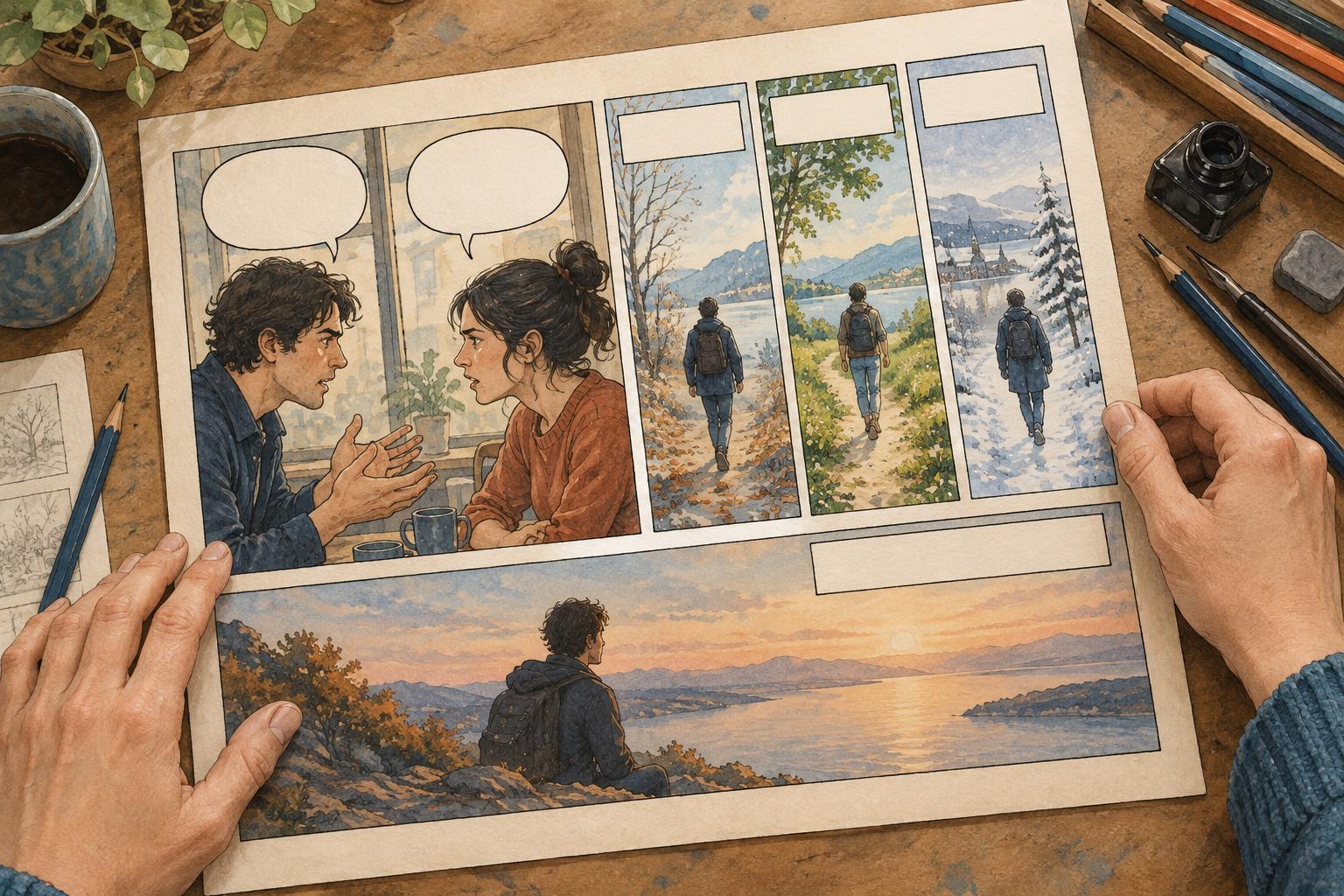
What a page turn can do
In a comic, the reader controls much of the pace. They can linger on a panel, skip ahead or glance across a spread. A page turn creates a useful exception: it places a small physical action between one image and the next. That pause can make a discovery feel larger, give a joke its punchline or let a character’s reaction arrive before the reader sees its cause.
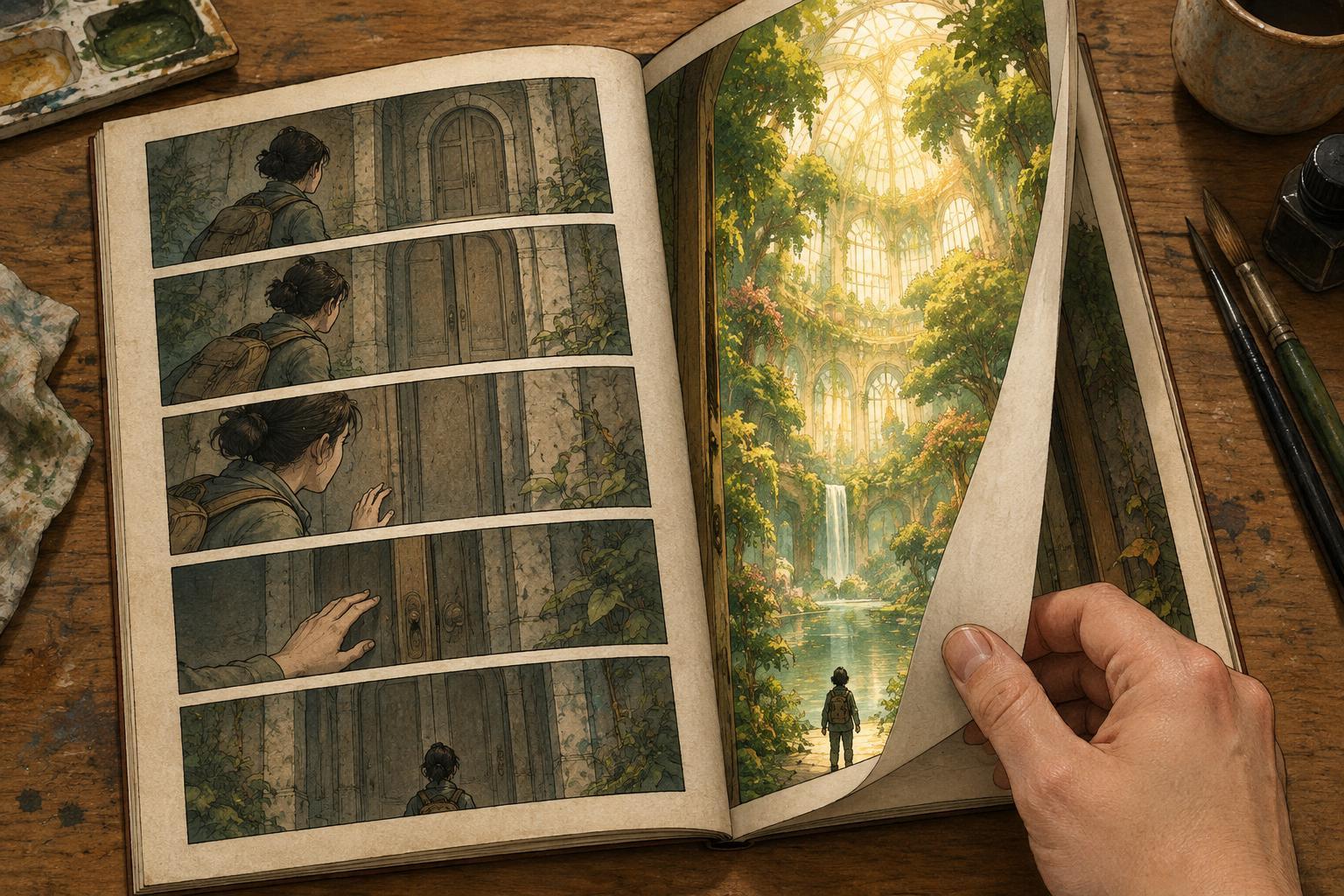
The basic arrangement is simple. Put a question on the last visible page, then answer it on the next. The question need not be written as dialogue. A character opening a door, noticing something beyond the frame or reaching toward an unseen object can all invite the reader to turn. The reveal works best when the answer changes how the preceding moment feels, rather than merely supplying an image that was withheld.
Build a setup that earns the reveal
Before hiding anything, decide what the reader should expect. A surprise gains shape from that expectation. If a character hears a crash in an empty house, the preceding panels might establish the quiet rooms and their growing concern. The next page could reveal a harmless accident, an unexpected visitor or a more troubling scene. Each answer creates a different emotional turn, so the setup should support the tone you want.
Give the reader enough information to understand why the discovery matters, but not so much that the reveal becomes obvious. A clear action and a specific point of view are often more useful than a string of vague hints. If the character knows something the reader does not, consider whether withholding it feels natural. Cropping a view because the character is looking around a corner can feel fair; repeatedly obscuring an object in plain sight may feel forced.
A reveal also needs a consequence. Ask what the character will do after seeing it, or how it changes the reader’s understanding of a relationship or place. That answer helps distinguish a story beat from a decorative splash image.
Choose the last panel and the first image
The final panel before a turn is a promise. It can end on an action, such as a hand lifting a curtain, or on a reaction, such as a face registering surprise at something outside the frame. An action asks, “What is there?” A reaction may also ask, “How should I feel about it?” Choose the version that creates the right kind of curiosity without making the reader wait through unnecessary panels.
On the following page, make the answer easy to find. If the reveal is a single important image, a strong silhouette, readable staging and enough space around the subject can give it impact. A large panel is an option, not a requirement: a small, quiet image may be funnier or more unsettling. What matters is that the reader can identify the new information before their eye moves into the next beat.
Think about what else is visible at the same time. In a printed book, a reveal may share a spread with later panels. Those panels can deepen the moment, but a competing image may draw the eye away from the answer. Thumbnail the entire opening, not just its first panel, to see where attention is likely to land.
Match the technique to the reading format
Page turns depend on how the comic is presented. A bound comic can conceal a right-hand page until it is turned, while two facing pages are generally visible together. If a surprise must remain hidden, check its position in a mock-up that reflects the intended binding and reading direction. Counting pages in a script alone can be misleading when covers, title pages or other material affect the final layout.
Digital formats create different thresholds. A one-page-at-a-time reader can preserve a reveal behind a click or tap. A scrolling comic may instead use spacing, a change in scale or the edge of a screen to delay information. Screen sizes vary, so avoid relying on one exact point where every reader will stop. In any format, the goal is the same: allow the audience to form a question before presenting a clear answer.
Test the turn before polishing the art
Try a short thumbnail exercise. Draw four pages using simple shapes and notes rather than finished artwork. Establish a character’s goal on the first page, build an expectation on the second, place a question in the final panel before the turn, and reveal the answer on the next page. Make two versions: one in which the answer confirms the reader’s fear and another in which it overturns that expectation. Compare how the same setup changes meaning.
Then show the rough sequence to a reader without explaining it. Ask what they expected before turning, what they noticed first afterward and whether they understood the character’s response. If the answer appears too early, move or simplify the clue. If the reveal is confusing, clarify the staging rather than adding more suspense. A successful page turn is not simply a secret kept until the next page; it is a well-timed exchange between what the reader imagines and what the comic finally shows.