Decide what the reader needs to experience
Visual point of view is more than the angle from which a panel is drawn. It is the relationship between the reader, the characters and the information in the scene. A panel might show what a character sees, look down on a room from a distance or stay close enough to catch a small change in expression. Each choice affects what the reader notices and how soon they notice it.
Before drawing, describe the scene’s main turn in one sentence: “A visitor realizes the house is not empty,” or “Two friends avoid saying goodbye.” Then ask what the reader should know at that moment. Should they spot the figure in the background before the visitor does? Should they share the visitor’s uncertainty? Should they study both friends’ reactions at once? The answer gives you a stronger starting point than choosing an angle because it looks dramatic.
Separate the viewpoint from the character’s knowledge
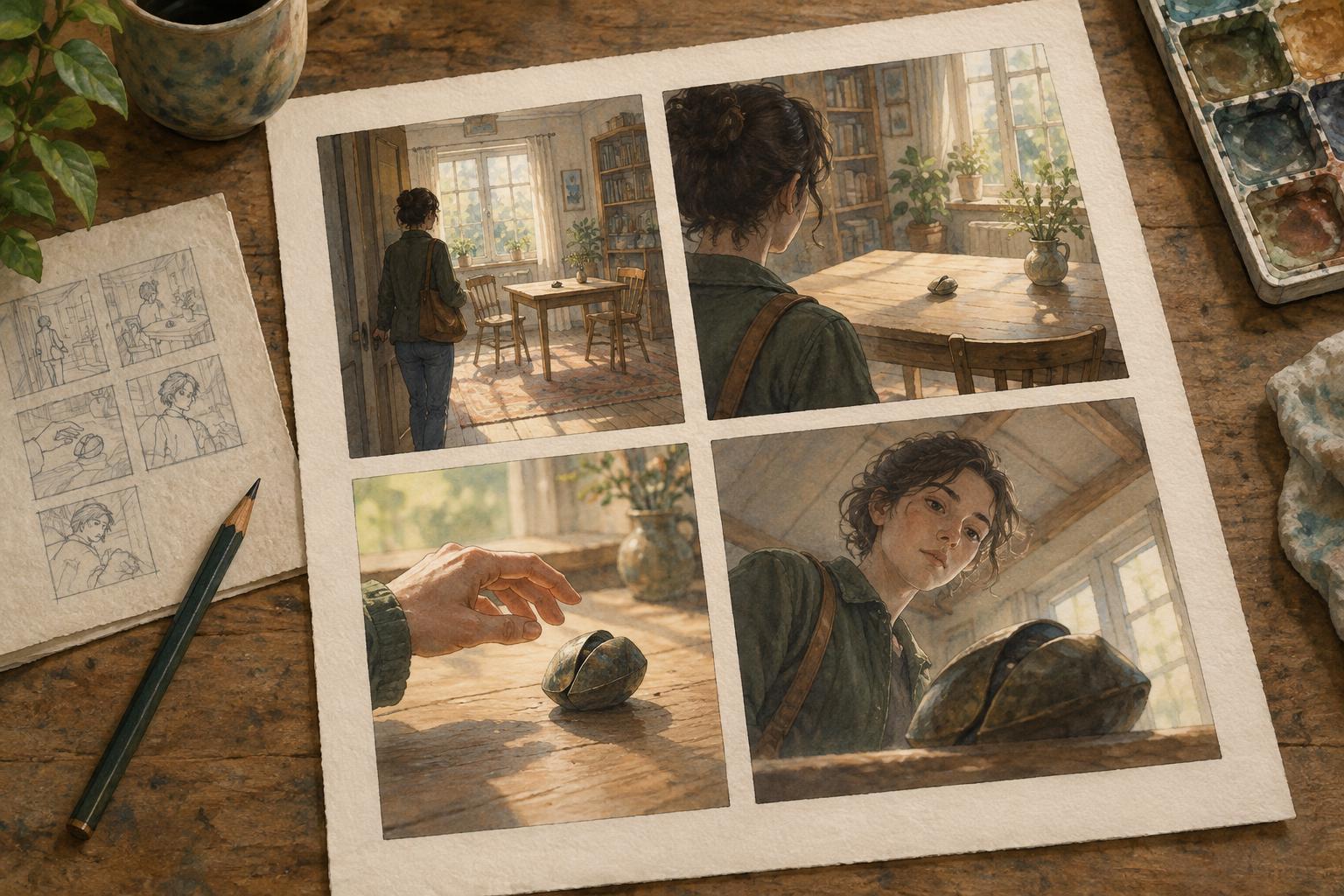
A panel drawn from a character’s eye level is not necessarily a literal view through their eyes. You can keep the reader near a character without copying everything that character sees. An over-the-shoulder view, for example, shows both the object of attention and part of the person responding to it. A wider view can let the reader observe something the character misses.
Use that difference deliberately. To build suspense, you might reveal a door slowly opening behind a character while they concentrate on a conversation. To create surprise, you might restrict the panels to their view until they turn around. Neither approach is automatically better: suspense depends on waiting for a known possibility, while surprise depends on withholding it. Decide which experience serves the scene, then check that later panels honor what you have already shown.
Give each shift in distance a job
Distance helps organize a scene. A wider panel can establish where people stand, what they can reach and which direction they are moving. A medium view can carry an exchange of gestures and dialogue. A close view can isolate a hand, an expression or an object that changes the meaning of the moment. Think of these as functions, not a required sequence. If the location is already clear, another wide panel may add little; if an object’s position matters, a close-up may hide too much.
Angle can contribute as well, but it needs a reason. Looking down might reveal a route through a crowded room. Looking up might keep a tall obstacle in view while a character approaches it. Extreme angles can be useful when a scene calls for disorientation, though repeated changes may make ordinary movement hard to follow. Whenever you move the imagined viewing position, ask whether the reader can still tell where the characters are in relation to one another.
Use panels to control the moment of discovery
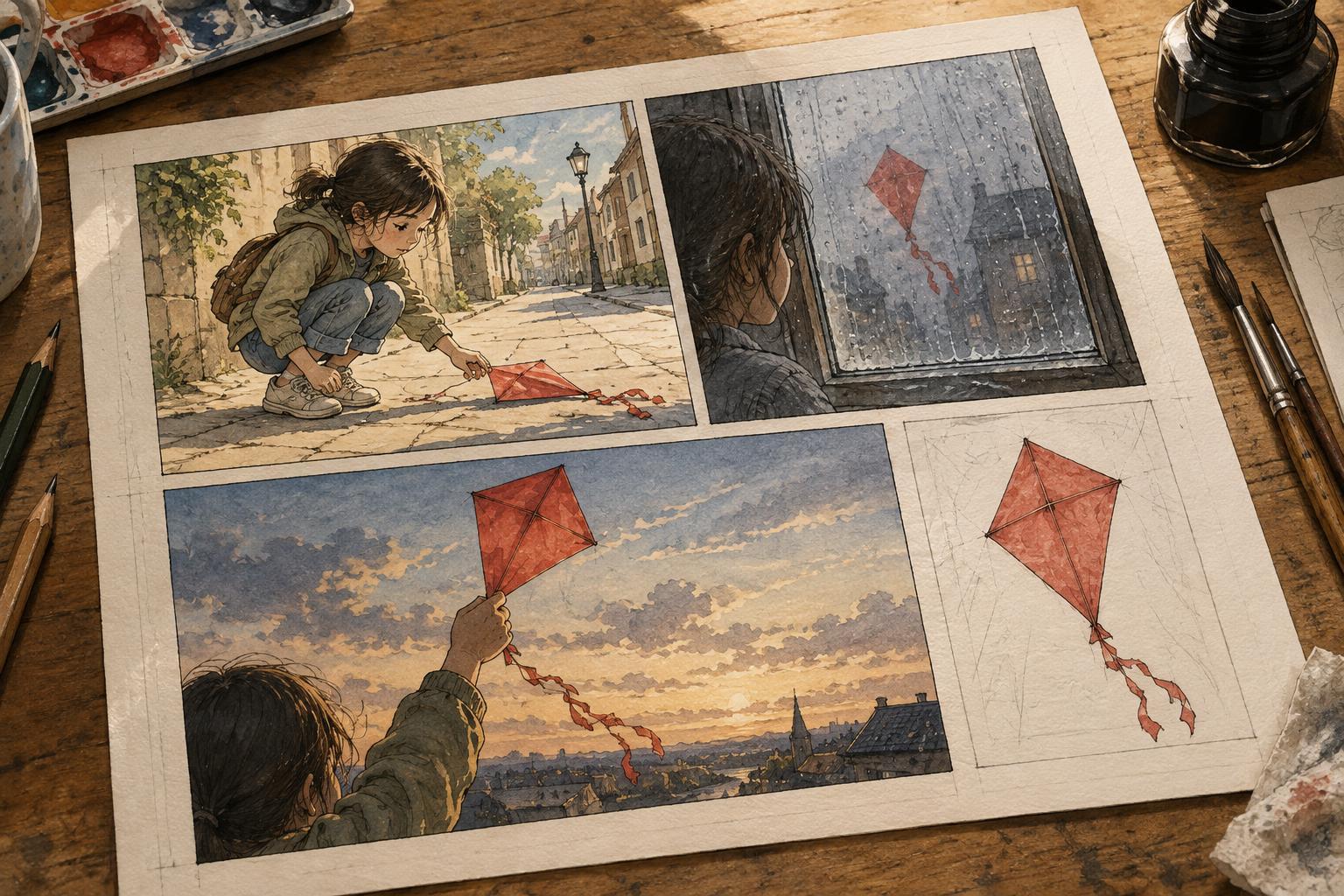
In comics, point of view also depends on what fits inside a panel and what waits beyond its border. A character glancing off-panel creates a question. The next panel can answer it immediately, delay the answer or reveal something the character did not expect. Panel size and placement may change how much time a reader spends with that question, but the essential tool is the order in which information becomes visible.
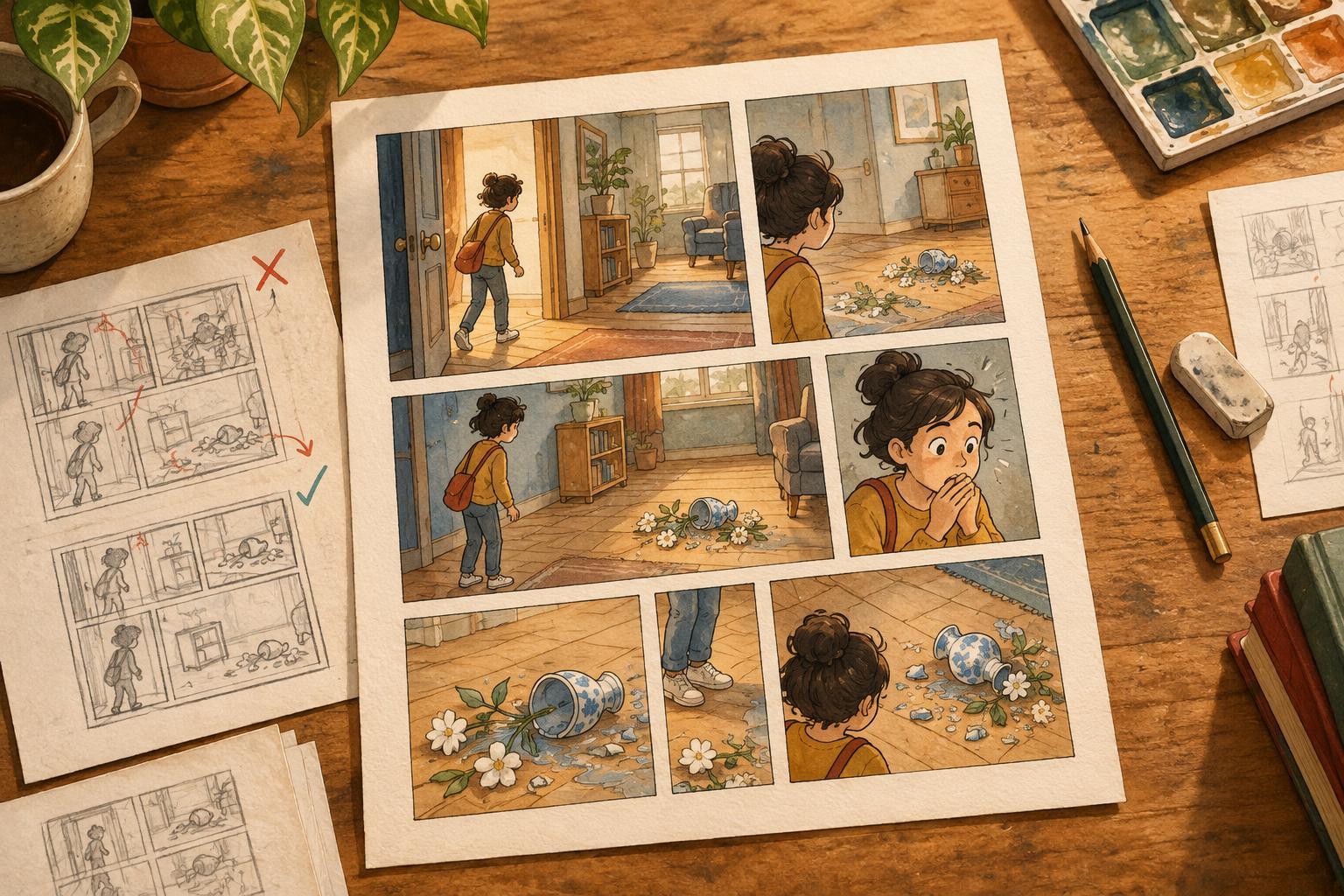
Consider a scene in which someone finds a broken cup. One version begins with the cup on the floor, then shows the person entering: the reader watches for their reaction. Another begins with the person hearing a sound, follows their gaze and reveals the cup last: the reader discovers it with them. The event is the same, yet the scene’s emphasis changes. When choosing between versions, identify whose reaction or interpretation matters most.
Test the scene with small thumbnails
Draw the scene twice as rough boxes, using simple figures and no finished details. In the first version, keep the reader close to one character. In the second, allow a more distant view that shows what is happening around them. Mark the key object, the direction of each gaze and the moment the reader learns something new. If a panel does not establish, reveal, conceal or deepen a reaction, see whether it can be combined with another.
Read both versions without dialogue. Can you follow the action? Do you know where to look first in each panel? Does a change in viewpoint feel motivated by new information or emotion? Then add dialogue and check again: words can clarify intent, but they should not have to repair confusing movement. The most useful viewpoint is not the most elaborate one. It is the one that lets the reader understand the scene while feeling the shift you intended.