Why brush tips lose their shape
A brush does much of its work at the tip. A pointed round brush makes fine lines; a flat brush needs an even edge. When bristles splay, curl or break, those marks become harder to control. Paint left near the ferrule—the metal band holding the bristles—can also stiffen a brush and push its hairs apart.
Good care begins while you paint. Rinse brushes when switching colors, and avoid using a delicate pointed brush to scrub a rough surface. Do not leave brushes standing tip-down in a water jar: the weight of the handle can bend the bristles. If you need to pause, rinse the brush and lay it where the tip can keep its shape.
Match the cleaning method to the paint
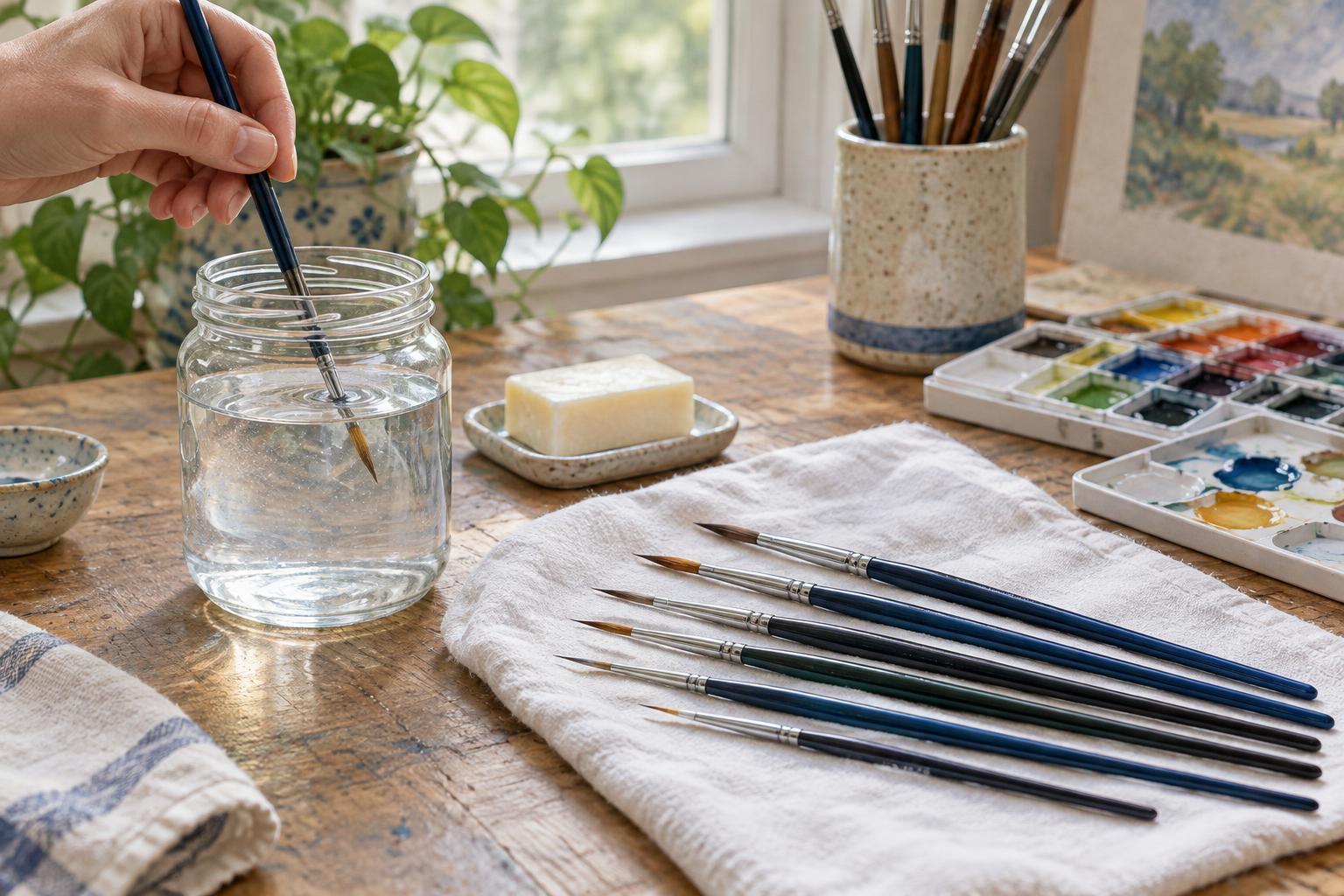
For watercolor and most water-based gouache, rinse the brush in clean, lukewarm water and gently work out remaining color with your fingers. A little mild brush soap can help if pigment remains. Use the paint maker’s cleaning guidance if a gouache or medium is not water-soluble. Avoid hot water, vigorous twisting and pulling on the hairs.
Acrylic needs prompt attention because it becomes difficult to remove once dry. Rinse before the paint sets, then work a suitable brush soap through the bristles and rinse again. Check the base of the tuft for trapped paint, but do not force the brush against the bottom of a jar. If acrylic has already dried inside the ferrule, cleaning may not restore the original point.
For oil paint, first wipe excess paint onto a rag or paper towel without tugging at the bristles. Follow the paint and brush manufacturers’ directions for a compatible cleaner, then wash away cleaner and residue as directed. Use solvents only with appropriate ventilation and handling, and follow local disposal rules rather than pouring used solvent down a drain.
Wash gently, from ferrule to tip
Whatever the medium, support the bristles as you clean. Wet and lather them gently, moving from the ferrule toward the tip rather than grinding the tip into your palm. Rinse until the water runs clear or the cleaning product has been removed. If color continues to appear when you lightly squeeze near the ferrule, repeat the wash instead of scrubbing harder.
Try not to soak the ferrule or handle for long periods. Prolonged immersion can be hard on some finishes and brush construction. After the final rinse, press the bristles lightly in a clean cloth to remove moisture. Do not wring them. While the tuft is still damp, use your fingers to bring a round brush back to a point or a flat brush back to a straight edge.
Let brushes dry before putting them away
Set clean brushes flat on a towel, preferably with the bristles extending beyond the towel’s edge so the tips are not pressed against it. A brush holder that keeps tips pointing downward can also work. Avoid drying brushes upright with wet bristles at the top: water can travel toward the ferrule and remain there longer. Keep brushes away from direct heat, which may affect handles or bristles.
Once the brushes are fully dry, store them upright with tips pointing up, or flat in a case that leaves room around each tuft. A protective cap can be useful for travel if it fits without pinching the bristles, but do not put a damp brush into a closed case. For longer storage, keep brushes somewhere clean and dry rather than loose in a crowded drawer.
Build a small routine you can repeat
You do not need an elaborate cleaning station. Keep a water container or suitable cleaner, brush soap when needed, and a clean cloth within reach. At the end of a session, sort brushes by medium, remove leftover paint, wash, reshape and leave them to dry. This short sequence is easier than trying to rescue a brush after paint has hardened.
Before the next session, check each tip. If a few hairs have shifted, wet the brush and reshape it gently. If the bristles remain bent or paint is fixed deep in the ferrule, reserve that brush for rough textures or other marks that do not require a precise point. Protecting your best brushes for fine work is as useful as cleaning them well.