Two erasers, two kinds of control
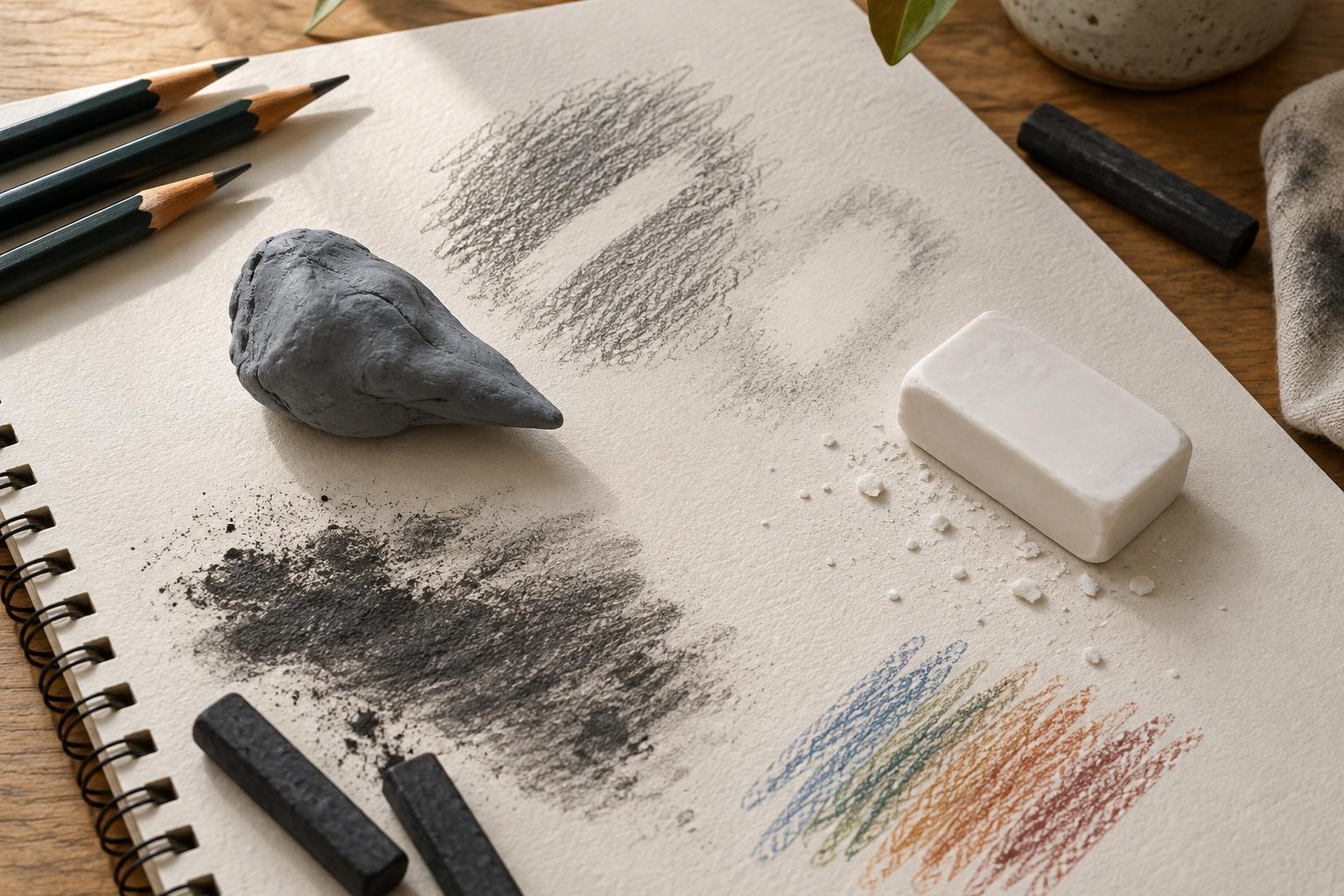
A kneaded eraser is a soft, moldable piece of material that picks up loose drawing particles when pressed against the page. You can shape it into a point for a small highlight or flatten it to lighten a broader area. Rather than scrubbing, you usually dab, press and lift. That makes it useful when you want to keep some of a mark instead of removing it completely.
A vinyl eraser is firmer and works mainly through rubbing. It can remove more graphite from a clean, sturdy sheet, especially when you need to clear a construction line before inking or make a light area look closer to the untouched paper. The trade-off is friction: repeated passes may roughen the surface or smear nearby marks. Neither tool can undo a groove pressed into the paper by a hard pencil.
Graphite: lighten or clear?
For a soft graphite sketch, start with a kneaded eraser if you want to adjust a value gradually. A few gentle lifts can make a shadow lighter without leaving a stark white patch. Pinch the eraser to a clean point to lift a narrow highlight from shading, or roll a fresh surface across a large area. Avoid dragging a dirty side through your drawing, since collected graphite can transfer back onto the page.
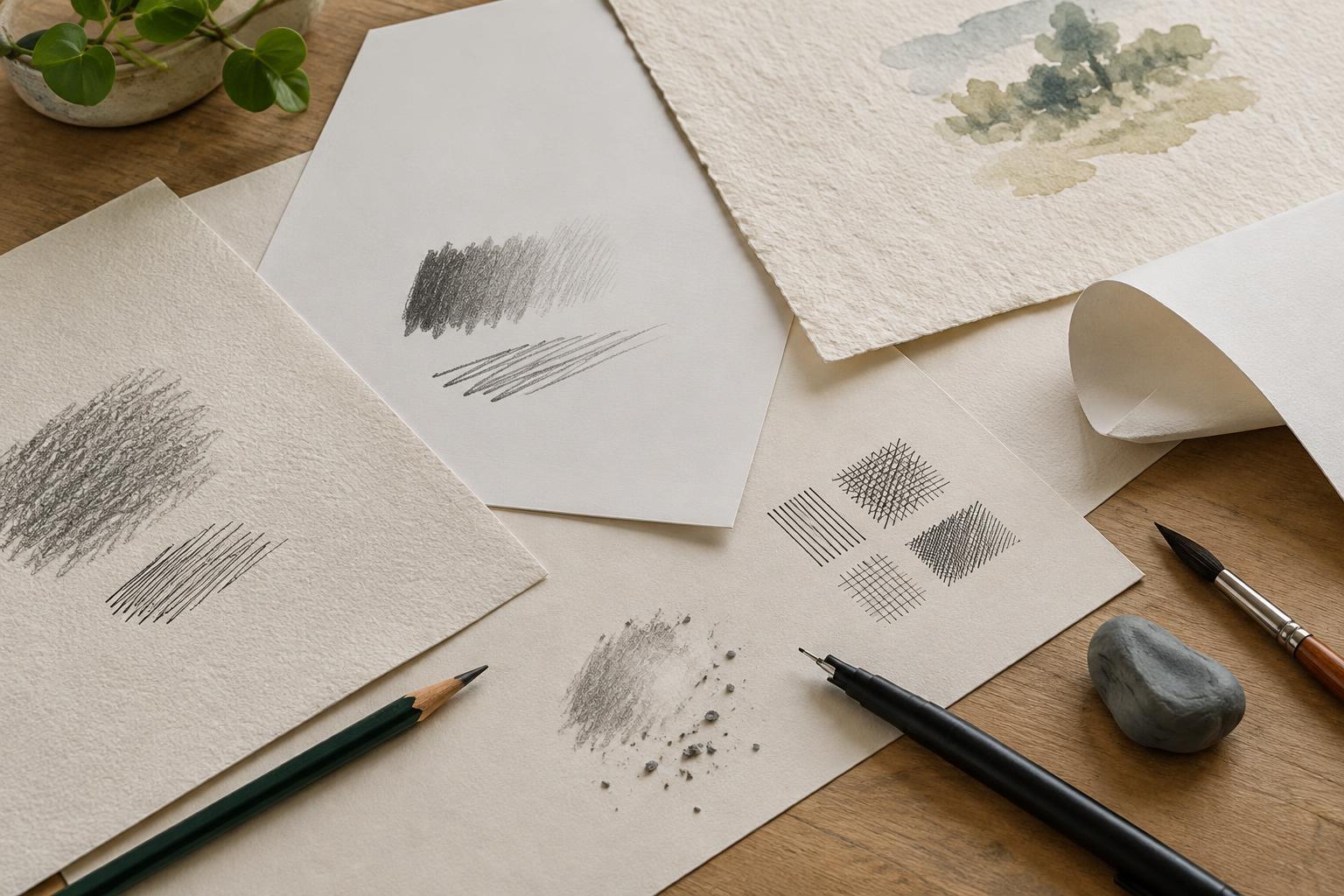
Choose a vinyl eraser when a pencil line needs more complete removal. Use light, short strokes and brush the crumbs away rather than sweeping them across the work with your hand. Dark, heavily layered graphite may leave a gray trace, particularly on textured paper. If the pencil has polished the surface or dented it, more force is unlikely to help; it is more likely to change how the paper takes new marks.
Charcoal and colored pencil behave differently
Loose charcoal is a good match for a kneaded eraser. Pressing and lifting can pull pigment from the page while preserving the grainy character of the drawing. Shape a small edge to pick out light on a cheek or fold of fabric. A vinyl eraser can clear some charcoal, but rubbing may push dark particles into the paper texture or spread them into an unwanted haze. Work gently, especially over a delicate blended area.
Colored pencil is usually harder to erase cleanly than graphite or loose charcoal because its color is held in a binder and can settle into the paper’s texture. A kneaded eraser may lift a light layer or soften a line made with gentle pressure. A vinyl eraser may remove more of some colors, but it can also smear pigment or wear the surface. On a dense, burnished layer, expect to lighten rather than fully restore the paper. Test your particular pencils on a scrap of the same paper before relying on either eraser.
Ink, paint and paper damage have limits
Once ink has dried and bonded with or soaked into paper, a kneaded eraser generally will not remove it. A vinyl eraser may take away a little surface residue from some marks, but it is not a dependable ink correction tool. Vigorous rubbing can leave a shiny, fuzzy or thinned patch that draws more attention than the original line. The same caution applies to dried paint and other media that form a firm layer or stain the sheet.
If you plan to ink over pencil, let the ink dry thoroughly before erasing the guidelines. Test a small corner first: some inks or papers may smear or lift under friction. Keep erasers clean, and pause if the page begins to pill. An eraser can remove material from the surface, but it cannot rebuild paper fibers after they have been scuffed away.
A simple way to choose
Ask what you want to change. To lift a shadow, soften a sketch or pick out a highlight, try the kneaded eraser first with a pressing motion. To clear an ordinary graphite guideline, try a clean vinyl eraser with minimal pressure. For colored pencil or unfamiliar materials, make a sample mark on spare paper and compare both tools before touching the finished drawing.
Keep the kneaded eraser usable by folding the soiled surface inward to expose a cleaner one, and replace it when it no longer lifts marks well. Wipe debris from a vinyl eraser before using it near finished work. Above all, stop when erasing starts to affect the paper. A faint remaining mark is often easier to work around than a damaged surface.