Give the reader a place to stand
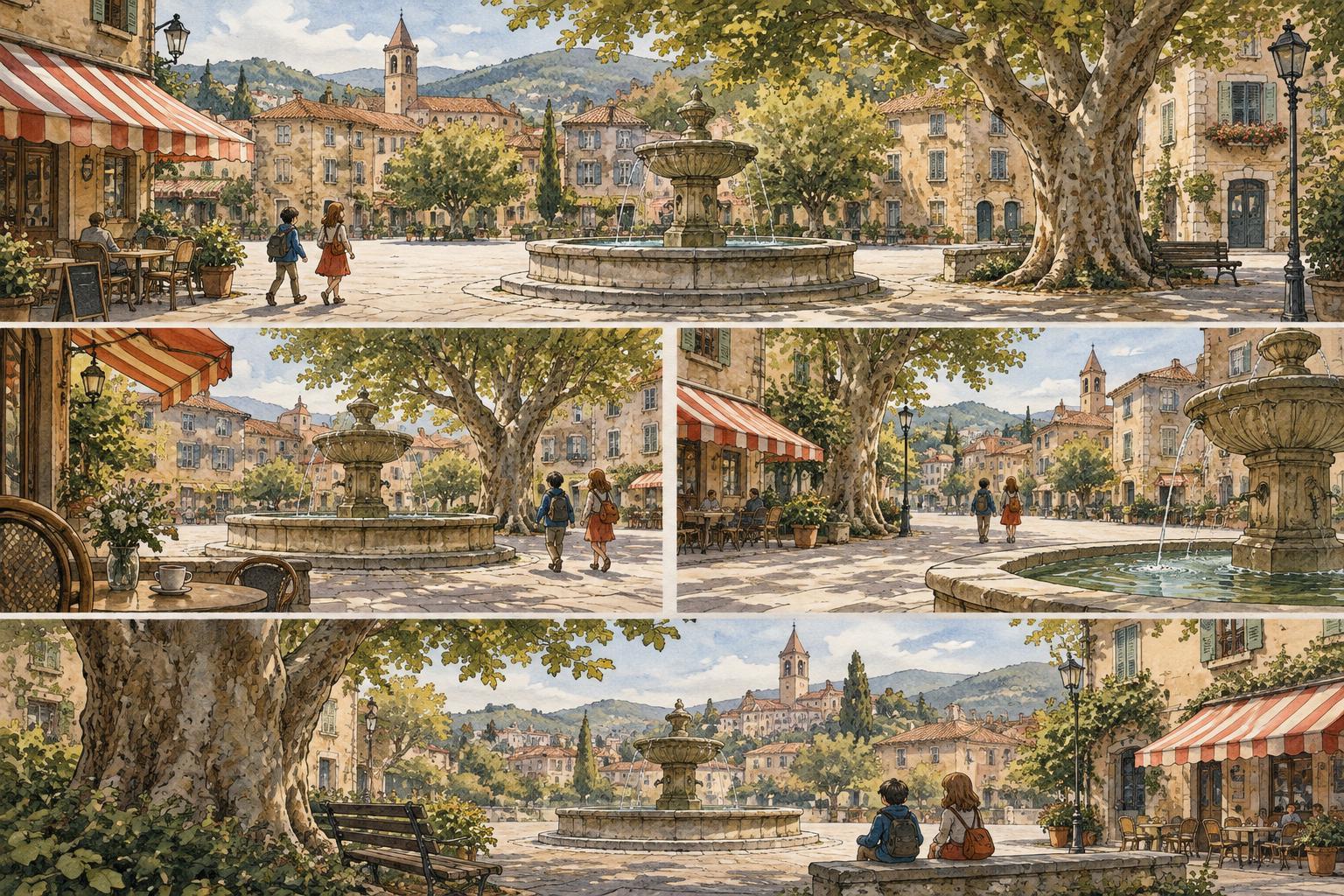
A comic scene can begin with a wide view, but an establishing panel does more than show scenery. It tells readers where the action will take place and which parts of the space matter. Before drawing it, ask what someone needs to know to follow the next page: Is there one exit or two? Is a character watching from above? Does a counter separate the people speaking? Include the details that answer those questions, then let less important details recede.
Imagine a conversation in a small café. A first panel might show the entrance on the left, the counter at the back, and two characters at a table near the window. Later panels can move close to faces or hands because the reader already has a rough mental layout. The opening view need not be an architectural plan. It needs to establish useful relationships between people, objects, and possible paths of movement.
Choose anchors that survive a change in viewpoint
Visual anchors are recognizable features that help readers identify a space across panels. A striped awning, a bent streetlamp, or a bright rectangle of window light may do more work than a fully rendered background. Choose a few anchors with distinct shapes or positions, and place them consistently. When the viewpoint changes, showing even part of one anchor can reassure the reader that the scene has not jumped somewhere else.
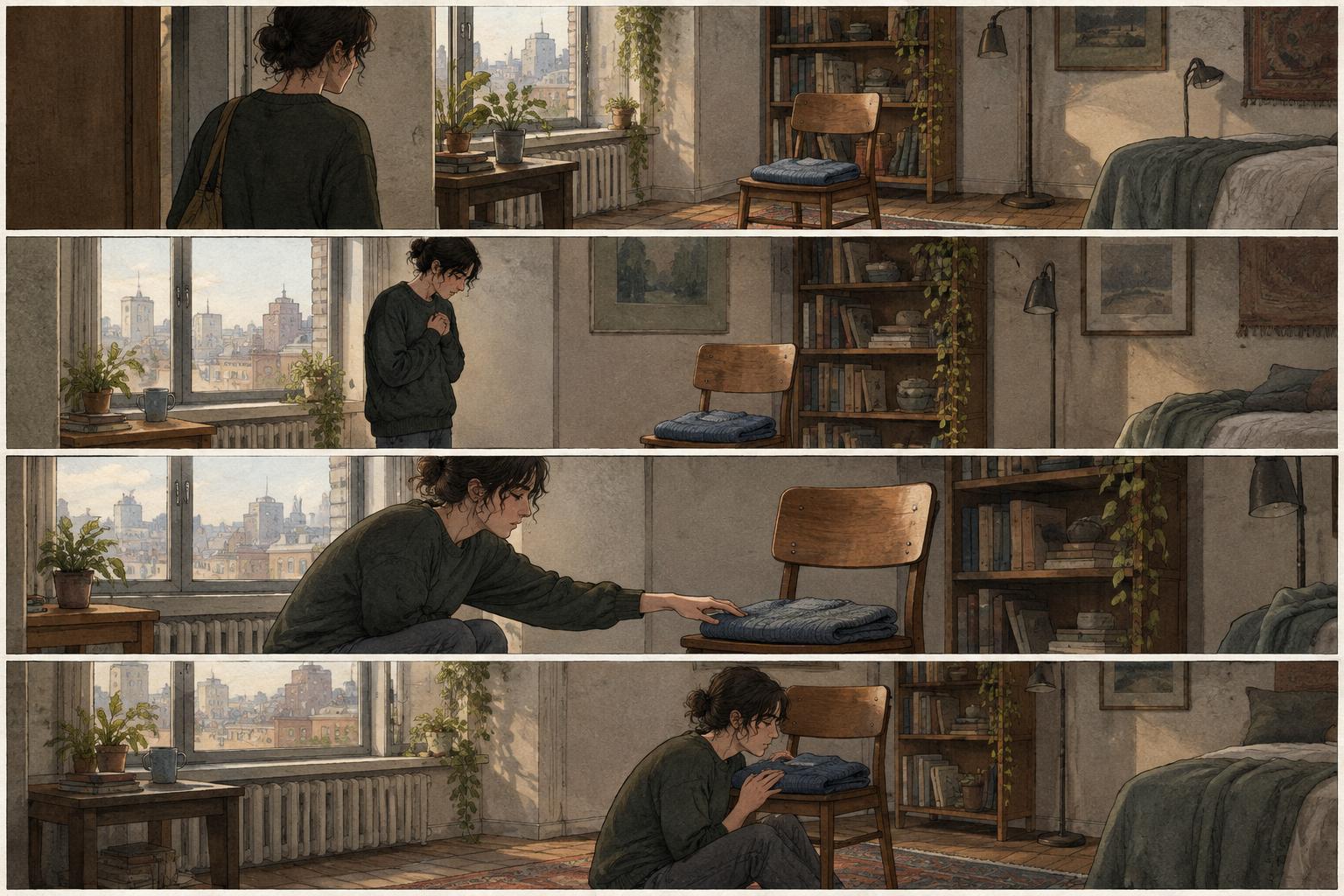
Anchors can also clarify action. If a character drops a key beside the table leg, that leg gives the key a location for a later retrieval. If someone heads toward a door, keeping the door in sight for a panel or two makes the movement legible. Background detail earns its space when it helps explain a choice, a distance, or an obstacle. Otherwise, simplifying it can make the important features easier to find.
Keep movement and screen direction readable
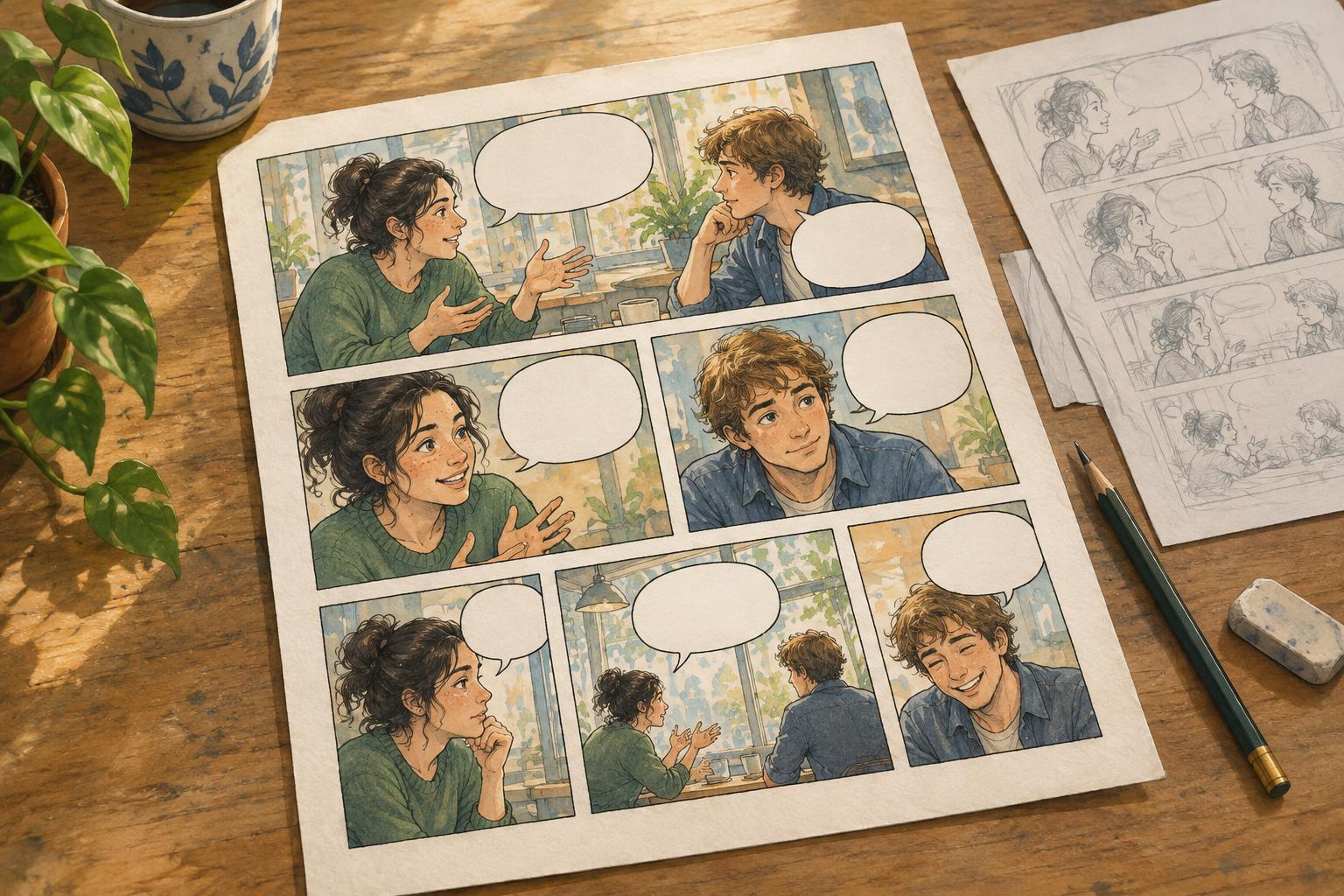
Once characters begin moving, decide which side of the space the reader is viewing them from. If one person stands to the left of another in a conversation, repeated close-ups can preserve that relationship through facing direction and eyelines. A sudden reversal may make the characters appear to have swapped places. Reversals are possible, but they work best when a panel shows the camera moving around them or otherwise gives the reader a chance to reorient.
The same principle applies to a chase or a walk down a corridor. A character traveling left to right will usually feel as though they are continuing forward if that direction persists across panels. To change direction deliberately, show the turn: a corner, a pause at a doorway, or a wider view of the new route. Consistency is not a rigid rule for every panel. It is a baseline that makes a meaningful change easier to understand.
Re-establish the space when the story needs it
An establishing view is not a one-time obligation. Readers may need a new look at the space after a character moves, an object changes hands, or an important area becomes relevant. A medium shot that includes both a face and a familiar landmark can refresh the layout without stopping the scene for another wide panel. An overhead view can be useful when routes or positions are the point, though it may feel detached if used during an intimate exchange.
Think of panel size as part of the guidance. A spacious panel can invite readers to survey a room; a tight sequence can keep attention on a reaction. After several tight panels, one wider image can reveal what has changed around the characters. For example, a conversation at the café table may end with a wider panel showing that someone now stands between the table and the exit. The geography becomes part of the tension rather than an interruption.
Test the scene with a simple map
Before finishing a page, make a rough private map of the location. Mark entrances, large objects, and where each character starts and ends. Then compare it with your thumbnails. Can a reader infer the same arrangement from the panels alone? If an action depends on a short distance, a blocked route, or a hidden observer, check that an earlier image makes that fact plausible. The map is a planning tool; it does not have to appear in the finished comic.
For a quick practice exercise, draw a six-panel scene in which one character enters a room, notices an object, crosses to it, and leaves by a different door. Use no captions explaining the layout. Ask someone to point out the doors and trace the character’s path after reading. If they hesitate, try revising one panel rather than adding detail everywhere. Often a clearer entrance view, a repeated anchor, or a panel showing the turn is enough.