Give each line a job
A comics panel has limited room for speech. Before writing a line, ask what the reader needs to learn at that moment. A character might reveal a plan, challenge another character, conceal a feeling, or draw attention to something outside the frame. If a line does none of these things, the expression, gesture, or setting may already be doing its work.
This does not mean every character must speak in clipped sentences. A long, wandering answer can reveal nervousness or create a deliberate pause. The key is to make its length a choice rather than a habit. Draft the conversation freely first, then underline the lines that change what the characters know, want, or do. Those are the lines most worth making space for.
Let the picture carry what it can
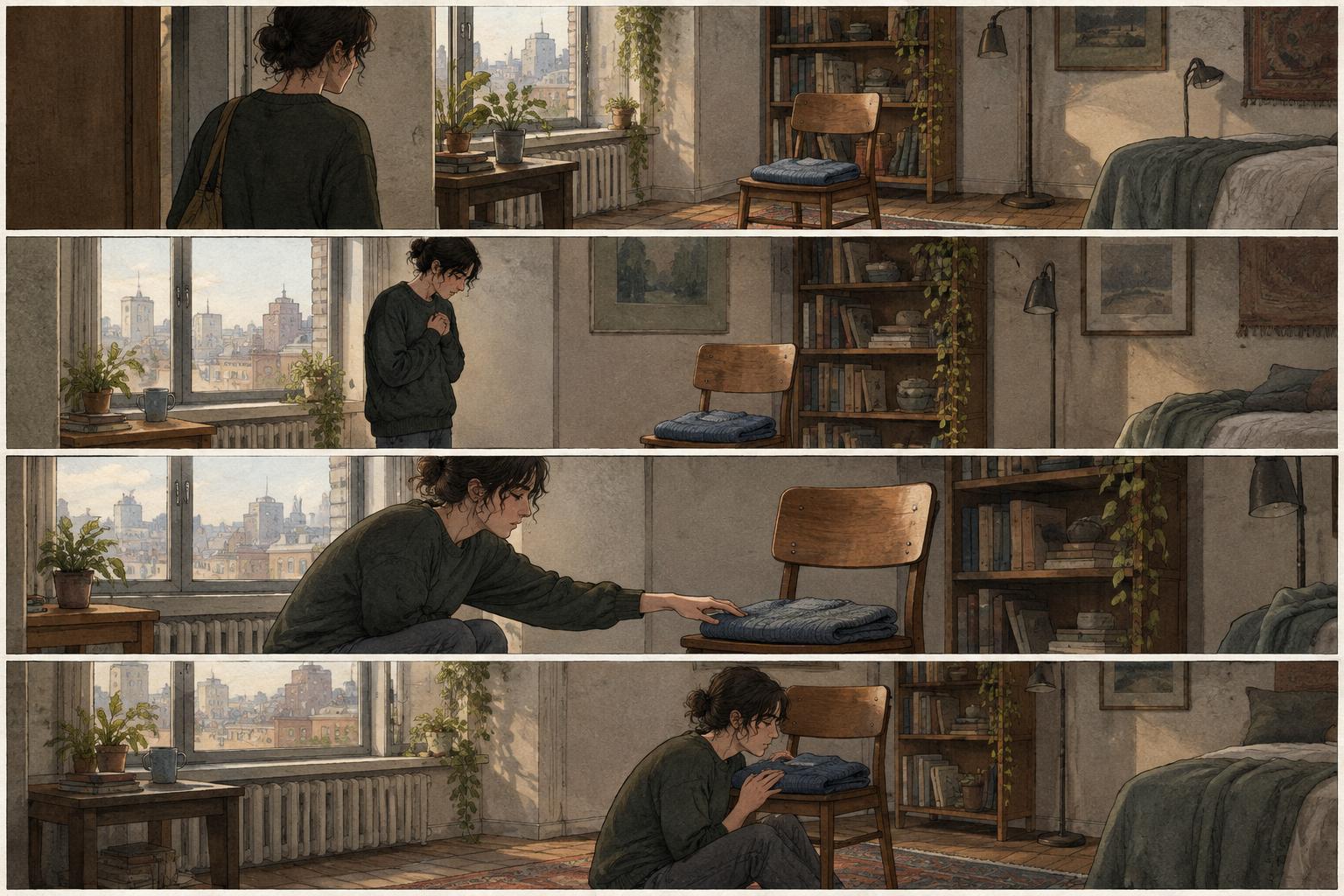
In prose, dialogue often needs help establishing who is present and what they are doing. In comics, the drawing can supply much of that information at a glance. If a panel shows a character reaching for a locked door, their speech need not explain that the door is locked. It can instead show their reaction, address the person beside them, or introduce a new concern.
Try reading a rough page twice: once with the dialogue and once while ignoring it. Notice which actions and emotions remain clear without words. Then read only the dialogue and look for descriptions that merely repeat the art. Removing that repetition can make room for more useful speech while allowing the reader to participate in the story by connecting image and text.
Write for the space and the reading path
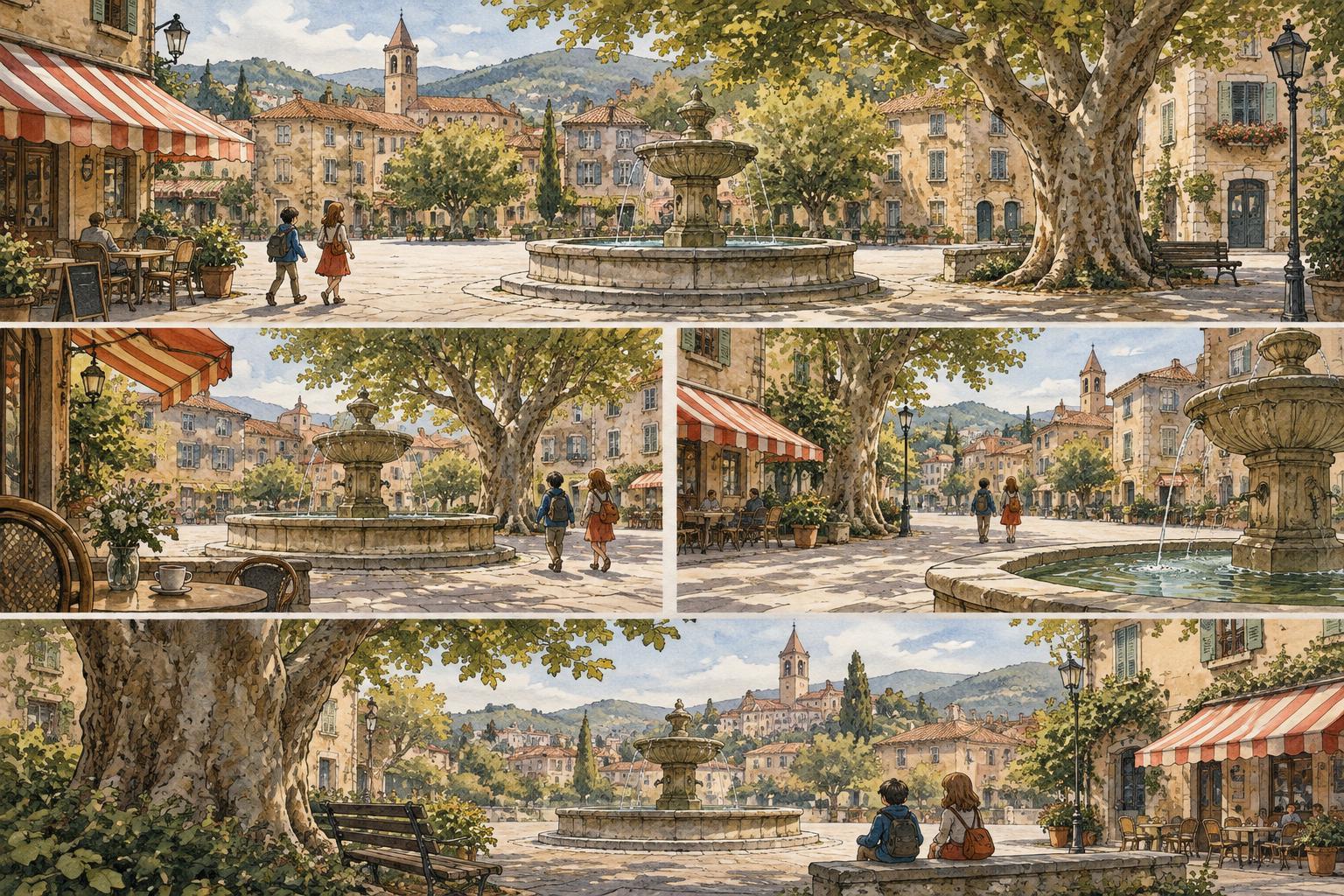
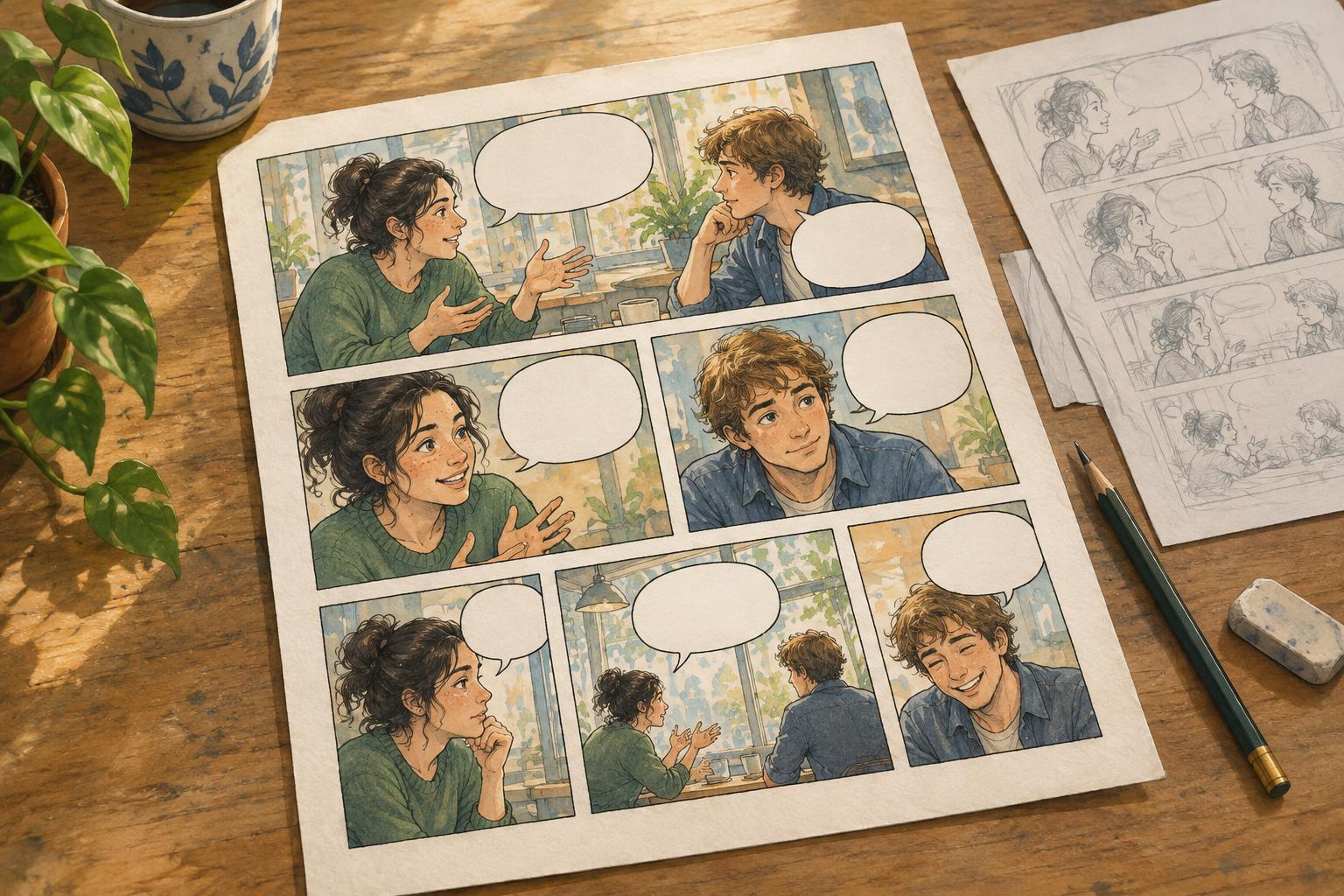
A speech balloon occupies part of the composition. Even a short exchange can become awkward if balloons cover faces, obscure an important object, or force the eye to jump backward across the page. When thumbnailing a scene, reserve approximate balloon space early. Decide who speaks first, where the reader will encounter that balloon, and how the conversation leads toward the next panel.
The number of words a panel can comfortably hold depends on its size, lettering, artwork, and the rhythm of the page. Rather than aiming for a fixed word count, test the dialogue in a rough layout. If the art has no room to breathe, cut a phrase, move a reply to another panel, or reconsider what must be said. Adding a panel can be useful when a response deserves its own facial expression or beat, not simply because the existing balloon is full.
Make voices distinct without overloading them
Natural dialogue is not a transcript of everyday speech. People repeat themselves, interrupt, and circle toward a point; on the page, too much of that can slow a scene without adding character. Select the hesitations or repetitions that reveal something specific. One character may answer questions directly while another changes the subject. One may use precise terms while another reaches for concrete comparisons. Those patterns often establish voice more effectively than elaborate spelling or constant verbal tics.
Read each character’s lines aloud in sequence, without the other speakers’ lines between them. Listen for repeated sentence shapes and words that seem out of place for that character. Then read the complete exchange aloud while looking at the page. The conversation should be understandable, but it should also leave space for looks, silences, and actions to affect its meaning.
Revise at the panel level
Dialogue that sounds fine in a script may feel crowded once it meets the drawings. A useful final pass is to give every panel a simple description of its main beat: a question lands, a character notices a clue, or someone decides not to answer. Check whether the dialogue supports that beat. If two balloons perform the same function, one may be enough. If a crucial response gets lost among several lines, it may need more visual space.
Finally, follow the page as a reader would. Is it clear who speaks first? Can each balloon be connected to its speaker? Does a reveal arrive after the reader has had a chance to see what prompts it? Revising dialogue this way is less about making every line shorter and more about finding the right balance between words, images, and the moments of silence between them.