Start with what the reader needs to experience
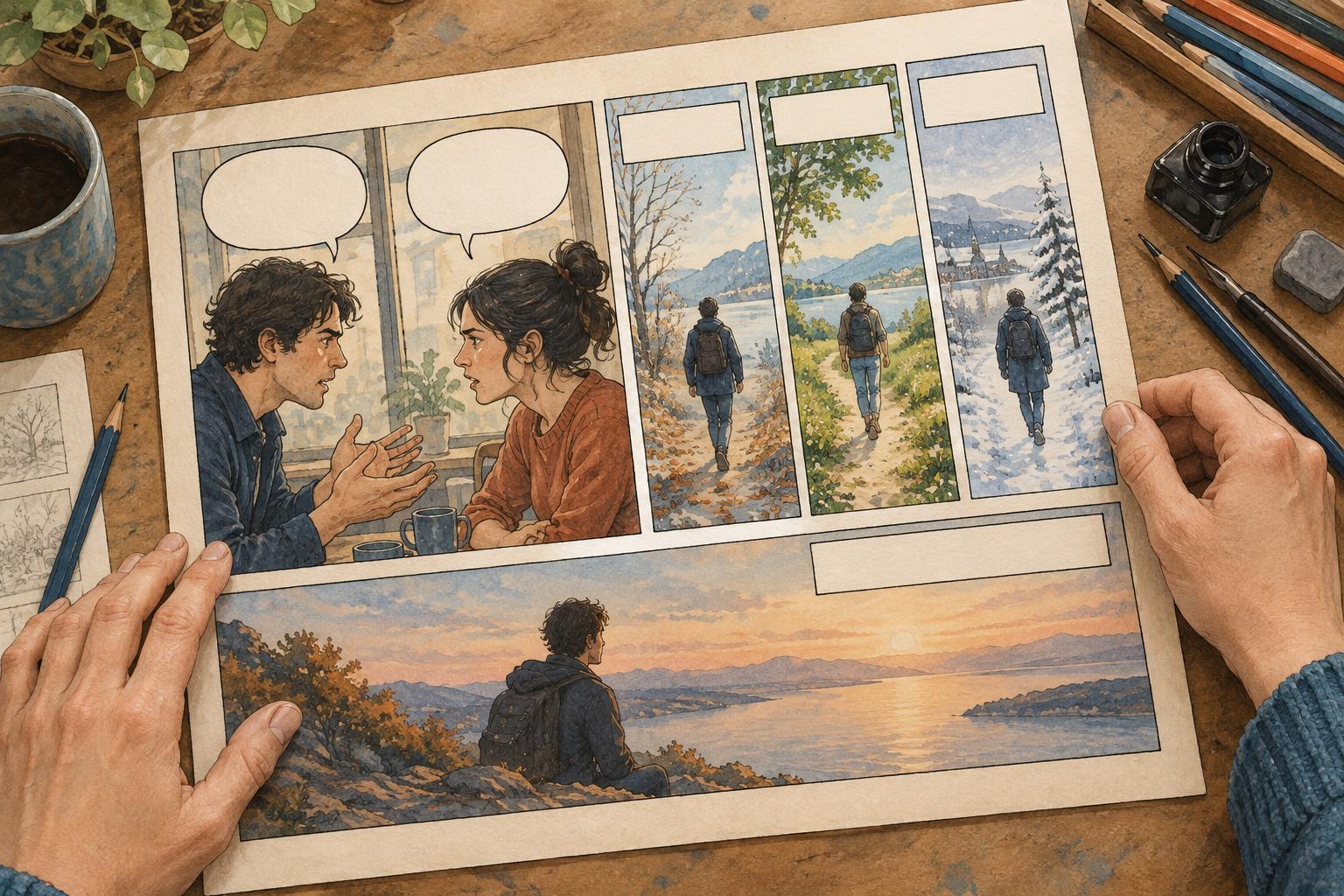
Dialogue and narration captions do different jobs. Dialogue belongs to a conversation happening in the scene: it lets characters react, interrupt, conceal things, and change one another’s minds. A narration caption sits outside that immediate exchange. It can describe a memory, bridge a gap in time, or give the reader a perspective the people in the panel do not share.
Before writing either one, ask what the panel needs the reader to experience. If the important event is a tense exchange, let speech and visible behavior carry it. If the important event is how a character understands that exchange later, a caption may be more useful. Neither form is automatically more literary or more natural. The useful choice is the one that adds information the drawing cannot easily provide while preserving what the drawing does best.
Use captions to cross time or distance
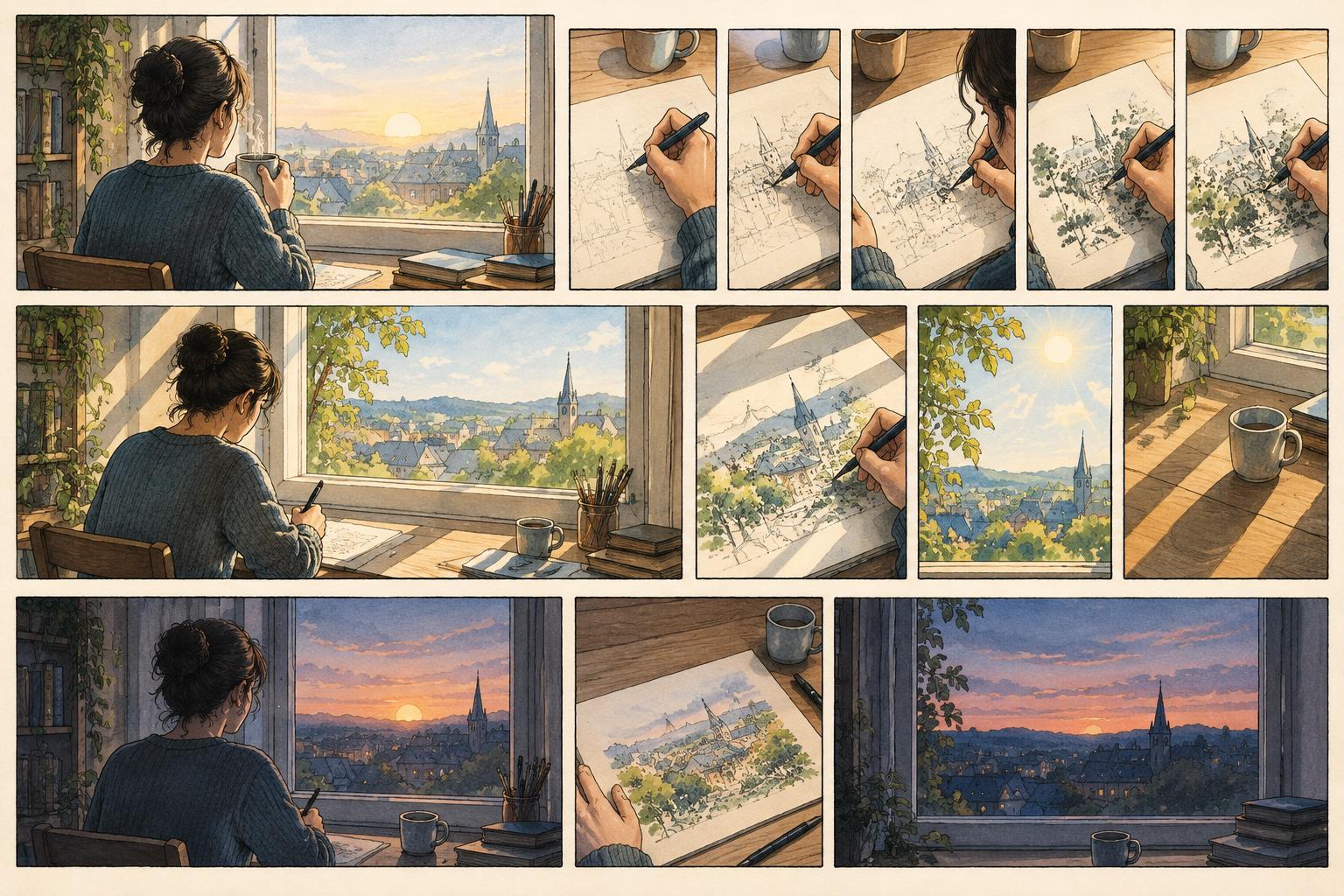
Captions are especially useful when a comic moves across several places or stretches of time without showing every step. A sequence of a character packing, traveling, and arriving can remain visually brisk while a few captions establish why the journey matters. Turning the same information into dialogue might require an artificial phone call or a companion who exists mainly to ask questions.
Captions can also signal a change in vantage point. A story told from a later moment may place a reflective voice over an earlier action. That contrast can create suspense: the art shows what the character did then, while the caption reveals how they understand it now. Make that relationship clear enough for readers to follow. An abrupt shift from present action to hindsight can be confusing if the caption’s voice is not established.
Keep live conflict in the scene
When characters want different things from each other, dialogue usually gives the conflict more room to breathe. A caption that reports an argument can cover its outcome, but it removes the hesitations, evasions, and small shifts that make an encounter feel active. If a decision changes during a conversation, consider showing the exchange rather than summarizing it.
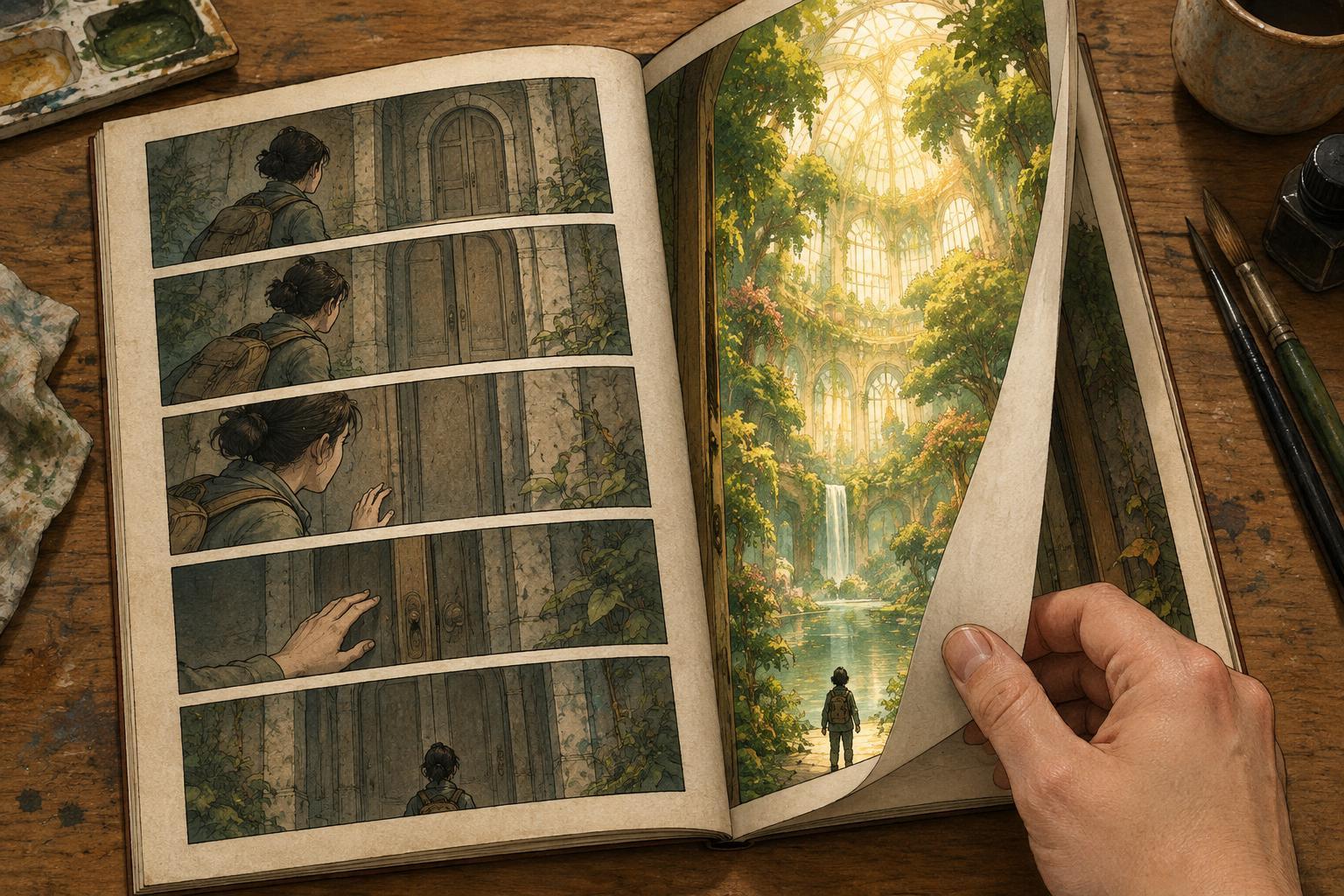
Dialogue also works well when what a character says differs from what the art shows. A confident answer paired with a trembling hand lets readers draw their own conclusion. A caption explaining the character’s fear would be clearer, but it might flatten the moment. Try withholding explanation when a facial expression, gesture, or panel transition can make the meaning legible.
Let captions offer perspective, not a transcript of the art
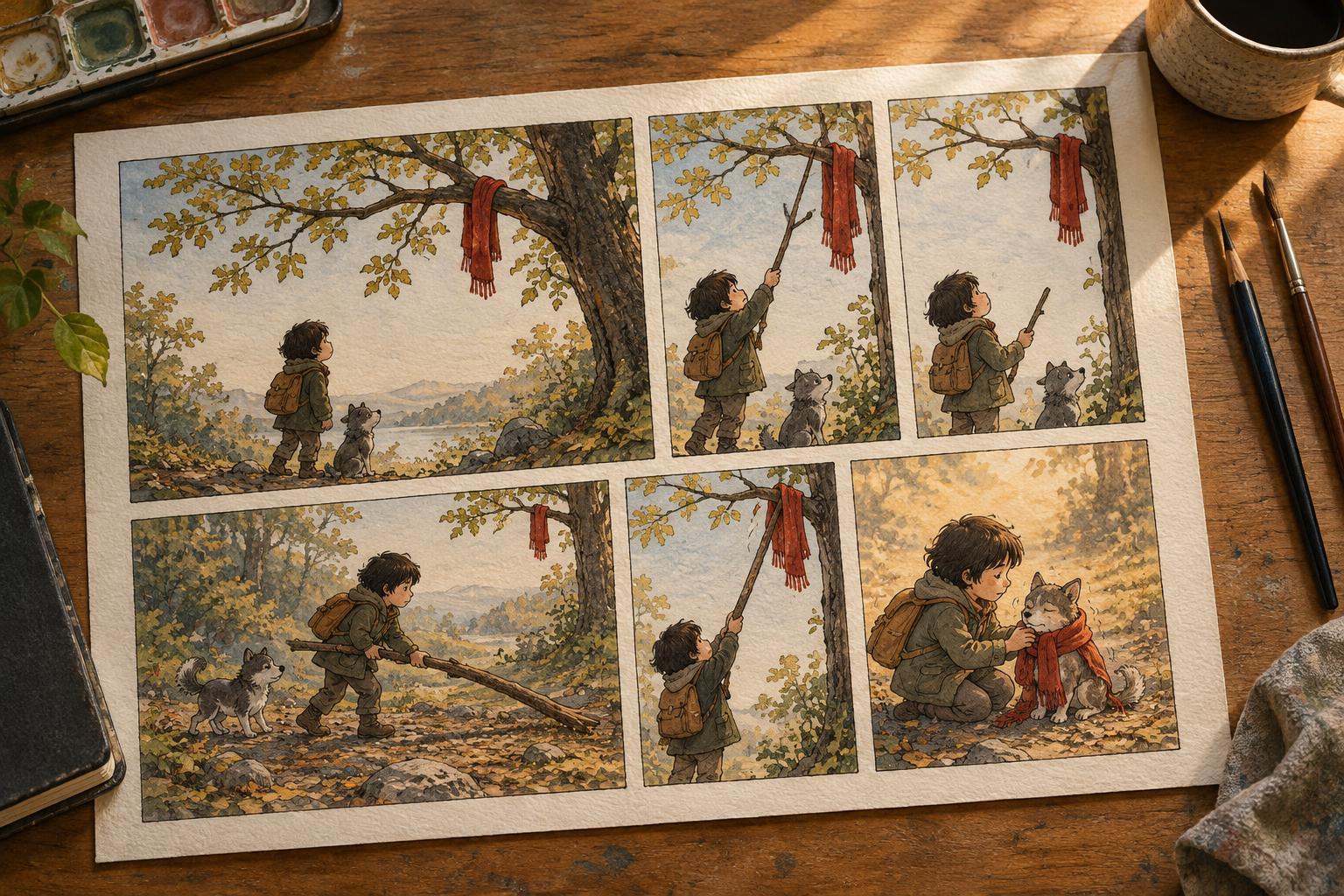
A caption earns its space when it changes how readers interpret a panel. Over an image of a crowded kitchen, it might convey a character’s sense of isolation or connect the room to an earlier memory. A caption that merely lists the visible objects asks readers to process the same information twice.
Voice matters here. First-person captions can feel intimate, but they should not become an uninterrupted account of every thought. Third-person captions can efficiently orient a reader, but too many can make scenes feel distant. In either case, give the caption a consistent purpose. Is it guiding us through events, revealing a limited viewpoint, or setting a rhythm? If it switches jobs, make the shift deliberate.
Be careful with captions that state emotions the art could express. Rather than labeling a character as disappointed, consider showing what they expected and what they find. Then use a caption only if their private interpretation adds something distinct.
Test the balance on the page
Draft a short sequence twice: once with dialogue doing most of the work, and once with captions carrying the context. Read each version while looking at the panels, not just at the script. Notice where your eye pauses, whether the words compete with a key image, and whether a character seems to speak only to inform the reader.
Next, remove any line that repeats something already clear from the picture. If the sequence becomes confusing, restore only the information readers need at that point. A caption may be the cleanest fix, but a revised panel, a small exchange, or an extra establishing image might work better.
The goal is not to minimize words at all costs. It is to give each storytelling element a task. Use dialogue for interaction readers should witness, captions for perspective or transitions that benefit from language, and the art for the details readers can discover by looking.