Give unfinished ideas a place to land
An illustration idea rarely arrives as a complete composition. It might begin as the shape of a chair in a waiting room, a sentence overheard on a bus, or a question such as “What would this scene look like at night?” An idea bank is a place to keep those fragments without asking them to become finished work immediately.
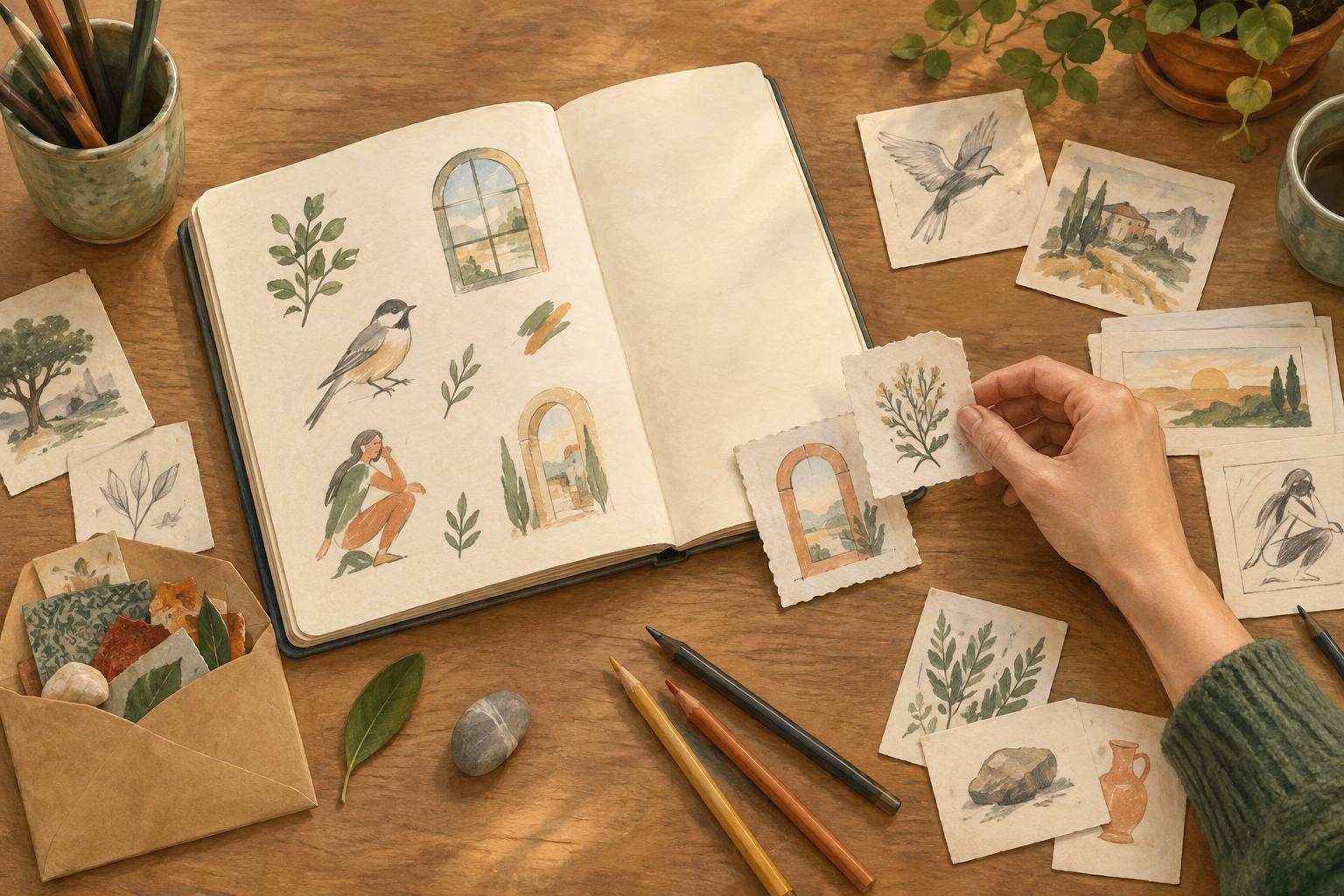
Choose a home you can reach when a thought appears: a pocket notebook, a notes app, a sketchbook, or a folder of small cards. The format matters less than the habit of using it. If collecting requires several steps, make it simpler. A quick entry can be one line or a rough drawing, provided it gives your future self enough to remember what caught your attention.
Treat the bank as a collection of possibilities, not a list of assignments. Many entries will never become illustrations. That is fine. Its purpose is to save useful sparks and reduce the pressure to invent from nothing each time you sit down to draw.
Capture details, not just subjects
“Draw a market” is a workable prompt, but it leaves little to build on. “A market stall where every label is handwritten at a different angle” offers a visual problem to explore. When you record an idea, add the detail that made it distinct: a gesture, contrast, texture, mood, bit of dialogue, or unusual point of view.
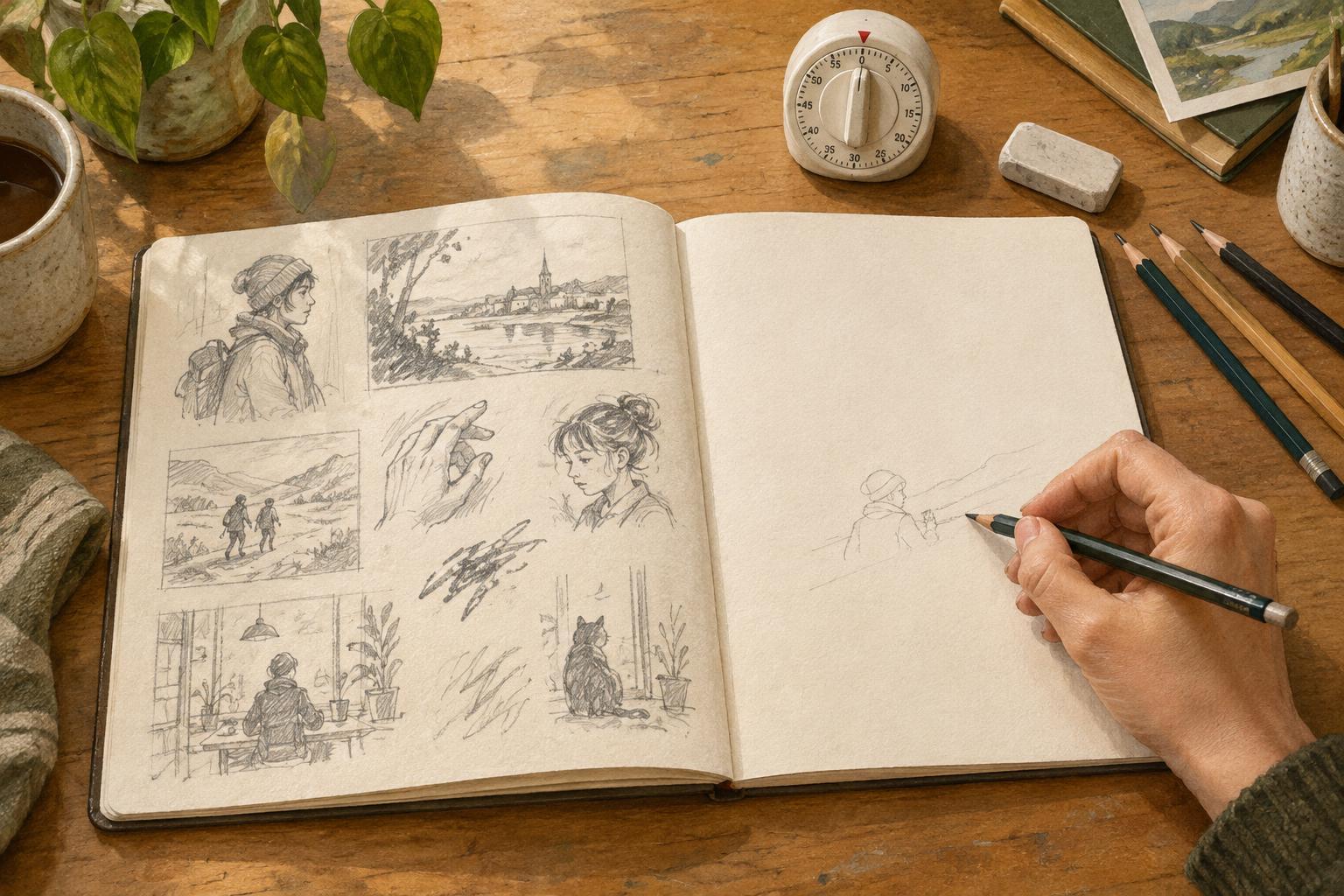
Try recording ideas in a few different forms. Write a one-sentence scene, draw a tiny silhouette, list three objects that seem to belong together, or note a color relationship you would like to test. A thumbnail can preserve spatial information that words miss; a sentence can hold a story question that is hard to sketch quickly.
It also helps to mark where an idea came from in general terms, such as “walk,” “book,” or “kitchen.” You do not need a formal catalog. A little context can bring back the feeling behind a note months later. If an entry is inspired by another creator’s work, record what interested you about it rather than saving only a vague instruction to make something similar.
Organize lightly enough to keep collecting
An elaborate filing system can become another project to maintain. Start with one chronological list or notebook. Once it grows, add a few broad labels that reflect how you work: characters, settings, objects, moods, story beats, or drawing challenges. An idea may fit more than one label, and it does not need a perfect category to be worth keeping.
For visual material, separate references from ideas when you can. A reference may help you understand the construction of a bicycle or the folds of a coat. An idea describes what you might do with that knowledge: a bicycle crowded with impossible cargo, or a coat passed between characters across several panels. Keeping that distinction visible makes it easier to move from collecting images to making decisions.
Leave room for entries that seem odd or impractical. A small “not yet” group can hold ideas you like but cannot currently develop. There is no need to judge their value at the moment you record them.
Revisit the bank with a question
An idea bank becomes more useful when you return to it. Set aside a short, occasional review and browse with a specific question: What could become a single-image scene? Which notes suggest a character? What might work as a three-panel sequence? A question gives you a way to select ideas without having to rank the whole collection.
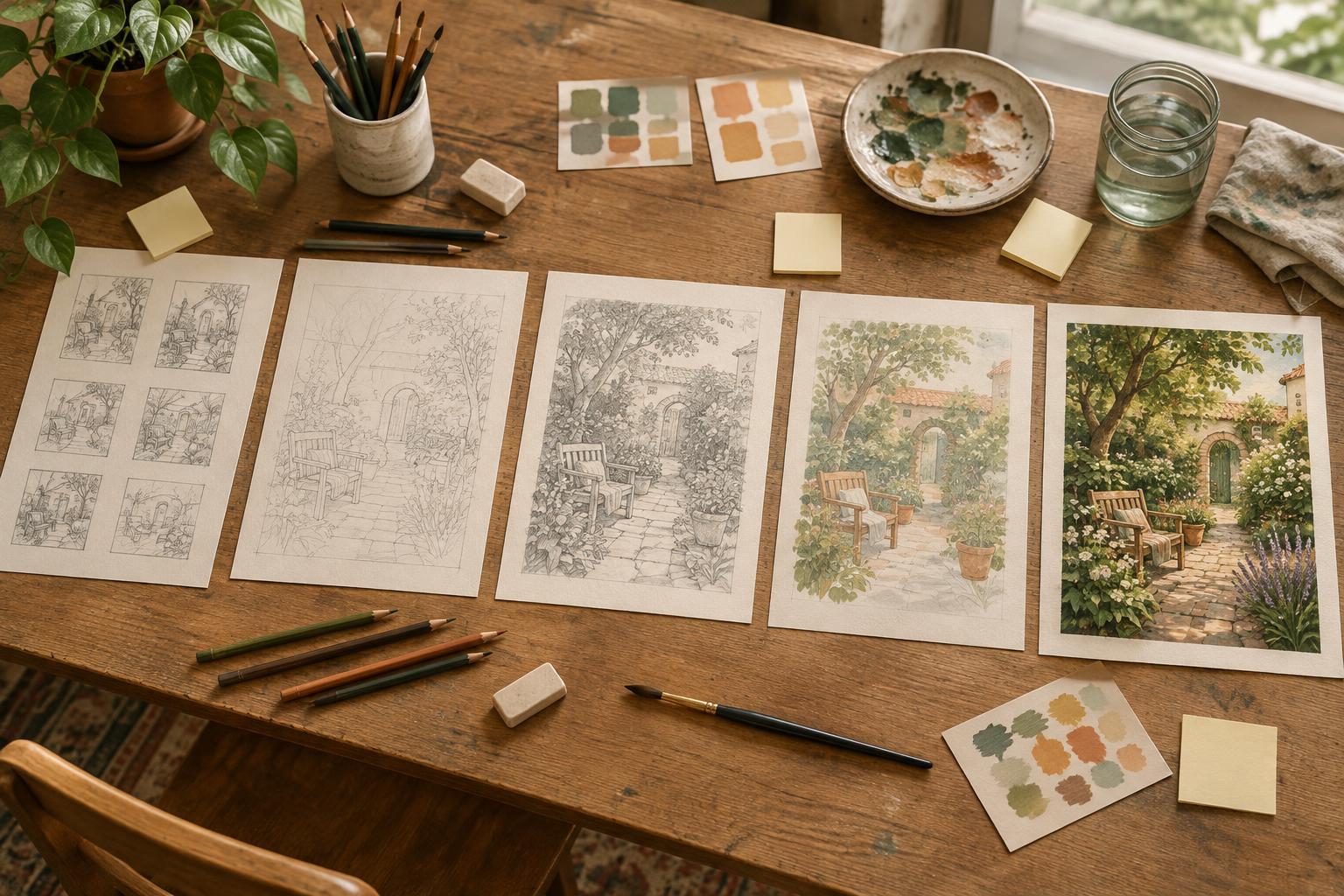
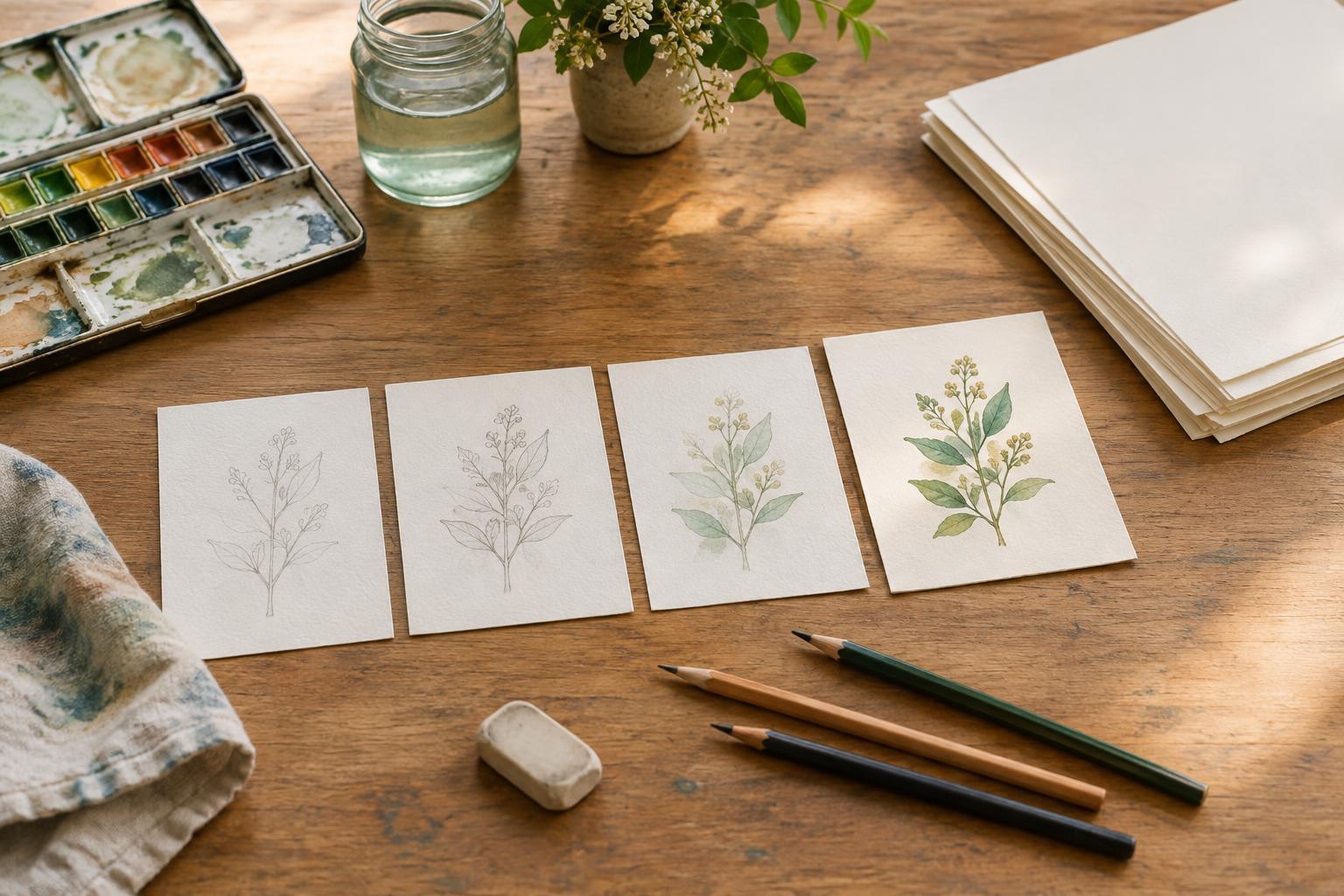
When one entry catches your eye, make several small variations before committing to a drawing. Change the scale, setting, viewpoint, or relationship between characters. A note about a houseplant leaning toward a window might become an illustration of a crowded apartment, a quiet study of light, or a comic about two people competing for the sunny spot. The original note is a starting point, not a rule.
If nothing feels ready, combine two unrelated entries. Pair a place with an emotion, an object with a character, or a visual detail with a story question. The combination may reveal a clearer prompt than either fragment offered alone.
Make room for the work to change
Before developing a selected idea, write down one thing you want the illustration to communicate and one thing you want to practice. For example, you might aim to show a hesitant reunion while practicing clear silhouettes. This gives the drawing direction without deciding every detail in advance.
As you sketch, let better possibilities replace the first version. An idea bank is not an archive of promises; it is a resource for making work. Add discoveries from the finished piece back into it, including unused thumbnails or questions you want to explore next. Over time, that exchange between collecting and drawing can help you notice recurring interests while leaving space for surprises.