Give the reader a place to begin
An unconventional page can break a grid without making the reader solve a puzzle. Before drawing its details, decide where the eye should land first, which moment follows, and where the page should end. A familiar entry point, such as a panel near the top left on an English-language page, gives readers a foothold. Once they are oriented, the layout can become less predictable.
Try sketching the page as small boxes with no figures or dialogue. Number the intended reading sequence, then ask whether the spaces between boxes support that sequence. If two possible next panels seem equally likely, change their size, alignment or distance before adding artwork. Clear direction at the layout stage is easier to achieve than a last-minute fix.
Use space and shape as directions
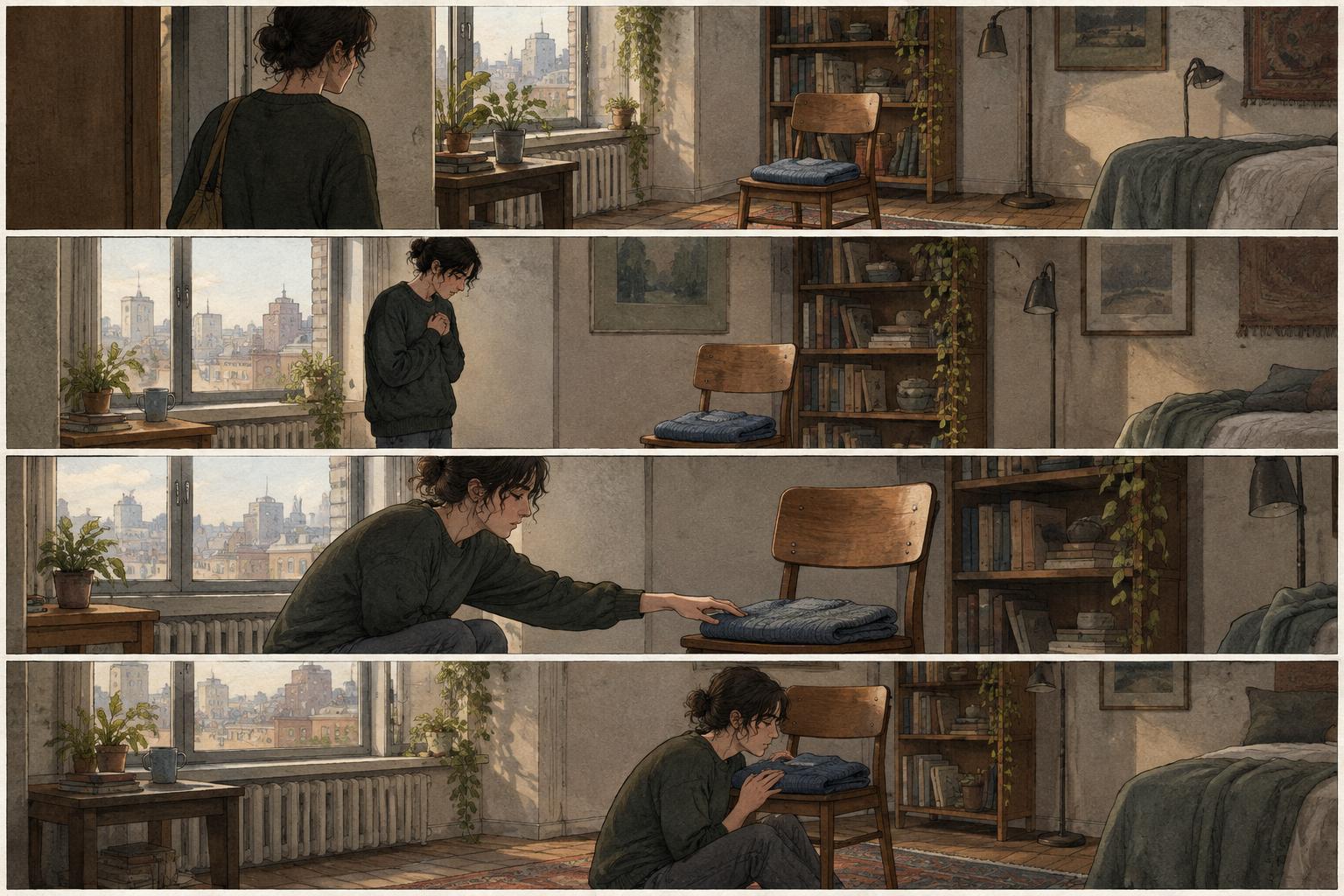
Readers often look for a path through nearby panels. A narrow gutter can suggest a close connection; a larger gap can signal a pause or shift. Panels that share an edge may feel sequential, while one set apart from the others may read as an interruption. These relationships are useful even when panels have irregular borders.
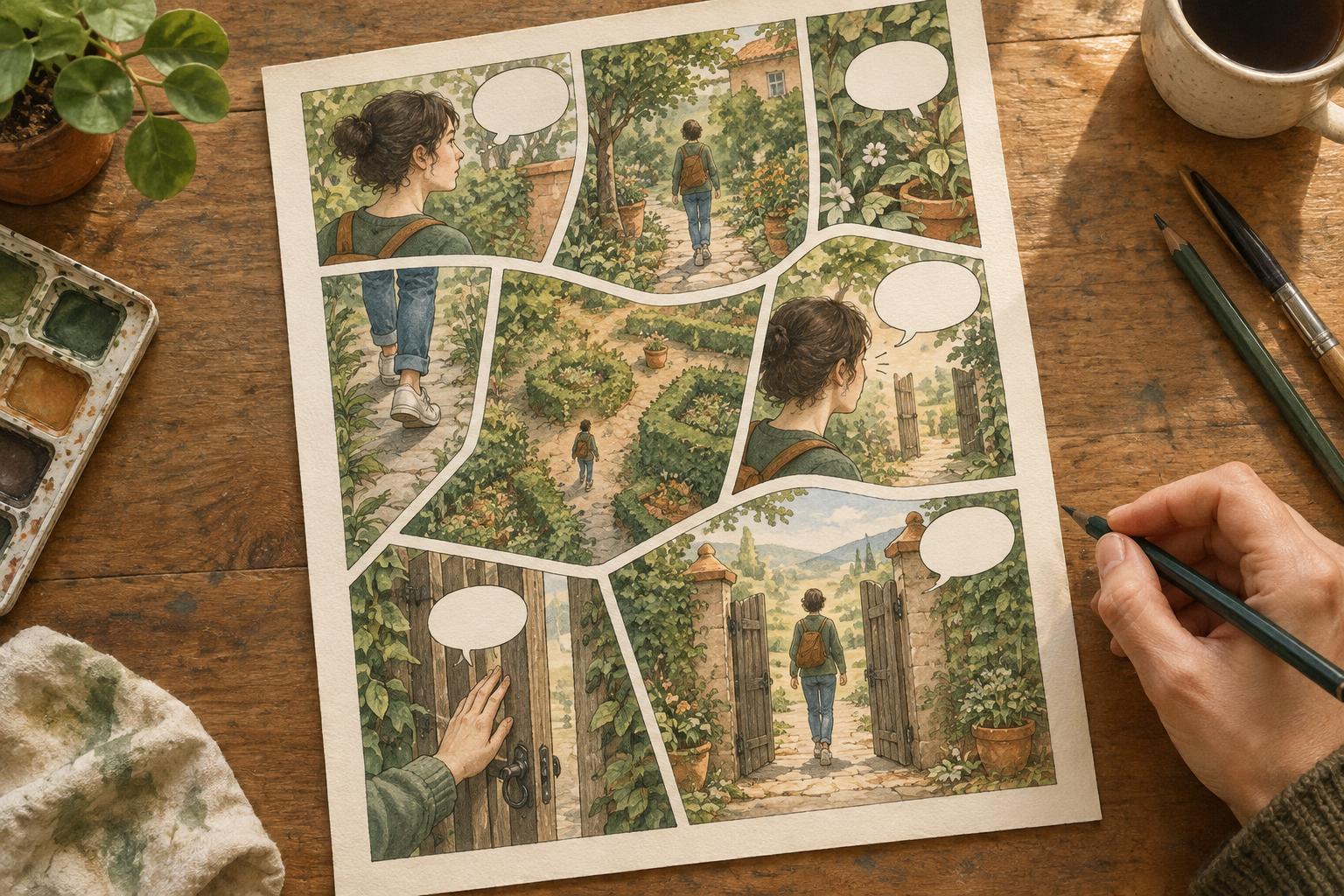
A diagonal arrangement can carry the eye across a page, but it needs a clear next step at each turn. A large central image, for example, might attract attention before smaller panels meant to precede it. You could move those smaller panels closer to the entry point, connect them with a consistent border or place the central image so its strongest visual pull comes later. Treat empty space as part of the route, not merely as leftover room.
Let the artwork point forward
Figures, gestures and objects can reinforce the path established by the panels. A character looking toward the next beat, a hand reaching across a gutter or a road continuing through adjacent images can all encourage movement. Strong contrasts also attract attention: if the brightest shape sits at the end of the sequence, it may help pull readers through earlier moments. If it sits in the middle, check that it does not invite them to skip ahead.
These cues work best when they agree with one another. A character facing right may not help if the next panel sits far to the left and a speech balloon pulls the eye downward. On a rough layout, draw a simple line tracing the intended route through panel shapes, faces and focal points. Where that line doubles back, consider adjusting the artwork rather than adding another arrow.
Make lettering part of the layout
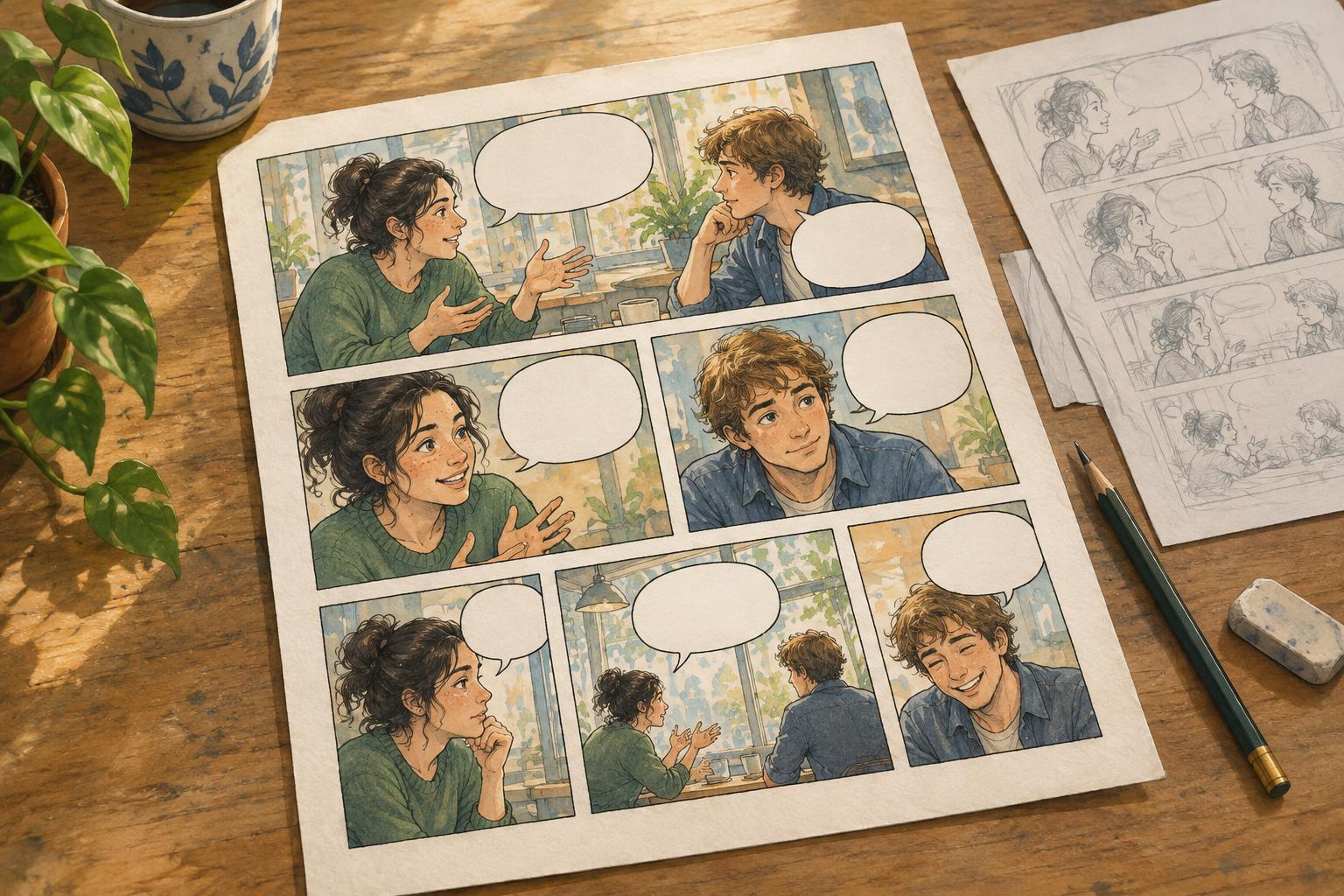
Dialogue is often one of the first things a reader notices, so balloons can either clarify or confuse an unusual page. Place them in the intended order before finishing the drawings. Their positions should lead the eye from one speaker to the next without crossing a panel or sending the reader toward a later scene too early. Leave enough room for tails to identify speakers without tangling with borders or other balloons.
Captions and sound effects need the same attention. A caption at the top of an image may establish its starting point; a sound effect spanning several panels may connect them into one event. Neither device should have to carry the entire burden of navigation. If the page makes sense only after every word is read, its visual sequence may need another pass.
Test the page at reading size
A layout that feels obvious while you draw it can change when reduced to the size at which someone will read it. Shrink the page or print a rough copy, then look at it without studying the details. Notice where your eye starts, where it goes next and whether you hesitate. You can also show an unlabeled draft to someone else and ask them to number the panels in the order they read them.
If their route differs from yours, first decide whether that difference harms the scene. A dream sequence might benefit from a brief uncertainty; a crucial action or reveal usually needs firmer guidance. Revise one element at a time, such as a gutter, focal point or balloon position, and test again. An unconventional page succeeds not because it hides its structure, but because its structure supports the experience you want readers to have.