Why a small cleanup routine matters
Dip pens have few parts, but dried ink can quickly change how a nib feels on paper. Ink caught between the tines may interrupt flow; buildup around the vent or underside can make the next dip unpredictable. Moisture left on steel can also encourage rust. A few minutes of cleaning and drying after a session is usually easier than removing a hard deposit later.
Set a scrap cloth or lint-free towel, a small container of clean water, and a dry towel beside your workspace before you begin. Keep the cleaning water separate from drinking water, and protect the table from spills. If you use more than one ink, check its label or maker’s care guidance: a water-soluble drawing ink may lift with water, while a waterproof or shellac-based ink may need a different cleaning method.
Clean the nib while the ink is still fresh
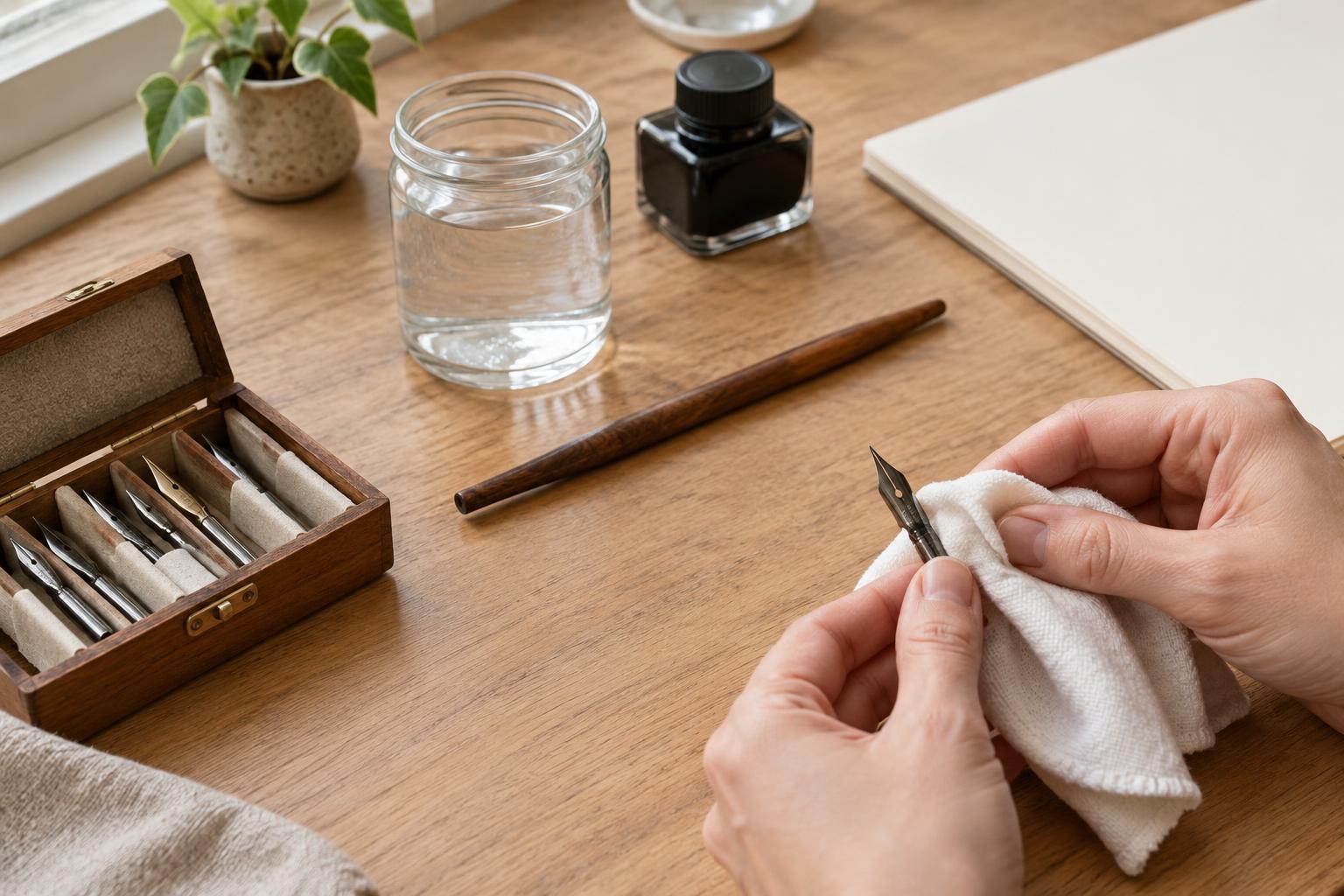
Start by wiping excess ink from the nib with a soft, damp cloth or towel. Wipe from the base toward the point rather than pushing against the fine tips of the tines. Pay attention to the underside, where ink can collect out of sight. For ink that releases in water, briefly rinse or swish the metal nib in clean water, then wipe it again. Avoid leaving it submerged while you work on something else.
If ink remains in the slit, use a soft brush or a damp, folded corner of cloth to loosen it gently. Do not pry the tines apart with a blade or scrape the point with an abrasive pad; either can change the way the nib writes. Stubborn waterproof ink calls for patience rather than force. Use a cleaner only if it is appropriate for both the ink and the nib, follow its directions, and test cautiously if you are unsure. Rinse away any cleaner as directed before drying.
It is worth doing a quick wipe during a long drawing session, especially if the pen begins to skip. This does not have to become a full wash every time you pause. Removing ink before it forms a crust keeps the final cleanup simple and helps you judge whether a flow problem comes from buildup, paper fibers, or the ink itself.
Keep the holder as dry as possible
Most dip pen holders do not need to be washed. If ink has reached the grip or ferrule, wipe the affected area with a slightly damp cloth and dry it promptly. Avoid soaking a wooden holder: water can affect its finish or fit. If your nib is removable, take it out when practical so you can reach ink trapped near the holder without forcing water into the socket.
Work gently when removing a nib. Hold it by the wider base, not the sharp point, and pull in line with the holder rather than twisting hard. Some nibs fit tightly, and repeated removal is not always necessary for a light cleanup. If you have a holder with unusual materials or a fixed fitting, follow its care instructions instead of trying to take it apart.
Dry every metal surface before storage
After cleaning, blot the nib thoroughly, including its underside and the area that sits inside the holder. A dry cloth can reach most surfaces; then leave the nib in an airy spot until no moisture remains. If you rinsed it while still attached to a holder, check the junction carefully. Water hidden there may linger longer than water on the exposed point.
Look at the nib under good light before putting it away. A clear slit and an even, clean point are useful signs that it is ready for the next session. If a nib has a bent tip, persistent rust, or a catch that damages paper, cleaning may not restore it. Set it aside rather than pressing harder to make it work.
Store nibs so the points stay protected
Keep clean, dry nibs in a box, tray, or small case where their points will not rub against other tools. A divided container makes it easier to separate sizes and styles without handling every sharp tip. Store the container in a dry place rather than beside a sink or on a surface prone to condensation. If you keep a nib mounted in its holder, place the pen where the point cannot strike the bottom of a jar or catch on loose supplies.
A simple end-of-session habit is enough: wipe, clean according to the ink, dry, and put each piece in its place. When you next sit down to ink a drawing or comic page, test the pen on scrap paper first. That brief check confirms that the nib is clean and flowing before it touches finished artwork.