Plan for words before finishing the panel
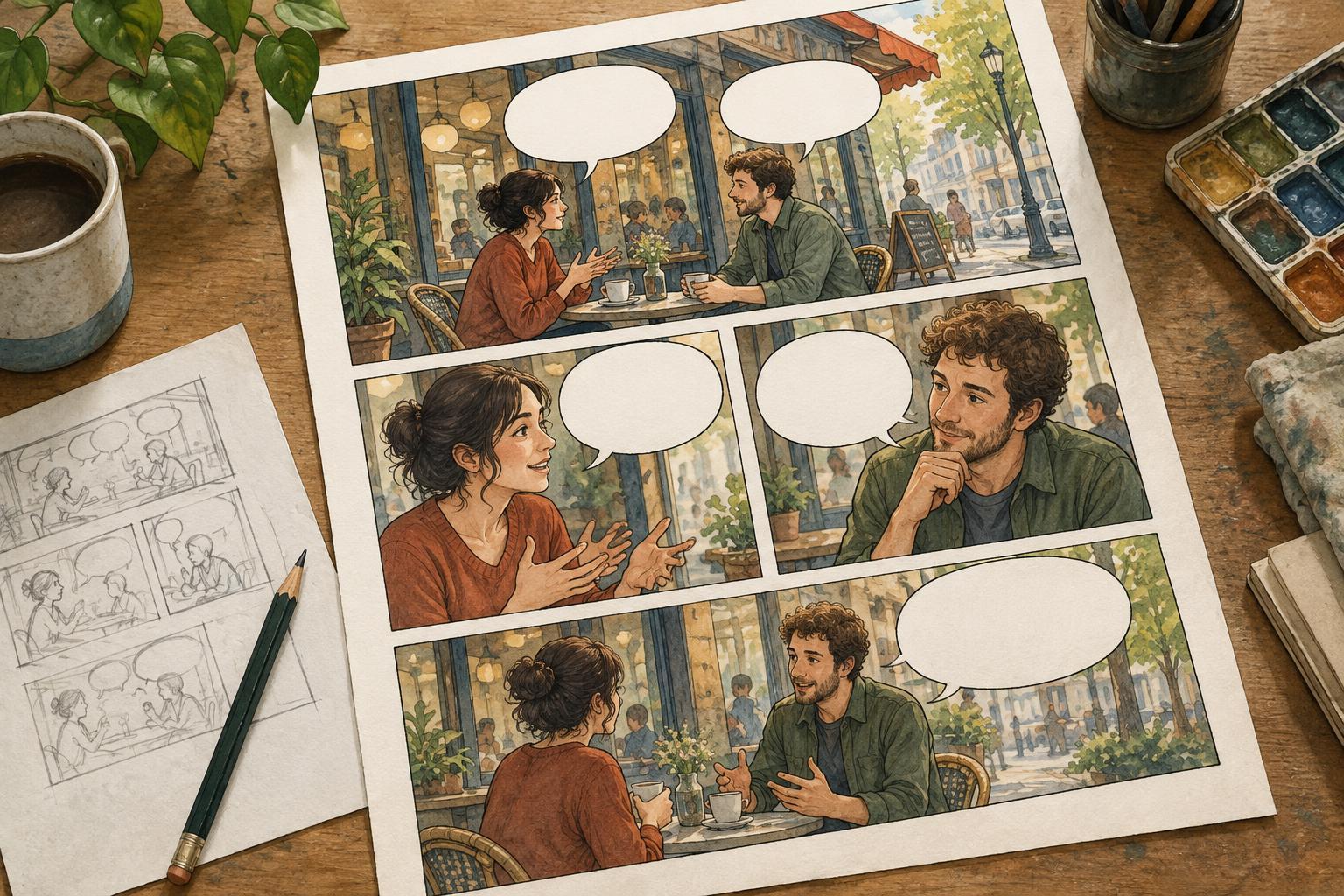
A speech balloon is part of the composition, not a label added after the drawing is complete. If a panel is filled edge to edge with important art, any balloon will cover something. Before drawing final details, mark a rough area for each block of dialogue. A loose oval or rectangle is enough at this stage; its purpose is to reserve space and reveal whether the panel can carry the words.
Work from the script’s actual dialogue rather than guessing how much room it needs. Letter a rough version at a readable size, then draw a temporary shape around it. A short sentence may need more space than expected once it has comfortable margins. If the text crowds the shape, first look for words that can be cut without changing the meaning. Shrinking the lettering should not be the default solution.
Let reading order lead the placement
Readers should be able to follow the conversation without stopping to work out who speaks next. Place balloons in the order they are meant to be read, taking the page’s reading direction into account. In a left-to-right comic, an earlier balloon will usually sit to the left of, or above, a later one. Check the path across the whole page as well as within each panel: a balloon near a panel border can accidentally seem connected to the panel beside it.
When two characters exchange several lines, test the sequence with simple numbered balloon shapes before refining the art. If the order forces balloon tails to cross or makes the reader double back across the panel, reconsider the staging. Moving one speaker, changing the camera angle or dividing the exchange across two panels may work better than squeezing every line into the original drawing.
Protect the visual information that matters
Not every part of a drawing needs equal protection. Faces, hands performing an action, significant objects and clues about the setting often carry essential story information. An area of open wall, sky or floor may be a better home for dialogue. As you thumbnail, decide what the reader must see to understand the moment, then keep balloons clear of those features.
A balloon can overlap art without harming the panel. Covering a small portion of a background texture may even simplify the image and make the dialogue easier to find. The question is whether the overlap removes information or weakens the intended mood. In a quiet panel built around a character’s expression, a balloon over the face changes the scene. In a busy action panel, a balloon over an incidental patch of scenery may cause no problem at all.
Leave some breathing room around the panel border and between balloons where possible. A shape pressed against an edge can feel cramped, while a cluster of closely packed balloons can make a pause in conversation feel rushed. The spacing of words and images helps establish pacing as well as clarity.
Use tails to identify speakers, not solve every layout problem
A tail should make the speaker clear at a glance. Aim it toward the character’s mouth or head, and keep its route straightforward. A long tail stretched across another character or a key action can distract from the scene. If a tail has to travel a complicated path, the balloon may be in the wrong place.
For a character who speaks more than once in the same panel, connected balloons can show that the lines belong together. Give each balloon a reason to exist: a break may suggest a shift in thought, a beat of timing or an interruption. Avoid dividing a sentence merely to fit it around the drawing if the split makes the line harder to read. When a speaker is outside the panel, use a consistent visual convention so readers can distinguish an off-panel voice from a balloon whose tail was simply omitted.
Review the page at reading size
A layout that looks spacious while zoomed in may feel crowded when the page is reduced. View a draft at roughly the size at which someone will read it. Follow the dialogue without deliberately searching for the next balloon, then look again at the art. Can you still read the expressions and actions that carry the scene? Does the dialogue arrive at the right moment, or does its position reveal something too early?
If the page fails either test, revise the largest constraint first. Try shifting a balloon into unused space, simplifying a background, adjusting a character’s position or rewriting an overlong line. Sometimes the strongest fix is to redraw the panel with dialogue space built into its composition. Treating balloons and art as partners from the thumbnail stage makes those revisions smaller—and gives both the story and the drawing room to work.