Make the first page a place to work, not perform
The hardest part of drawing is sometimes deciding what the drawing should become. An empty sheet can seem to demand a finished illustration before a single line exists. A short sketch session changes the assignment: instead of making something good, you are testing one idea for a few minutes. The page becomes a workspace for questions, false starts and discoveries.
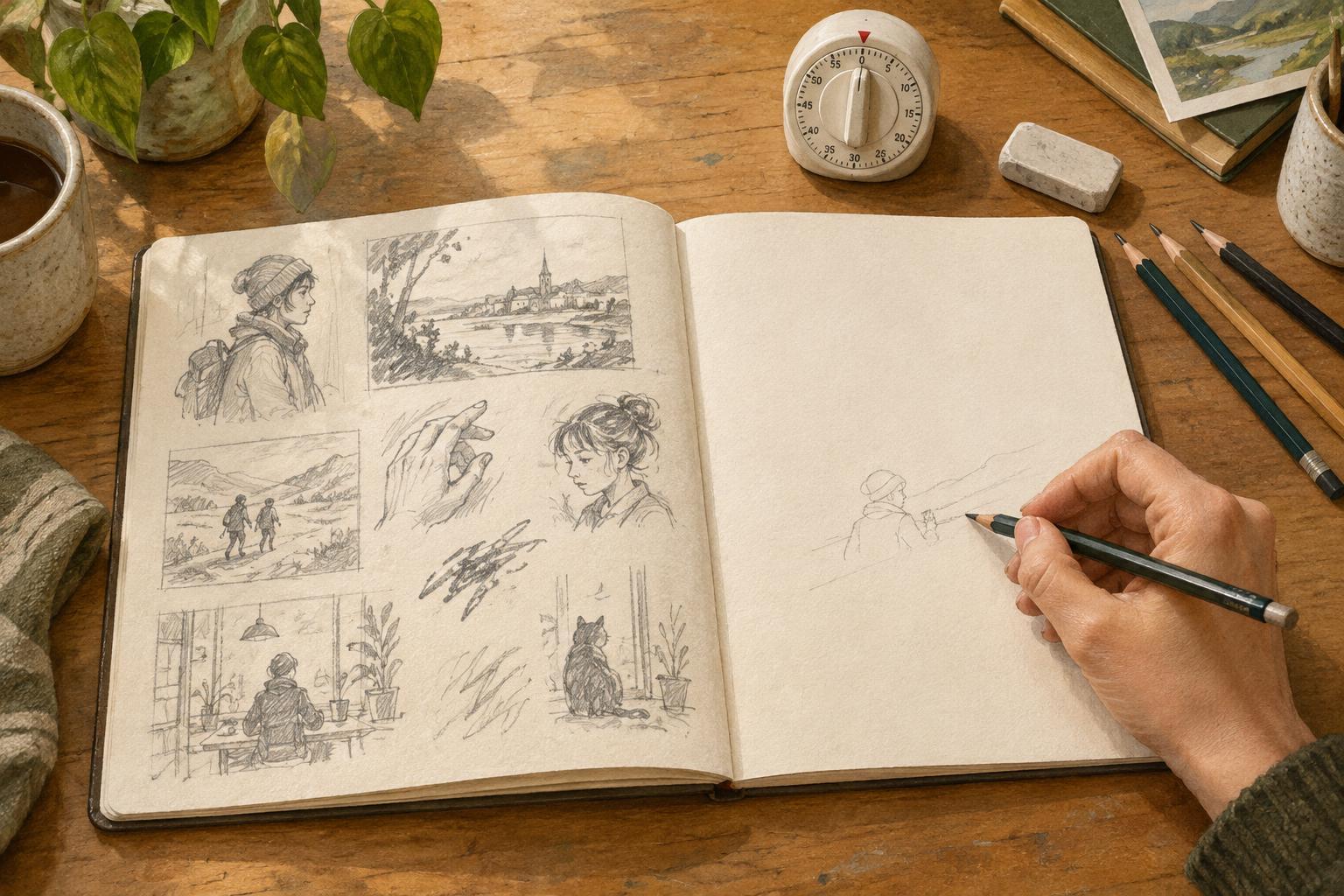
Set a time limit that feels easy to enter, such as ten or fifteen minutes. Choose a small surface or divide a larger page into boxes. Neither choice is meant to improve the art by itself; both keep the task from expanding indefinitely. Write a brief prompt at the top, then start drawing before you have planned the result. A session still counts if it produces only rough shapes and one promising detail.
Give each session a narrow question
A useful prompt is specific enough to begin but open enough to invite variation. “Draw a character” can leave too many decisions at once. “Draw three ways a tired character might hold a bag” gives you a subject, an action and room to experiment. For comics, try showing the same moment from two distances, or sketching three panel arrangements for a character entering a room. For illustration, explore silhouettes, lighting directions or the placement of a focal point.
Keep the question visible while you work. If you are exploring posture, let hands and faces remain simple. If you are testing a page layout, use loose blocks instead of detailed figures. This is not a rule against following an interesting detour; it is a way to avoid turning every sketch into a full production. When another idea interrupts, jot it in the margin so you can return to it later.
Choose constraints that reduce decisions
A limit can make starting easier because it removes choices you do not need to make yet. Try using one pen, drawing without erasing, or filling six thumbnail boxes before refining any of them. You might draw an ordinary object as a character’s treasured possession, or depict a familiar location from an unexpected viewpoint. These constraints give your hand something to do while your ideas catch up.
Match the constraint to the obstacle. If you keep searching for the perfect subject, draw the nearest object in three moods. If you get lost in detail, work at thumbnail size. If a story scene feels static, sketch only gestures and movement arrows. Avoid piling on so many rules that the exercise becomes another source of hesitation. One useful limit is usually enough for a brief session.
Stop on time, then look for what worked
When the session ends, resist the urge to judge the whole page as a success or failure. Instead, circle one mark, shape or arrangement that gives you a next step. It might be the angle of a shoulder, the spacing between two panels or a shadow that creates a mood. Add a short note beside it: “try at a larger scale” or “use this viewpoint for the opening panel.” This turns a rough sketch into material you can use.
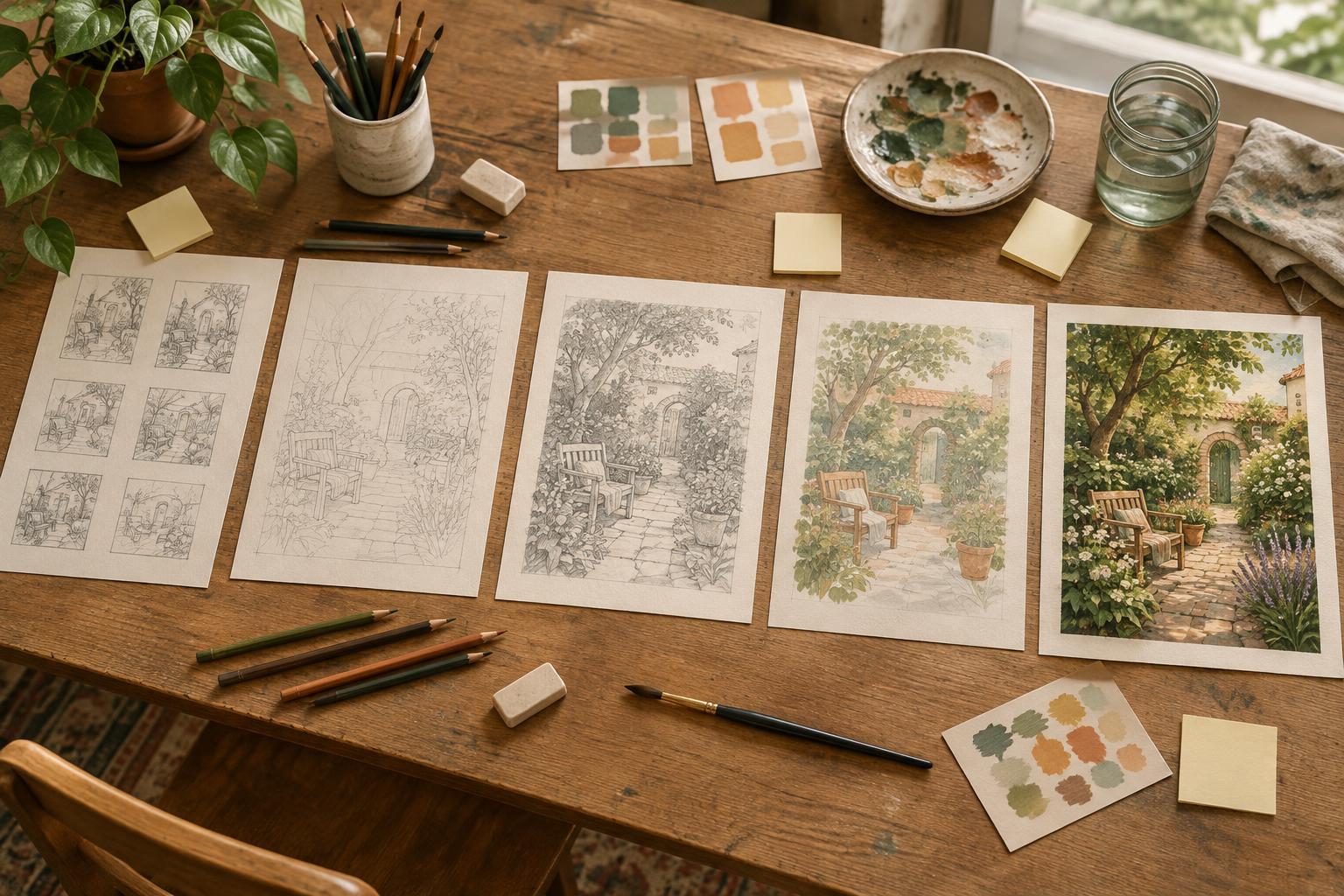
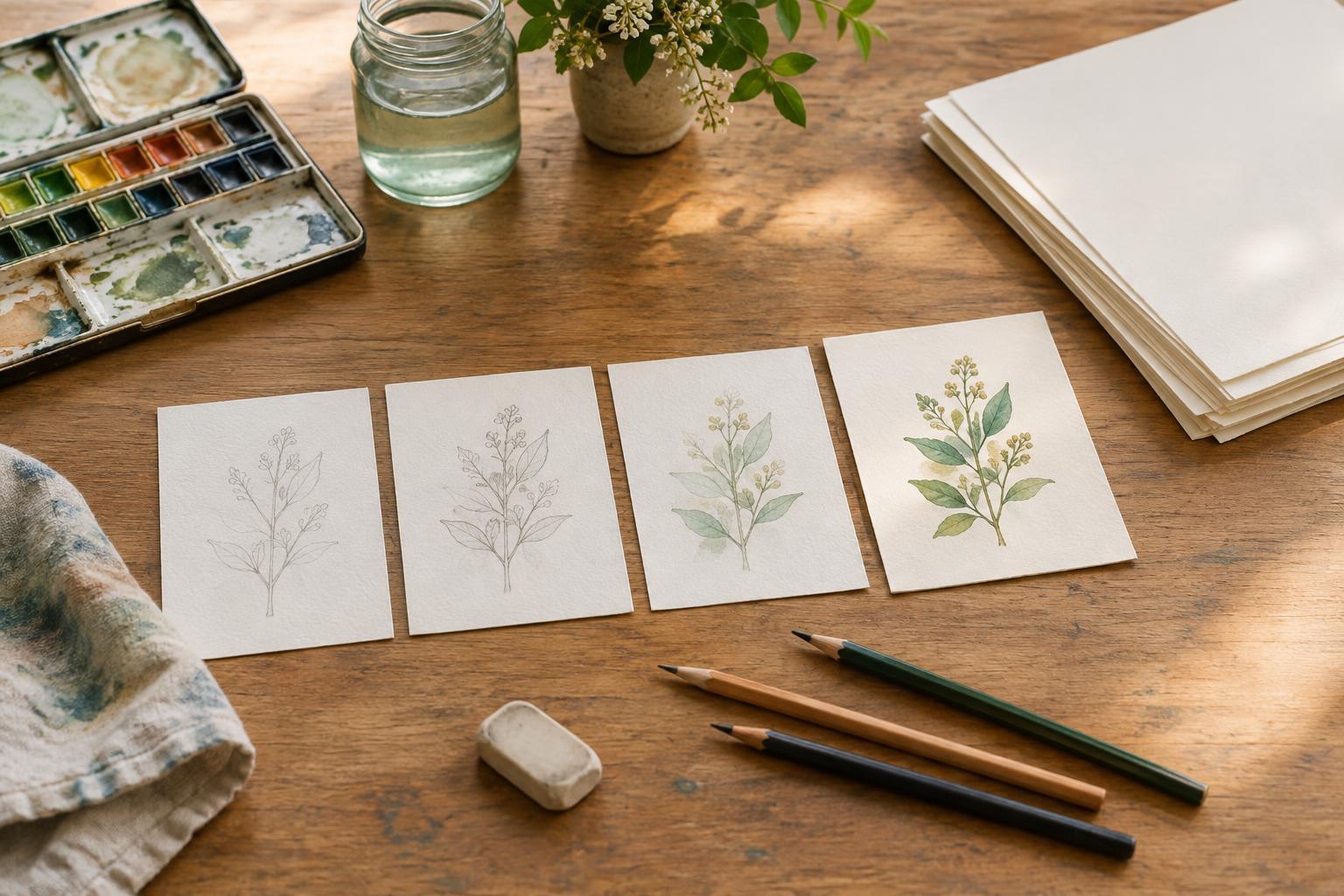
You do not have to develop every page. Some sessions are valuable because they show which approach feels awkward or unclear. If nothing stands out, leave the page and move on. Looking again later can be more helpful than forcing an immediate conclusion. The goal is not to build an archive of polished sketches; it is to make ideas easier to find and test.
Build a routine that is easy to return to
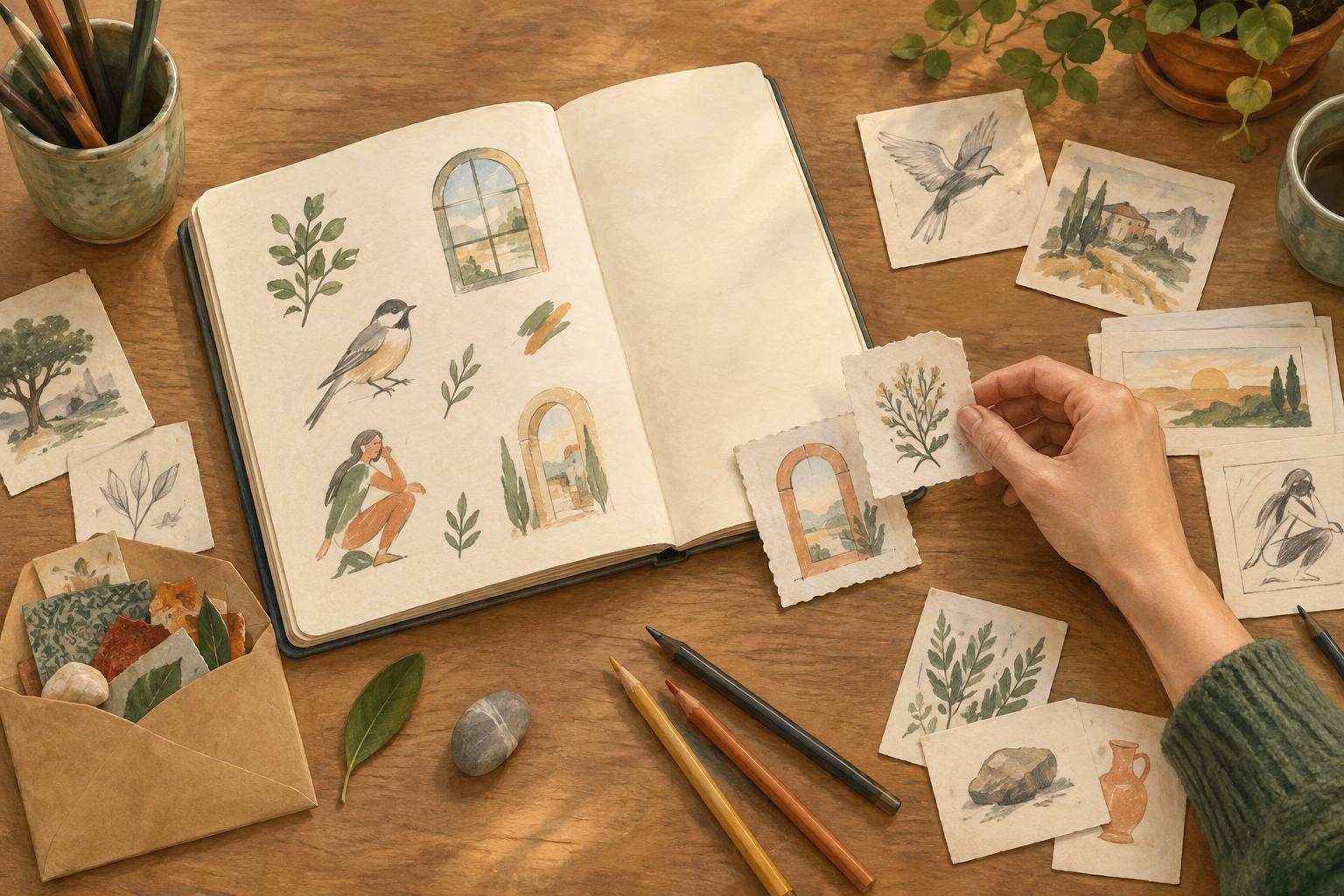
A sketch habit works best when its setup is simple. Keep a small notebook and a dependable drawing tool within reach, or use a familiar digital canvas with minimal preparation. Save a few prompts for days when choosing one feels difficult: a hand carrying something, a doorway with a story behind it, or a conversation shown without words. Repeating a prompt is fine; a different attempt may reveal something new.
Short sessions are an entry point, not a substitute for longer projects. When a sketch suggests a story or image worth pursuing, give it more space another day. When it does not, the session has still offered a manageable way to begin. Over time, the blank page may feel less like a test and more like a place to ask a small, answerable question.