What makes a line look confident?
A confident line is not necessarily perfectly straight or smooth. It looks intentional: it begins somewhere, travels along a chosen path and ends without excessive correction. A slightly uneven mark can still serve a drawing well if its direction is clear. By contrast, many tiny strokes used to search for one edge can make a shape look uncertain, even when those strokes eventually reach the right place.
Line warm-ups give you a low-pressure place to practice that intention. Set aside five to ten minutes before a drawing session, or use them as a session on their own. A sheet of ordinary paper and a pencil or pen are enough. Leave the eraser aside for these exercises so you can see what each attempt teaches you. The goal is not to fill a page with flawless marks; it is to become more familiar with how your hand moves.
Prepare the movement before the mark
Place your paper where your arm can move comfortably, and turn the page if a different angle makes a stroke easier. For a short detail, finger movement may be enough. For a longer line, try allowing your wrist, elbow or shoulder to contribute. You do not need to hold one joint rigid; notice which movement lets you travel the intended distance without strain.
Before touching the page, choose a start and end point. Move your hand between them just above the paper two or three times, following the path you want to draw. Then make the mark in one pass at a manageable pace. Moving too slowly can encourage small, repeated adjustments; rushing can make the line overshoot. Aim for a motion you can repeat. Pause between attempts rather than trying to fix a line while the pencil is still moving.
Warm up with straight lines
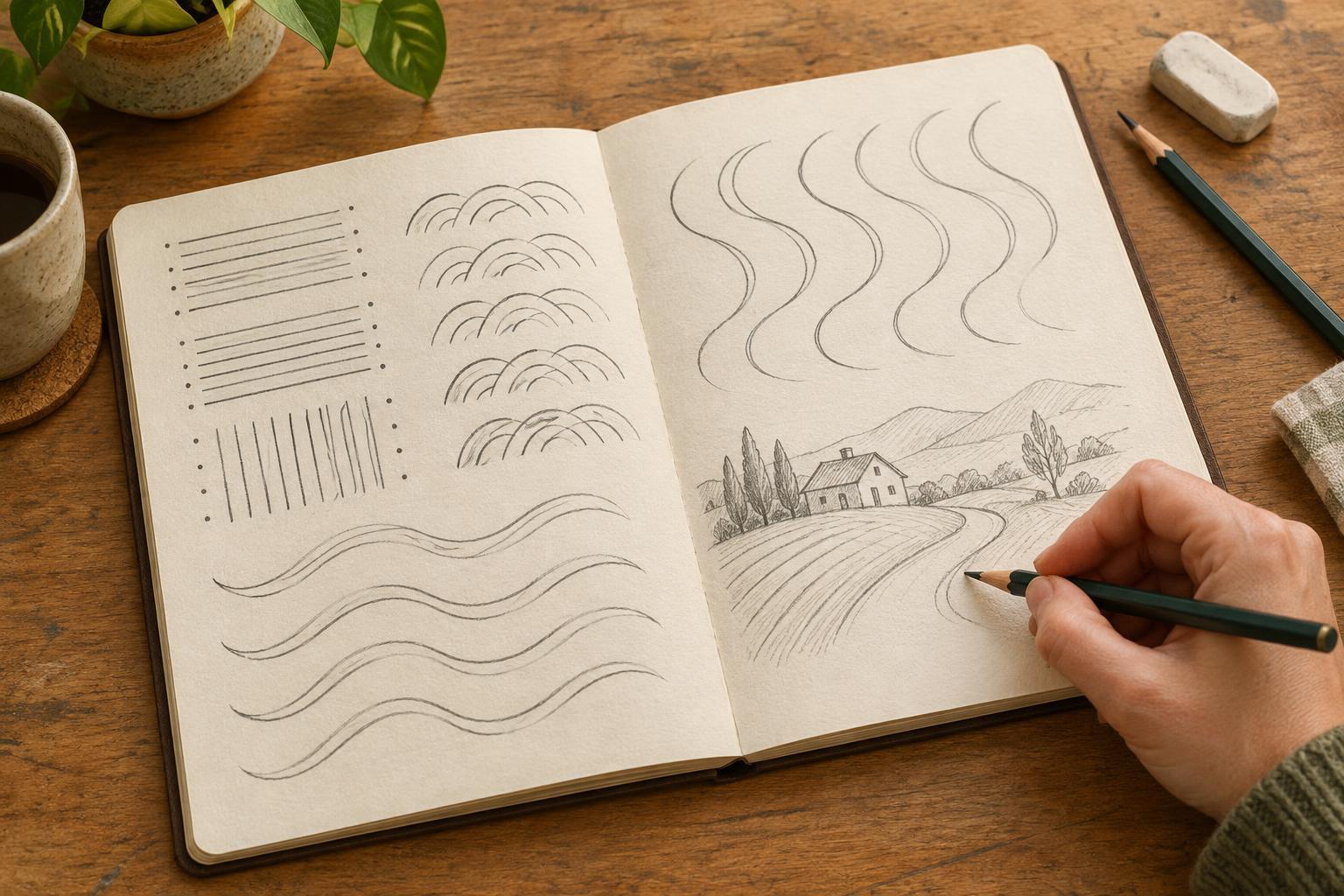
Put two small dots a few inches apart and connect them with a single stroke. Make a row of these pairs, changing their angle and distance. Look toward the destination as you draw rather than watching only the pencil tip. If a line misses its target, leave it visible and try the next pair. After several rows, check for a pattern: do longer strokes bend, or do certain angles feel awkward?
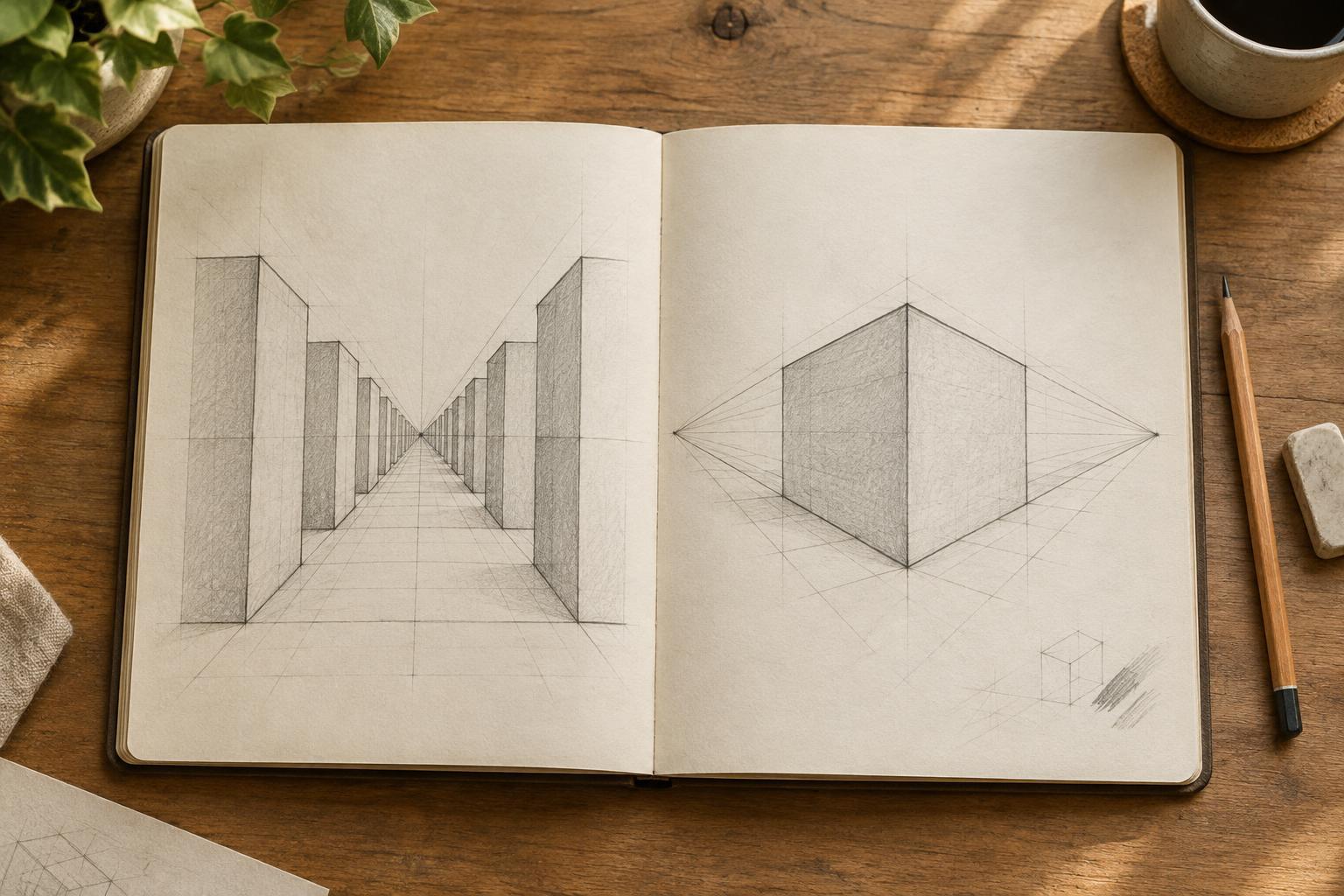
Next, draw one straight line and place several more alongside it, keeping the spacing roughly even. This exercise shifts your attention from hitting a point to maintaining direction. Try horizontal, vertical and diagonal groups. For an added challenge, draw a simple box with each edge made in one pass. It does not need to be a perfect rectangle. Notice how choosing each corner before you draw helps you avoid building the edges out of hesitant dashes.
Practice arcs and flowing curves
Curves ask you to guide a changing direction. Begin with rows of open arcs, like shallow bridges. Draw several from left to right, then reverse direction. Gradually make the arcs taller, wider or narrower while keeping each movement continuous. If an arc flattens unexpectedly, rehearse its path above the page before trying again. Rotating the paper may also help you find a comfortable direction.
For a second exercise, draw two dots and connect them with an S-shaped curve. Imagine where the bend changes direction before your pencil touches down. Repeat with different distances between the dots. Then make a ribbon by drawing a second curve beside the first. The gap between them will show where your hand speeds up, slows down or changes direction abruptly. Treat those variations as observations, not failures.
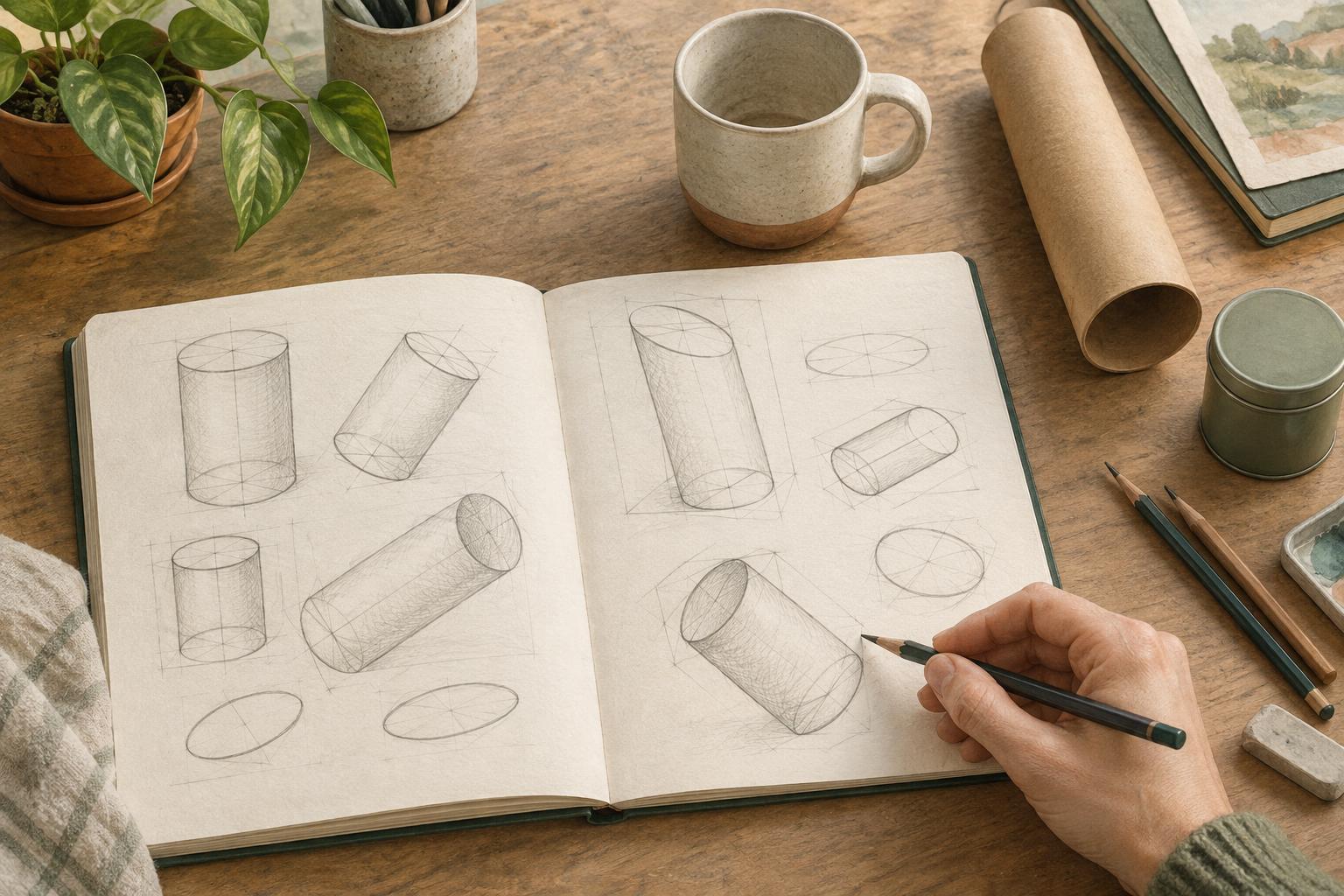
Finish with a page of loose circles and ovals. You can make each shape in one pass or travel around it twice lightly before lifting the pencil. Try tall, narrow ovals as well as wide ones. These shapes combine the movements practiced in arcs and help prepare your hand for drawing heads, objects and rounded forms.
Carry the warm-up into a drawing
Warm-ups become more useful when you connect them to a real subject. After practicing, choose a simple object such as a mug, book or leaf. Look for its longest straight edges and broadest curves. You might mark a few endpoints lightly, rehearse a movement and then draw each major edge with one considered stroke. Smaller details can come later. This keeps the exercise focused on structure rather than decoration.
Some days your lines will feel easier than others. Instead of judging a page by its neatest stroke, compare your first few attempts with your last few. Did you adjust the paper, choose a better starting point or find a more comfortable pace? Keep the warm-up short enough that you will return to it. Confidence grows through repeated, attentive movements, not through demanding perfection from a single line.