Start with a change, not a complete plot
A short story idea may arrive as a character, an image, or a question. Before dividing it into pages, write one sentence about what changes. “A child finds a key outside a locked greenhouse” is a situation. “A child who wants to keep a found key decides to return it after seeing what is trapped inside” suggests a sequence with a choice. The change gives you an ending to aim toward, even if you later discover a better one.
Keep the first draft small. Identify who wants something, what stands in the way, and what action settles the immediate problem. You do not need to explain the character’s entire past or resolve every question raised by the setting. For a short comic, one clear decision can carry more weight than several loosely connected events. Write the premise in two or three sentences, then underline anything that could be shown through an action, object, or expression.
Build a chain of visible beats
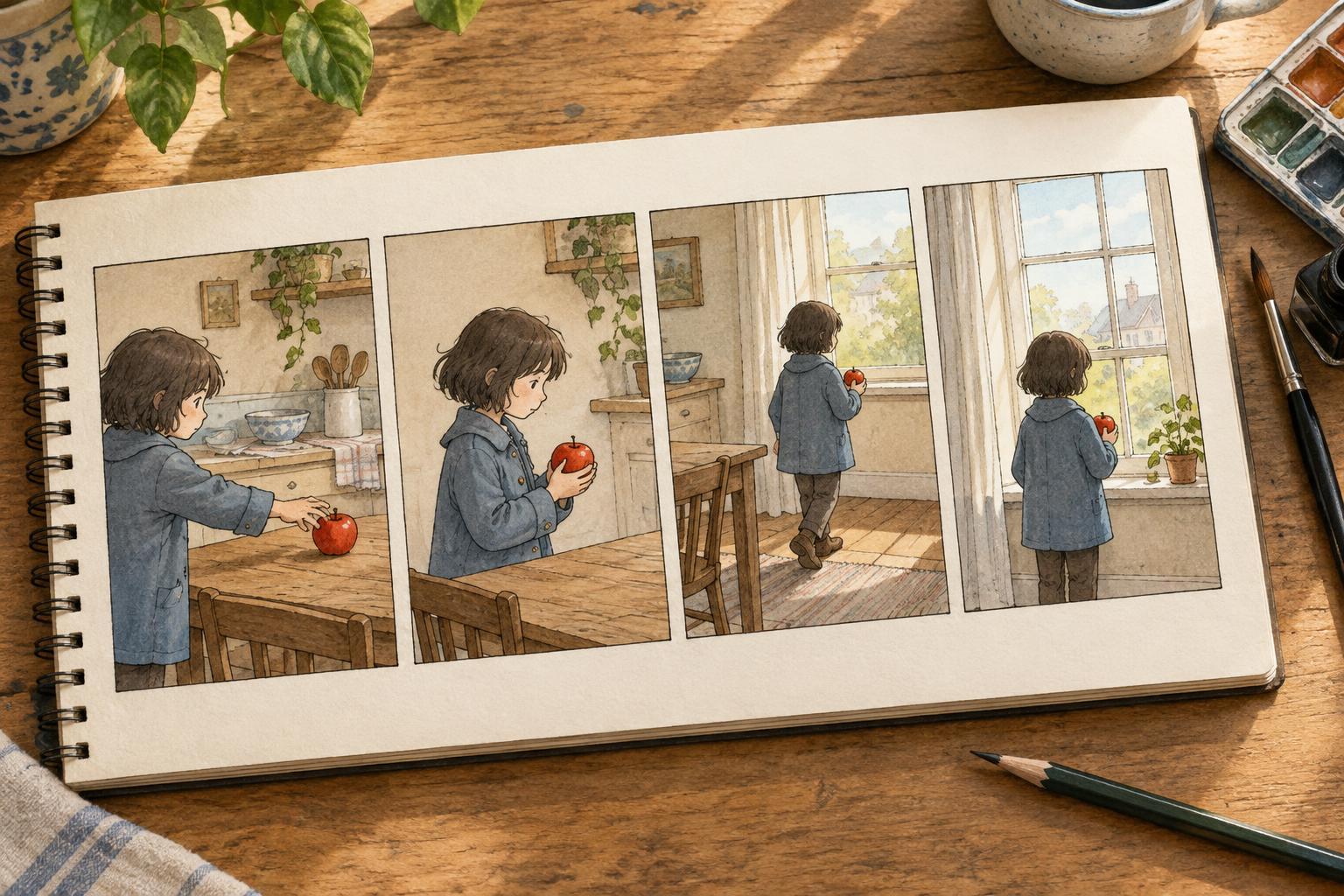
A beat is a meaningful step in the story, not necessarily a panel. For the greenhouse idea, the beats might be: the child spots the key; tries it in the door; notices a small animal inside; hesitates when someone calls from nearby; opens the door; leaves the key where its owner can find it. Each beat either changes what the character knows or forces a response. If two beats do the same job, consider combining them.
Put the beats in an order that lets the reader understand the choice. The hesitation matters more after we have seen both the temptation to keep the key and the reason to use it. Look for a simple cause-and-effect path: because the child finds the key, they approach the door; because they approach the door, they notice the animal. When a beat depends on information the reader has not received, add a visible clue or move that beat later.
Turn beats into pages and panels
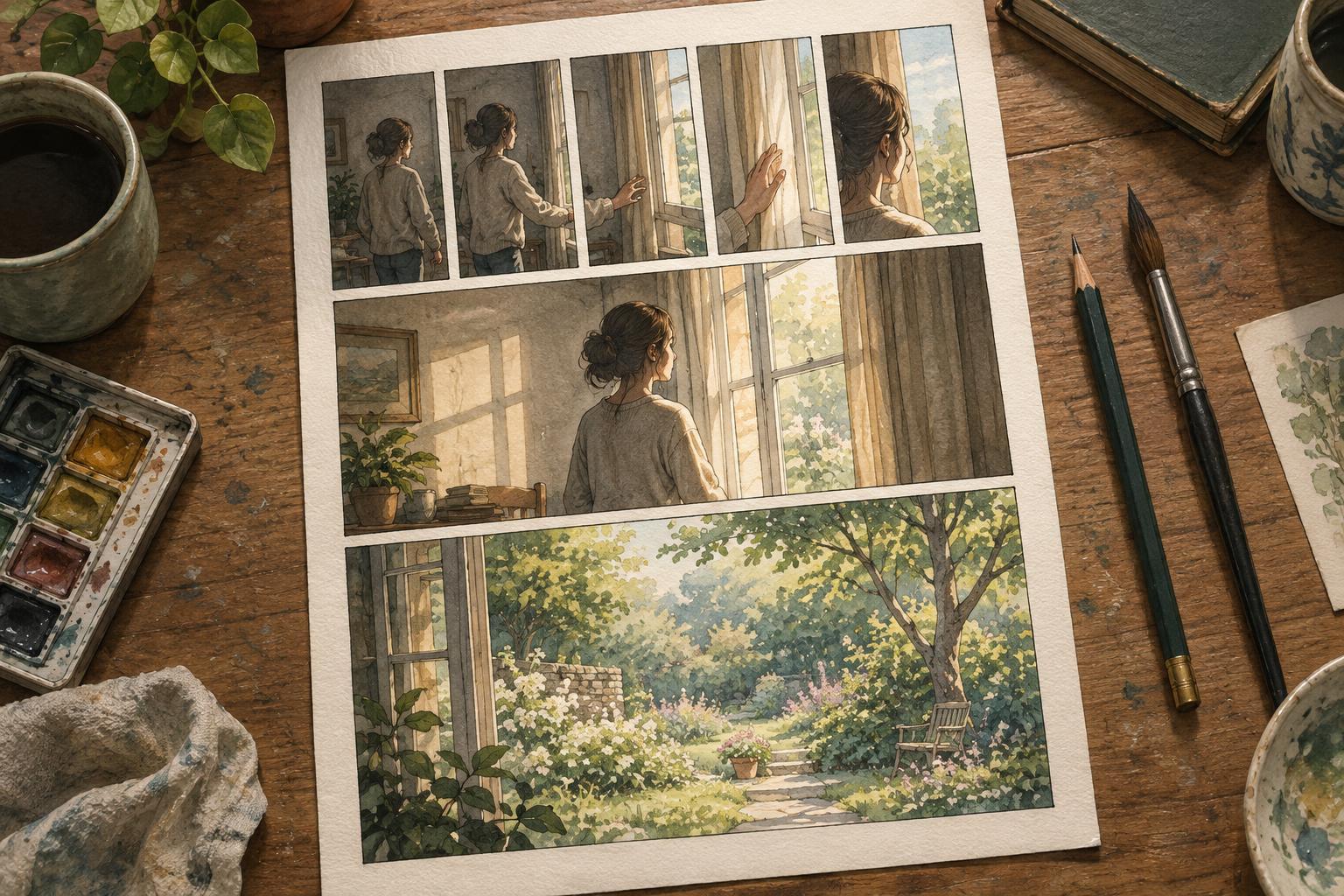
Now estimate how much room each beat needs. A page turn can withhold a discovery; a larger panel can give a revealing image space to land; a run of smaller panels can slow attention around a difficult choice. These are options, not rules. First sketch a rough page map using boxes or a numbered list. Mark where the reader should pause, what they should notice first, and what question draws them into the next panel.
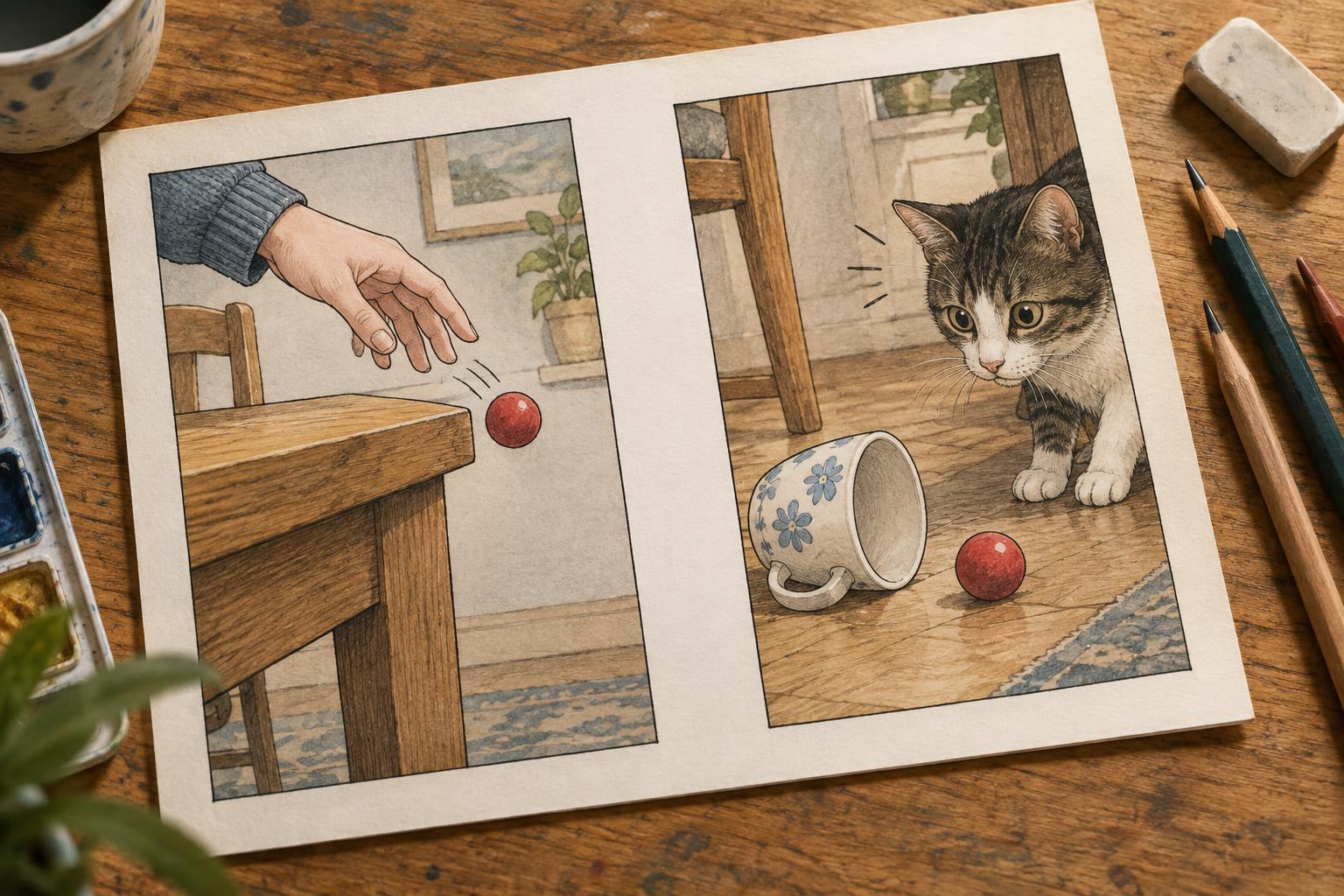
Write each panel as something an artist could draw at one moment in time. “The child reaches for the key, unlocks the door, and watches the animal escape” asks one image to contain several actions. Split it into moments: a hand turning the key, the door opening, then the animal moving past. Include details that affect the story, such as the key left in the lock. Leave room for the artist to decide incidental details unless they are essential to the action.
Make words and pictures share the work
Dialogue and captions are most useful when they add something the image cannot easily convey. If a panel clearly shows a locked door, a caption saying “The door was locked” repeats it. A short line such as “It isn’t mine” could instead reveal the child’s conflict while their hand remains on the key. Silence is also a script choice: a glance from the child to the animal may communicate the decision more directly than an explanation.
Use a consistent format so the sequence is easy to follow. A simple draft can list page number, panel number, visual description, then any dialogue or sound. For example: “Page 2, panel 3. Close view of the child’s hand holding the key beside the lock. From inside, a faint scratching sound.” The description identifies what the reader sees; the sound suggests why the next action matters. Keep speech short enough that it does not compete with the drawing.
Test the script before polishing it
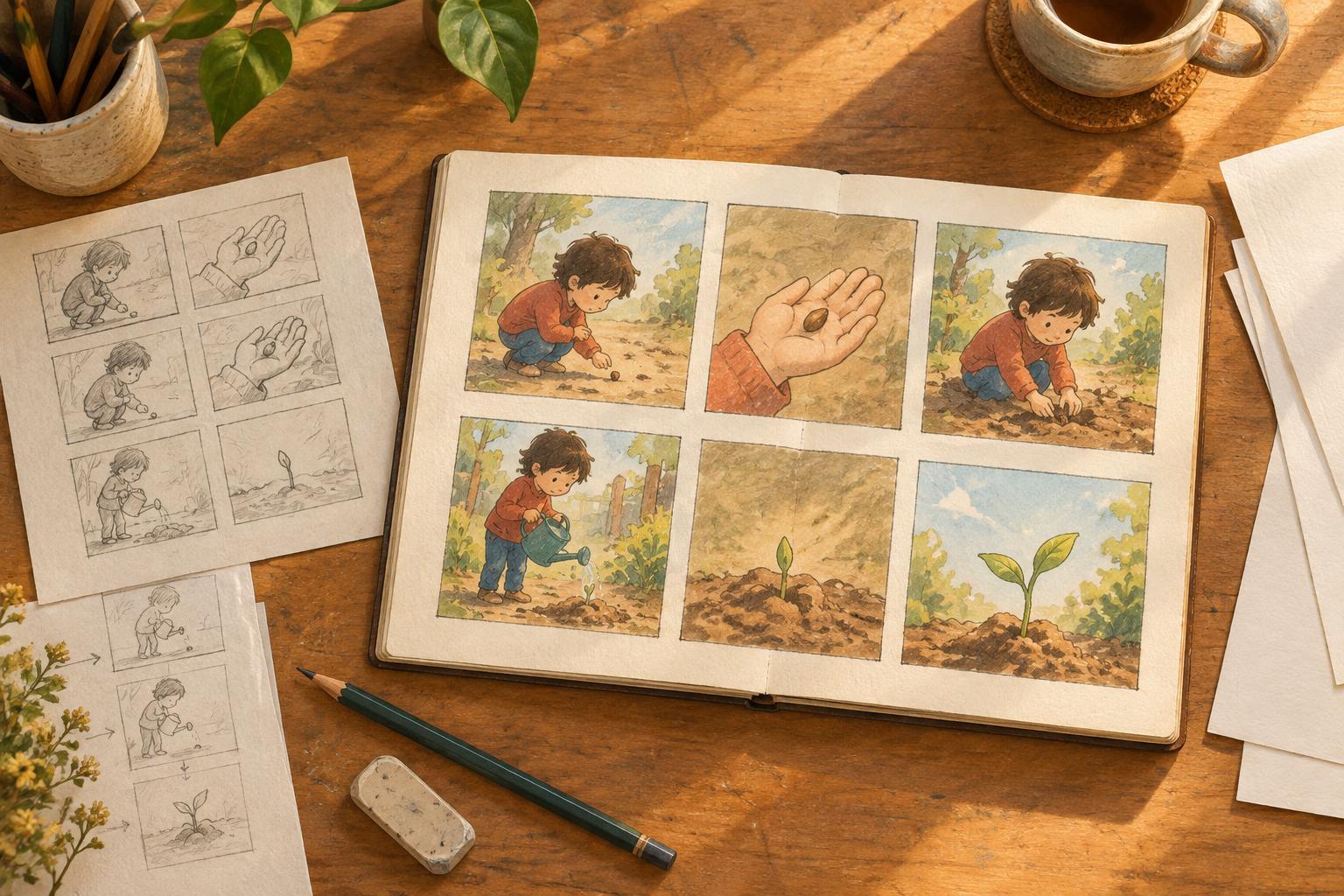
Read the panel descriptions without the dialogue. Can you still follow the physical action and the central choice? Then read only the dialogue. Does it reveal character or add useful information, rather than narrating what is already visible? Finally, make tiny thumbnail sketches, even if they are only stick figures. Thumbnails often expose problems a written script hides: repeated compositions, unclear positions, or an important object that disappears between panels.
Revise for clarity before adding detail. Check that the reader can tell where people and objects are, why each action follows the last, and which moment carries the ending. If the script feels crowded, remove an explanation or combine minor beats rather than forcing every event into a smaller panel. A useful comic script is not a perfect description of every image. It is a clear path through a sequence that leaves the finished artwork room to tell the story.