Choose a task you can begin immediately
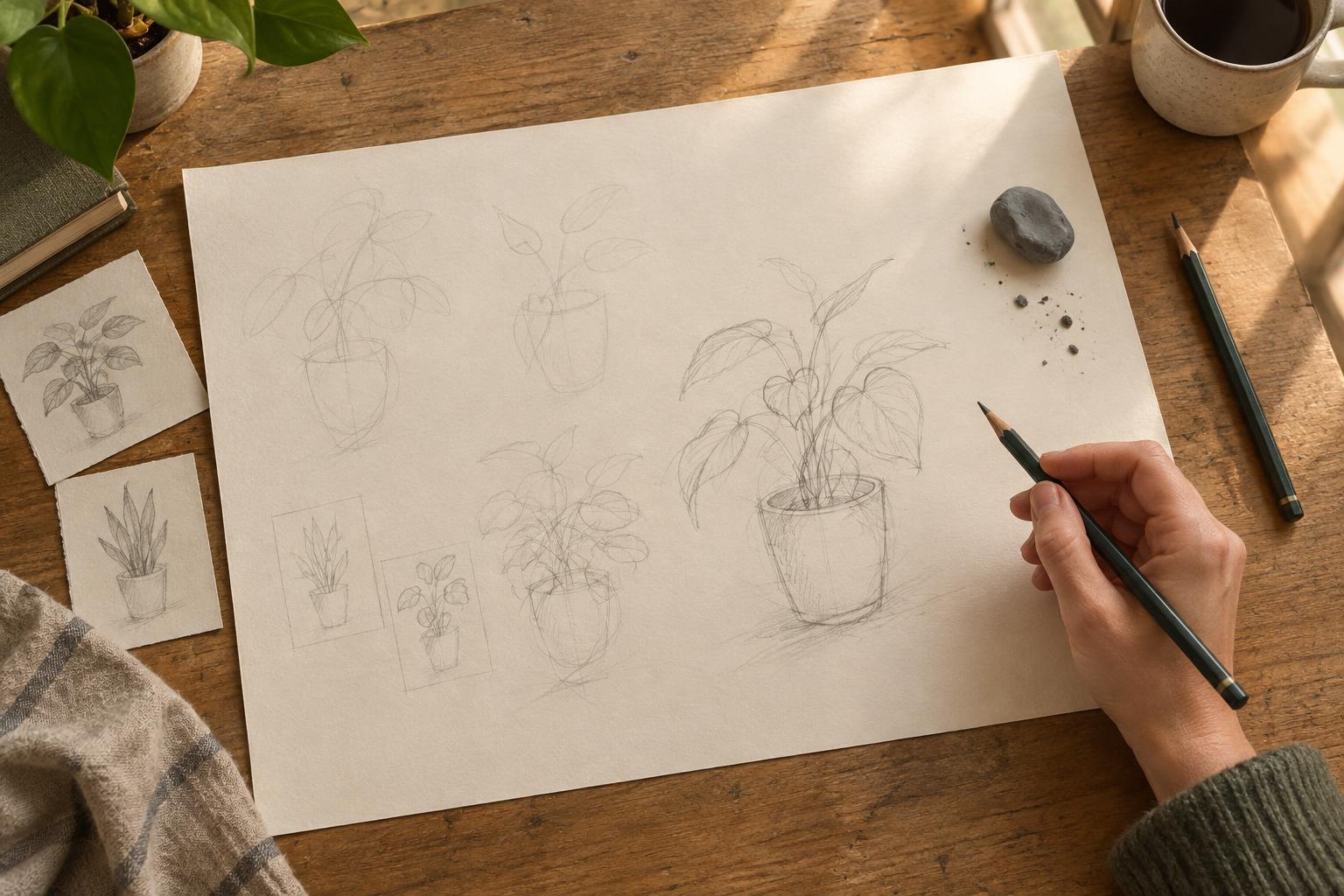
A vague plan to “work on a drawing” leaves many decisions for the moment you sit down. Before the session, name a task small enough to start without further planning: fill one page with hand gestures, make six thumbnail compositions, or ink the foreground of a panel. The task does not need to finish a project. It needs to give your attention somewhere to land.
Match the task to the time available. A short session may suit studies or revisions with a clear stopping point. A longer one can hold exploratory work, but it still helps to choose an entry point, such as testing three lighting ideas. Write that first action on a scrap of paper and place it beside your drawing surface. When you arrive, you can begin rather than renegotiate the whole project.
Prepare the space, not a perfect studio
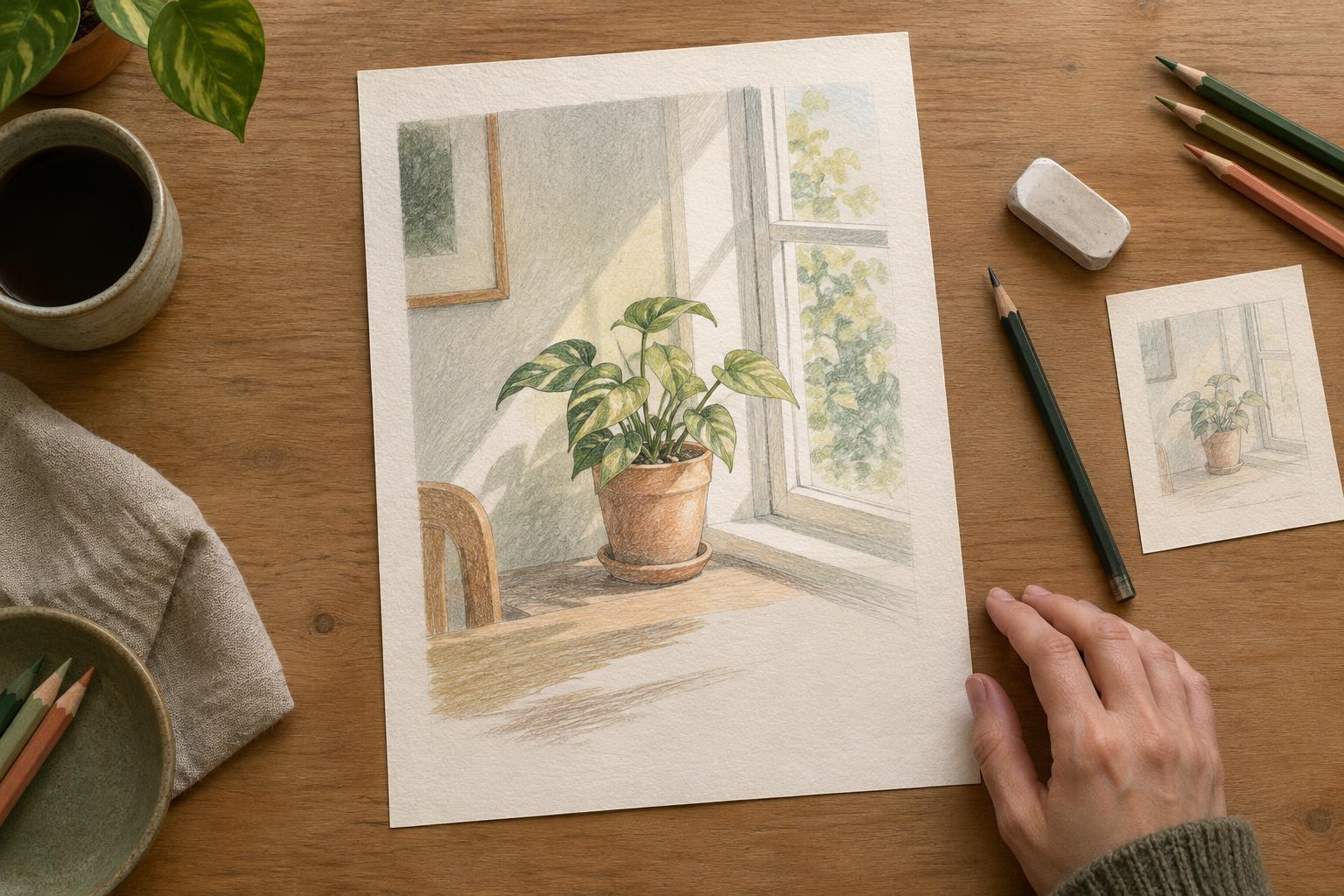
You do not need a dedicated room to make a useful drawing space. Clear enough room for your paper or tablet, the tools you expect to use and a place to set finished sheets. If your task needs references, select them in advance and keep them easy to reach. Searching for a reference halfway through a sketch can turn into browsing without a clear end.
Keep setup proportional to the work. A pencil, eraser and sketchbook may be enough for thumbnails; a finished ink drawing may need a more deliberate layout. Put frequently used tools within reach and move unrelated materials out of the immediate work area. The goal is not tidiness for its own sake. It is to remove small obstacles that repeatedly pull you away from the page.
Make distractions harder to enter
Decide what needs to remain available during the session. If you are drawing from a screen, open the reference before you start and close unrelated tabs. Silence nonessential notifications, or place your phone somewhere you cannot pick it up automatically. If a device must stay nearby for practical reasons, choose which alerts you will answer and let the rest wait.
It also helps to set a boundary with the people and activities around you. A brief statement such as “I’m drawing until the next break” can make your availability clearer without treating interruptions as failures. If your setting is noisy or shared, aim for a workable boundary rather than total quiet. Even a modest reduction in competing demands can make it easier to return to a line of thought.
Give the session a rhythm
Start with a short, low-stakes action. Draw loose lines, copy a simple shape from your reference, or make one rough thumbnail. This warm-up is not a test of skill; it is a transition from preparing to making. Once your hand is moving, turn to the task you chose and stay with it long enough to learn something from the attempt.
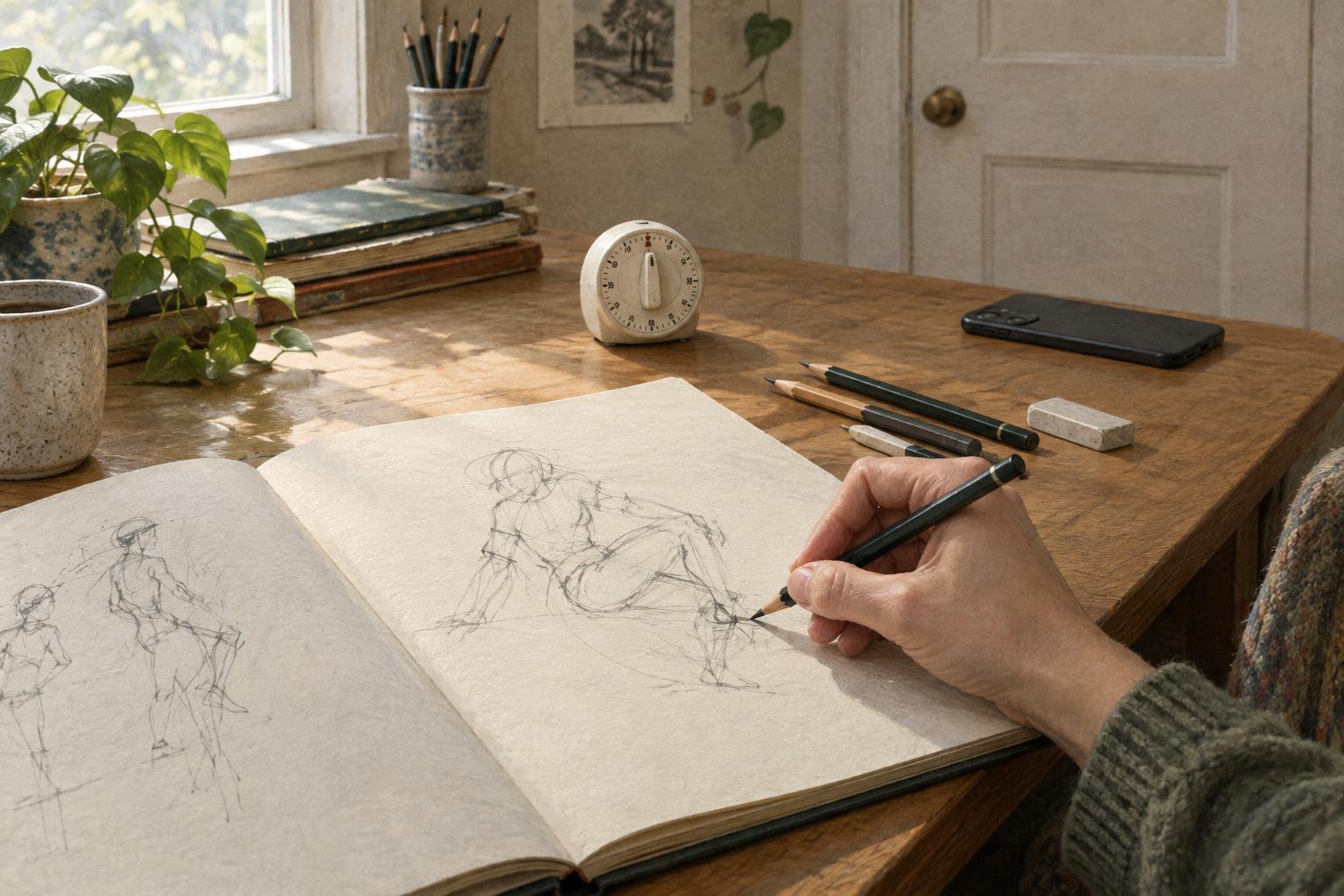
Use a time boundary if it helps you avoid checking the clock or deciding repeatedly whether to stop. You might work until a timer sounds, then pause to stretch and look at the drawing from a little distance. During the break, decide whether to continue, adjust the task or close the session. A planned pause is different from following every impulse to switch activities.
Plan for interruptions and an easy return
Distractions will still happen. When an unrelated idea or errand comes to mind, jot down a few words on a separate note instead of acting on it immediately. If you must step away, leave a visible cue for your return: circle the panel you were revising or write “next: darken the shadow under the chair.” That cue saves you from reconstructing your intention when you sit back down.
End by recording what you did and the next useful step. Keep it brief: “four compositions tried; develop the second” is enough. Put away anything that could be damaged, but consider leaving tomorrow’s first tool or reference ready. A distraction-resistant session is not one in which attention never wanders. It is one that makes starting, continuing and returning to the drawing reasonably simple.