Start with the marks you make most often
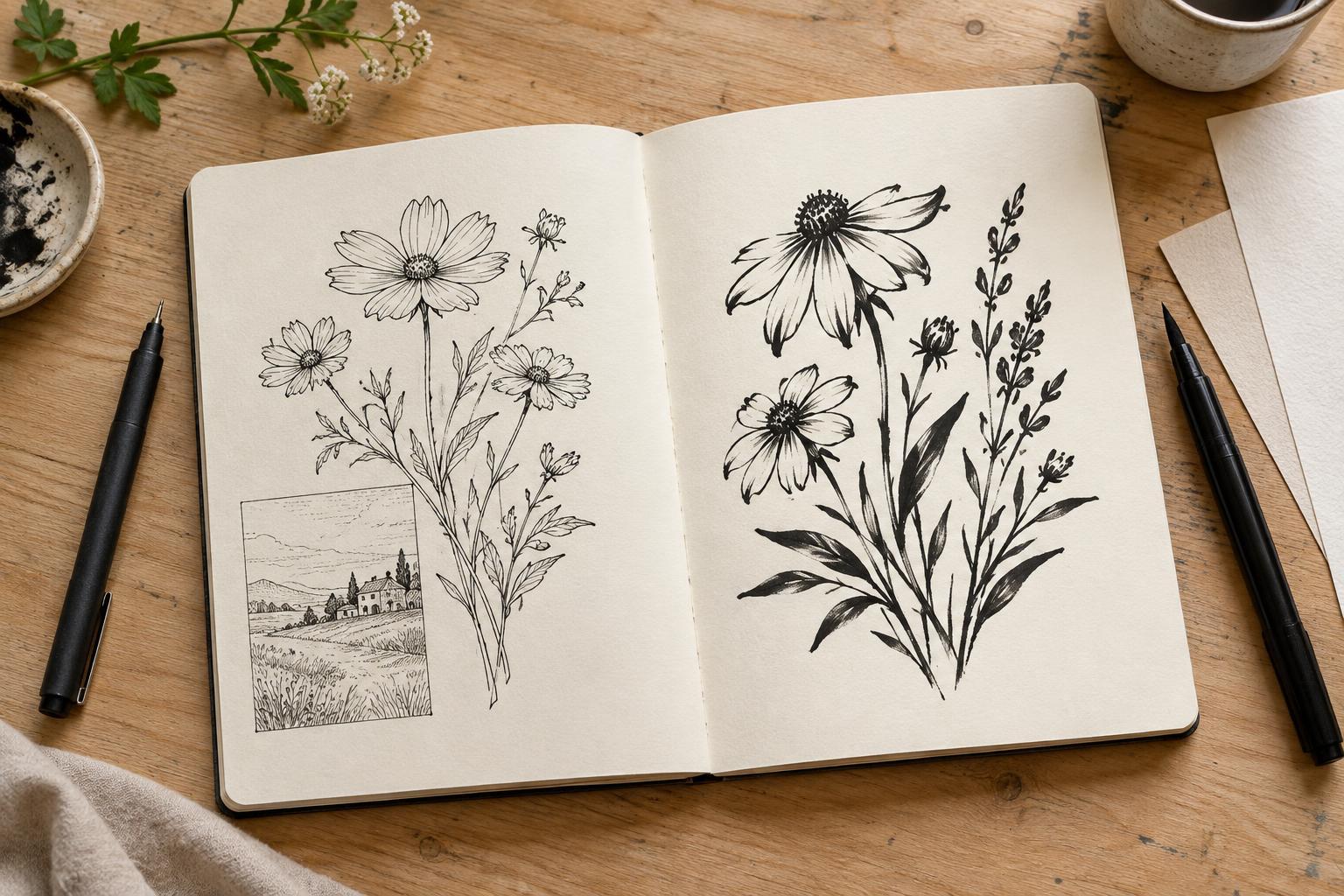
A sketchbook is a working surface, not just a place to store finished drawings. Before comparing covers or page counts, think about a typical session. Do you make light pencil studies, build dark layers of graphite, draw clean ink lines, or add washes over a drawing? Choose for the tools you reach for most often, then decide which occasional techniques the book also needs to handle.
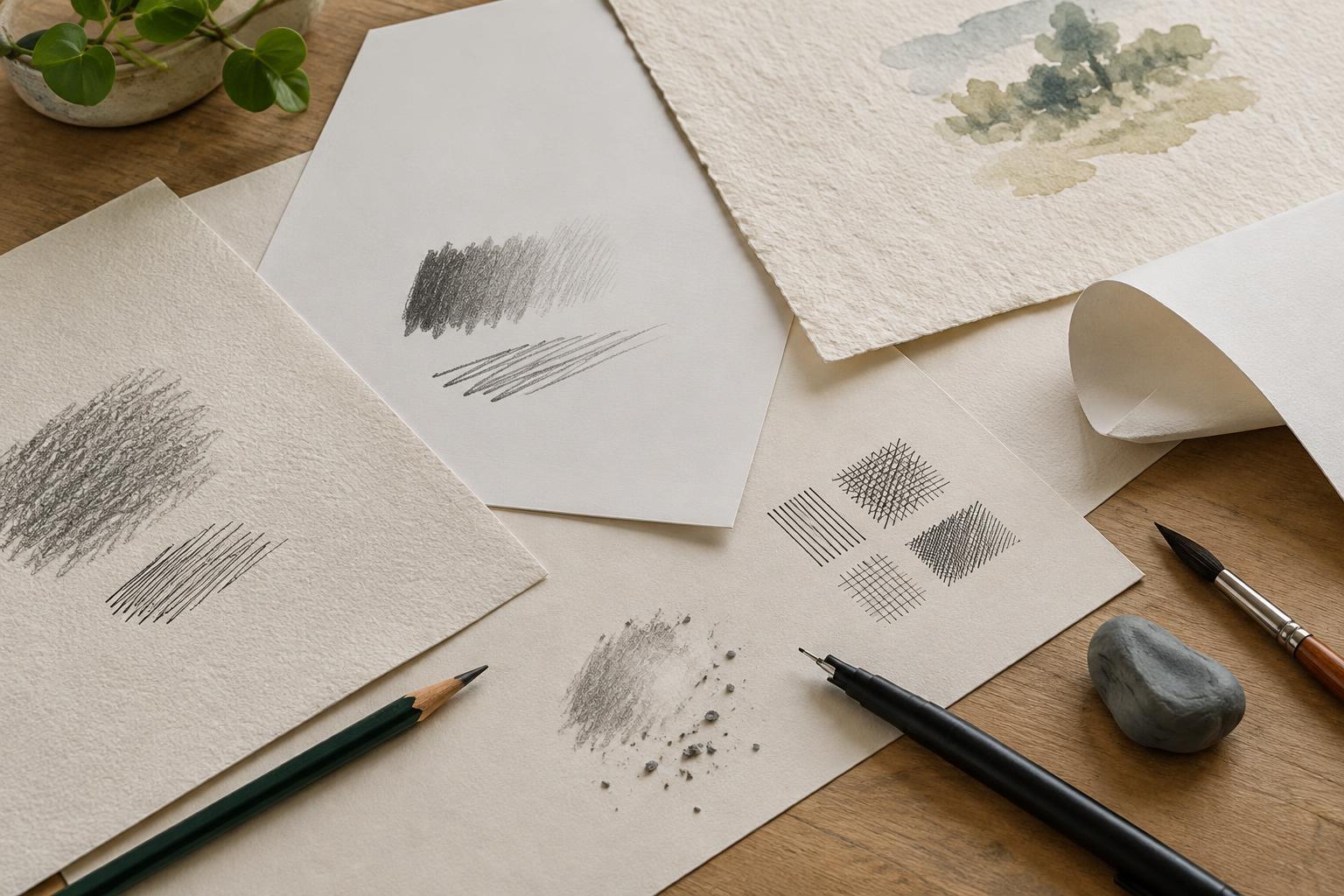
No single paper is ideal for every material. A smooth sheet may help a pen move evenly but offer less grip for repeated pencil layers. A textured sheet can make graphite marks lively while interrupting a fine ink line. If you use several materials, look for a comfortable compromise rather than expecting one book to behave like specialist paper for every medium.
Match the paper surface to pencil and ink
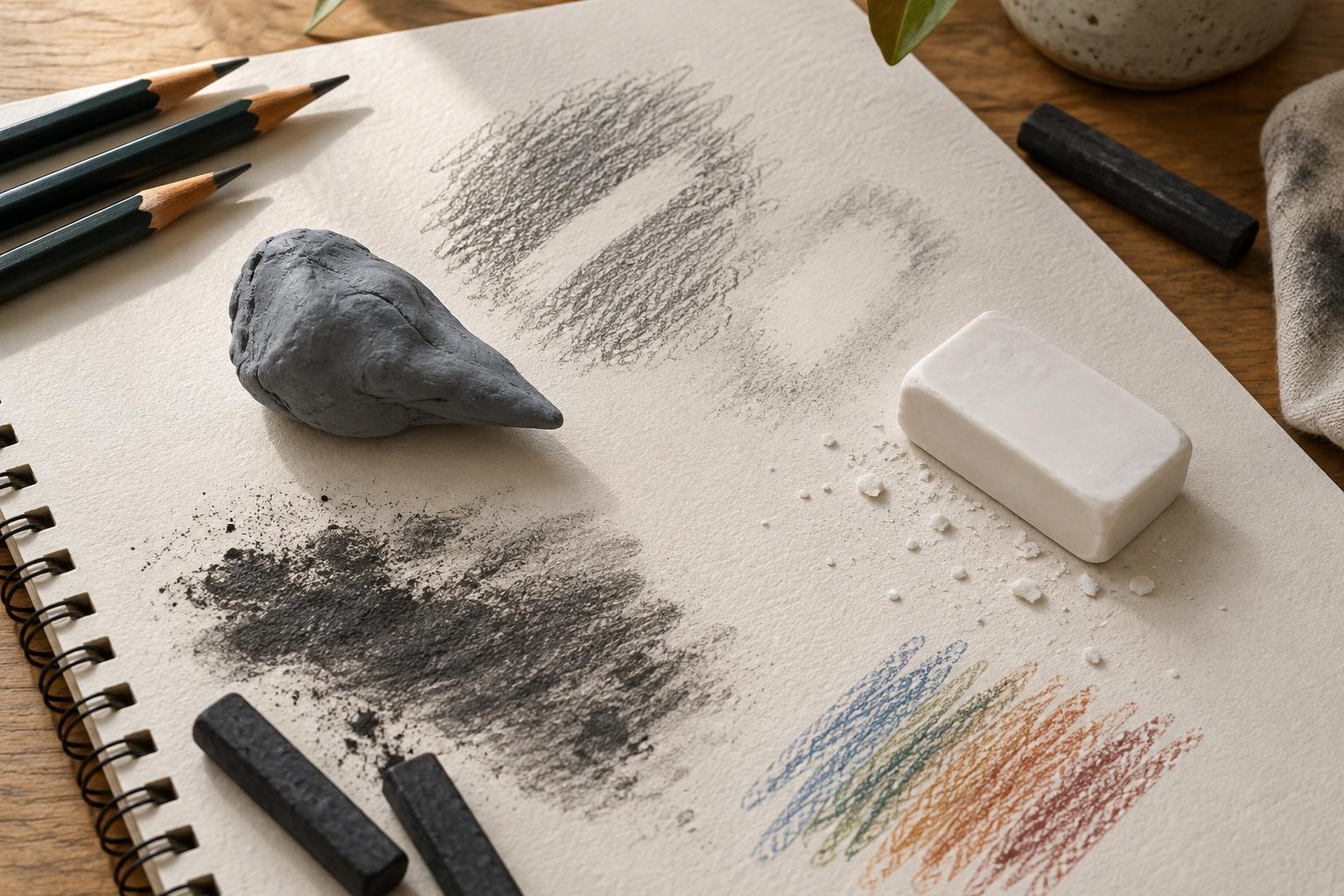
For pencil, consider how much texture, often called tooth, you want. Slight tooth catches graphite and makes it easier to build tone. Very smooth paper suits fine lines and quick layouts, but it may become slippery as you layer or blend. If you erase frequently, check whether the surface stays intact instead of becoming fuzzy or polished. Try both light construction lines and darker shading when you test it.
For ink, ask a different set of questions: Does the nib glide without snagging? Do lines keep their edges, or do they spread into the fibers? Does the ink remain visible on the reverse side? Pen type matters here. A fineliner, brush pen and fountain pen can behave differently on the same page. Bleed-through means ink reaches the back of the sheet; show-through means you can see it from the other side without it passing through. Both can affect whether you enjoy using facing pages.
Think carefully about water and layered media
If you add watercolor, diluted ink or wet brush-pen marks, paper thickness becomes more important, but a heavier sheet is not an automatic guarantee. Paper treatment and surface also affect how liquid sits and spreads. Thin sketch paper may buckle with a wash, while paper intended for mixed media will often tolerate modest amounts of water better. For frequent, generous washes, a watercolor sketchbook may be the more useful starting point.
Consider the order of your layers. A pencil drawing followed by a light wash asks something different of the page than marker over ink or repeated wet applications. Alcohol-based markers, in particular, can pass through papers that handle water reasonably well; a protective sheet behind the page may save the next drawing. If you regularly combine materials, test the whole sequence you use rather than judging the paper from one pen stroke.
Choose a format that fits your routine
Size influences what you draw. A small book is easy to carry and inviting for short studies, but it can feel cramped for scenes or page layouts. A larger book gives you room to explore compositions, though you may be less likely to take it outside. Consider where you usually draw and whether you need space for notes beside an image. A sketchbook you can use regularly is more valuable than one with impressive specifications that stays on a shelf.
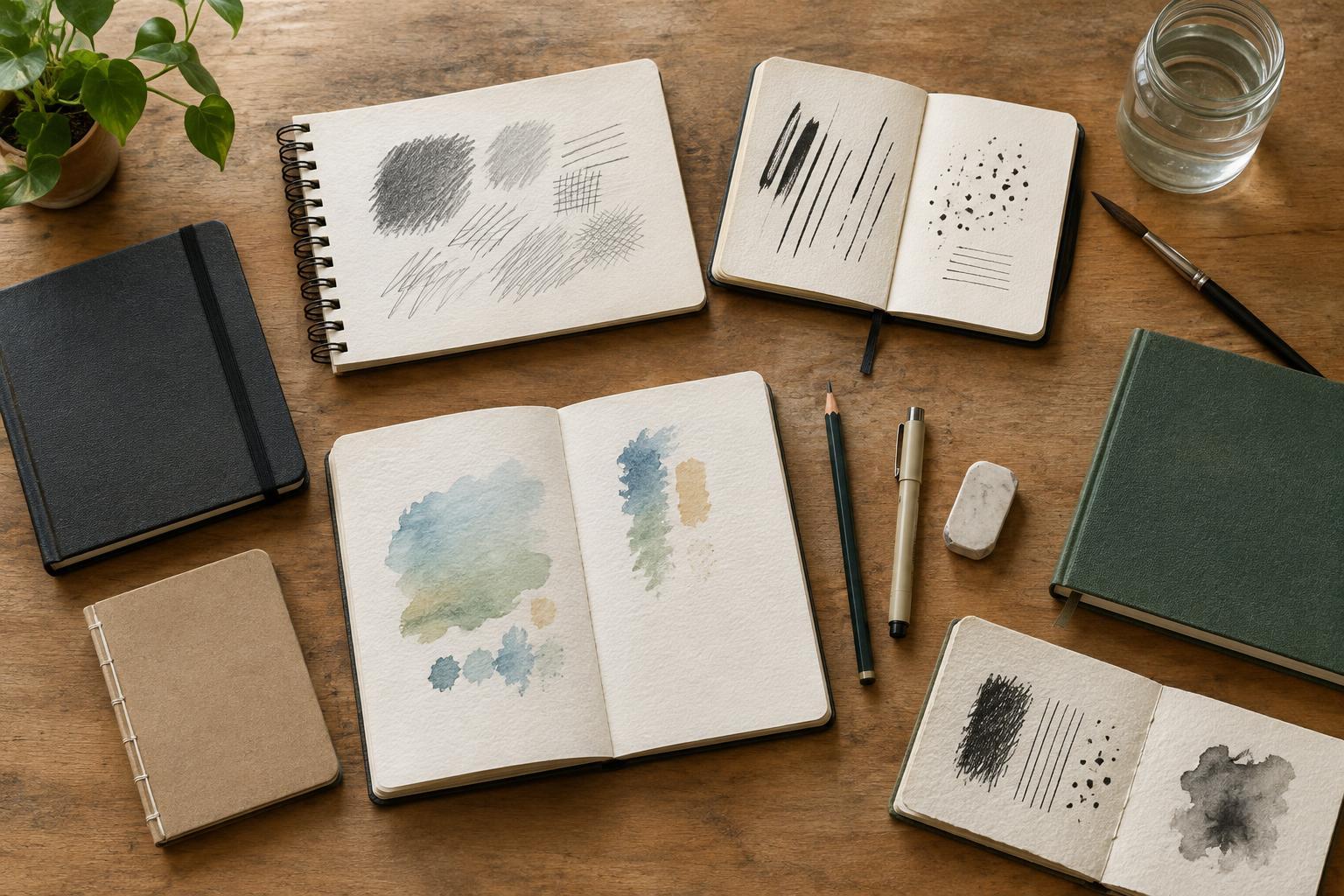
Binding changes the experience too. A book that opens flat makes it easier to draw across a spread or work near the center seam. Spiral binding can let you fold the cover back, although the coil may get in the way when carrying or scanning pages. A sewn or glued binding has a different feel, and some books resist lying flat at first. Check the actual book if possible, including how its pages turn and whether its cover provides enough support for drawing away from a desk.
Test a page before committing the whole book
Once you have a candidate, use a back page for a small, repeatable test. Make light and heavy pencil marks, erase a patch, draw slow and fast ink lines, and add the wettest mark you would normally use. Let everything dry before checking for feathering, buckling, show-through and bleed-through. Look at the page again after turning it: can you comfortably draw on the other side?
The result does not need to be perfect. A little show-through may be acceptable for a book of loose ideas, while it might distract you in a book of finished spreads. Note which tools worked well and which needed a lighter touch. Over time, these observations will tell you more than a product label can—and help you choose a sketchbook that makes drawing feel easy to begin.