Treat the sketchbook as evidence, not a verdict
Looking through old drawings can be uncomfortable. A page that felt promising when you made it may now seem awkward, while a quick doodle may have more energy than a carefully finished piece. Neither reaction tells the whole story. A sketchbook records decisions made with the time, tools, references, and skills available on a particular day. Reviewing it is most useful when the question is not “Was I good?” but “What can this page tell me about how I draw?”
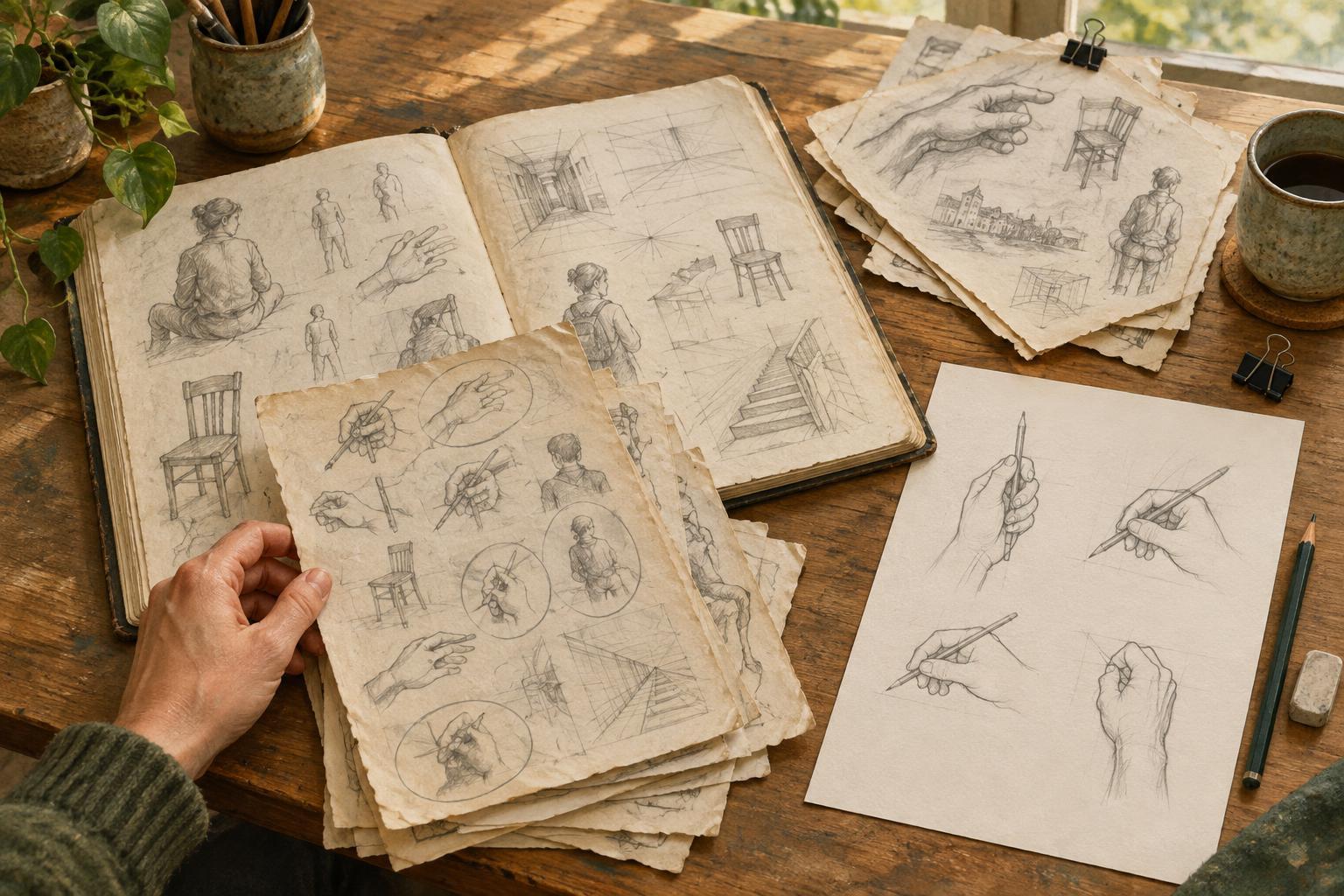
Choose a manageable sample rather than every sketch you have ever made. One sketchbook, a folder from a single project, or ten drawings made across several months is enough to start. Include quick studies as well as more resolved work. Keep a current sketch nearby for comparison, but resist ranking every page against it. The aim is to notice patterns you can act on, not to prove that your work has improved in a straight line.
Look for patterns across several drawings
On a first pass, record what you notice without proposing fixes. You might see lively poses, appealing shapes, stiff hands, crowded compositions, or characters whose expressions are hard to read. Be specific about where an observation appears: “In three seated figures, the torso and legs do not seem to share the same perspective” is more useful than “anatomy is bad.” Note strengths with the same care. They may be worth developing or protecting as you practice.
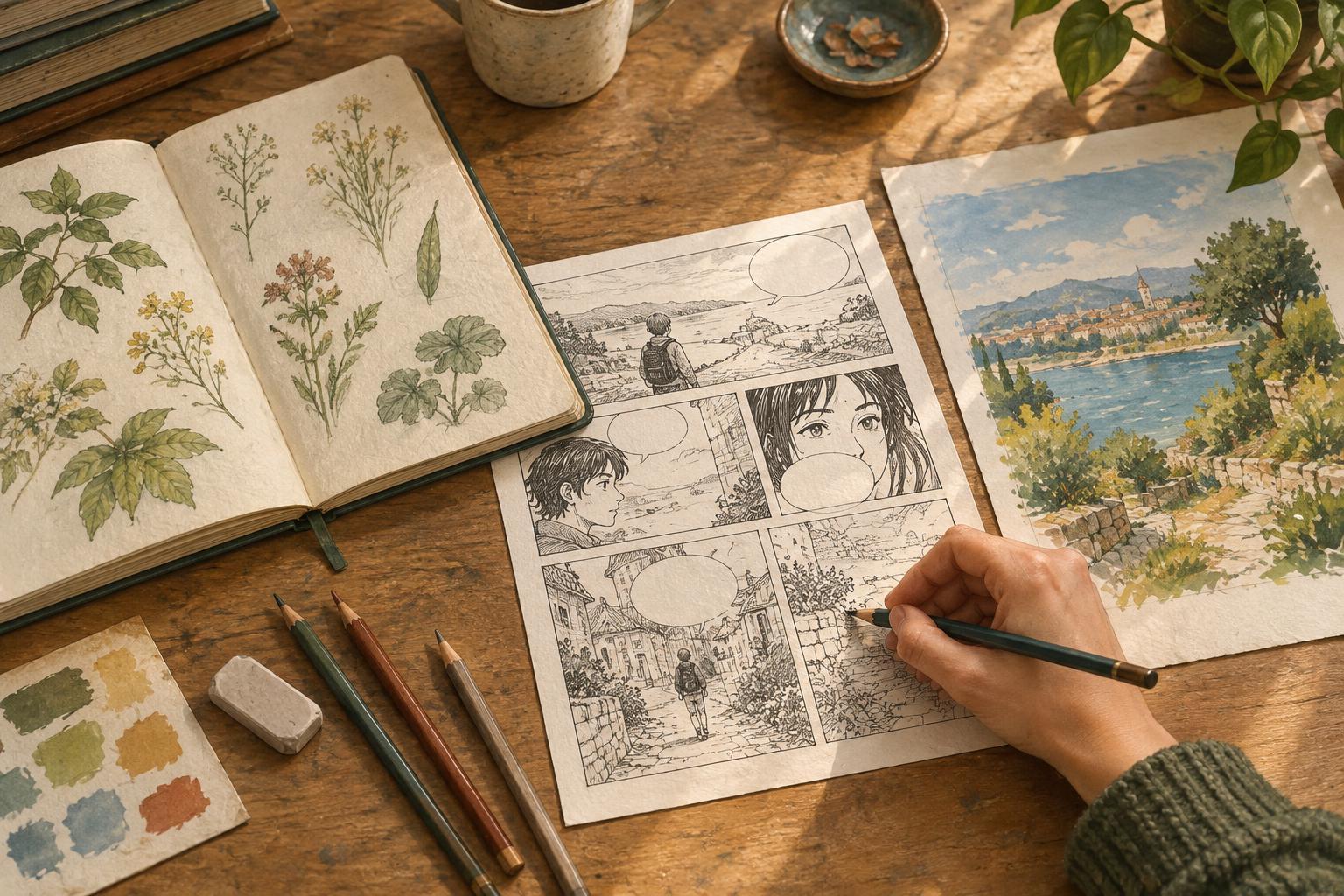
On a second pass, separate recurring issues from one-off accidents. A smudged page may say little about your drawing process; the same cramped framing across several comics panels may reveal a habit. It also helps to distinguish a skill gap from a choice. Simplified hands can suit a character design, for example, while hands that change size unexpectedly from panel to panel may interfere with continuity. Ask what you were trying to communicate before deciding whether something needs work.
Turn one observation into a practice question
A broad goal such as “get better at drawing people” is hard to practice or assess. Narrow it to a question your sketches have raised: “Can I make the direction of a figure’s rib cage and pelvis clearer?” or “Can I show a character picking up a cup without relying on dialogue?” A useful question points toward an exercise and gives you something visible to check afterward.
Choose one priority for the next short block of practice. Consider both frequency and purpose: does the issue appear often, and does it get in the way of the work you want to make? If you draw short comics, unclear staging may matter more immediately than polished rendering. If you enjoy drawing expressive portraits, head angles may be the better focus. You do not need to repair every weakness at once; choosing one leaves room to keep making the drawings you enjoy.
Design an exercise that resembles the problem
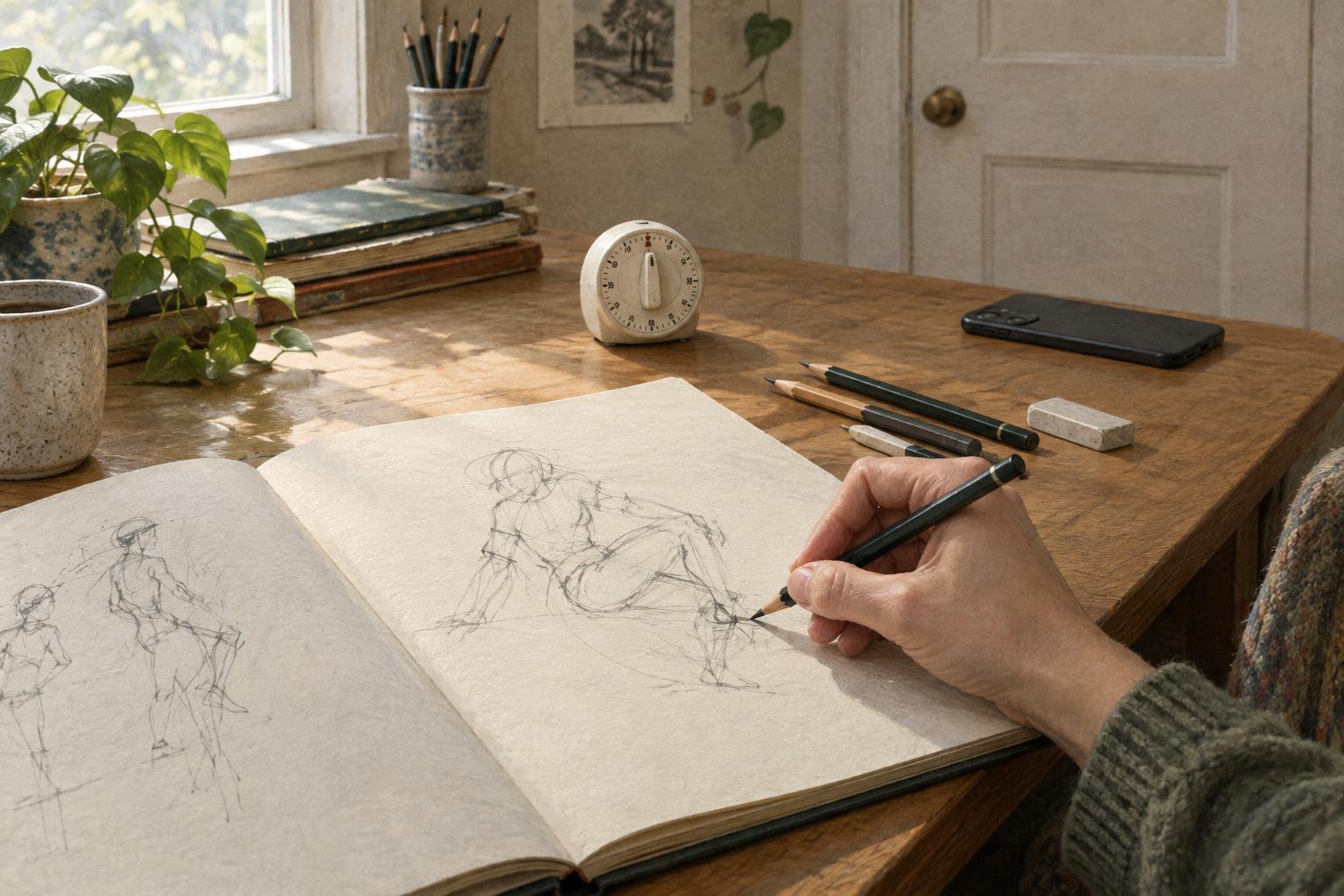
Match the exercise to the observation. If your characters float in empty space, draw a few simple scenes with a horizon line, furniture, and a clear place for each figure to stand. If poses feel stiff, make short gesture studies that emphasize weight and direction before adding details. If a story beat is hard to follow, draw it as three small panels with no words, then ask whether the action reads in order. An exercise is more useful when it tests the same decision that was difficult in the original sketch.
Keep the task small enough to repeat. You could draw six versions of one pose, try three crops of a scene, or redraw a confusing panel from two viewpoints. Save the attempts, including the ones that do not work. Write a brief note about what you changed each time. That note helps distinguish deliberate experiments from repeated guesses and gives you a clearer record to review later.
Review the new work without chasing a perfect page
After a handful of sessions, return to the old sketches and compare a specific feature rather than overall polish. Are the figures easier to place in space? Can a reader follow the action without an explanation? Do the hands stay consistent across views? You may find a partial improvement, or discover that the original problem has a different cause than you thought. Either result helps you choose the next exercise.
Old work is also a reminder of interests that can disappear under a list of corrections. Perhaps you repeatedly drew crowded marketplaces, quiet interiors, or characters in motion. Those subjects are clues about what holds your attention. Let them shape the practice plan: work on perspective through the interiors you already want to draw, or study gesture through your own characters. The best next step is not necessarily the most impressive skill to name. It is one you can use, revisit, and bring back into your stories.