Define the finish line before dividing the work
A large illustration can feel like one enormous task because “finish the image” hides dozens of smaller decisions. Before making a schedule, write a short working brief. What is the image meant to communicate? Where will it appear? What size or shape does it need to fit? Note any fixed requirements, such as a character who must be recognizable or an area that needs to remain clear for text.
Then describe what “done” will look like in observable terms. For example: the focal point reads at thumbnail size, the figures are consistent, the color is resolved, and the file is ready for its intended use. This is more useful than aiming for an image that simply feels perfect. If the project is self-directed, set your own limits anyway. A chosen format, subject and stopping point can keep an open-ended idea from expanding indefinitely.
Turn decisions into milestone outputs
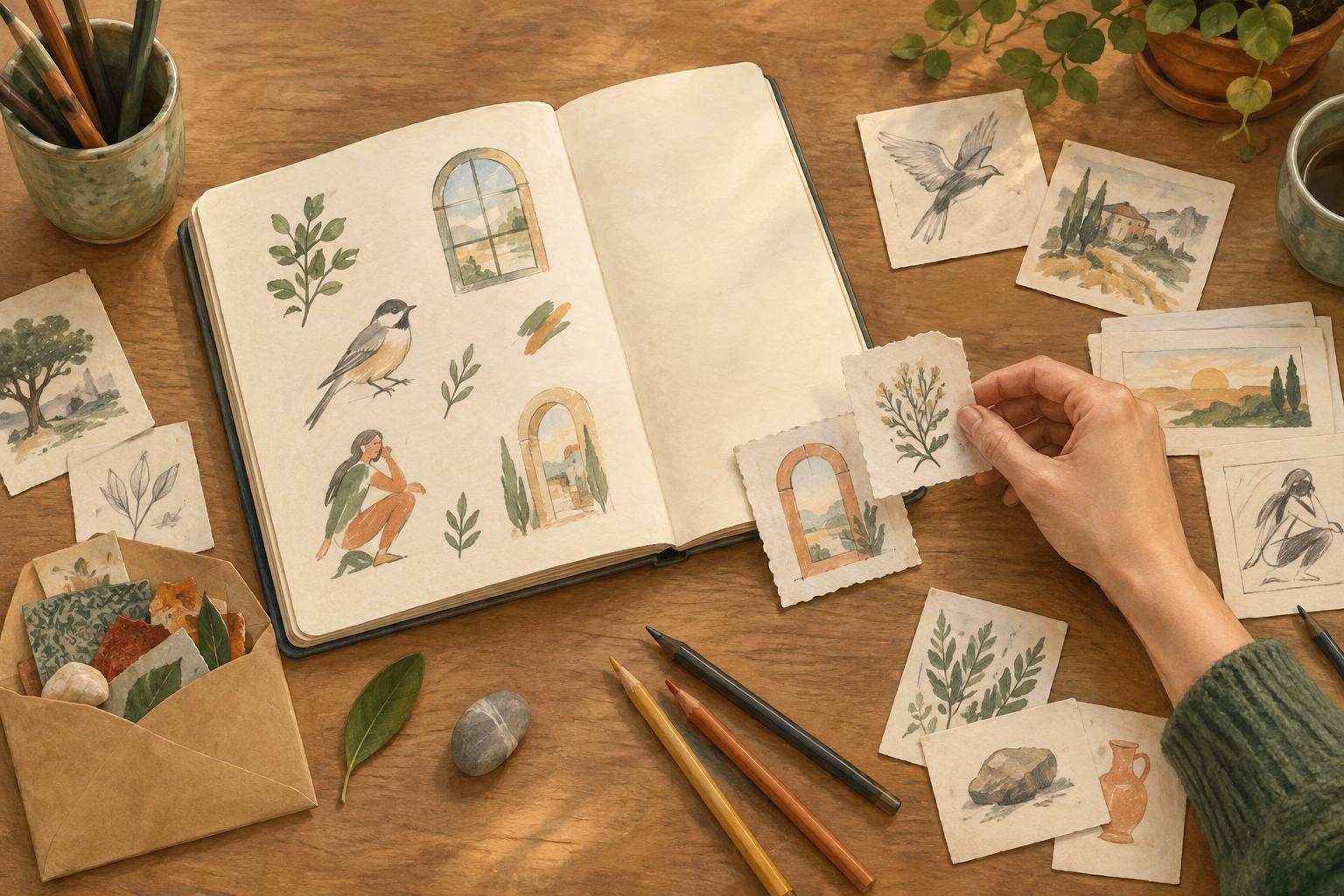
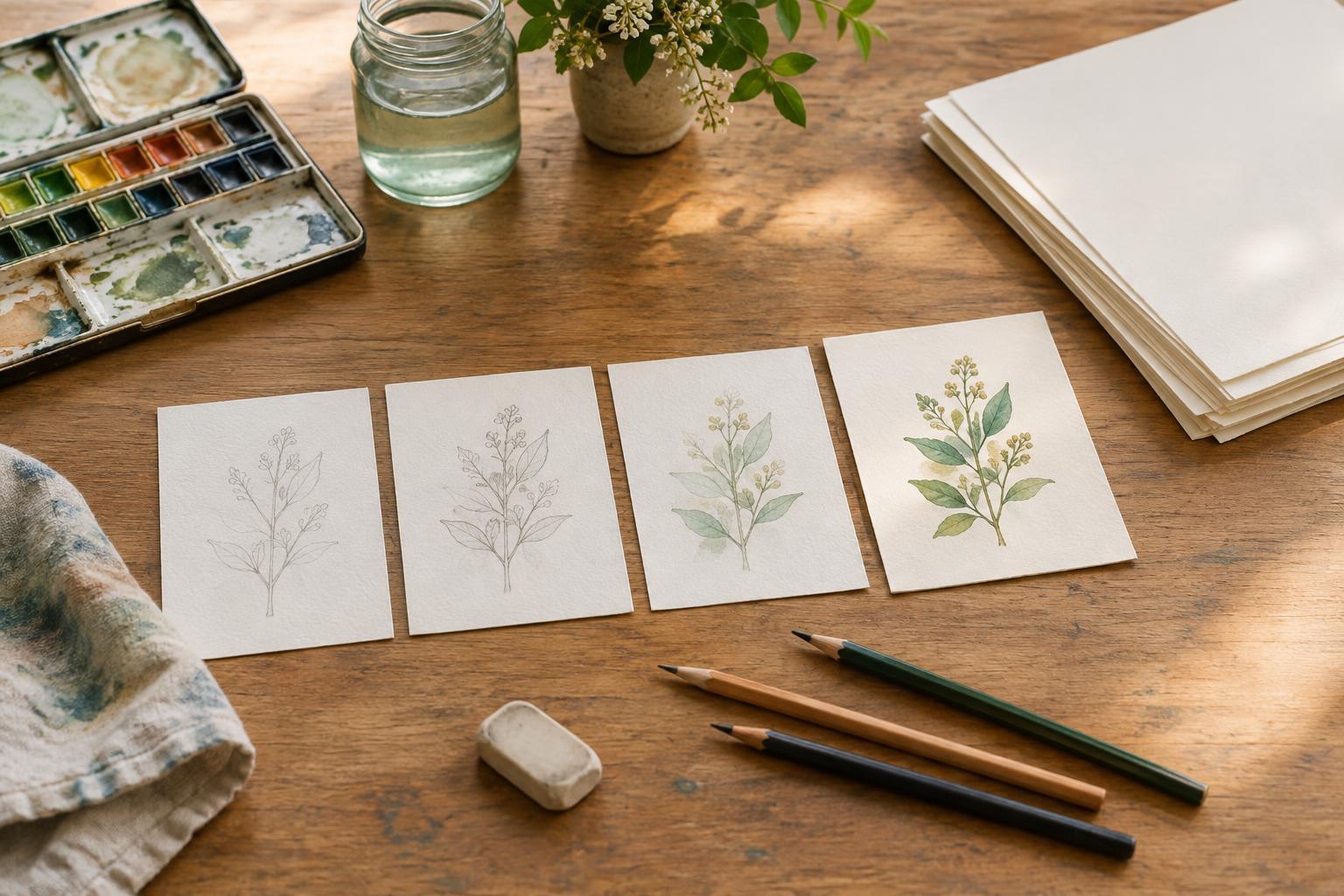
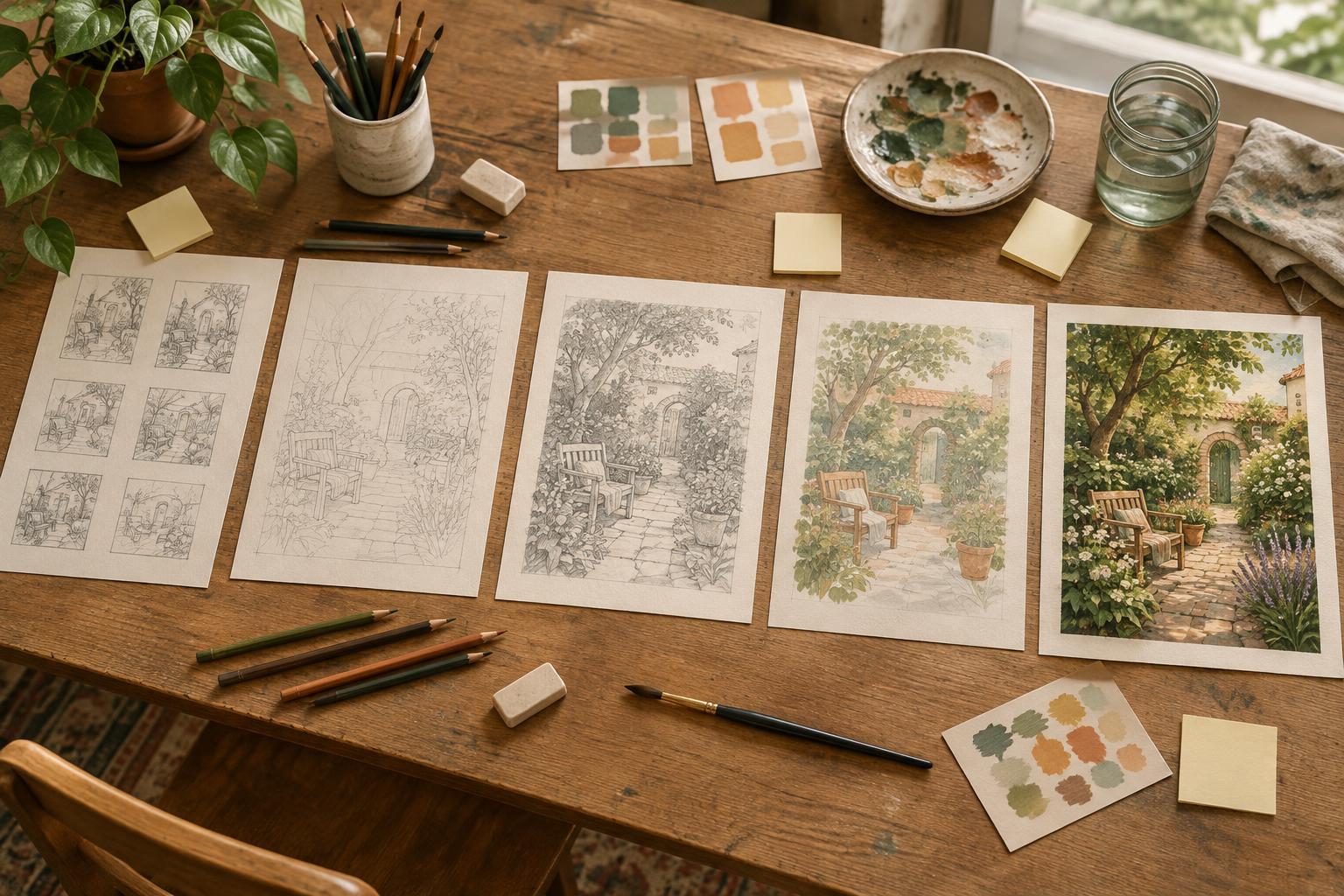
Build milestones around decisions, not just hours worked. A practical sequence might be brief, research and reference gathering, thumbnails, chosen composition, value or color study, refined drawing, final rendering, and delivery check. Each stage should leave behind something you can inspect. “Choose one composition from six thumbnails” is a clearer milestone than “work on composition.”
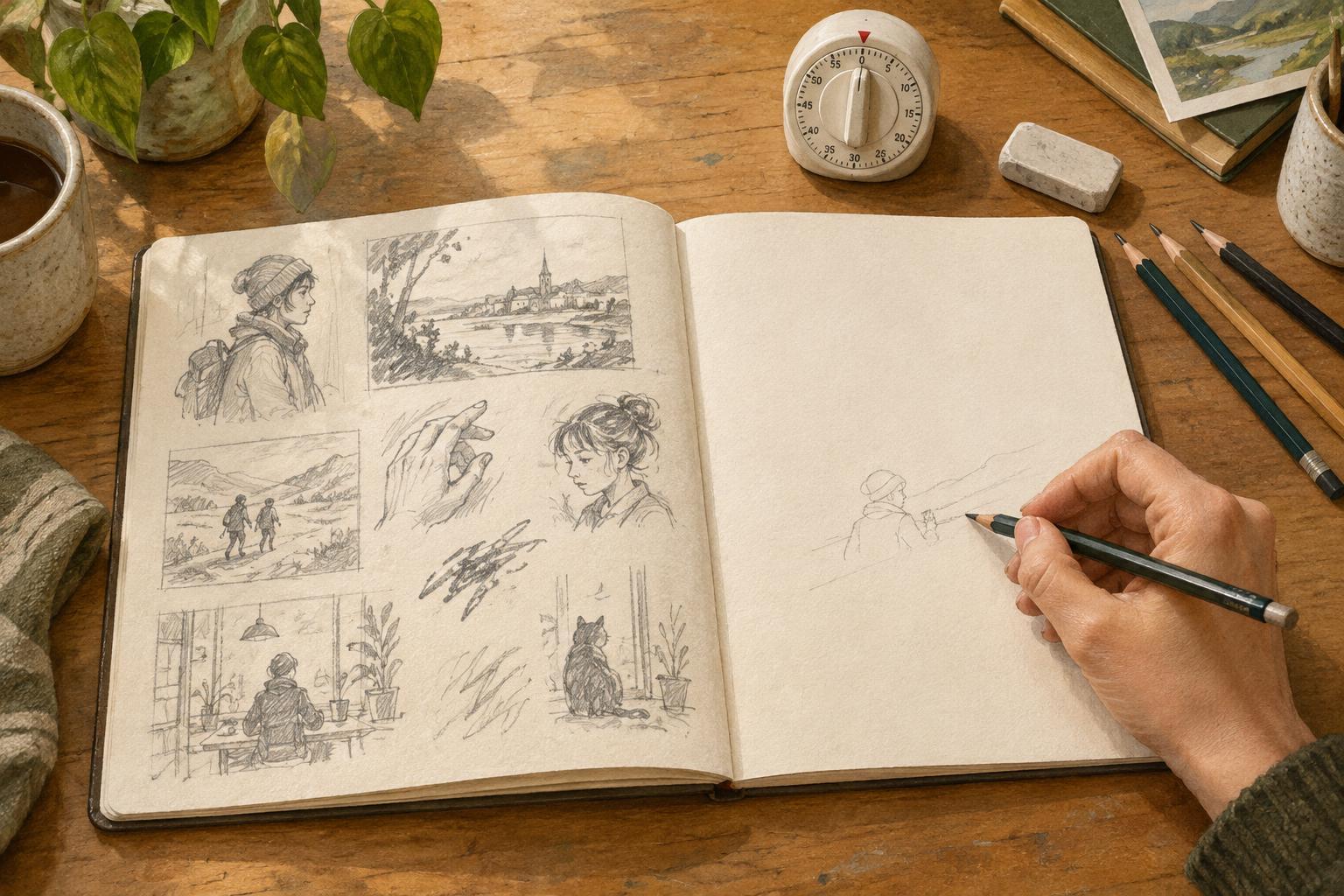
Keep early outputs small. Thumbnails let you test the placement of major shapes without becoming attached to details. A value study can show whether the subject separates from the background before you commit to a palette. If the illustration includes several characters or a complex setting, a focused test of the most difficult element may be worthwhile. These tests are not detours; they help answer questions while changes are still relatively easy.
Avoid treating every stage as a promise that cannot be revisited. Milestones are checkpoints, not walls. If a refined sketch exposes a weak composition, return to a smaller study and fix the underlying problem. The aim is to notice that problem before polishing makes it harder to change.
Size tasks so the next action is obvious
A milestone can still be too large to start. Break it into actions that fit an available work session: gather reference for hands, sketch three camera angles, compare two lighting directions, or clean up the foreground figure. Write tasks as verbs with an end condition. “Explore colors” might become “make three small palettes and choose one that keeps the focal point clear.”
Estimate effort loosely, then leave room for uncertainty. A scene with unfamiliar architecture, multiple figures or intricate textures may need more testing than a simpler image. Instead of filling every session with rendering, reserve time for decisions, feedback, corrections and file preparation. If a task repeatedly carries over, divide it again or ask whether the level of detail is necessary for the image’s purpose.
Keep a short list of the next few actions separate from a larger project checklist. The checklist shows the route; the short list tells you what to do when you sit down. This distinction can make a complex project feel less like a demand to solve everything at once.
Use reviews to protect the whole image
Schedule reviews at points where a change is still affordable: after thumbnails, after the chosen study, and before final polish. Look at the illustration small, flipped horizontally if useful, or after a break. Ask whether the main idea is legible, whether the eye goes where you intended, and whether important parts compete for attention. A review should produce a decision, such as strengthening contrast around the subject or simplifying a busy corner.
If other people are involved, show them work that matches the decision you need. A rough composition is suitable for discussing layout; it is not meant to invite line-level corrections. State what is still flexible and what has already been agreed. For a personal project, you can use the same discipline by recording a few review questions in advance rather than endlessly searching for faults.
Finish with a buffer, not an endless polish stage
The final milestone should include more than adding detail. Check the image against the original brief, inspect edges and overlaps, confirm that text-safe areas remain clear if needed, and review the file at both working size and likely viewing size. Save a working version before flattening or exporting, and give the exported file an unambiguous name.
Set a limit for final adjustments. Separate essential fixes, such as an unreadable focal point or an incorrect format, from optional refinements that few viewers would notice. Complete the essential fixes first. A small buffer for export problems or one last review is more useful than scheduling every available minute for painting.
Once the image is delivered or published, make a brief note of which milestones helped and where the plan slipped. That note gives the next project a better starting point. The purpose of milestones is not to make illustration mechanical; it is to give creative choices enough structure that the work can move forward.